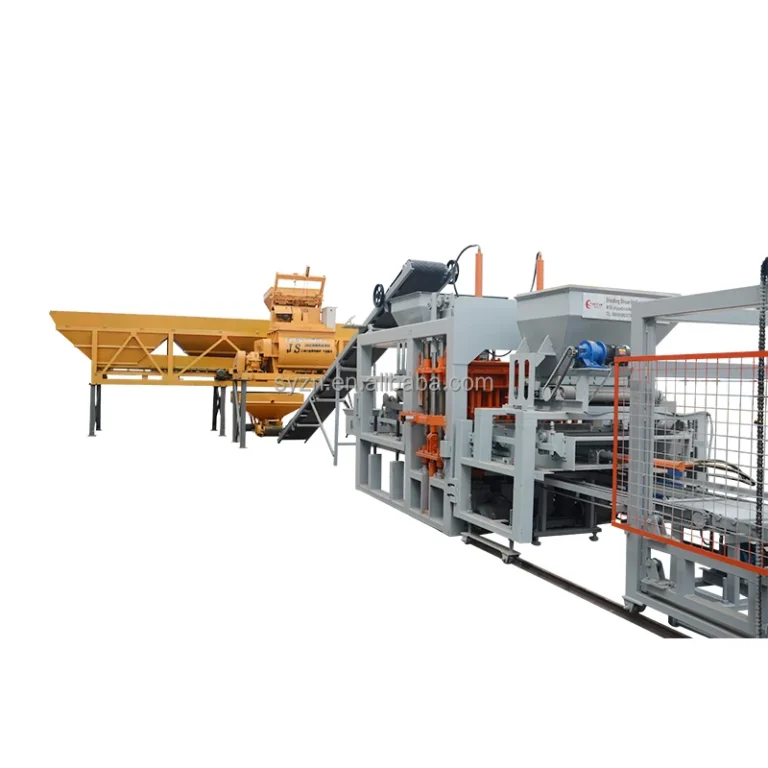
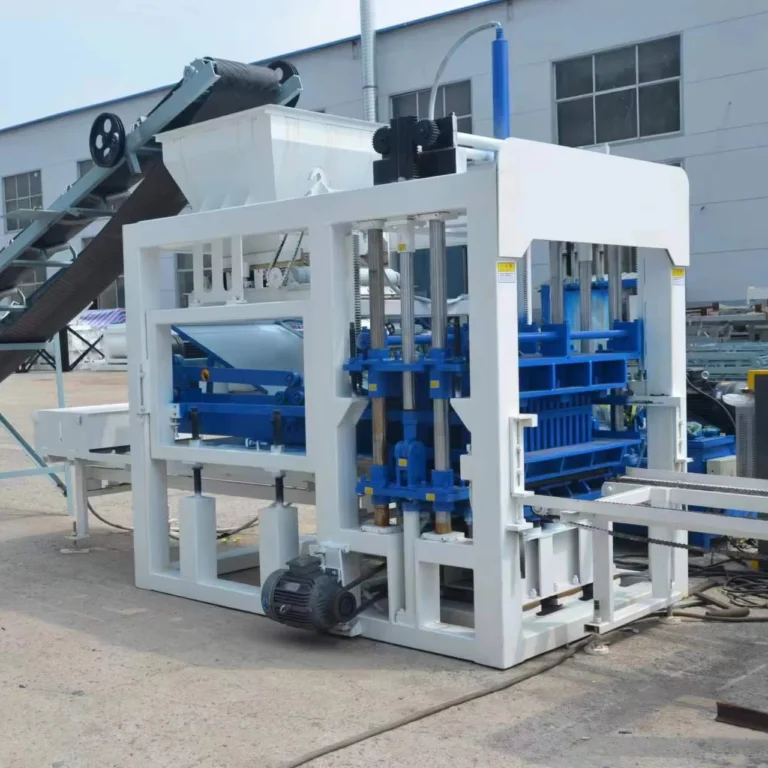
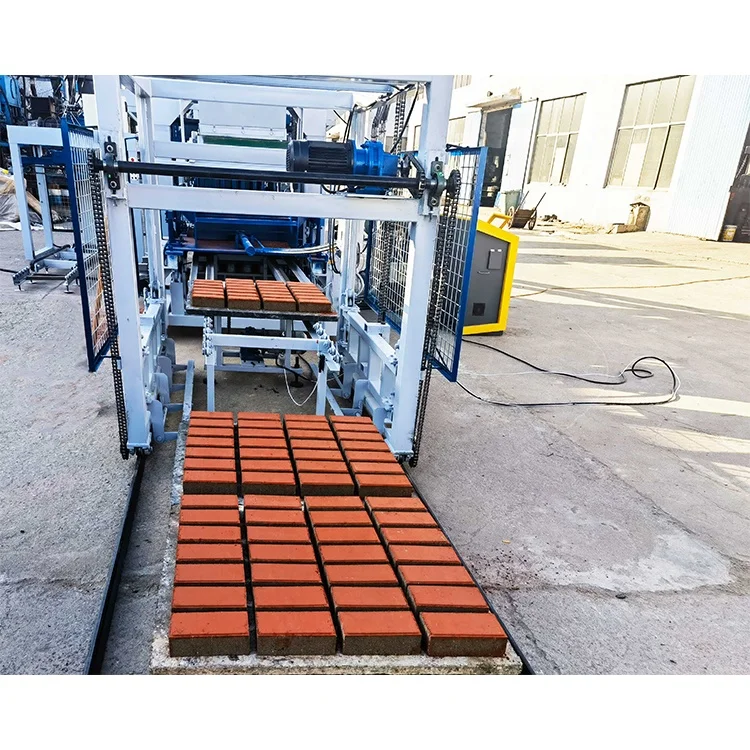
Matched System Configuration — we specify the press, mould, pallet and handling as one coordinated set against the buyer’s actual mix design, not as isolated components sourced from separate catalogues.
Technical Specifications
| Parameter |
Value |
| Model |
QTJ4-35 |
| Product Type |
Semi-Automatic Concrete Block Making Machine |
| Overall Dimensions (L×W×H) |
1350×1460×1800 mm |
| Molding Cycle |
35 s (basis not stated in source — confirm block format / material / thickness) |
| Vibration Frequency |
2800 r/min |
| Vibration Force |
30 kN |
| Total Power |
11.15 kW |
| Mixer Model |
JQ350 |
| Pallet Size |
850×450×20 mm |
| Net Weight |
1500 kg |
| Frame Construction |
Four-lead guide, channel steel stand |
| Automation Level |
Semi-automatic (manual pallet handling) |
| Applied Products |
Concrete hollow blocks (8 inch, 6 inch), solid bricks |
| Output Capacity — Hollow Block 400×200×200 mm |
4 pcs/mould, 408 pcs/hr, 3264 pcs/8hr |
| Output Capacity — Hollow Block 400×150×200 mm |
5 pcs/mould, 510 pcs/hr, 4080 pcs/8hr |
| Output Capacity — Solid Brick 240×115×53 mm |
18 pcs/mould, 2100 pcs/hr, 17000 pcs/8hr |
| Raw Materials |
Crushed stone, sand, cement, dust, fly ash |
| Voltage & Frequency |
To be confirmed with buyer’s site supply |
| Control System |
To be confirmed (PLC or relay logic) |
| Standards |
CE (where applicable, confirm per order) |
Application Suitability
| Application |
Material or Output |
| Small-scale hollow block plant |
400×200×200 mm and 400×150×200 mm concrete hollow blocks from crushed stone, sand, cement and fly ash |
| Solid brick production for local building supply |
240×115×53 mm solid bricks from cement and sand or stone dust |
| On-site production for construction contractors |
Hollow blocks and solid bricks produced directly at the project location |
| Format testing before automatic line investment |
Limited-volume runs of new block formats for distributors evaluating market demand |
What "408 Blocks per Hour" Actually Means for Your Site
Every output figure here is tied to a specific block format, mould cavity count and cycle assumption — no single headline number.
When I first started in block machine selection, a buyer received a quotation that quoted cycle capacity without naming the block size it assumed. The machine arrived and the daily tonnage never matched what the sales sheet implied. With the QTJ4-35 block machine manufacturer data set, the 408 pieces per hour rating applies specifically to a 400×200×200 mm hollow block at four cavities per mould. Switch the mould to a 240×115×53 mm solid brick and the hourly figure changes entirely because the cavity count and compaction behaviour differ. Buyers comparing quotations across suppliers must ask each one to state the assumed format alongside the cycle number [NEED_CITE: block machine capacity calculation standards].

Placing the QTJ4-35 Within the Full Machine Range
The Shiyue range spans mobile egg-laying units at the lowest investment tier, through semi-automatic presses like the QTJ4-35, up to fully automatic lines with pallet feeders, stackers and cubing systems. This model sits at the entry point of the stationary press category. It requires a fixed production area and manual pallet handling, but it delivers a mould-changeable platform that covers both hollow block and solid brick formats. Buyers who know their daily volume will stay within the semi-automatic band typically find this tier covers their first two to three years of operation before market demand pushes them toward higher automation.
Where Semi-Automatic Fits and Where It Does Not
A construction contractor producing hollow blocks for a single housing project benefits from the low capital outlay and compact footprint. The 1350×1460 mm machine envelope leaves room inside a standard site compound. The trade-off is labour: every pallet must be fed and removed by hand, so shift output depends directly on crew size and stamina. For a plant running two shifts daily and selling into a competitive local market, the manual pallet cycle becomes the bottleneck long before the press itself reaches its mechanical limit. That is the signal to evaluate the next tier in the range [NEED_CITE: labour cost impact on semi-automatic block production].
Reading the Specification Sheet Beyond the Headline Numbers
The 30 kN vibration force and 2800 r/min frequency define how thoroughly the mix is compacted inside the mould cavity. On hollow blocks with thin shell walls, insufficient vibration leaves voids that reduce compressive strength; excessive vibration can cause segregation where coarse aggregate settles to the bottom. The QTJ4-35 block machine manufacturer pairs this vibration rating with a four-lead guide frame that keeps the mould box aligned during each cycle, preventing uneven compaction across cavities.
Pallet size at 850×450 mm determines two things simultaneously: the curing rack dimensions the buyer needs on site and the type of forklift or hand trolley that can handle loaded pallets. A pallet chosen without checking existing curing infrastructure forces the buyer to rebuild the drying area after the machine arrives.
Total power at 11.15 kW, including the JQ350 mixer, means the buyer must confirm the site supply can sustain continuous draw at the local voltage and frequency. A mismatch here halts commissioning before the first block is pressed.
The Hidden Cost of Skipping Configuration Confirmation
I have seen block machines arrive at port only to sit unpowered for weeks because the motor winding was specified for 380 V / 50 Hz while the site runs on 415 V / 60 Hz. Rewinding or replacing a motor on site costs more than confirming the supply before production begins. The same applies to PLC display language: a control panel in a language the operator cannot read turns minor fault diagnosis into a multi-day event. When pallet specifications are left to default without checking the buyer’s curing racks, the entire downstream handling process has to be redesigned around an incompatible pallet size [NEED_CITE: common block machine commissioning delays].
Why Buyers Source This Range Through Shiyue
Block machinery is the single focus here, which means the press, mould, pallet and handling equipment are specified as a matched set rather than assembled from unrelated suppliers. The QTJ4-35 block machine manufacturer configuration is set against the buyer’s actual mix design, local aggregate properties and target block format — not a default catalogue entry. Mould design and supply cover the formats the buyer’s market actually sells, with custom drawings available when standard sizes do not match. The automation level is selectable, so a buyer can start at semi-automatic and move up within the same range as demand grows. Installation support includes operator training on the specific mould set delivered, not generic machine instruction.
Documentation & Verification
- Line layout showing press, mixer and curing area dimensions for the selected block format
- Capacity calculation sheet stating the exact block size and cavity count behind each output figure
- Mould drawing and format list covering every block size included in the quotation
- Pallet specification matching the 850×450 mm size to the buyer’s curing rack system
- Voltage, frequency and control language confirmation document signed before production starts
- Factory test record on the buyer’s specified raw material mix before dispatch
Installation, Commissioning & Support
- Foundation pad sized to the 1350×1460 mm footprint with vibration isolation considerations
- Dedicated electrical circuit rated for the 11.15 kW total draw at confirmed voltage and frequency
- Machine shipped as a single assembled press unit with JQ350 mixer packed separately for container loading
- First-run commissioning includes vibration force and cycle time adjustment to the buyer’s local aggregate
- Operator training covers mould change procedure, pallet handling sequence and daily maintenance checks
- Wear parts and mould replacement list provided with the operation manual at handover
Before You Request a Quotation
Share the specific block formats your market demands, including dimensions and target daily output for each. Provide details on the crushed stone, sand or fly ash available locally along with any mix design testing already done. Confirm the site voltage, frequency and the language your operators need on the control panel. If you have existing curing racks or pallets, send their dimensions so the system is configured around what you already have.
Frequently Asked Questions
Q: How is the QTJ4-35’s capacity calculated, and which block format does each figure assume?
A: Each output number is tied to a specific block size and cavity count. The 408 pieces per hour applies to a 400×200×200 mm hollow block at four cavities per mould with a 35-second cycle. Solid brick figures use different cavity counts. Ask for the full format-by-format breakdown before comparing quotations.
Q: Where does the QTJ4-35 sit in the full machine range, and when should a buyer step up?
A: It occupies the entry tier of the stationary press range. When daily volume consistently exceeds what manual pallet handling can sustain across two shifts, the next tier with automatic pallet feeding and stacking becomes justified by labour savings and output consistency.
Q: What voltage, frequency and control language options are available for export markets?
A: The electrical system is configured per order to match the buyer’s site supply. Voltage, frequency and PLC or relay logic selection along with display language are confirmed before production begins to avoid commissioning delays on arrival.
Q: What supporting equipment is needed to complete the line around this press?
A: The JQ350 mixer is included in the power rating. Buyers also need a pallet supply matching 850×450 mm, a curing area with compatible racks, and manual handling trolleys or a forklift rated for loaded pallet weight. Line layout documentation covers all station positions.
Q: What is the lead time from order to dispatch, and how is the machine packed?
A: Lead time depends on stock availability and mould configuration complexity. The press is typically loaded into a container as an assembled unit with the mixer and pallets packed separately. Exact dispatch timing is confirmed at quotation stage.

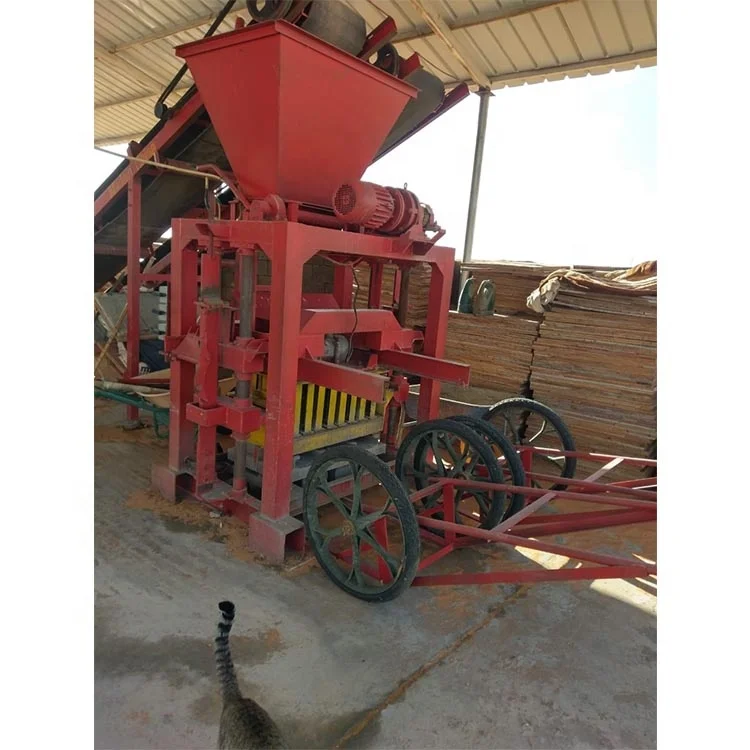
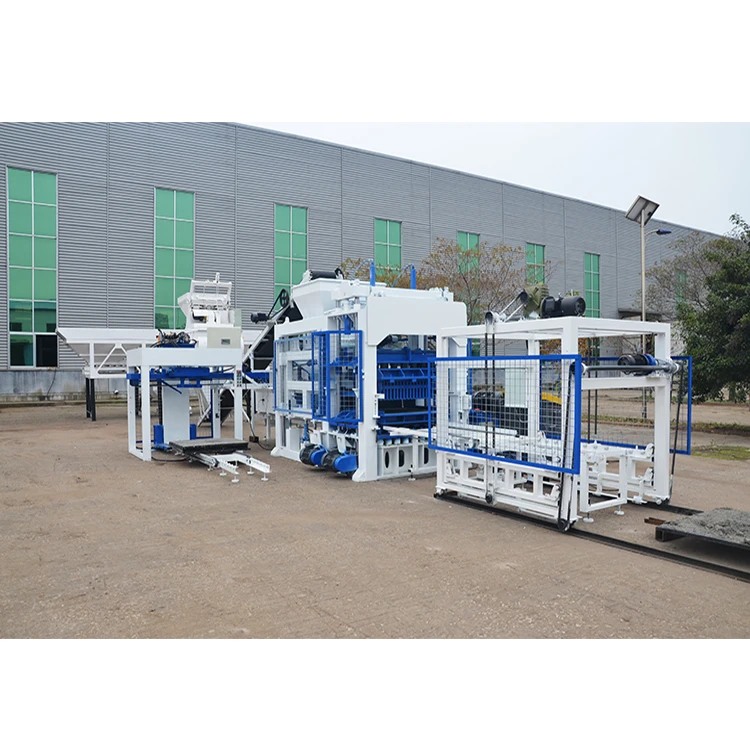 High quality block machine