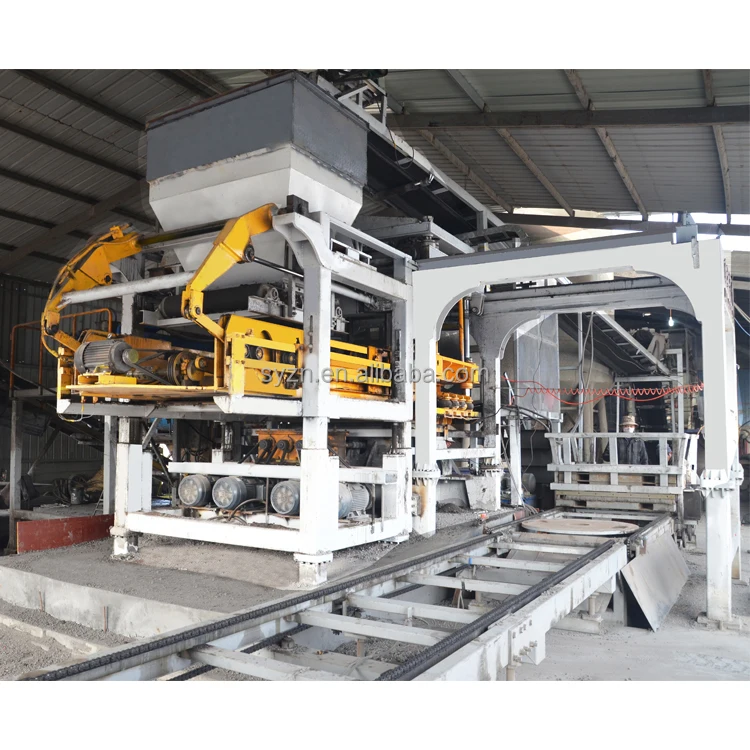
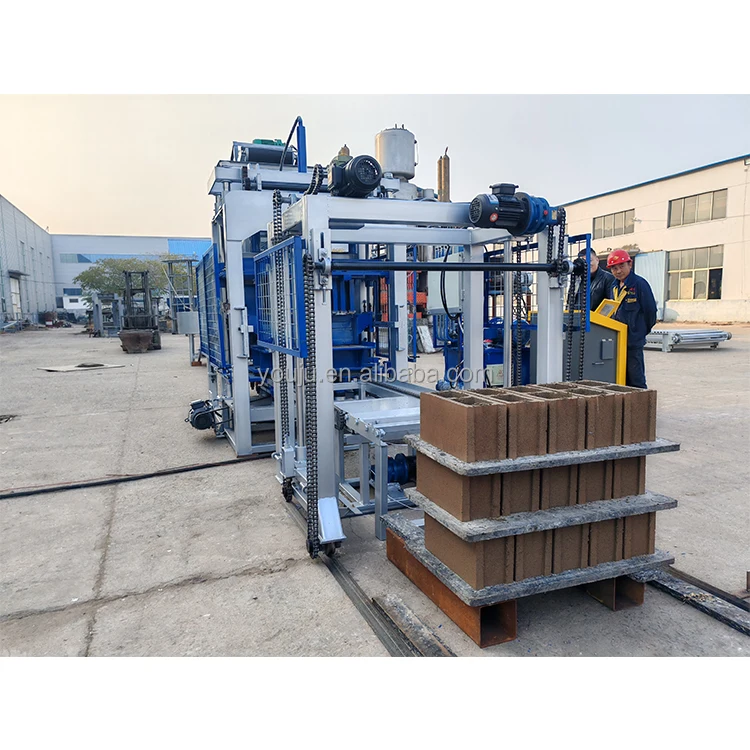
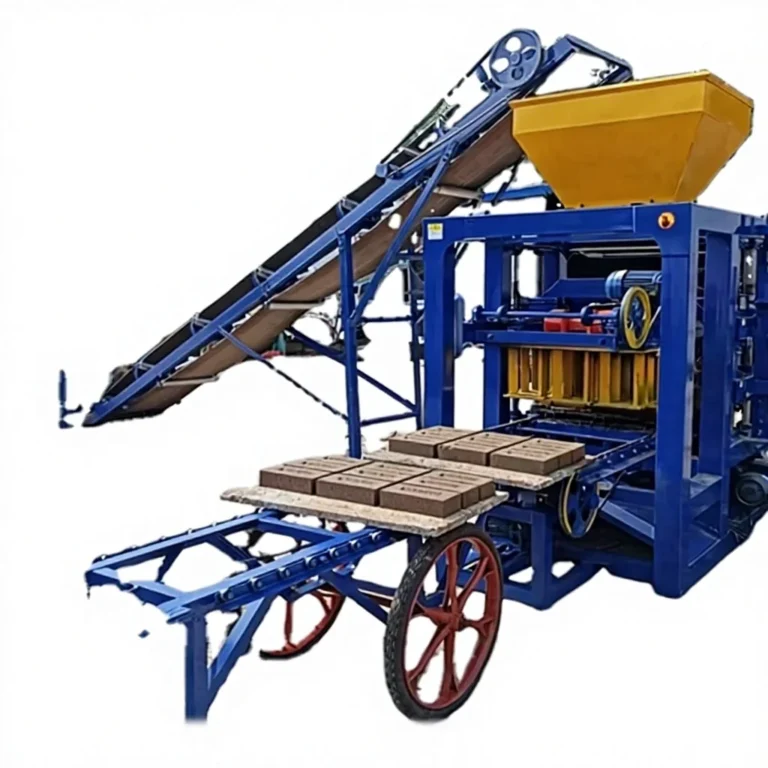
Model-Matched Wear Parts — every QTJ4-35 leaves the factory with vibration bearings and hydraulic seals sized to the actual duty cycle, not a generic spares list.
Technical Specifications
| Parameter |
Value |
| Model |
QTJ4-35 |
| Product Type |
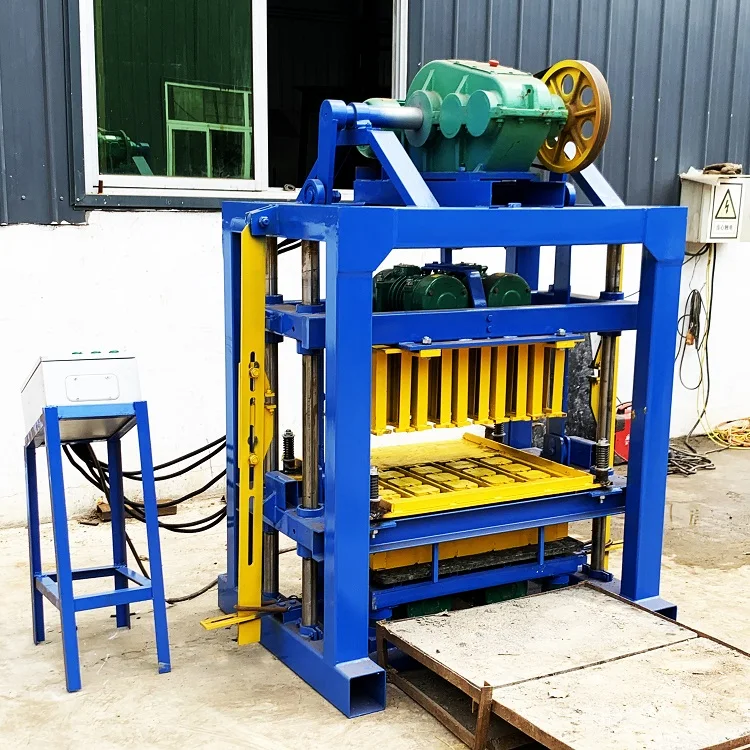
Stationary Concrete Block Making Machine |
| Overall Dimensions (L×W×H) |
2050×1660×1900 mm |
| Total Mass |
1500 kg |
| Rated Vibration Force |
35 kN |
| Main Vibration Form |
Platform Vibration |
| Vibration Frequency |
2800 r/min |
| Pallet Size |
850×450 mm |
| Molding Cycle |
35 s (basis not stated in source — confirm block format / material / thickness) |
| Overall Power |
9.7 kW |
| Demolding Method |
Vibration |
| Recommended Factory Area |
260 m² |
| Raw Materials |
Crushed stone, sand, cement, dust, fly ash, gravel, slag |
| Applied Products |
Concrete hollow blocks, solid blocks, pavers, interlocking blocks, curbstone, colored pavers |
| Automation Level |
Semi-automatic with manual pallet handling |
| Warranty |
1 year (whole machine, excluding spare parts) |
Application Suitability
| Application |
Material or Output |
| Small-scale hollow block production |
Crushed stone, sand, cement and fly ash mixes |
| Solid block manufacturing for masonry |
Gravel, sand and cement blends |
| Interlocking paver runs for walkways |
Colored concrete with fine aggregate |
| Curbstone and kerb production |
Coarse aggregate with standard cement ratios |
| On-site block production for housing projects |
Locally sourced sand, slag and cement |
What "35-Second Cycle" Leaves Out for a Stationary Concrete Block Machine for Sale
The cycle time only holds if the block format, mix design and pallet condition are all within the machine’s tested range.
I have watched buyers in Latin America take delivery of a stationary concrete block machine for sale and run hollow blocks one day, then switch to pavers the next without adjusting the vibration profile. The 35-second figure assumes a specific format and material charge that was never written into the contract. When the aggregate gradation shifts or the pallet surface wears unevenly, the cycle stretches and daily output quietly drops below the plan [NEED_CITE: block cycle time dependency on format and mix].

Where the QTJ4-35 Sits in the Output Tier Ladder
The QTJ4-35 occupies the entry-level stationary tier. It sits above mobile egg-laying machines that need no pallets but produce lower densities, and below fully automatic lines where stacking and cubing run without manual intervention. Buyers choosing this stationary concrete block machine for sale are typically comparing a fixed-plant investment against the flexibility of a mobile unit or the higher capital of an automatic press.
Pallet Size and Curing Area Alignment
An 850×450 mm pallet defines how many blocks cure per square meter and which forklift can handle the loaded racks. If a buyer’s existing curing yard was laid out for a different pallet dimension, either the yard or the handling equipment must change. Confirming pallet compatibility before the machine ships avoids a situation where freshly pressed blocks sit on the press table because there is nowhere to move them [NEED_CITE: pallet size and curing yard planning for block plants].
Vibration Force, Frequency and Block Density
The 35 kN rated vibration force at 2800 r/min delivers platform vibration that consolidates the concrete charge inside the mould. Higher force generally increases block density and compressive strength, but only if the mix has enough fines to fill voids. A lean mix with coarse gravel may not consolidate fully at this frequency, leaving blocks that crumble at the edges during demolding. Matching vibration parameters to the buyer’s actual aggregate and cement ratio is what turns a specification sheet number into a usable block.
The 9.7 kW total power draw keeps the machine within the supply capacity of a small workshop panel. A dedicated circuit with correct breaker sizing prevents nuisance trips when the vibration motor starts under load. Voltage and frequency must be confirmed before production so the motor winding matches the local grid, avoiding overheating on a 60 Hz supply when the motor was wound for 50 Hz.
The Cost of Skipping Configuration Checks
A machine ordered without stating the target block format, local voltage and pallet preference often arrives with the wrong motor winding or an incompatible control language. Commissioning stalls while replacement parts are shipped overseas. I have seen plants sit idle for weeks because a vibration bearing failed and no spare was on site — the quotation listed spares generically, and the specific bearing the QTJ4-35 requires was not among them [NEED_CITE: downtime cost from missing spare parts in block production].
Why Source This Tier from Shiyue
Block machinery is the single product focus, so the QTJ4-35 is specified alongside its mould, pallet and handling equipment as a matched set rather than a standalone press. Configuration is checked against the buyer’s local aggregate and target block format, not pulled from a catalogue default. Mould design covers the formats the buyer’s market actually sells, with room for custom drawings later. Automation level is selectable, so a buyer can start with manual pallet handling and add automatic stacking when volume grows. Installation support includes operator training and a documented wear parts list from day one.
Documentation & Verification
- Line layout drawing stating which block format was assumed for the capacity calculation
- Machine specification sheet covering pallet size, vibration force and total power
- Mould drawing and format list showing every block type included in the quotation
- Voltage, frequency and control language confirmation signed before production
- Factory test record on the buyer’s specified block format before dispatch
- Operation and maintenance manual with a wear parts cross-reference table
Installation, Commissioning & Support
- 260 m² minimum factory area required for the QTJ4-35 with curing space and raw material storage
- Dedicated 9.7 kW circuit with correct breaker rating for vibration motor starting current
- Machine arrives assembled; vibration platform and motor are checked and aligned before crating
- First-day commissioning includes pallet tracking, vibration timing and demolding adjustment
- Operator training covers mould change procedure, daily bearing inspection and pallet handling
- Wear parts list supplied with the machine identifies vibration bearings and hydraulic seals by part number
Before You Request a Quote
Send the block format you plan to produce most often, the daily output target and a sample of your local aggregate. Include your site voltage and frequency so the motor can be wound correctly, and confirm the control panel language your operators need. If you already have curing racks and a forklift, share the pallet dimensions so we can match or adapt.
Frequently Asked Questions
Q: How is the output capacity calculated and which block format does it assume?
A: Output depends on the block format, mix design and curing method. The 35-second molding cycle is a reference figure; actual daily output must be calculated per format. We provide a capacity table listing cycles and pieces per hour for each block type in your quotation, so the number you plan against matches what the press actually produces.
Q: Where does this model sit between mobile, semi-automatic and fully automatic tiers?
A: The QTJ4-35 is a stationary semi-automatic press with manual pallet handling. It produces higher density blocks than mobile egg-layers and requires less capital than a fully automatic line with stacking and cubing. It suits buyers who want a fixed plant but do not yet need full automation.
Q: What plant footprint and factory area do I need for a stationary line at this tier?
A: The recommended area is 260 m², covering the press, raw material storage, pallet circulation and initial curing racks. Your actual layout will depend on ceiling height, forklift access and whether you store finished blocks indoors. We supply a line layout drawing before order confirmation.
Q: Which voltage, frequency and control language options are available for my market?
A: The motor winding and control panel are configured after we confirm your local supply. Options cover common industrial voltages and both 50 Hz and 60 Hz frequencies. Control panel labels and PLC display language are specified before production so operators can read instructions on arrival.
Q: What mould formats are included and how do I add more block types later?
A: The quotation lists every mould included, from hollow blocks to pavers. Additional moulds can be ordered to buyer drawings at any time, and the press accepts them without modification. We keep mould drawings on file so reorder lead times stay short.

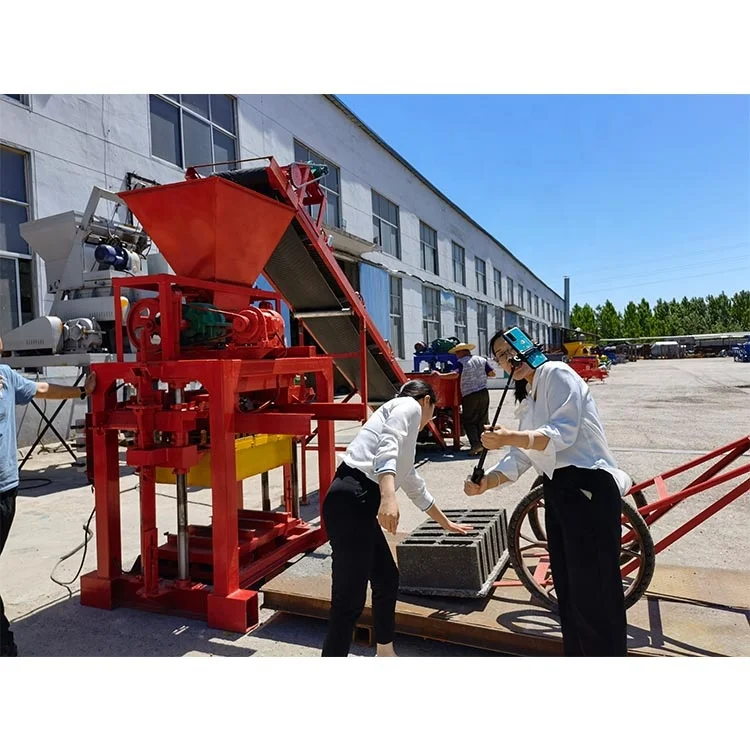
 Stationary block machine