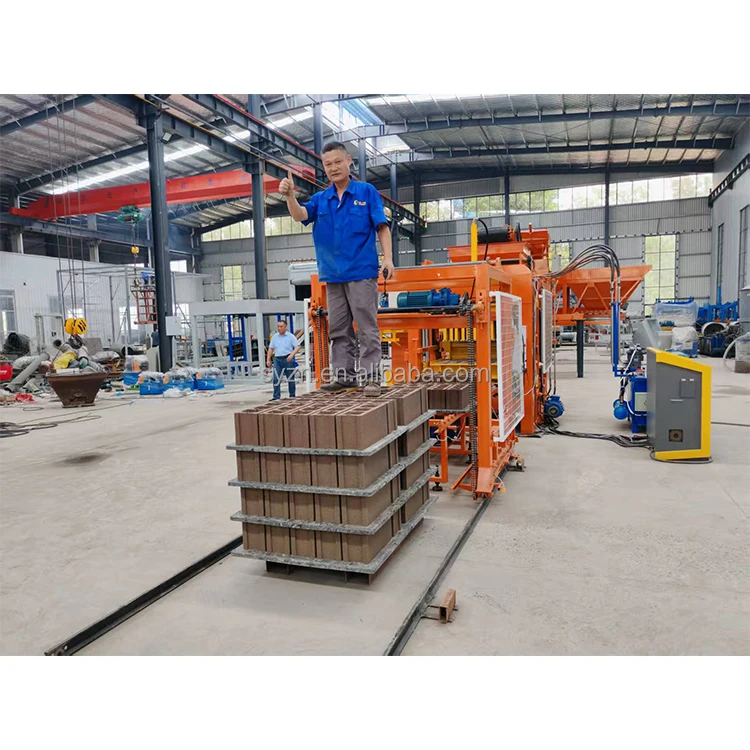
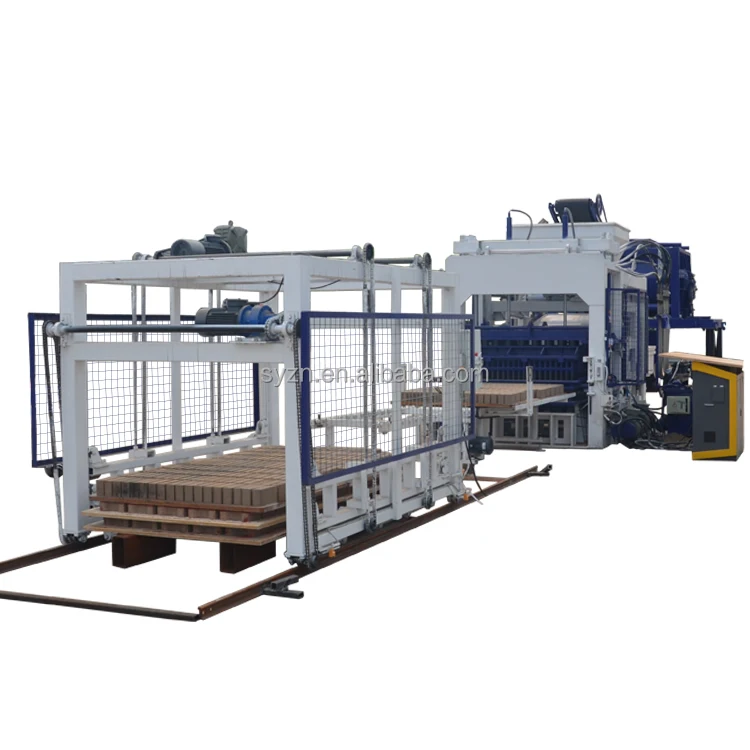
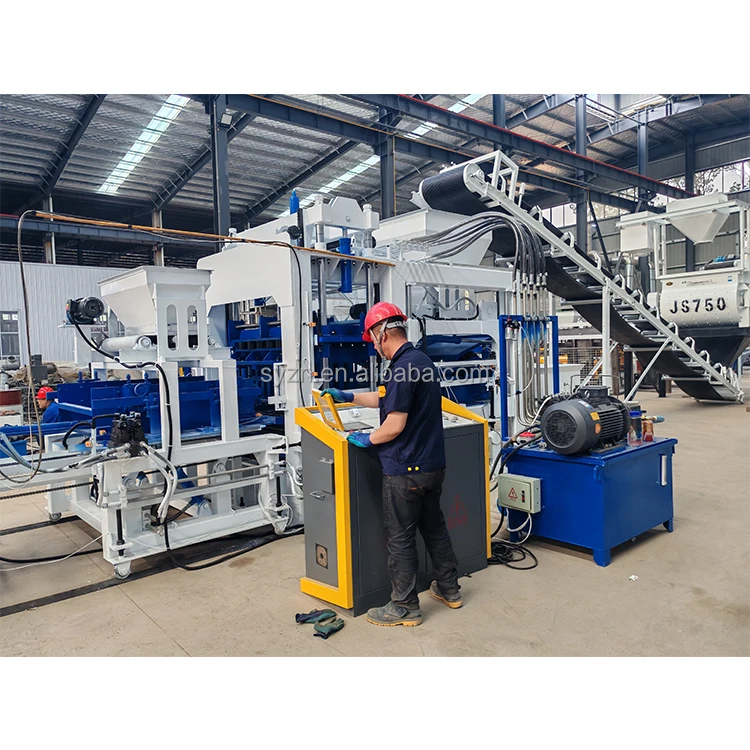
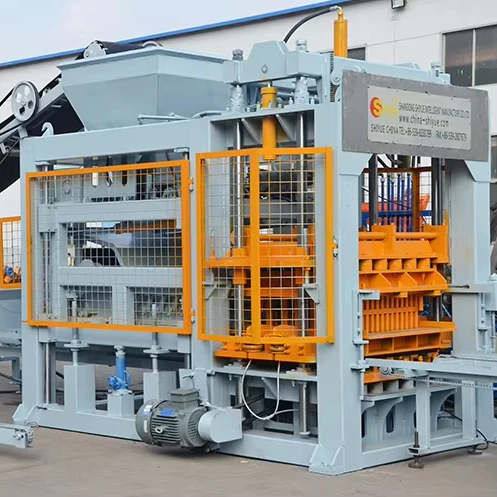
Matched System Configuration — the QTJ4-26 semi-automatic block machine, mixer, mould and pallet are specified together as one line, so capacity figures reflect actual block formats rather than isolated press cycles.
Technical Specifications
| Parameter |
Value |
| Product Type |
Semi-Automatic Concrete Block Making Machine |
| Model |
QTJ4-26 |
| Overall Dimensions |
2060×1730×2580 mm |
| Total Weight |
1800 kg |
| Molding Cycle |
26 s |
| Vibration Frequency |
4200 r/min |
| Exciting Force |
35.5 kN |
| Rated Power |
11.95 kW |
| Mixer Model |
JQ350 |
| Pallet Size |
850×450×20 mm |
| Guide System |
Four guide pillars |
| Mould Movement |
Automatic |
| Vibration Type |
Dual vibrating motors under mould, direct vertical vibration with upper mould pressing |
| Applied Products |
Hollow block (8 inch, 6 inch), solid brick |
| Output Capacity |
480 pcs/h (based on 390×190×190 mm hollow block, 4 pcs/mould) |
| Output Capacity |
600 pcs/h (based on 400×150×200 mm hollow block, 5 pcs/mould) |
| Output Capacity |
2100 pcs/h (based on 240×115×53 mm solid brick, 18 pcs/mould) |
| Automation Level |
Semi-automatic |
| Hydraulic Pressure |
(basis to be confirmed) |
| Mould Change Time |
(basis to be confirmed) |
| Voltage & Frequency |
(basis to be confirmed) |
| Control System |
(basis to be confirmed) |
Application Suitability
| Application |
Material or Output |
| Small-scale hollow block plant |
Crushed stones, sand, cement, fly ash producing 8-inch and 6-inch hollow blocks |
| On-site contractor production |
Local aggregate and cement for solid brick and hollow block formats at project locations |
| Starter block workshop |
Standard masonry products with semi-automatic operation and manual pallet handling |
| Distributor format expansion |
Adding solid brick (240×115×53 mm) and hollow block lines to existing building material inventory |
What "480 Pieces per Hour" Actually Means for Your Plant
Capacity figures are only honest when tied to a named block format, mould cavity count and cycle time.
Quoting a semi-automatic block machine manufacturer output without stating the assumed block size leaves buyers planning shifts around numbers that never materialize on the factory floor. A machine cycling every 26 seconds produces a very different daily total when the mould holds four 8-inch hollow blocks compared to eighteen solid bricks. I have walked through plants where the owner purchased based on a single headline capacity, only to discover the format their market actually demanded ran at less than half that rate [NEED_CITE: common block machine capacity misrepresentation in export quotations]. The QTJ4-26 output figures above are each calculated from a specific mould configuration and the 26-second cycle, so you can match the number to the product your customers buy.

Where the QTJ4-26 Sits in the Full Machine Range
The QTJ4-26 occupies the entry tier for buyers who need automatic mould movement but are not yet ready to invest in fully automatic stacking and cubing. The four guide pillars and automatic mould travel remove the heaviest manual handling steps while keeping the capital outlay within reach of a first-time plant owner. This semi-automatic block machine manufacturer configuration leaves a clear upgrade path: when volume justifies it, the same pallet size and block formats carry over to higher-tier automatic lines without re-tooling the curing area or replacing the forklift fleet.
Positioning the Semi-Automatic Investment
Choosing semi-automatic over fully automatic is not simply a cost decision — it determines how many operators the line requires and what skills they need. With the QTJ4-26, the mould moves automatically on the guide pillars, but pallet feeding and green block handling remain manual tasks. This suits workshops where labour is available and the daily target does not demand continuous uninterrupted cycling [NEED_CITE: labour availability and automation level selection in emerging markets]. Buyers planning to scale later benefit from starting here, because the pallet specification and mould formats remain compatible with future automatic equipment from the same range.
Vibration Force, Cycle Time and Block Density
The 35.5 kN exciting force delivered by dual vibrating motors at 4200 r/min works in combination with upper mould pressing to compact the concrete mix during the 26-second cycle. For hollow blocks, this direct vertical vibration must be sufficient to consolidate crushed stone and fly ash around the mould core without causing segregation. The 850×450 mm pallet provides a rigid base that transfers vibration energy efficiently, and its dimensions align with standard curing rack widths so pallets move from press to curing area without re-stacking. If your local aggregate is lighter — such as volcanic ash or expanded clay — the vibration force requirement changes, and that adjustment must happen before the machine ships, not after commissioning.
The Cost of Skipping the Pallet and Mixer Match
Ordering the press alone and sourcing pallets and mixers separately introduces mismatches that surface during the first production week. A pallet that is too flexible absorbs vibration energy, producing blocks with inconsistent density across the same cycle. A mixer with insufficient capacity forces the press to idle between batches, and the quoted cycle time becomes irrelevant because the line waits for material [NEED_CITE: block production line bottleneck analysis from mismatched equipment]. The QTJ4-26 quotation includes the JQ350 mixer and 850×450×20 mm pallet specification so these interfaces are resolved before production begins.
Why Source This Range Here
Block machinery is the single focus of Shandong Shiyue, so the QTJ4-26 press, mould, pallet and JQ350 mixer are engineered as one system rather than assembled from unrelated suppliers. Machine configuration is set against your actual mix design and local aggregate, not a catalogue default that assumes materials you cannot source. Mould design covers the hollow block and solid brick formats your market sells, with custom drawings available when standard sizes do not match local building codes. Automation level is selectable within the range, meaning a buyer can commission the QTJ4-26 as semi-automatic today and move to a higher tier without changing pallet size or curing infrastructure. Installation support includes operator training at your site, and mould and wear parts supply continues after commissioning.
Documentation & Verification
- Line layout drawing showing QTJ4-26 footprint with JQ350 mixer placement and pallet flow
- Capacity calculation sheet stating block format, mould cavity count and cycle time for each output figure
- Mould drawing and format list confirming included hollow block and solid brick sizes
- Pallet specification sheet matched to your curing rack dimensions and forklift capacity
- Voltage and control language confirmation form signed before production release
- Factory test record on your specified block format before container loading
Installation, Commissioning & Support
- Foundation plan for 2060×1730 mm footprint with vibration isolation requirements for the 1800 kg operating weight
- Electrical supply specification confirming rated power 11.95 kW circuit and voltage before motor connection
- Machine arrives partially assembled; guide pillars and vibration motors fitted, mould installed on-site
- First-run commissioning includes cycle time verification at 26 seconds on your chosen block format
- Operator training covers mould change procedure, pallet handling rhythm and daily lubrication points
- Wear parts list identifies vibration motor bearings and guide pillar bushes with replacement intervals
What to Include in Your Inquiry
Provide the specific hollow block or solid brick dimensions your market requires, along with the daily output target and the number of operating shifts you plan to run. Share your local aggregate type — whether crushed limestone, river sand, fly ash or volcanic material — because this determines the vibration force setting and mixer configuration. Confirm your site voltage and frequency, the language your operators will use on the control interface, and whether you already have curing racks and forklifts that the 850×450 mm pallet must fit.
Frequently Asked Questions
Q: How is output capacity calculated and which block format does each figure assume?
A: Each capacity figure for the QTJ4-26 is calculated from a specific mould cavity count and the 26-second molding cycle. For example, 480 pieces per hour assumes a 4-cavity mould producing 390×190×190 mm hollow blocks. When you change to a different format, the cycle time remains constant but the pieces per cycle change, so the hourly total shifts accordingly. We state the assumed format with every output number.
Q: What does semi-automatic mean for daily operation?
A: On the QTJ4-26, mould movement along the four guide pillars is automatic, and the vibration and pressing cycle runs without manual intervention. The operator manually places empty pallets, removes loaded pallets with green blocks, and handles stacking. This keeps the machine investment lower than a fully automatic line while removing the heaviest physical task from the operator.
Q: Which mould formats are available and can I order custom moulds later?
A: Standard moulds cover 8-inch and 6-inch hollow blocks plus 240×115×53 mm solid bricks. Custom moulds can be designed to your drawings for interlocking pavers, kerbstones or non-standard block sizes. The mould mounting system on the QTJ4-26 accepts additional formats without modifying the press frame or vibration assembly.
Q: How does the QTJ4-26 compare to the next tier in the full machine range?
A: The next tier adds automatic pallet feeding, stacking and cubing, which removes manual pallet handling entirely and increases continuous cycling capability. The QTJ4-26 uses the same pallet size and compatible mould formats, so a future upgrade does not require replacing your curing racks or re-designing the plant layout. The choice depends on your daily volume target and available labour.

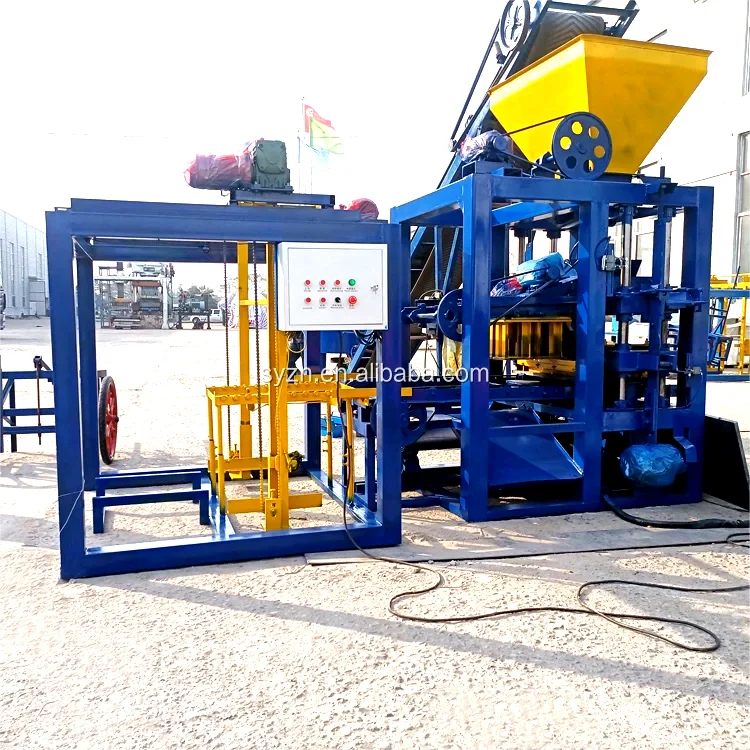
 High quality block machine