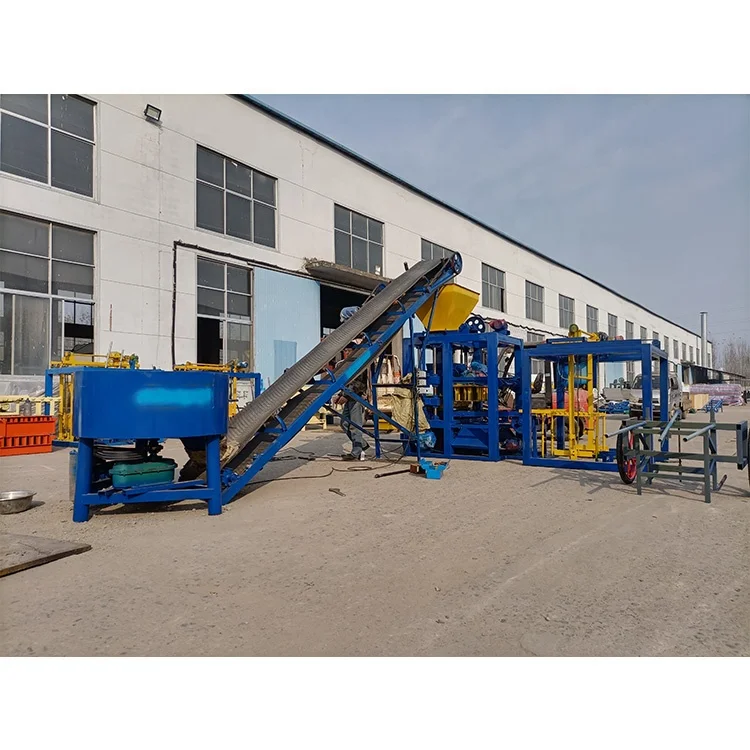
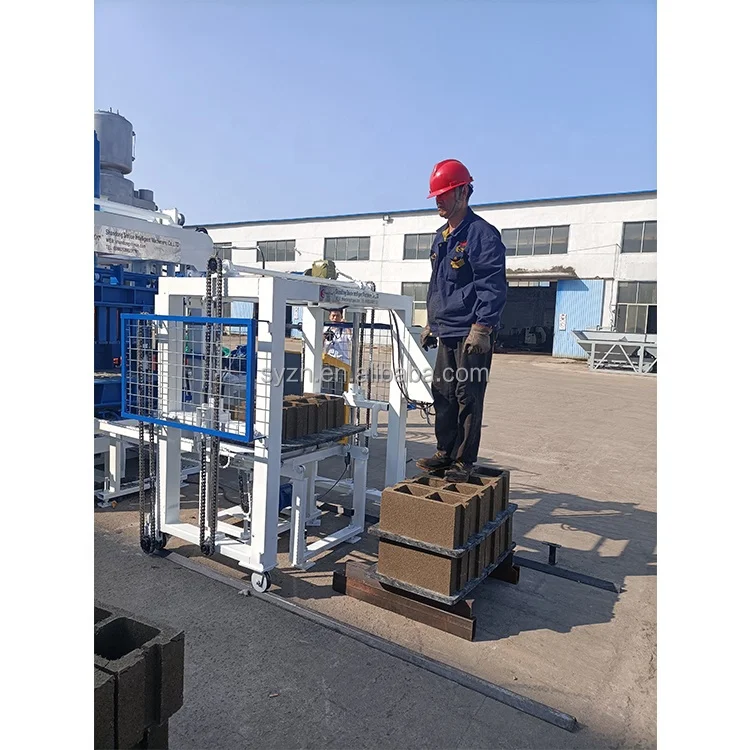
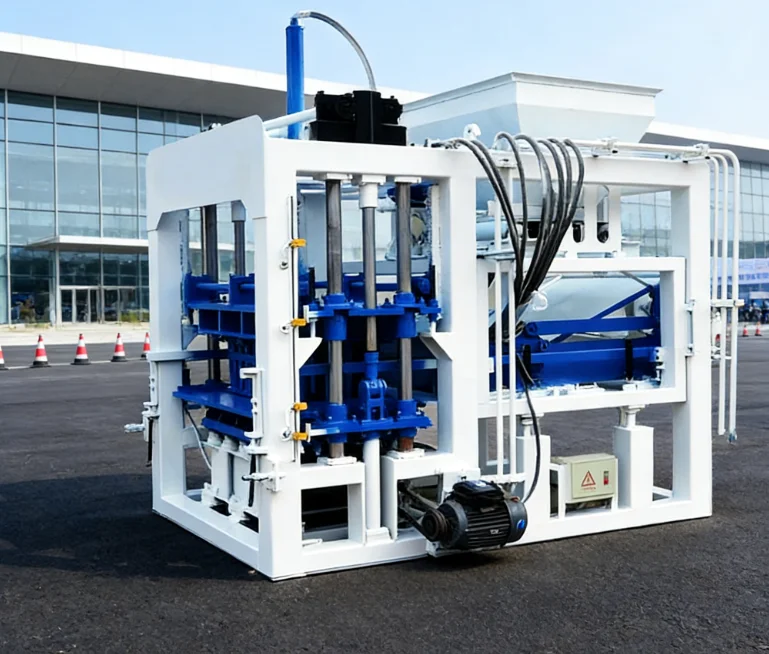
Matched System Design — the QTJ4-26 semi-automatic block machine ships with mixer, conveyor, pallet and optional stacker specified together so cycle times align across every station.
Technical Specifications
| Parameter |
Value |
| Model |
QTJ4-26 |
| Product Type |
Semi-Automatic Concrete Block Making Machine |
| Molding Type |
Platform Vibration |
| Overall Dimensions (L×W×H) |
3600mm × 1700mm × 2560mm (working state) |
| Total Mass |
1750kg |
| Pallet Size |
850mm × 450mm |
| Overall Power |
14.25kW |
| Mould Format — Hollow Block |
390mm × 190mm × 190mm (4 pcs/mould) |
| Mould Format — Solid Brick |
240mm × 115mm × 53mm (21 pcs/mould) |
| Vibration System |
Lower platform vibration (2 × 3kW motors) + Upper vibration (1.5kW attached device) |
| Elevating System |
Cone-shape motor with JZQ250 speed reducer, V-belt drive |
| Delivery Device |
Cycloidal pin wheel speed reducer, chain and V-belt drive |
| Machine Frame |
Dragon gate style, super steel construction, four wear-resisting vertical shafts |
| Automation Level |
Semi-automatic (mechanical and electronic combined control) |
| Supporting Equipment (basic) |
JQ350 pan mixer, 6m belt conveyor, trolley |
| Supporting Equipment (optional) |
Auto stacker (3–6 layers depending on block height) |
| Output Capacity |
basis to be confirmed with target block format and shift hours |
| Hydraulic Pressure |
Not applicable — mechanical vibration type |
Application Suitability
| Application |
Material or Output |
| Small-scale hollow block plant |
Standard 390×190×190mm hollow blocks from crushed stone, sand and cement |
| On-site contractor production |
Solid bricks and hollow blocks using locally sourced aggregate |
| First block plant for entrepreneurs |
Standard formats with low initial investment and compact footprint |
| Building material distributor |
Adding 240×115×53mm solid bricks to an existing product catalogue |
What "Cycles per Hour" Leaves Out When Sizing a Semi-Automatic Block Machine Manufacturer
Capacity is meaningless unless it names the block format it assumes.
I have seen buyers compare two quotations side by side, both claiming similar hourly figures, only to discover one figure was based on a solid brick mould producing 21 pieces per cycle while the other was based on a hollow block mould producing 4. The semi-automatic block machine manufacturer that quotes honestly will always pair the number with the format, shift length and curing cycle. Without that context, daily output is guesswork [NEED_CITE: block output calculation methods by format and shift pattern].

Where the QTJ4-26 Sits in the Full Machine Range
The Shiyue lineup runs from mobile egg-laying units through semi-automatic stationary presses like the QTJ4-26 to high-capacity fully automatic lines. This model occupies the entry-to-mid tier: platform vibration, mechanical-electronic control, and a basic material handling set that keeps investment manageable while still delivering a fixed-plant workflow. Buyers outgrowing mobile machines but not yet ready for full automation typically land here.
Matching the Machine Tier to Your Project Timeline
A stationary press demands a prepared foundation, curing yard and power supply, so it suits buyers who have a confirmed site and a production window of several months or more. The QTJ4-26 footprint is compact enough for a small yard yet structured so the buyer can add an auto stacker later without replacing the press itself. This upgrade path matters when a contractor’s first project ends and a second, larger contract begins [NEED_CITE: typical block plant expansion stages in developing markets].
Reading the Specs That Actually Shape Daily Output
The dual 3kW lower vibration motors plus the 1.5kW upper device determine compaction density — weaker vibration means blocks crack during handling before curing finishes. The 850×450mm pallet size sets how many blocks cure per square meter of yard; order pallets that match your forklift fork spacing and yard racking, not the other way around. The dragon gate frame with four wear-resisting vertical shafts keeps mould alignment stable over extended runs, reducing scrap from dimension drift. Finally, the 14.25kW total power draw tells your electrician whether the existing site transformer can absorb the starting current of three vibration motors simultaneously.
The Hidden Cost of Skipping Configuration Checks
Buyers who confirm nothing beyond price often discover, after arrival, that the control panel displays in a language the operators cannot read, or that the local grid runs at a frequency the motors were not wound for. Commissioning stalls while replacement contactors are shipped overseas. Pallet size mismatches force the curing crew to double-handle every board because the forklift cannot stack them. These are not warranty issues — they are specification gaps that a semi-automatic block machine manufacturer should close before production starts [NEED_CITE: common commissioning delays caused by unconfirmed voltage and language settings].
Why Source This Tier from Shiyue
Block machinery is the single focus here, so the QTJ4-26 is not bundled from unrelated suppliers — the press, mixer, conveyor and pallets are specified as one matched set. Configuration starts from your actual mix design and local aggregate, not a catalogue default. Mould design covers the formats your market sells, with custom drawings available when standard formats do not match. Automation level is selectable: start semi-automatic and add a stacker when volume justifies it. Installation support includes operator training on your specific mould set, and wear parts lists ship with the machine so the first replacement order is already prepared.
Documentation & Verification
- Capacity calculation sheet stating output per block format, not a single blanket figure
- Mould drawing and format list confirming cavity count for each product
- Pallet specification matched to your curing yard and forklift dimensions
- Voltage, frequency and control language confirmation signed before production
- Factory test record run on your specified mould before container loading
- Hydraulic and electrical schematic (where applicable) for on-site troubleshooting
Installation, Commissioning & Support
- Foundation pad must level the 3600×1700mm working footprint and anchor the four vertical shafts
- Dedicated circuit sized for the 14.25kW total load plus starting surge of three vibration motors
- Machine ships partially assembled; frame, vibration table and elevating system bolt on site
- First run sets vibration duration and conveyor timing to your mix consistency
- Operator training covers mould change procedure and daily shaft lubrication schedule
- Wear parts list identifies shafts, V-belts and vibration motor bearings for first reorder
What to Include with Your Inquiry
Send the target block format, the daily output you need, and a sample or lab report of your local aggregate so the vibration force can be matched to your actual mix. Confirm your site voltage, frequency and preferred control panel language to prevent commissioning delays. State your available curing yard area and forklift type so the 850×450mm pallet is verified against your handling setup.
Frequently Asked Questions
Q: How is output capacity calculated and which block format does it assume?
A: Capacity depends on the mould fitted — the QTJ4-26 holds 4 hollow blocks or 21 solid bricks per cycle. A realistic daily figure also requires shift length, curing cycle and operator changeover time. Request a format-by-format calculation sheet rather than accepting a single unqualified number.
Q: What voltage and frequency options are available, and is the control panel language configurable?
A: Voltage and frequency must be confirmed before production so motors and control components match your local grid. The control display language is also set during build. State your site supply details and preferred language at inquiry stage.
Q: Where does the QTJ4-26 sit compared to mobile and fully automatic machines?
A: It occupies the semi-automatic stationary tier — higher output and better consistency than a mobile egg-layer, lower investment and smaller footprint than a fully automatic line. Buyers who have outgrown mobile production but are not yet ready for full automation typically select this tier.
Q: What supporting equipment is included and what is optional?
A: The basic set includes a JQ350 pan mixer, 6m belt conveyor and trolley. An auto stacker capable of 3 to 6 layers depending on block height is available as an option. Confirm which items your quotation covers before production starts.
Q: What plant footprint and site preparation does the QTJ4-26 require?
A: The working envelope is 3600×1700mm, but you must also allow space for the mixer, conveyor, pallet return path and curing yard. A level concrete pad, anchored vertical shafts and a dedicated electrical circuit rated for 14.25kW plus starting surge are the minimum requirements.

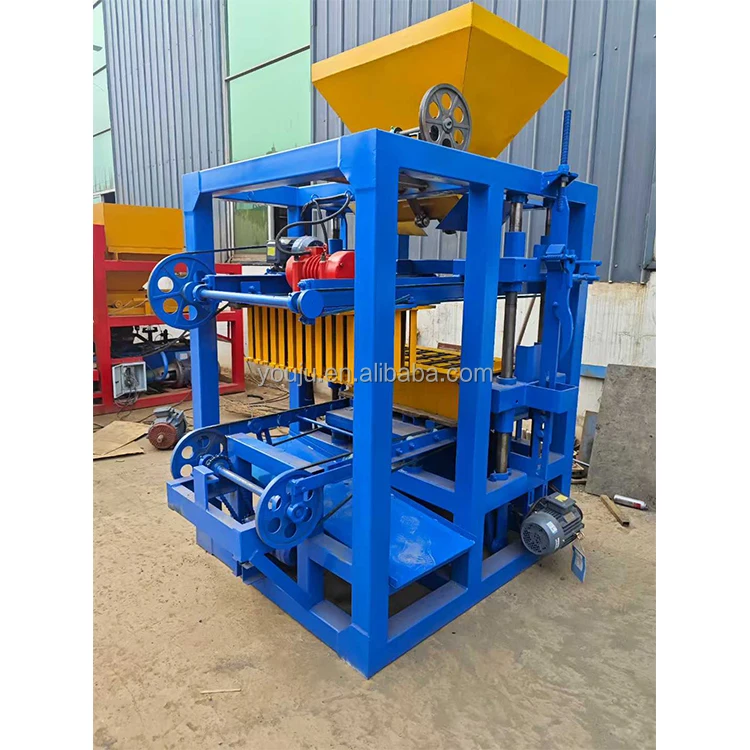
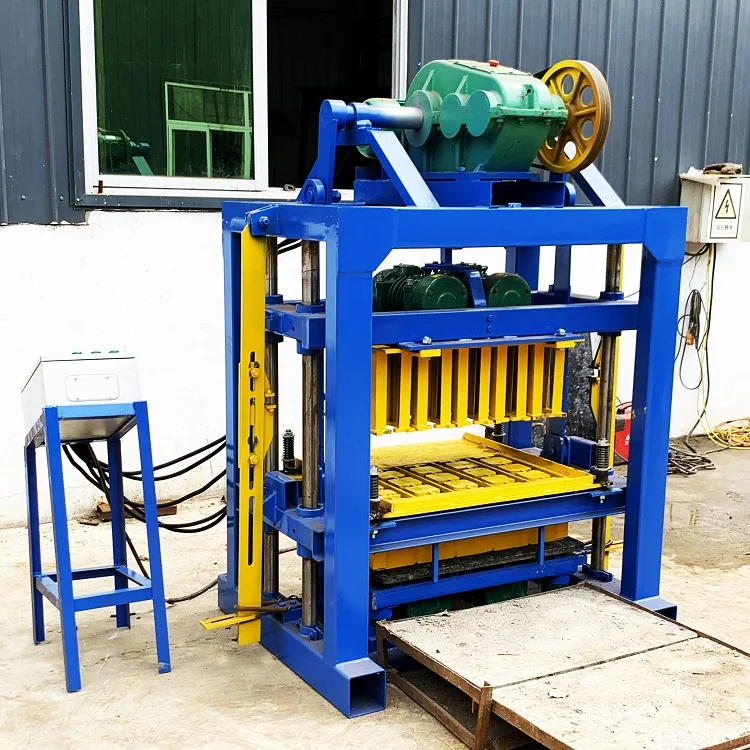 Stationary block machine