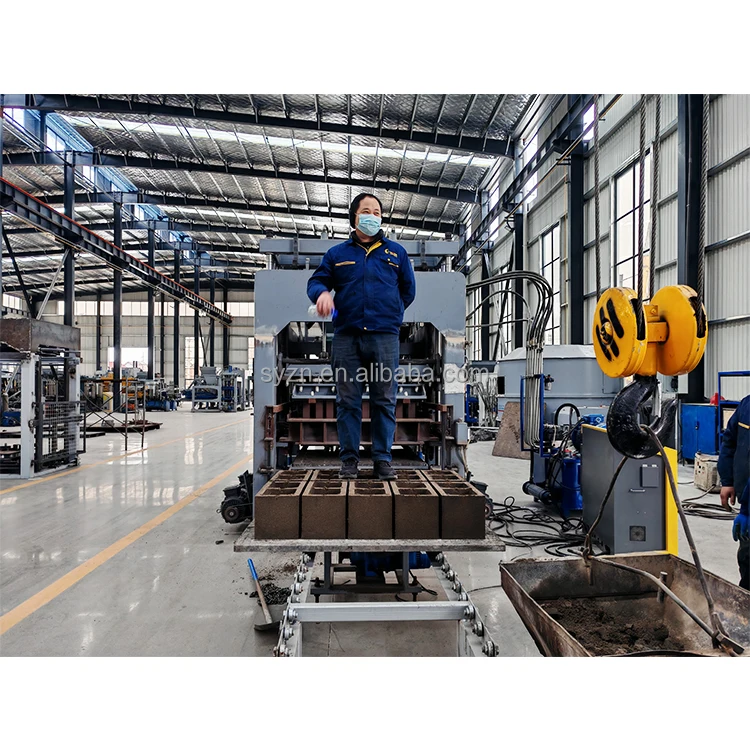
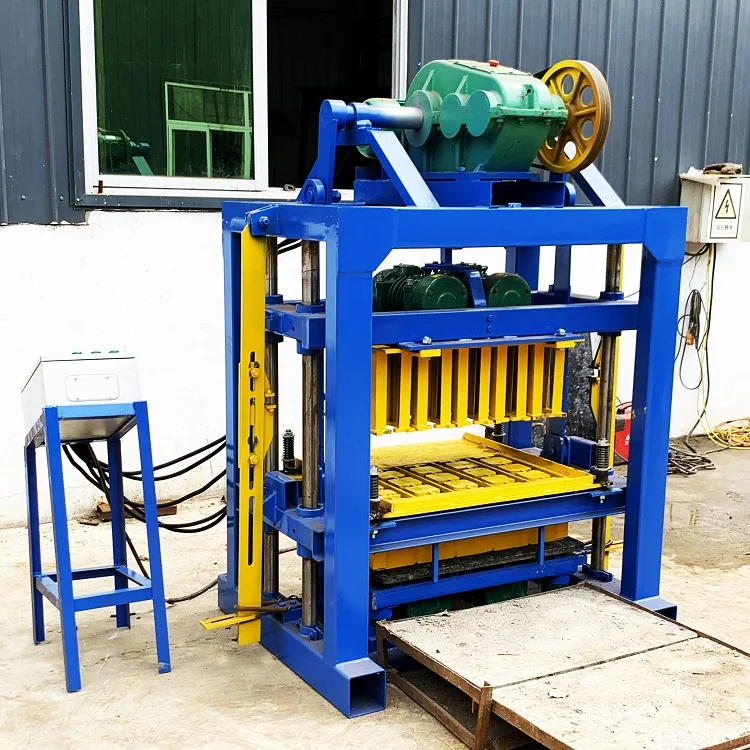
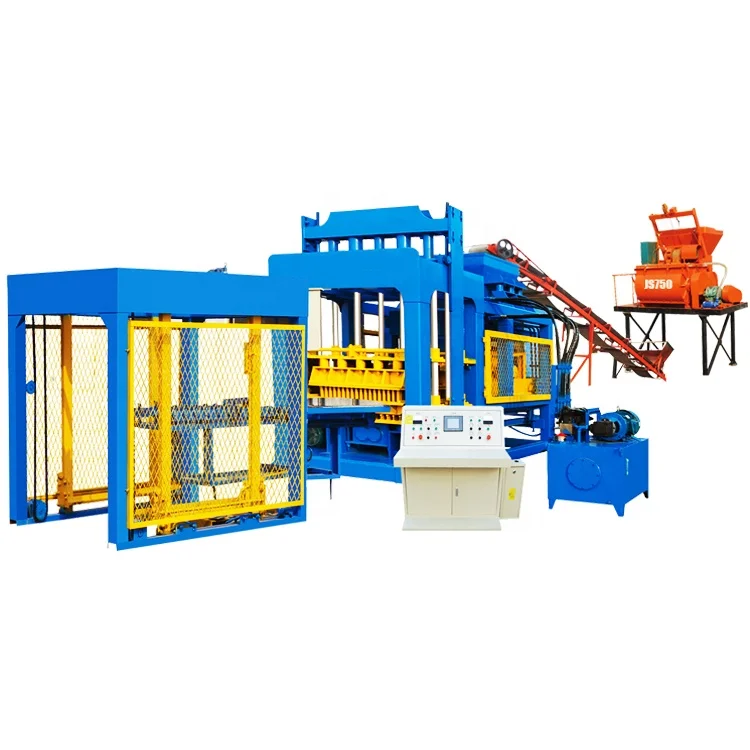
Matched System Configuration — Host press, block mould, pallet, and mixer are specified as one integrated unit based on the buyer’s local aggregate and target block format, not sourced from separate suppliers.
Technical Specifications
| Parameter |
Value |
| Model |
QTJ4-25 |
| Product Type |
Stationary Block Making Machine |
| Rated Power |
17.9 kW |
| Overall Dimensions (L×W×H) |
6400 × 1500 × 2700 mm |
| Net Weight |
2500 kg |
| Molding Cycle |
25 s |
| Output Capacity |
960 pcs/h, 7680 pcs/day (basis: 400×200×200 mm hollow block, 4 pcs/mould) |
| Vibration Force |
60 kN |
| Vibration Frequency |
2800 r/min |
| Pallet Size |
850 × 550 × 20 mm |
| Automation Level |
Semi-automatic |
| Mould Format |
Hollow, solid, paver (multiple sizes, e.g., 8/6/5/4 inch) |
| Configuration |
Host machine 1 set, block mould 1 set, JQ350 mixer |
| Stacking Method |
Manual (pallet moved by trolley) |
| Voltage & Frequency |
Available on request (basis to be confirmed) |
| Control System |
Available on request (basis to be confirmed) |
| Hydraulic Pressure |
Available on request (basis to be confirmed) |
Application Suitability
| Application |
Material or Output |
| Hollow block production for building walls |
Crushed stone, river sand, cement, fly ash |
| Solid block production for load-bearing structures |
Gravel aggregate, sand, cement mix |
| Paving block manufacturing for walkways and yards |
Fine aggregate, cement, pigment (optional) |
| On-site block production for housing projects |
Locally sourced sand, stone dust, cement |
| First plant setup by entrepreneurs |
Standard concrete mix with regional aggregate |
What the Quoted Capacity Figure Actually Means for Your Daily Output
Capacity is meaningless without the block format attached to it.
I once configured a stationary block making machine for a buyer who had been quoted an impressive hourly cycle count from another supplier. When the machine arrived and ran his actual volcanic aggregate instead of the standard river sand used in factory testing, the vibration force and pressure were mismatched. A full day’s output failed strength testing and had to be scrapped. That is the kind of gap that opens up when a capacity number floats without a format anchor. The QTJ4-25 output is stated explicitly against the 400×200×200 mm hollow block — four pieces per mould, twenty-five second cycle — so a buyer can calculate realistic daily volume before committing. [NEED_CITE: aggregate variation effects on block density and compressive strength]

Where the QTJ4-25 Sits Across the Output Tiers
The stationary block making machine range spans from small workshop machines to high-capacity fully automatic lines. The QTJ4-25 occupies the semi-automatic, medium-output tier — positioned for buyers who need consistent daily volume without the investment level or plant footprint of a full automatic setup. The host press, JQ350 mixer, and pallet trolley form a complete working cell that fits inside a modest production bay.
Semi-Automatic Means the Operator Controls the Pace
At this tier, pallet movement between the press and the curing area is handled manually via trolley rather than by an automatic conveyor and stacker. This keeps the initial investment lower and the plant layout simpler, while still leaving a clear upgrade path. A buyer can start with the semi-automatic configuration and later add automatic pallet feeding and stacking as volume grows, without replacing the host press itself. [NEED_CITE: typical automation upgrade paths for stationary block plants]
How Vibration and Pressure Shape Block Density
The QTJ4-25 uses bed mould vertical vibration at 60 kN combined with upper mould compression vibration. These two forces work together: the vibration settles the concrete mix into the mould cavity, while the compression from above consolidates it. If the vibration frequency of 2800 r/min and the hydraulic pressure are not matched to the buyer’s specific mix design — particularly the aggregate size and cement ratio — the resulting blocks can show inconsistent density across a single pallet. That is why factory testing should replicate the buyer’s actual material, not a generic reference mix. The 850×550 mm pallet size is chosen to align with standard curing rack dimensions and the manual trolley used in this tier, so freshly pressed blocks move smoothly from press to curing area without bottlenecks.
The Cost of Ignoring Pallet and Curing Area Compatibility
A pallet size selected without checking the buyer’s existing curing racks and forklift creates problems that only appear after installation. Blocks get stacked on the ground because the pallets do not fit the racks. A forklift designed for a different pallet dimension struggles to move loaded pallets safely. These are not machine faults — they are configuration oversights. When a buyer receives a quotation that does not address pallet material, curing layout, and handling equipment together, the gap gets filled by manual labor and lost floor space on day one. [NEED_CITE: pallet handling inefficiencies in block production plants]
Why Buyers Specify the Full Line Here
Block machinery is the single focus of this operation, so the host press, mould, pallet, and mixer are matched as one system rather than assembled from unrelated suppliers. The machine configuration is set against the buyer’s actual mix design and local aggregate, not pulled from a catalogue default. Mould design covers the formats the buyer’s market actually sells, and custom mould drawings are available for non-standard sizes. The semi-automatic tier allows a buyer to start with manageable investment and add automation later. Installation includes on-site commissioning and operator training so the crew knows the machine before production begins.
Documentation & Verification
- Line layout with capacity calculation stating the 400×200×200 mm hollow block basis
- Machine specification sheet confirming vibration force, pallet size, and rated power
- Mould drawing and format list covering hollow, solid, and paver sizes
- Voltage, frequency, and control language confirmation record before production
- Factory test record on buyer’s target block format before dispatch
- Packing photographs and customs documentation support for export shipment
Installation, Commissioning & Support
- Foundation pad sized to the 6400×1500 mm footprint with level tolerance for stable press operation
- Dedicated power circuit rated for the 17.9 kW load with correct voltage and frequency confirmed before wiring
- Machine shipped in dismantled state with reassembly and alignment completed on site
- First-run parameter setting using buyer’s local aggregate to verify block density and cycle timing
- Operator training covering mould change procedure, daily maintenance, and pallet handling workflow
- Wear parts and mould replacement list supplied for first reorder planning
What to Include in Your Inquiry
To configure the QTJ4-25 correctly, share your target block format and dimensions, the daily output you need, and the raw materials available locally including aggregate type and cement grade. Include your site voltage and frequency, preferred control language, and the curing area layout so pallet size and handling can be matched. If you have existing upstream or downstream equipment, note the model and capacity so the line can be balanced.
Frequently Asked Questions
Q: How is the output capacity verified, and which block format is it based on?
A: The 960 pieces per hour figure is calculated against the 400×200×200 mm hollow block with four pieces per mould and a twenty-five second cycle. If your primary product is a different format, the cycle time and pieces per mould change, and a revised capacity calculation is provided with the proposal.
Q: Where does the QTJ4-25 sit between semi-automatic and fully automatic tiers?
A: It sits in the semi-automatic, medium-output tier. Pallet handling is manual via trolley, and stacking is done by hand. The host press and mould system remain compatible with automatic pallet feeding and stacking upgrades if production volume increases later.
Q: What plant footprint and investment level should a buyer expect at this tier?
A: The host machine measures 6400×1500 mm, and the full working cell including mixer and pallet trolley fits a modest bay. The semi-automatic configuration keeps initial investment lower than a full automatic line while still delivering consistent daily output.
Q: Can the automation level be upgraded from semi-automatic to automatic stacking later?
A: Yes. The host press is designed to accept automatic pallet feeding, stacking, and cubing modules as add-ons. The upgrade path is planned during initial configuration so the press does not need replacement when automation is added.
Q: How is pallet size chosen relative to the curing area and existing forklift on site?
A: The 850×550 mm pallet is selected to match standard curing rack spacing and manual trolley dimensions at this tier. If the buyer has existing racks or a forklift with specific fork dimensions, the pallet specification is adjusted to avoid handling conflicts after installation.

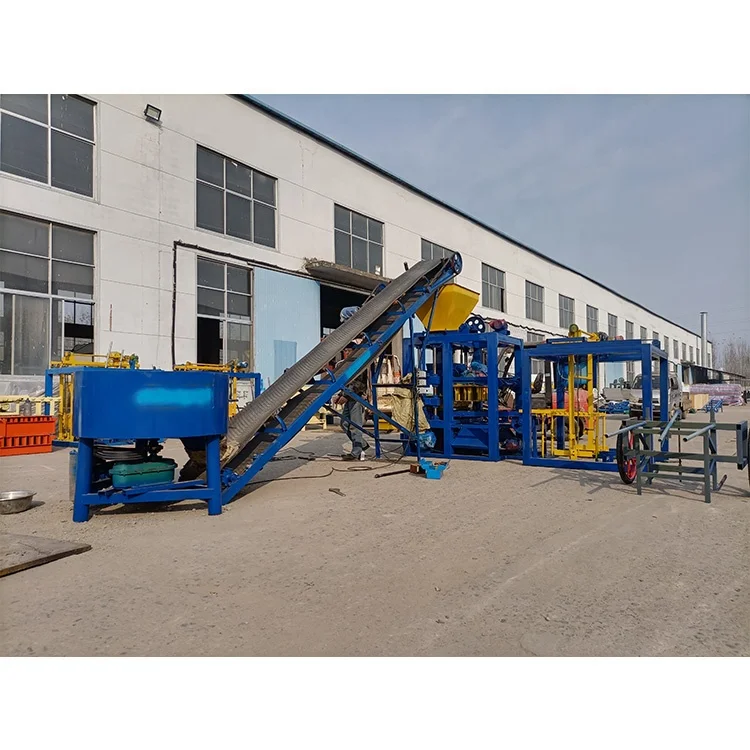
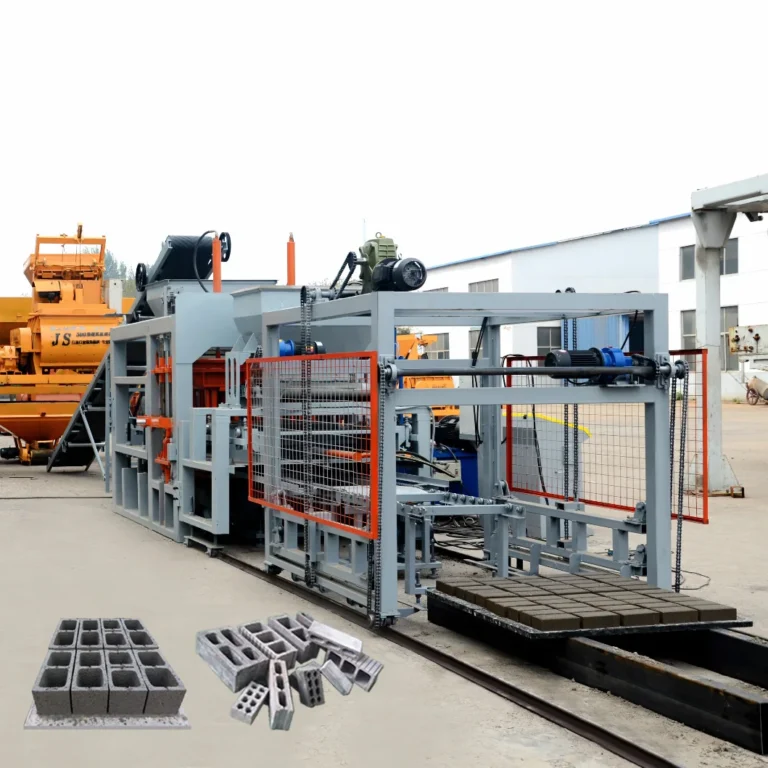 Stationary block machine