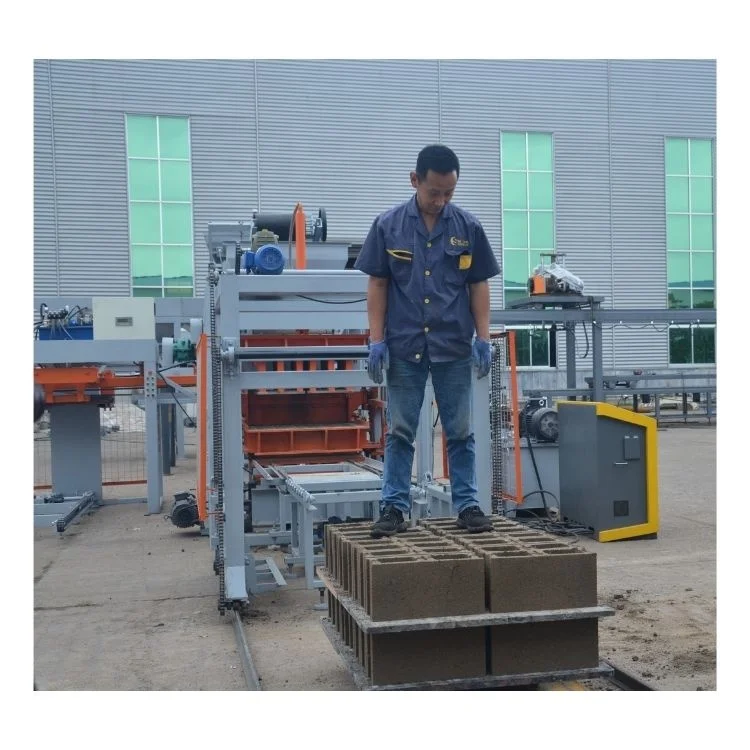
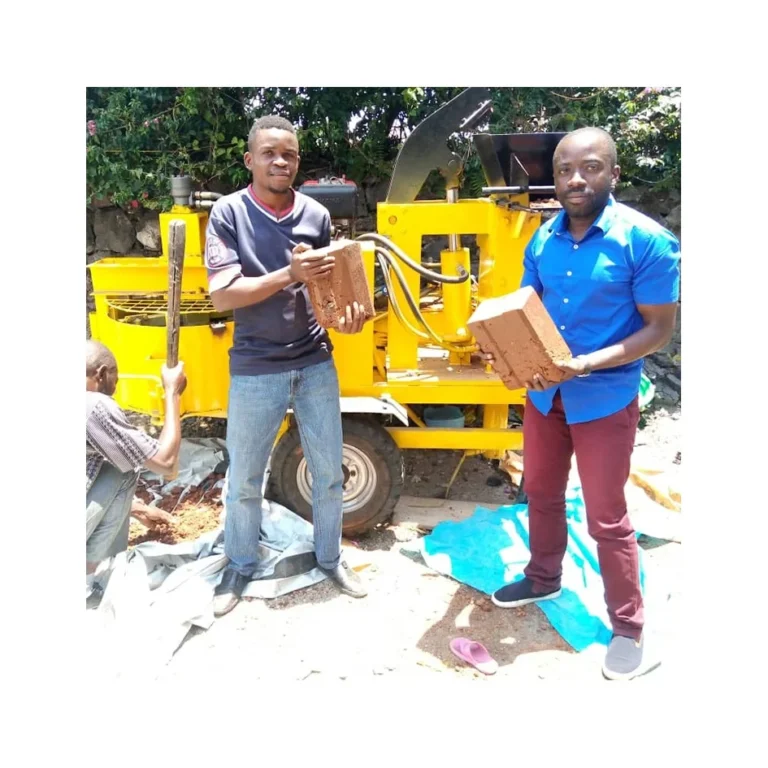
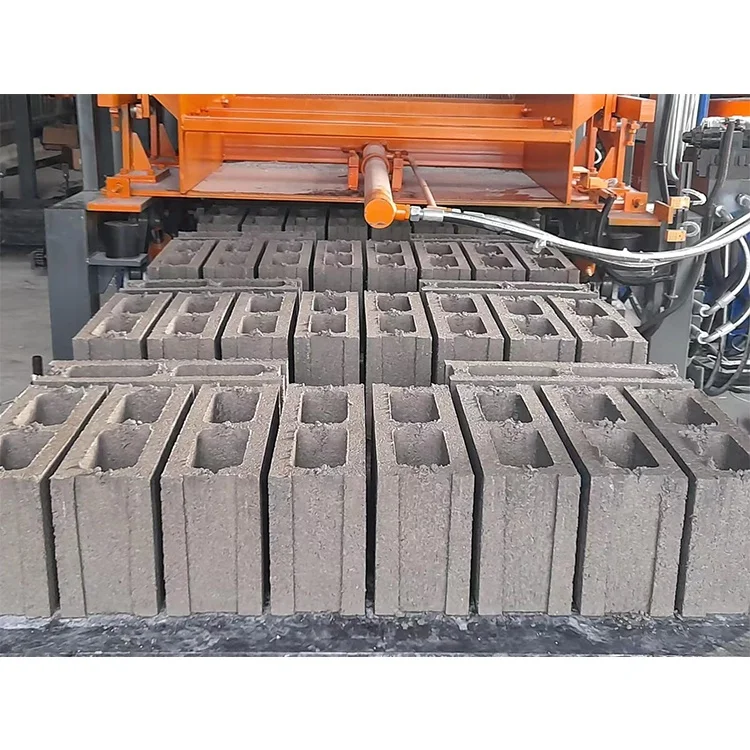
Matched Vibration and Pressure — the QTJ4-25 pairs 45.5 kN platform vibration with 16–21 MPa hydraulic pressure, tuned to your mix design before dispatch so block density holds across every shift.
Technical Specifications
| Parameter |
Value |
| Model |
QTJ4-25 |
| Product Type |
Semi-Automatic Concrete Block Making Machine |
| Overall Dimensions (L×W×H) |
3060 × 1730 × 2580 mm |
| Total Mass |
4 T |
| Rated Pressure |
16–21 MPa |
| Main Vibration Form |
Platform Vibration |
| Vibration Frequency |
4200 r/min |
| Vibration Force |
45.5 kN |
| Pallet Size |
850 × 550 mm |
| Molding Cycle |
25–30 s (basis not stated in source — confirm block format / material / thickness) |
| Overall Power |
14.9 kW |
| Demolding Method |
Vibration |
| Factory Area Required |
200 m² |
| Automation Level |
Semi-automatic |
| Applied Products |
Concrete hollow blocks, solid blocks, pavers, interlocking blocks, curbstone, colored pavers |
| Raw Materials |
Crushed stone, sand, cement, fly ash, gravel, slag, dust |
| Voltage & Frequency |
Configurable to buyer’s grid (confirm before production) |
| Control System |
To be confirmed with buyer |
Application Suitability
| Application |
Material or Output |
| Small to medium block plant startup |
Hollow and solid blocks from locally sourced crushed stone, sand, and cement |
| On-site construction block production |
Solid and hollow blocks produced directly at the building project location |
| Paver and interlocking block addition |
Colored concrete pavers and interlocking formats for landscaping supply |
| Curbstone manufacturing |
Heavy-duty kerbstone from dense aggregate mixes with high cement content |
| Fly ash block production |
Lightweight blocks using fly ash, slag, and cement as primary binders |
Why Quoted Output Figures Rarely Match Reality on Site
A cycle time printed on a brochure means nothing unless you know which block format was loaded when the clock started.
When I spent years commissioning semi-automatic machines across Latin American job sites, the most common complaint was not mechanical failure — it was disappointment. Buyers ordered a semi-automatic block machine for sale based on a headline number, then watched daily throughput drop sharply once their actual hollow block or paver format went into the press. The cycle time shifts depending on block height, cavity count, and how your local sand behaves under vibration [NEED_CITE: block cycle time variation by format and aggregate]. That gap between expectation and output is the single largest source of disputes I have handled after installation.

Where the QTJ4-25 Sits in the Full Range
This model occupies the entry-to-mid tier of the semi-automatic range. It is built for buyers who need dependable daily output without the capital outlay and floor space a fully automatic stacking and cubing line demands. The 200 m² factory area requirement keeps it within reach of a modest workshop footprint. For a first-time plant owner or a contractor producing on a project site, the QTJ4-25 offers a practical starting position with room to add automation stations later.
What Semi-Automatic Means for Your Daily Workflow
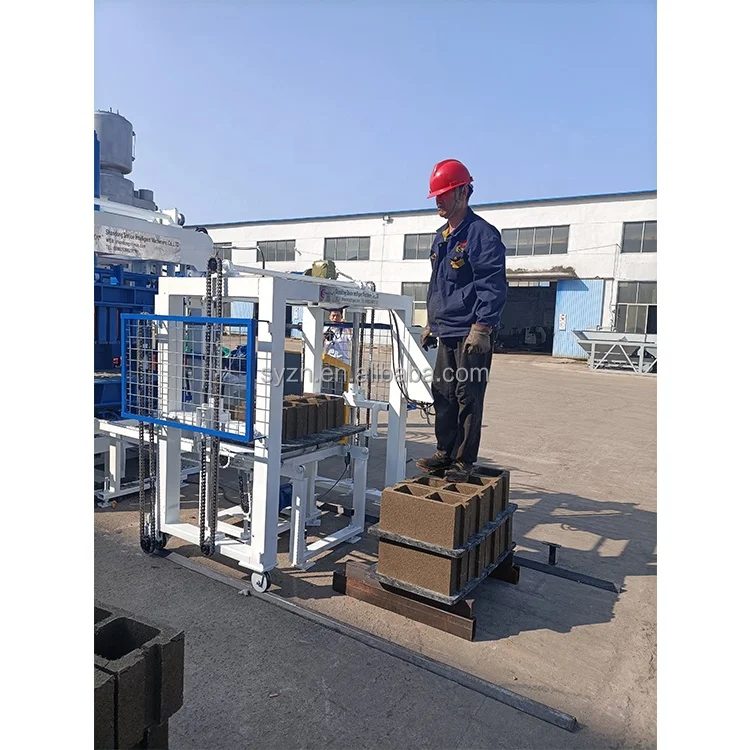
Semi-automatic operation means the press cycle, vibration, and hydraulic pressing run under machine control, while pallet handling and block stacking rely on operators. This keeps the initial investment contained and reduces the electrical and control complexity on site. The trade-off is labour: you need hands at the pallet feed and off-bearing end [NEED_CITE: labour allocation in semi-automatic block plants]. For many buyers in emerging markets, this balance is exactly right — lower upfront cost, simpler maintenance, and a workforce that already knows manual handling.
How Vibration Force and Hydraulic Pressure Work Together
The 4200 r/min platform vibration and 45.5 kN force are not independent numbers — they work as a pair with the 16–21 MPa hydraulic pressure to compact the mix into a dense, consistent block. Vibration settles the aggregate and removes air voids; hydraulic pressure locks the particles into position before the cement begins to set. If the vibration force is too low for a coarse aggregate mix, blocks emerge with weak corners. If pressure is too high for a fine sand mix, the material squeezes out of the mould cavity. Both parameters must match your specific raw material and target block strength, which is why pre-shipment testing with your actual aggregate sample matters far more than catalogue defaults. The 850 × 550 mm pallet size also needs checking against your curing rack dimensions and the forklift you plan to use — a mismatch here slows every downstream handling step.
The Hidden Cost of Skipping Configuration Checks
A semi-automatic block machine for sale at an attractive price can become expensive fast if voltage, frequency, and PLC language are not confirmed before production. I have seen machines sit idle for weeks on a Latin American site because the control panel displayed in a language the operators could not read and the motor was wound for a frequency the local grid did not supply [NEED_CITE: commissioning delays from unconfirmed electrical specifications]. The motor runs, but it runs hot, insulation degrades, and bearing life shortens. Correcting these issues after the machine arrives costs more in downtime and rewinding than a ten-minute email exchange would have cost before the container was sealed.
Why Buyers Source This Range Here
Block machinery is the sole focus of this manufacturing operation, so the QTJ4-25 is specified as part of a matched system — machine, mould, pallet, and handling equipment — rather than assembled from unrelated suppliers. The vibration and hydraulic settings are configured against the buyer’s actual mix design and target block format, not left at a factory default. Mould design covers the formats your market actually buys, and custom mould drawings are available when standard options do not fit. The semi-automatic tier allows a buyer to begin production now and add automatic pallet feeding or stacking later, protecting the initial investment as demand grows.
Documentation & Verification
- Line layout showing QTJ4-25 placement within your 200 m² factory area
- Capacity calculation stating the specific block format assumed for cycle time
- Hydraulic and electrical schematic matching your confirmed voltage and frequency
- Factory test record run on your submitted aggregate sample before dispatch
- Mould drawing and format list confirming every block type your market requires
- Operation and maintenance manual in the control language you select
Installation, Commissioning & Support
- 200 m² minimum workshop area with level concrete floor for the 4 T machine mass
- Dedicated electrical circuit matching confirmed voltage and the 14.9 kW total power draw
- Platform vibration table and hydraulic system calibrated on site to your mix design
- Operator training covering mould change procedure and pallet handling workflow
- Wear parts list covering hydraulic seals, vibration springs, and mould liners
- Scheduled maintenance intervals aligned with semi-automatic operating cycles
What We Need to Move Forward
To prepare a configuration proposal for the QTJ4-25, share your target block formats with dimensions, the daily output you need for each format, and a sample or analysis of your local aggregate and sand. Include your site voltage and frequency, the language your operators need on the control display, and the dimensions of your existing curing area and handling equipment so the 850 × 550 mm pallet can be verified against them.
Frequently Asked Questions
Q: How is daily output calculated for the QTJ4-25, and which block format does it assume?
A: The 25–30 second molding cycle is a baseline figure that shifts depending on block height, cavity count, and material behaviour under vibration. Daily output must be calculated per format — a tall hollow block cycles slower than a thin paver. Request a capacity table that lists each block type you plan to produce with its individual cycle time and projected shift output before committing to an order.
Q: What voltage and frequency options can the QTJ4-25 be built for?
A: The machine is configured to match your local grid, whether that is 220V/60Hz, 380V/50Hz, or another industrial standard. Voltage and frequency must be confirmed before production begins so the motor winding, control transformer, and any PLC components are correct for your site. Changing these after the machine is built requires costly rewinding and component replacement.
Q: How long does a mould change take, and what formats can I produce?
A: The QTJ4-25 supports hollow blocks, solid blocks, pavers, interlocking bricks, and curbstone through interchangeable moulds. Mould change time depends on the operator’s familiarity and the specific format transition. Request the mould format list and changeover procedure during the quotation stage so you can plan shift schedules around format rotations and avoid unplanned downtime.
Q: Can I upgrade from this semi-automatic machine to full automation later?
A: The semi-automatic configuration leaves room to add automatic pallet feeding, stacking, and cubing stations as your production volume grows. Starting semi-automatic keeps the initial investment and floor space requirement manageable. When you are ready to expand, the additional stations are integrated into the existing line layout without replacing the core press.

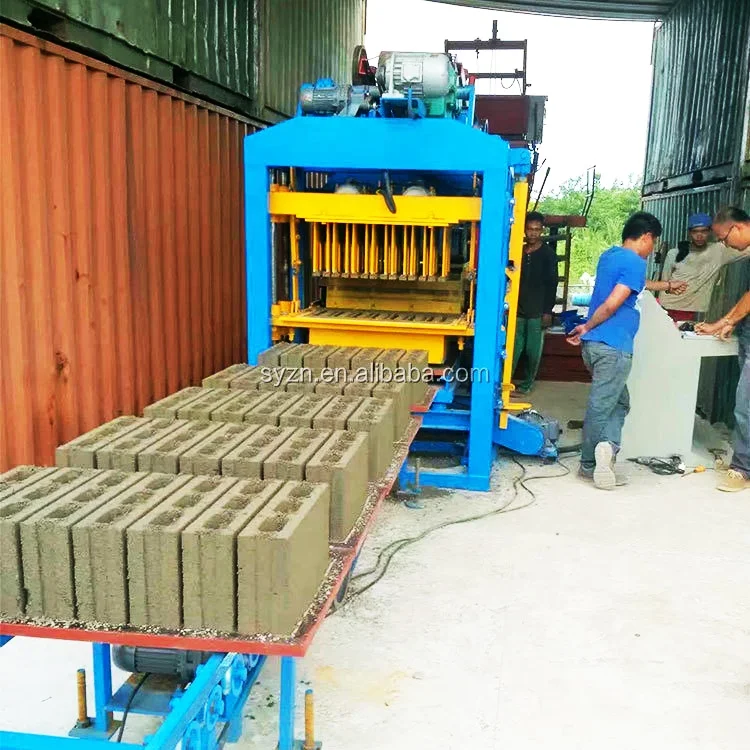
 High quality block machine