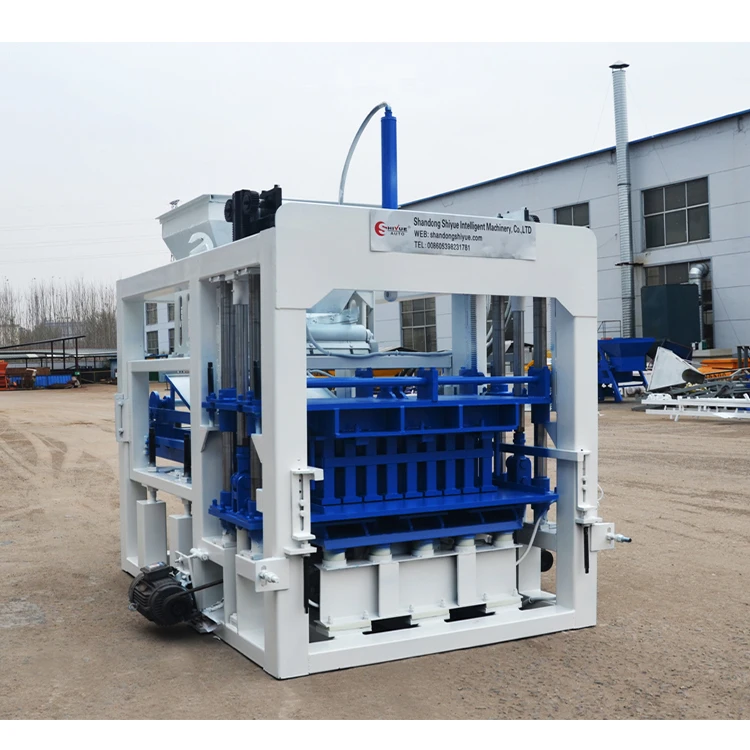
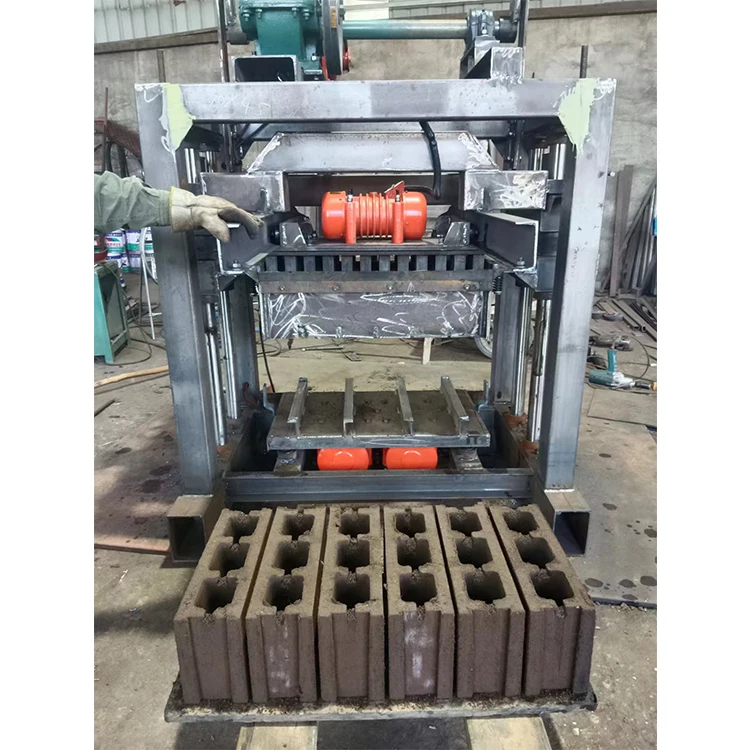
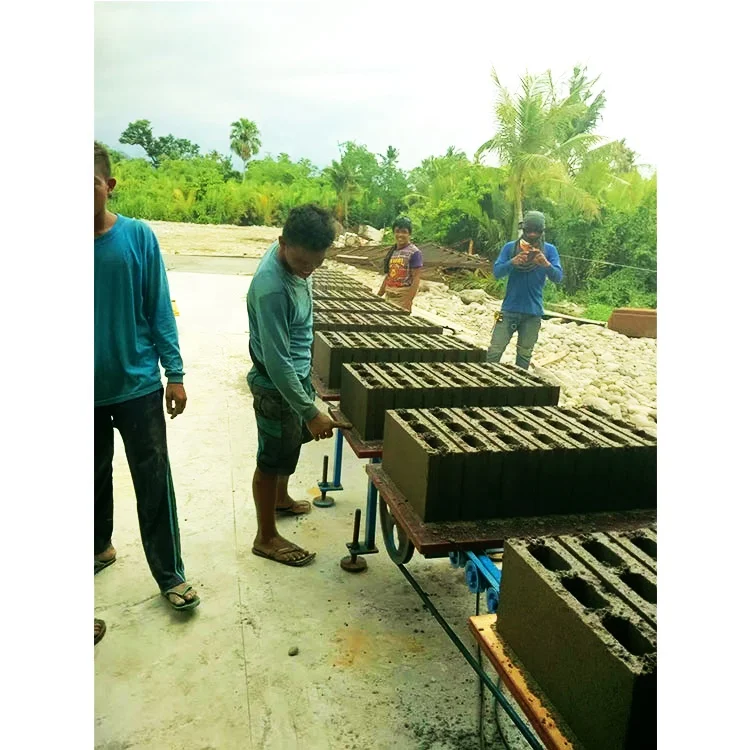
Matched system specification — machine, mixer, conveyor, and pallets are sized as one line so the QTJ4-25 press is never left waiting for material or handling.
Technical Specifications
| Parameter |
Value |
| Model |
QTJ4-25 |
| Product Type |
Semi-Automatic Hollow Block Making Machine |
| Overall Dimensions (L×W×H) |
3060×1730×2580 mm |
| Total Weight |
4 T |
| Vibration Force |
45 kN |
| Cycle Time |
25 s |
| Pallet Size |
850×550 mm |
| Block Height Range |
40–280 mm |
| Workshop Area |
50–150 m² |
| Material Storage Area |
300–500 m² |
| Belt Conveyor Length |
8 m |
| Mixer Model |
JQ500 |
| Motor Brand |
Siemens or ABB |
| Control System |
Electric control |
| Automation Level |
Semi-automatic |
| Output Capacity |
480 pcs/h (based on 400×200×200 mm hollow block, 4 pcs/mould) |
| Output Capacity |
600 pcs/h (based on 400×150×200 mm hollow block, 5 pcs/mould) |
| Output Capacity |
840 pcs/h (based on 400×100×200 mm hollow block, 7 pcs/mould) |
| Output Capacity |
2880 pcs/h (based on 240×115×53 mm solid brick, 24 pcs/mould) |
| Voltage & Frequency |
380V, 3-phase, 50Hz (customizable to local voltage) |
| Mould Format |
Hollow block, solid block, paver, interlocking block, curbstone, colored paver, grassed brick, revetment brick |
| Mould Change System |
Manual (basis not stated in source) |
| Stacking Method |
Manual (basis not stated in source) |
| Warranty |
1 year (excluding wearing parts) |
Application Suitability
| Application |
Material or Output |
| Small block production plants |
Hollow and solid blocks from crushed stone, sand, and cement |
| On-site construction projects |
Hollow blocks produced locally without fixed plant infrastructure |
| First block plant startups |
Hollow blocks, solid bricks, and pavers at entry-level investment |
| Existing product range expansion |
Interlocking blocks, curbstones, and colored pavers added to current lineup |
What "480 Pieces per Hour" Actually Means for Your Shift
Capacity figures only hold water when the block format behind them is named.
A semi-automatic block machine for sale is often advertised with a single headline number pulled from the fastest format the mould can run. When the buyer’s market actually demands a different size — say 400×150×200 mm hollow blocks instead of the 400×200×200 mm used for the test — daily output drops because the mould holds more cavities of the smaller format but each cycle still takes 25 seconds. I have seen buyers budget for a full shift of production only to find the machine spends half the day on format changes and pallet handling that were never part of the original conversation [NEED_CITE: common output discrepancies in semi-automatic block machine quotations]. The QTJ4-25 states output per format so you can match the figure to the block your market actually buys.

Where the QTJ4-25 Sits in the Full Machine Range
The semi-automatic block machine for sale tier is the entry point for buyers who need consistent daily output without the capital outlay of a fully automatic line. The QTJ4-25 pairs a 45 kN vibration force with a JQ500 mixer and an 8 m belt conveyor, forming a complete circuit from raw material to cured block. Pallets are loaded and stacked by hand, which keeps the initial investment lower and leaves room to add automatic handling later.
Footprint Before You Pour Concrete
Workshop area runs from 50 to 150 m², and material storage needs 300 to 500 m² beside the press. These numbers matter before you sign a lease or pour a slab. A semi-automatic block machine for sale in this tier is compact enough for a contractor’s yard yet productive enough for a dedicated block plant [NEED_CITE: typical workshop area requirements for semi-automatic block production lines]. The 850×550 mm pallet size should be checked against the curing racks and forklifts you already have on site — mismatched pallets cause stacking delays that no amount of press speed can recover.
Reading the Specs That Shape Daily Production
Vibration force at 45 kN is matched to the semi-automatic tier and standard hollow block formats; higher force is needed when the mix contains larger aggregate or when solid brick density requirements are strict. The 25-second cycle time governs every format, so output scales with mould cavity count rather than press speed. Block height range from 40 to 280 mm covers most structural and paving formats, but the mould drawing must confirm which heights your market requires. Voltage is listed as 380V three-phase 50Hz, and this must be confirmed against local supply before production starts — arriving with the wrong motor specification delays commissioning by weeks.
The Cost of Skipping Configuration
When pallet size is chosen without looking at the buyer’s curing area, blocks pile up on the workshop floor waiting for rack space. When voltage and frequency are assumed rather than confirmed, the motor overheats or the control panel refuses to start. When mould formats are selected from a catalogue rather than from the buyer’s actual sales data, the machine spends shifts sitting idle between runs of the only format the market wants [NEED_CITE: consequences of unconfirmed block machine configuration before shipment]. These are not manufacturing defects — they are specification gaps that surface after the container is opened.
Why Buyers Source This Tier from Shiyue Machinery
Block machinery is the single focus here, so the QTJ4-25 press, JQ500 mixer, belt conveyor, and pallets are specified as one matched system rather than assembled from separate suppliers. Configuration is set against the buyer’s actual mix design and local aggregate, not a catalogue default. Mould design covers the formats the buyer’s market sells, including custom drawings when standard formats do not match. Automation level is selectable — a buyer can start semi-automatic and add automatic pallet feeding or stacking later. Installation support includes on-site commissioning and operator training so the first shift runs with confidence.
Documentation & Verification
- Line layout showing QTJ4-25 placement with capacity per block format stated
- Machine specification sheet with vibration force, cycle time, and pallet size confirmed
- Mould drawing and format list covering every block type in your quotation
- Voltage, frequency, and control language confirmation signed before production
- Factory test record on your specified block format before dispatch
Installation, Commissioning & Support
- Foundation must support 4 T static weight across the 3060×1730 mm footprint
- Dedicated 3-phase circuit at confirmed voltage with correct breaker rating
- Machine ships nude-wrapped; on-site assembly aligns press, mixer, and conveyor
- First-run parameter setting covers vibration timing and cycle calibration
- Operator training addresses manual pallet loading rhythm and mould change procedure
- Wear parts list identifies high-friction components with replacement intervals
What to Share Before Requesting a Quotation
Tell us the block formats your market sells most, the daily output you need per format, and the raw materials available locally including aggregate type and moisture content. Share your workshop dimensions, existing curing rack setup, and the voltage and frequency at your site. This lets us configure the QTJ4-25 and its supporting line to your actual conditions rather than a default build.
Frequently Asked Questions
Q: How is capacity calculated, and which block format does each figure assume?
A: Every output figure on this page names the block format and cavity count behind it. The 480 pcs/h figure assumes 400×200×200 mm hollow blocks at 4 per mould, while smaller formats yield more pieces per cycle. Your real daily output depends on which format your market orders most and how many hours you run per shift.
Q: Where does the QTJ4-25 sit compared to automatic and mobile machines?
A: The QTJ4-25 is the semi-automatic entry point — higher output than a mobile egg-laying machine but lower investment than a fully automatic line with stacking and cubing. Pallet handling is manual, which reduces capital cost and leaves an upgrade path when volume grows.
Q: What voltage and control options are confirmed before shipment?
A: The standard motor is rated 380V three-phase 50Hz, but voltage and frequency are confirmed against your local supply before production begins. Control language options are agreed at the same stage so the electric panel is readable on arrival [NEED_CITE: voltage and frequency standards by export market].
Q: Can I start semi-automatic and upgrade later?
A: Yes. The QTJ4-25 can be configured with manual pallet handling now and accept automatic pallet feeding or stacking equipment later. The press frame and control system accommodate these additions without replacing the core machine.
Q: What plant footprint do I need for this machine?
A: Plan for 50 to 150 m² of workshop space for the press and handling area, plus 300 to 500 m² for raw material storage. The 850×550 mm pallet size should match your existing curing racks and forklift capacity to avoid handling bottlenecks.

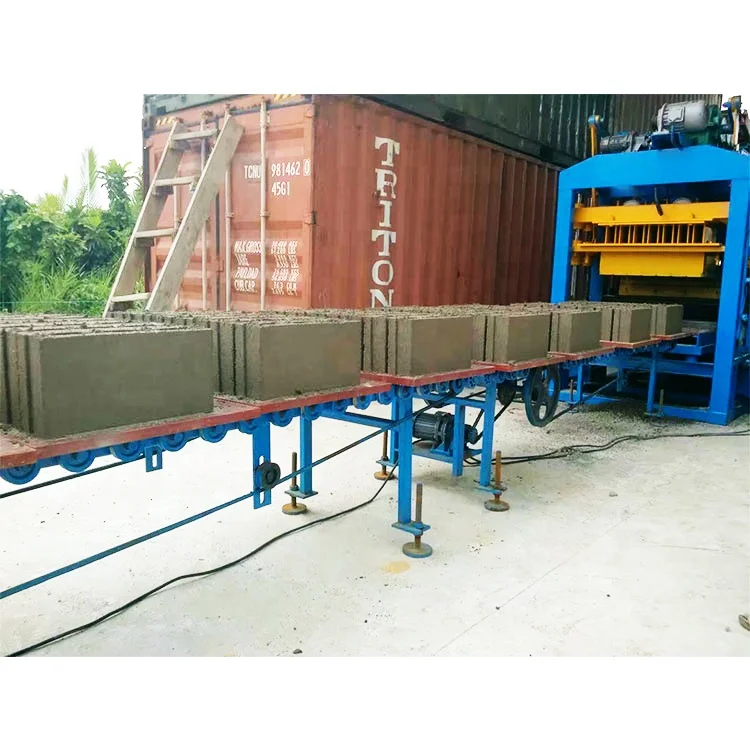
 High quality block machine