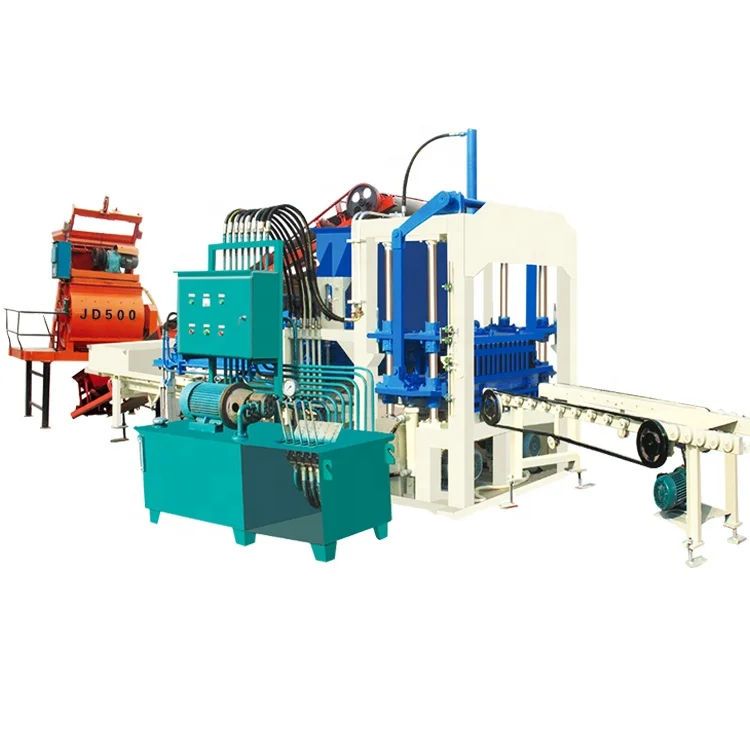
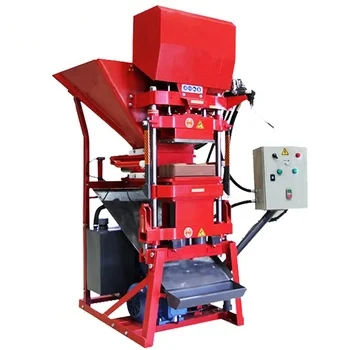
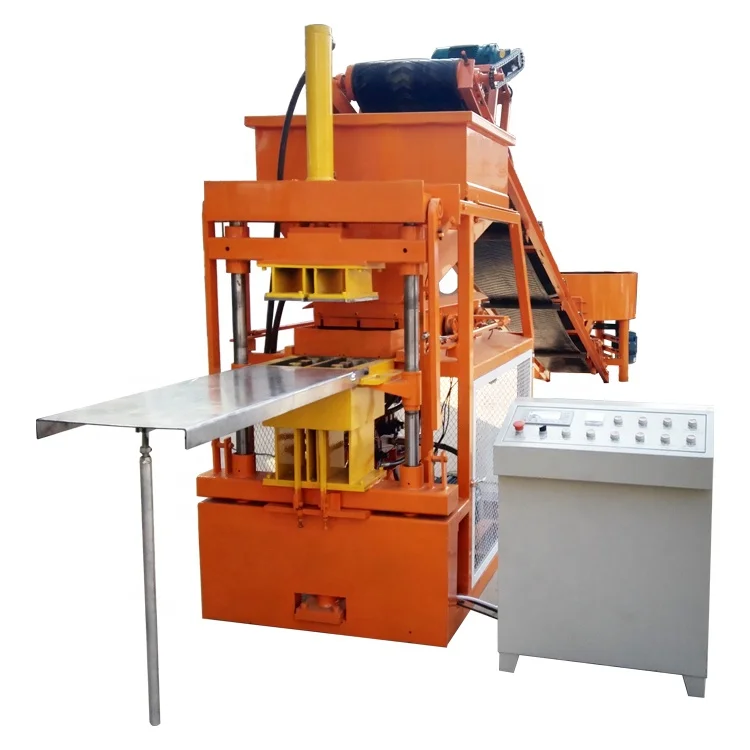
Matched System Design — every QTJ4-25 unit leaves our workshop with its mixer, conveyor and pallets specified as one coordinated line rather than a collection of mismatched components.
Technical Specifications
| Parameter |
Value |
| Model |
QTJ4-25 |
| Product Type |
Semi-Automatic Concrete Block Making Machine |
| Overall Dimensions (L×W×H) |
3060×1730×2580 mm |
| Total Weight |
4 T |
| Vibration Force |
45 kN |
| Cycle Time |
25 s |
| Pallet Size |
850×550 mm |
| Block Height Range |
40–280 mm |
| Workshop Area |
50–150 m² |
| Material Storage Area |
300–500 m² |
| Belt Conveyor Length |
8 m |
| Mixer Model |
JQ500 |
| Motor Brand |
Germany SIEMENS or ABB |
| Voltage & Frequency |
380V, 3-phase, 50Hz (customizable) |
| Control System |
Electric control |
| Output Capacity |
480 pcs/h (basis: 400×200×200mm hollow block, 4 pcs/mould) |
| Output Capacity |
600 pcs/h (basis: 400×150×200mm hollow block, 5 pcs/mould) |
| Output Capacity |
840 pcs/h (basis: 400×100×200mm hollow block, 7 pcs/mould) |
| Output Capacity |
2880 pcs/h (basis: 240×115×53mm solid brick, 24 pcs/mould) |
| Mould Format Options |
Hollow block, solid block, paver, interlocking block, curbstone, colored paver, riverside brick, revetment brick, grassed brick |
| Stacking Method |
Manual pallet handling |
| Warranty |
1 year (excluding wearing parts) |
Application Suitability
| Application |
Material or Output |
| Small-scale hollow block production |
Crushed stone, sand, cement and water mix |
| On-site solid brick manufacturing for contractors |
Local aggregate with Portland cement binder |
| Paver and interlocking block for landscaping |
Colored concrete mixes with fine aggregate |
| First-time block plant setup by entrepreneurs |
Standard concrete mixes within 50–150 m² workshop |
| Curbstone and grassed brick for municipal projects |
High-compaction concrete with coarse aggregate |
What "480 Pieces per Hour" Actually Means for Your Plant
Every capacity figure on this page is tied to a specific block format and mould cavity count.
The QTJ4-25 block machine manufacturer catalogue often leads with a single headline number, but that number shifts dramatically depending on what you are actually pressing. A 400×200×200mm hollow block runs four cavities per cycle, while a standard solid brick fills twenty-four. I once watched a buyer in Southeast Asia plan an entire curing yard around a headline capacity, only to discover his local volcanic ash aggregate doubled the cycle time and cut daily output nearly in half [NEED_CITE: effect of local aggregate on block machine cycle time]. Before you compare machines, confirm which format each capacity figure assumes.

Where the QTJ4-25 Sits in the Full Machine Range
The Shiyue range spans mobile egg-laying units, semi-automatic workshop presses and fully automatic lines with stacking and cubing. The QTJ4-25 block machine occupies the entry semi-automatic tier, aimed at buyers who need mechanized compaction but are not yet ready to invest in automatic pallet feeding and stacking. Its 50–150 m² workshop requirement keeps the building cost manageable for a first plant.
Stepping Up from Manual to Semi-Automatic
Buyers moving from hand-tamped blocks or a mobile egg-layer will notice the 45 kN vibration force delivers consistent density across every cavity on the 850×550 mm pallet. Manual pallet handling still applies at this tier — operators pull the pressed pallet off the table and wheel it to the curing area. This keeps the electrical system simple and the investment low, while leaving a clear upgrade path to a fully automatic tier with mechanical stacking when volume justifies the next step [NEED_CITE: block plant automation upgrade considerations].
Reading the Specs That Shape Daily Output
Vibration force and cycle time interact directly: the 45 kN rating compacts standard concrete mixes within the 25-second cycle, but denser mixes or larger aggregate may extend that cycle. The 850×550 mm pallet defines the maximum block footprint per press — choose a pallet size that matches the curing racks and forklifts already on site, not just the machine table. The JQ500 pan mixer feeds the 8 m belt conveyor, keeping material flow aligned with the press rhythm so the hopper never starves. Voltage customization before shipment prevents the common arrival-day problem of a 50 Hz motor on a 60 Hz grid.
The Cost of Skipping the Mix Design Conversation
When a machine is configured for a catalogue-default mix that the buyer cannot source locally, the choices become either importing costly aggregate or running the press with a suboptimal recipe. Blocks leave the mould under-compacted, crack during curing, or fail the drop test. Pallet size mismatches surface later: if the curing racks were built for a different pallet dimension, every pressed block must be restacked by hand before it enters the yard, adding labour the buyer never budgeted for [NEED_CITE: pallet handling inefficiency in block plants].
Why Source the QTJ4-25 from Shiyue Machinery
Block machinery is our single focus, so the QTJ4-25 press, its moulds, pallets and the JQ500 mixer are specified together rather than assembled from separate suppliers. We configure the line against your actual mix design and local aggregate, not a generic default. Every mould is designed for the formats your market sells, and custom drawings are available when standard formats fall short. The automation level is selectable — start semi-automatic today and move to automatic stacking when your volume grows. Installation support includes operator training so your team runs the machine confidently from the first shift.
Documentation & Verification
- Line layout and capacity calculation stating the block format assumed for each output figure
- Machine specification sheet confirming vibration force, pallet size, motor brand and voltage
- Mould drawing and format list showing every block type with cavity count per mould
- Voltage and control language confirmation signed off before shipment
- Factory test record on your specified block format before dispatch
Installation, Commissioning & Support
- 50–150 m² workshop with level concrete floor required for the 3060×1730 mm machine footprint
- 380V three-phase supply with dedicated circuit breaker sized to the SIEMENS or ABB motor
- Machine ships fully assembled; belt conveyor and mixer positioned on-site during commissioning
- First-run parameter setting covers vibration duration, feed volume and cycle timing for your mix
- Operator training addresses mould change procedure across all included block formats
- Wear parts list and mould maintenance schedule provided at handover
What We Need to Quote Your Line Accurately
Share the block formats your market demands, the daily output you need for each format, and the raw materials available locally. Confirm your workshop dimensions, local voltage and frequency, and whether you plan to handle pallets manually or want a partial automation upgrade. If you already have curing racks or forklifts on site, tell us the pallet dimensions they accept so the line matches from day one.
Frequently Asked Questions
Q: How is the QTJ4-25 capacity calculated for different block formats?
A: Each output figure is based on a specific block size and mould cavity count at the rated 25-second cycle. The 480 pcs/h figure assumes 400×200×200mm hollow blocks with four cavities per mould, while 2880 pcs/h assumes 240×115×53mm solid bricks with twenty-four cavities. Real daily output depends on your mix design and operator rhythm.
Q: When should a buyer step up from the QTJ4-25 to an automatic tier?
A: If your daily volume requires continuous pressing without manual pallet handling pauses, or if labour cost makes manual stacking uneconomical, the automatic tier with mechanical pallet feeding and stacking is the logical next step. The semi-automatic tier suits first plants and project-site production where flexibility matters more than maximum throughput.
Q: Can the motor and voltage be configured before shipping?
A: Yes. The standard configuration is 380V three-phase at 50 Hz, but voltage and frequency are customizable to match your local grid. This confirmation must be finalized before production so the correct motor winding and control components are installed at the factory.
Q: What mould formats are included with the QTJ4-25?
A: The machine supports hollow blocks, solid bricks, pavers, interlocking blocks, curbstones, colored pavers, riverside bricks, revetment bricks and grassed bricks. Mould change is manual. Custom mould designs are available when your market requires formats outside this standard list.
Q: What supporting equipment comes with the line?
A: The standard line includes the JQ500 pan mixer, an 8 m belt conveyor, and pallets sized at 850×550 mm. Raw material storage area of 300–500 m² should be planned separately. Stacking and curing rack handling remain manual at this semi-automatic tier.

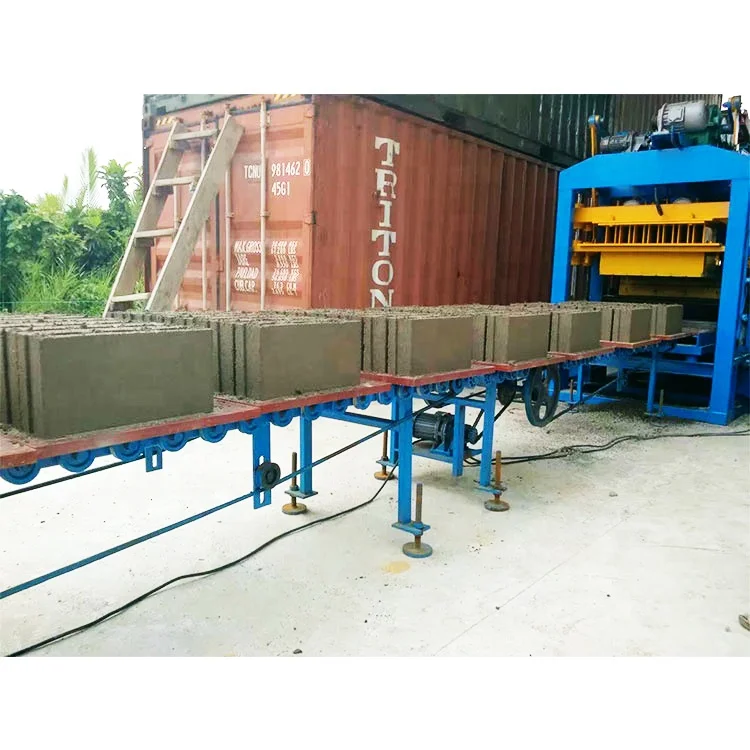
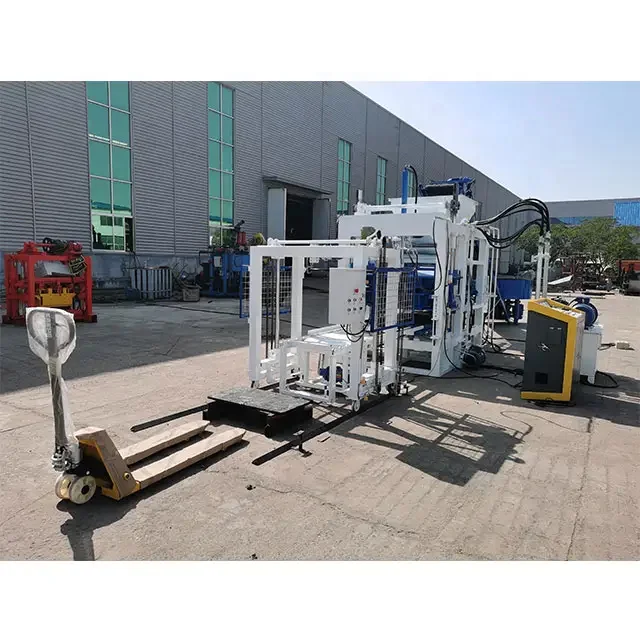 Automatic block machine