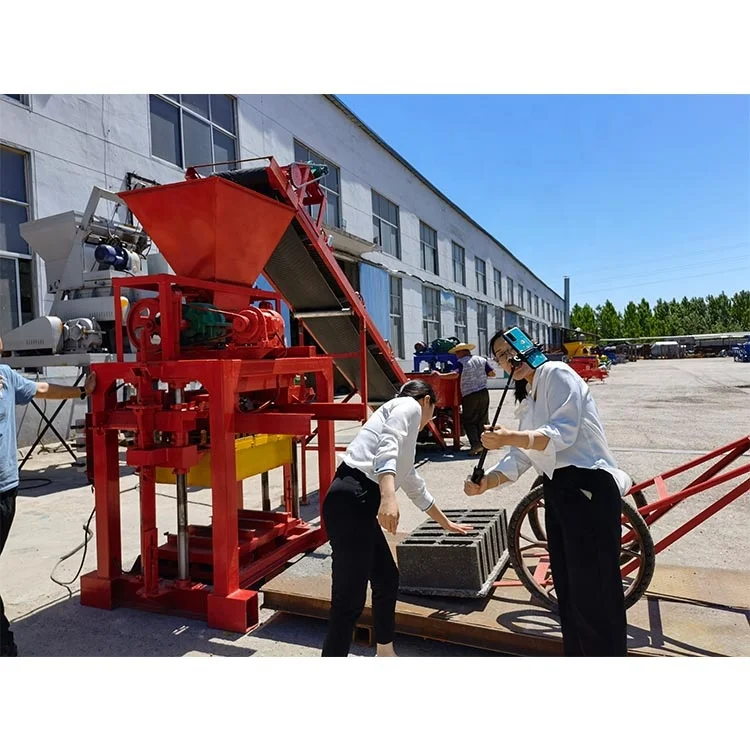
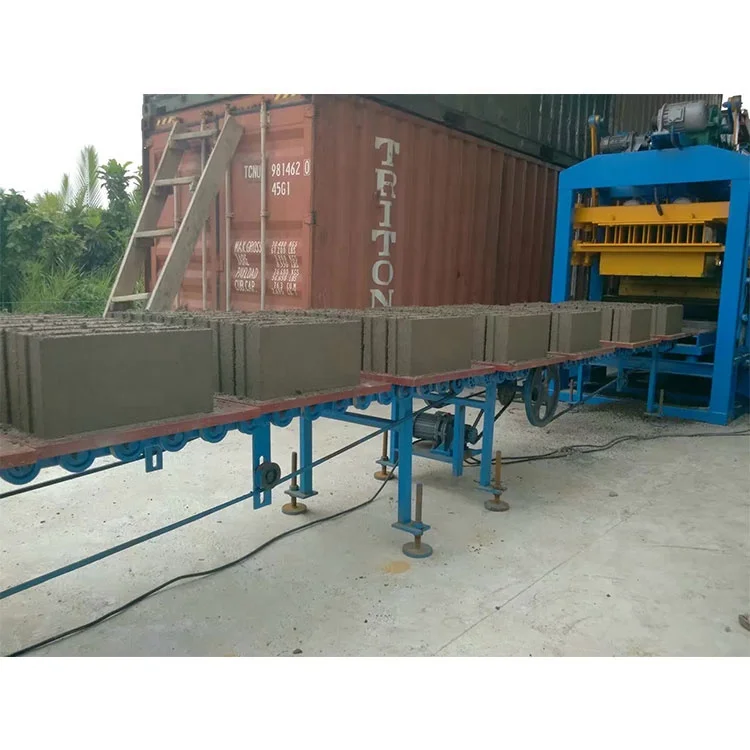
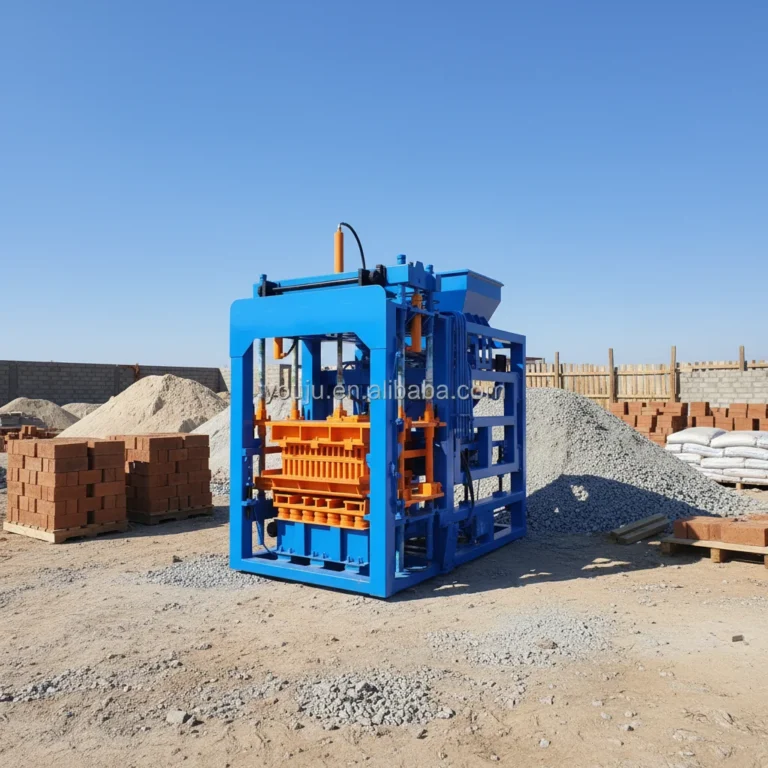
Configured Around Your Mix — The QTJ4-25 block making machine manufacturer proposal you receive is based on your actual aggregate sample and target block format, not a generic catalogue default.
Technical Specifications
| Parameter |
Value |
| Model |
QTJ4-25 |
| Product Type |
Stationary Block Making Machine |
| Rated Power |
17.9 kW |
| Overall Dimensions (L×W×H) |
6400 × 1500 × 2700 mm |
| Total Mass |
2500 kg |
| Molding Cycle |
25 s |
| Pallet Size |
850 × 550 × 20 mm |
| Vibration Frequency |
2800 r/min |
| Vibration Force |
60 kN |
| Output Capacity |
960 pcs/h based on 400×200×200 mm hollow block (4 pcs/mould) |
| Mould Compatibility |
Hollow, solid, paver, curbstone (change required) |
| Automation Level |
Semi-automatic |
| Hydraulic Station |
Equipped |
| Configuration Includes |
Host machine, block mould (1 set), JQ350 mixer |
Application Suitability
| Application |
Material or Output |
| Small-scale hollow block production |
Crushed stone, sand, cement, water |
| Solid brick manufacturing for local masonry |
River sand or crusher dust with cement binder |
| Paving block runs for driveway and walkway projects |
Fine aggregate with pigment and cement |
| Curbstone production for municipal infrastructure |
Coarse aggregate blends with high cement content |
| On-site block making by construction contractors |
Locally sourced aggregate and Portland cement |
| First-plant entrepreneurs entering block market |
Any locally available block-making raw mix |
What "960 Pieces per Hour" Actually Means on the Shop Floor
The number only holds when you are running 400×200×200 mm hollow blocks with a mix that matches the machine’s vibration and pressure settings.
A rated capacity of 960 pieces per hour sounds solid until you swap to a smaller solid brick mould or your local aggregate requires a longer compaction cycle. I have stood next to buyers at trade shows who purchased machines based on a headline cycle time, only to discover their actual daily output dropped significantly once they started running the formats their market actually demanded. The QTJ4-25 block making machine manufacturer capacity quote should always arrive with the block format and mix assumption printed alongside the number [NEED_CITE: block machine capacity calculation standards by format].

Where the QTJ4-25 Sits in the Full Machine Range
This model occupies the semi-automatic stationary tier, positioned between the smallest mobile egg-laying units and the higher-output fully automatic lines. Buyers who have outgrown manual pallet handling but are not yet ready for automatic stacking and cubing typically land here. The semi-automatic designation means the press cycle runs on motor-driven control, while pallet feeding and product removal still require operator involvement.
Understanding the Automation Tier Before You Commit
Choosing the right automation level depends as much on your labour market as on your production target. In regions where manual handling labour is affordable and available, a semi-automatic machine like this one keeps the initial investment contained. Where labour costs are high or worker availability is limited, buyers often look toward the fully automatic tier with pallet feeders and stackers. The QTJ4-25 offers a starting point that can be supplemented with supporting equipment as the plant grows [NEED_CITE: semi-automatic versus automatic block plant labour considerations].
How Vibration Force and Pallet Size Shape Your Daily Output
The 60 kN vibration force works in combination with vertical bed-mould vibration and upper-mould compression to compact the concrete mix into the mould cavity. This force level is suited to standard hollow and solid block formats using conventional aggregate blends. If your local material includes lightweight aggregates or unusually coarse stone, the mix design may need adjustment to achieve consistent block density within the 25-second moulding cycle.
The 850 × 550 × 20 mm pallet size is a critical matching point. This dimension must align with your curing area layout and the forklift you plan to use for moving racked pallets. A pallet size chosen without checking your existing infrastructure leads to double-handling or wasted curing space. The QTJ4-25 block making machine manufacturer should confirm pallet compatibility with your site before the order is finalized.
Vibration Frequency and Mould Change Reality
At 2800 r/min, the vibration frequency is set for the density range expected in standard concrete masonry units. The frequency is fixed by the motor specification, meaning the machine relies on proper mix proportioning rather than adjustable vibration to hit target block strength. For buyers producing multiple formats, mould changes are necessary between runs — hollow to paver, for instance — and each change requires operator time on the shop floor.
The Hidden Cost of Skipping the Voltage Conversation
Voltage and frequency specifications left unconfirmed before production create a bottleneck the day the machine arrives. A 17.9 kW motor rated for one electrical standard will not run correctly on a different supply without a transformer or motor swap, both of which add cost and delay. I have seen machines sit idle for weeks on a buyer’s floor while the correct electrical components were sourced locally [NEED_CITE: industrial motor voltage and frequency compatibility for export equipment].
Confirming the supply voltage, frequency, and control display language during the quotation stage prevents this entirely. It is a small detail that becomes a large problem only after it has been overlooked.
Why Source This Tier from a Block Machinery Specialist
The QTJ4-25 arrives as part of a matched system — host machine, mould, mixer, and pallets specified together rather than assembled from unrelated suppliers. Configuration is set against your actual mix design and target block format, which means the capacity calculation you receive reflects a realistic production scenario.
Mould design covers the formats your market sells, with custom drawings available when standard sizes do not match. The semi-automatic level means you can start with the QTJ4-25 and add supporting automation later as volume grows. Installation guidance includes operator training so your team can manage mould changes and daily maintenance independently.
Documentation & Verification
- Line layout with capacity calculation stating the assumed block format
- Machine specification sheet covering power, dimensions, and cycle time
- Mould drawing and format list for the quoted block sizes
- Pallet specification matched to your curing area dimensions
- Hydraulic and electrical schematic for local maintenance reference
- Voltage and control language confirmation signed off before production
Installation, Commissioning & Support
- Foundation requirements based on the 6400 × 1500 mm machine footprint and 2500 kg mass
- Dedicated electrical circuit sized for the 17.9 kW rated power draw
- Delivery condition and on-site assembly scope confirmed before shipment
- First-run parameter setting for your specific mould and block format
- Operator training covering mould change procedure and daily checks
- Wear parts list identifying items due for first replacement and sourcing options
What to Share with Your Enquiry
To receive a configuration that matches your actual production needs, include the block formats you intend to run and the daily volume you are targeting. Specify your local aggregate type so the mix can be evaluated against the machine’s vibration characteristics. Confirm your site’s electrical supply voltage and frequency to avoid commissioning delays.
Frequently Asked Questions
Q: How is the 960 pcs/h output calculated and what block format does it assume?
A: The 960 pieces per hour figure is based on running 400×200×200 mm hollow blocks with four blocks produced per mould cycle. The 25-second moulding cycle is applied continuously to arrive at the hourly rate. Actual output will differ when running other formats such as solid bricks or pavers, which use different moulds and may require adjusted cycle times.
Q: Where does the QTJ4-25 sit compared to other machines in the range?
A: This model sits in the semi-automatic stationary tier, above mobile egg-laying machines and below fully automatic lines with integrated pallet feeding and stacking. It suits buyers who need consistent output from a fixed plant location without the investment required for full automation. Supporting equipment can be added as production volume increases.
Q: What voltage and frequency options are available for this machine?
A: The electrical configuration is confirmed with each buyer before production begins. You provide your site supply voltage and frequency, and the motor and control components are specified accordingly. The control display language is also confirmed at this stage so operators can read instructions in a familiar language from day one.
Q: Which mould formats can this machine accept and how long does a change take?
A: The QTJ4-25 accepts hollow block, solid block, paver, and curbstone moulds. Each format requires a physical mould change on the press, which takes operator time between production runs. Custom mould designs are available when standard sizes do not match your market requirements. Mould drawings and format lists are provided before production.
Q: What supporting equipment is included in the standard quotation?
A: The standard configuration includes the host machine, one block mould set, and a JQ350 mixer. Pallets, conveyors, stacking equipment, and curing rack systems are specified separately based on your site layout and automation preference. Pallet quantity recommendations typically range from 300 to 500 pieces depending on your curing area capacity and production cycle.

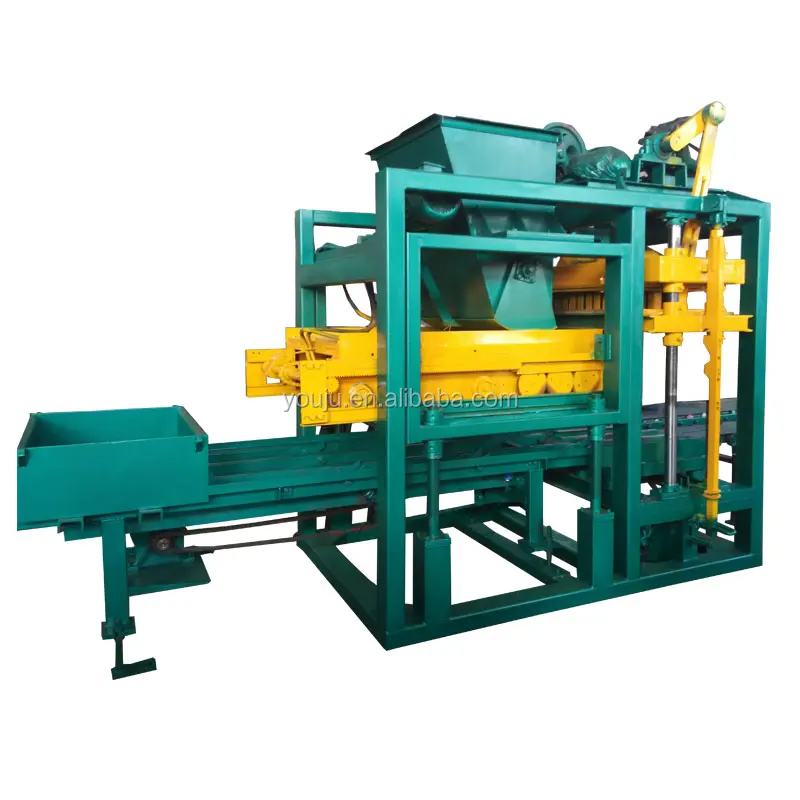
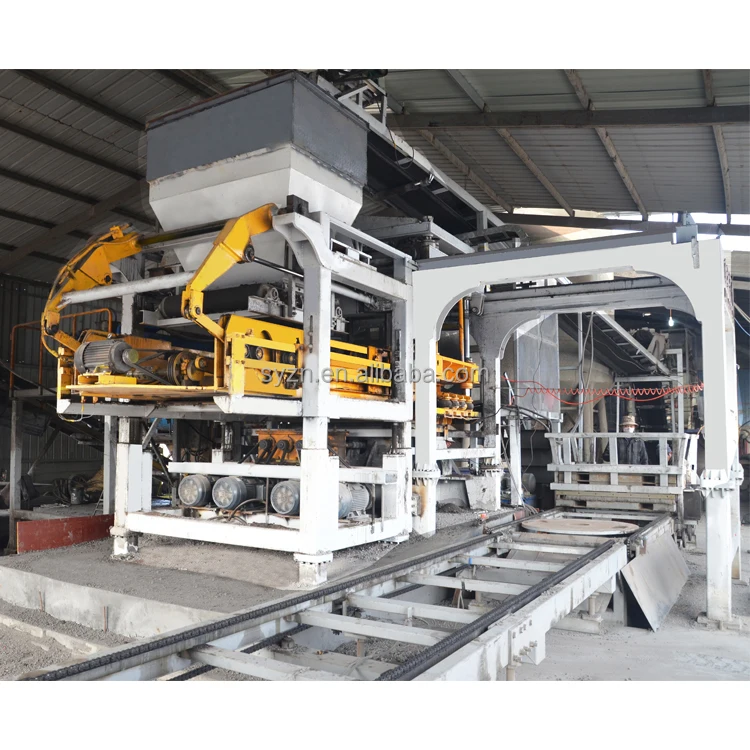 Stationary block machine