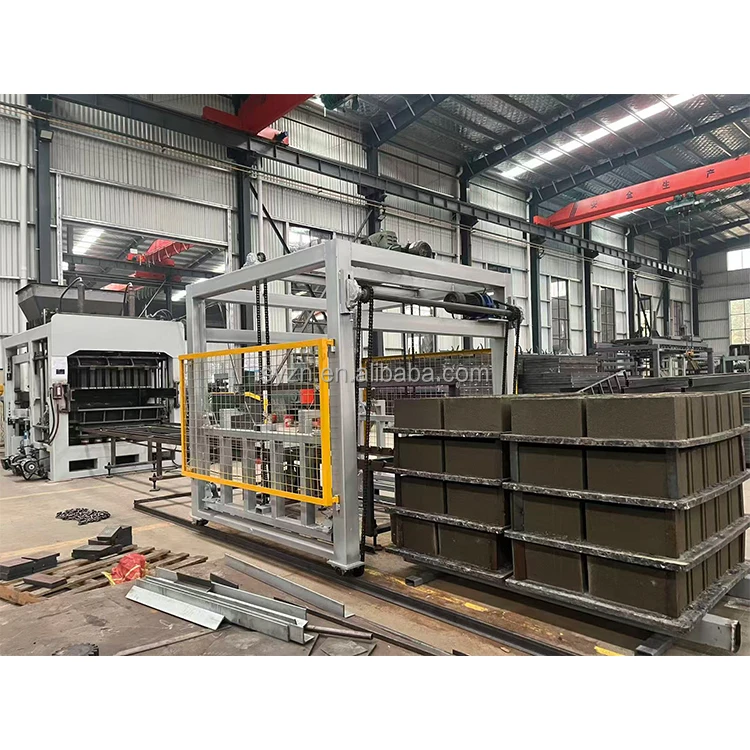
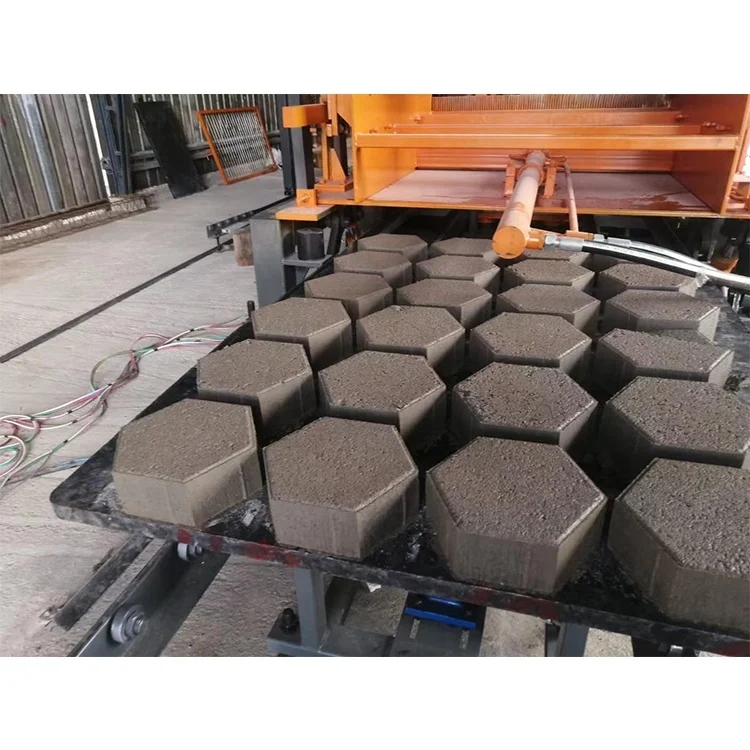
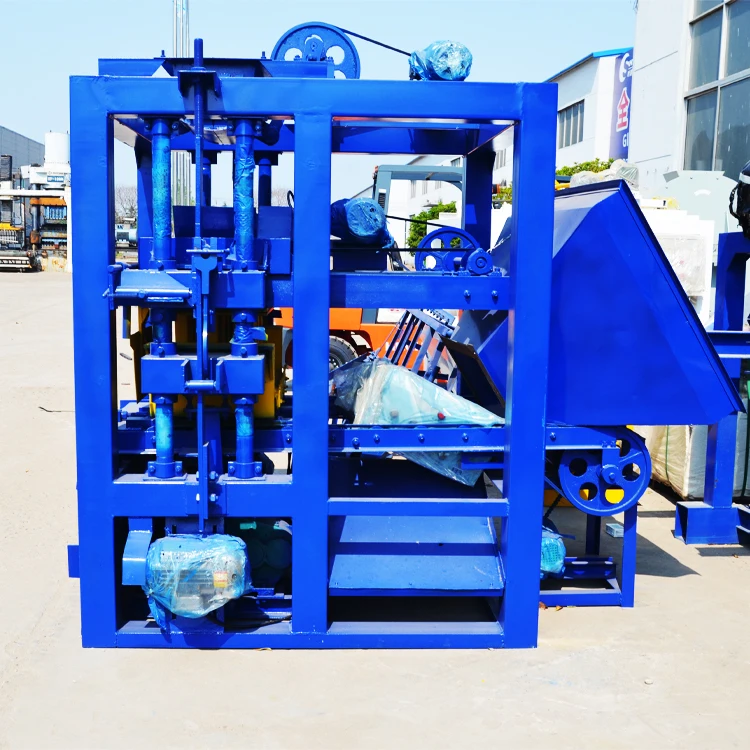
Matched system, not a catalogue default — the QTJ4-24 is configured against the buyer’s actual mix design and target block format, so vibration force, pallet size and cycle time align with local aggregate rather than a generic showroom spec.
Technical Specifications
| Parameter |
Value |
| Model |
QTJ4-24 |
| Product Type |
Semi-Automatic Concrete Block Making Machine |
| Main Machine Power |
11.95 kW |
| Overall Dimensions (L×W×H) |
3600 mm × 1700 mm × 2560 mm |
| Net Weight |
3.5 T |
| Pallet Size |
900 mm × 450 mm |
| Molding Cycle |
24–26 s |
| Vibration Type |
Table vibration with upper and lower vibrators |
| Feeding Method |
Manual feeding, two feed ways available |
| Control System |
Electrical control cabinet with knife switch |
| Automation Level |
Semi-automatic (mechanical and manual combination) |
| Assembly State |
Stationary, installed on precast concrete ground |
| Mould: 400×200×200 mm |
4 pcs/mould |
| Mould: 390×240×190 mm |
3 pcs/mould |
| Mould: 390×120×190 mm |
6 pcs/mould |
| Mould: 240×115×53 mm |
21 pcs/mould |
| Compatible Mixer |
J350 or JQ350 / JQ500 vertical mixer |
| Compatible Conveyor |
6 m or 8 m belt conveyor |
| Wiring: Main Machine |
3×6 mm |
| Wiring: Mixer |
3×4 mm |
| Wiring: Conveyor |
3×2.5 mm |
| Wiring: General Power |
3×16 mm |
| Voltage & Frequency |
To be confirmed with buyer’s site requirements |
| Hydraulic Pressure |
(basis not stated in source — verify against manufacturer catalog) |
| Vibration Force |
(basis not stated in source — verify against manufacturer catalog) |
| Output Capacity |
(basis not stated in source — confirm block format and daily shift hours) |
Application Suitability
| Application |
Material or Output |
| Cement hollow block production |
Crushed stone, sand, cement, water |
| Solid block production |
Quarry dust, gravel, cement blend |
| Paving brick and paver production |
Fine aggregate and cement mix |
| Standard brick production |
Sand, fly ash, cement combination |
| Small-scale workshop block plant |
Semi-automatic operation with manual pallet handling |
| On-site construction block production |
Locally sourced aggregate with portable mixer and belt conveyor |
What "Pieces per Mould" Actually Tells You Before You Commit
Honest throughput starts with the mould, not the brochure headline.
Many buyers discover too late that a cycle time quoted against a standard hollow block does not translate to the smaller formats their market actually demands. I watched a contractor lose an entire shift because the daily capacity he planned around assumed one block size, while his orders required three different formats with different demoulding behaviour. [NEED_CITE: block format assumptions in capacity quotations] With the QTJ4-24, each mould lists its piece count per cycle, so you can build a realistic daily figure from your actual product mix instead of a single optimistic number.

Where the QTJ4-24 Sits in the Shiyue Range
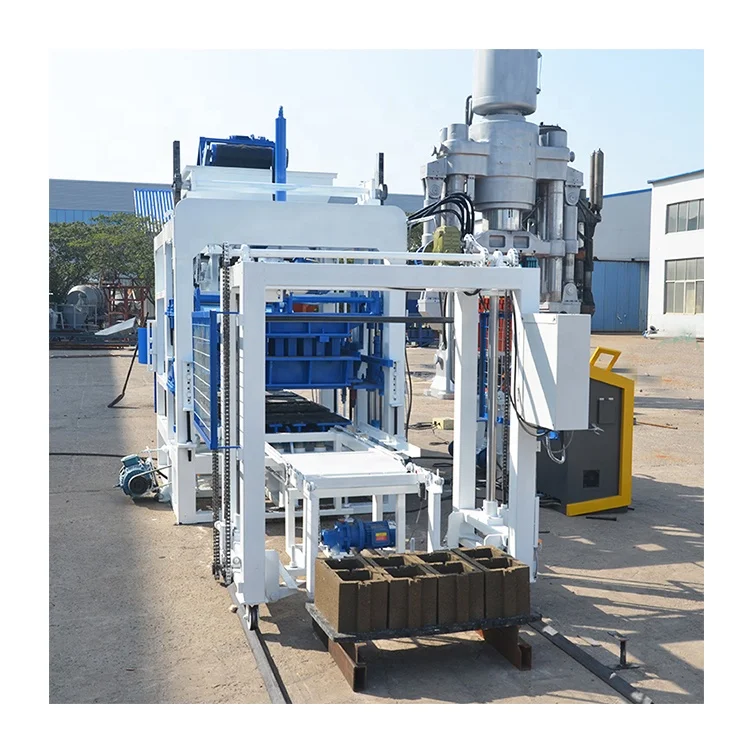
The Shiyue lineup spans mobile egg-laying machines at the entry end, semi-automatic stationary presses in the middle, and fully automatic lines with stacking and cubing at the top. This Semi-Automatic Block Machine manufacturer places the QTJ4-24 firmly in that middle tier, aimed at buyers who have outgrown mobile production but are not yet ready for the footprint and investment of a fully automatic plant. The 3600 mm × 1700 mm frame and 3.5 T weight mean the machine fits inside a modest workshop without requiring an industrial-scale building.
Understanding the Semi-Automatic Positioning
At this tier, the press handles compaction and vibration mechanically while operators manage pallet feeding and product removal by hand. That division keeps the capital outlay lower and lets a first-time plant owner learn the process before committing to higher automation. The electrical control cabinet with knife switch keeps the interface straightforward, and the manual feeding system offers two feed ways so operators can adjust to different mix consistencies. [NEED_CITE: semi-automatic block machine operation principles] Buyers who later need more throughput can move up to an automatic tier without replacing the entire supporting line — the mixer and conveyor remain compatible.
How Vibration and Pallet Size Shape Your Daily Reality
The table vibration system uses both upper and lower vibrators working across the 900 mm × 450 mm pallet area. That dual-vibrator layout distributes compaction energy across the mould cavity, which matters when you are pressing hollow blocks with thin webs or standard bricks where density uniformity affects compressive strength. The 24–26 s molding cycle applies to the standard formats listed, and each format carries a different piece count: four hollow blocks per cycle versus twenty-one standard bricks. Those numbers are the basis for any honest capacity calculation. Pallet dimensions also determine how many blocks you can cure per square metre and whether your existing forklift can handle loaded pallets without modification — a mismatch here creates a bottleneck the press itself never caused.
The Cost of Skipping the Pallet and Mixer Match
When buyers focus only on the press and treat pallets and mixers as afterthoughts, the consequences show up on the first production day. A pallet that does not match the curing rack spacing means blocks are restacked by hand before they can even begin to cure. A mixer with insufficient batch capacity leaves the press idling between cycles, and the rated cycle time becomes irrelevant because the line is waiting for material. [NEED_CITE: block production line bottleneck causes] I have seen plants where the belt conveyor was too short to reach from the mixer discharge to the press hopper, requiring manual transfer that doubled labour and halved the output the buyer had budgeted for.
Why Buyers Source This Tier from Shiyue
Block machinery is the single focus here, so the QTJ4-24 is specified as part of a matched system — press, mould, pallet, mixer and conveyor are selected together rather than assembled from separate suppliers. Mould design covers the formats the buyer’s market actually sells, and custom mould drawings are available when a local standard falls outside the catalogue range. Configuration is set against the buyer’s local aggregate and mix design, which matters because I have seen Pakistani contractors lose half their daily output when a machine calibrated for clean gravel met high-clay local sand. Voltage, frequency and wiring specifications are confirmed before production, avoiding the commissioning delays that happen when a 50 Hz machine arrives at a 60 Hz site. The automation level is selectable, so a buyer starting with semi-automatic operation has a clear upgrade path without scrapping the foundation.
Documentation & Verification
- Line layout showing the QTJ4-24 positioned with J350 mixer and 6 m belt conveyor
- Capacity calculation sheet stating which mould format the daily output assumes
- Mould drawing and format list for every block type in your product range
- Machine specification sheet with pallet size, power and wiring confirmed to your voltage
- Factory test record on your target block format before dispatch
- Packing photographs and customs documentation for shipment planning
Installation, Commissioning & Support
- Precast concrete ground required for the 3600 mm × 1700 mm stationary base
- General power circuit at 3×16 mm with dedicated 3×6 mm main machine line
- Machine arrives fully assembled; bolt to prepared foundation and connect wiring
- Voltage and frequency confirmed against your site before the QTJ4-24 leaves the factory
- Operator training covers the 24–26 s cycle rhythm and manual pallet handling sequence
- Wear parts list and mould maintenance schedule provided at commissioning
Before You Request a Quote
To size the QTJ4-24 correctly, share the block formats your market sells and the daily volume each format requires. Let us know your local aggregate type — whether crushed stone, river sand, fly ash or a blend — along with your site voltage and frequency. If you already have a curing area or forklift, confirm the pallet handling dimensions so the 900 mm × 450 mm pallet integrates without rework.
Frequently Asked Questions
Q: How is the QTJ4-24’s output capacity calculated, and which block format is the cycle time based on?
A: The 24–26 s molding cycle applies across the standard mould range, but each format yields a different piece count — from four hollow blocks to twenty-one standard bricks per cycle. Daily output depends on which formats you run, shift length, and pallet handling speed. We provide a capacity calculation sheet that states the assumed block format so you can cross-check the figure against your actual product mix before committing.
Q: Where does this semi-automatic tier sit compared to Shiyue’s automatic and mobile machines?
A: The QTJ4-24 occupies the middle of the range — above mobile egg-laying machines in output and consistency, below fully automatic lines in capital cost and footprint. It suits buyers who need stationary production with a compact workshop footprint but are not yet ready to invest in automatic stacking and cubing. The supporting mixer and conveyor remain compatible if you later upgrade to a higher automation tier.
Q: What voltage, frequency and wiring does the QTJ4-24 require before shipment?
A: The general power feed uses 3×16 mm cable, the main machine draws through 3×6 mm, the mixer through 3×4 mm, and the conveyor through 3×2.5 mm. Voltage and frequency are not preset — we confirm your site’s electrical standard before production so the machine arrives ready to connect. Sharing your local supply details at the inquiry stage avoids commissioning delays on arrival.
Q: Which pallet size does the QTJ4-24 use, and how should buyers match it to their curing setup?
A: The machine uses a 900 mm × 450 mm pallet. Before ordering, verify that this dimension matches your existing curing rack spacing and that your forklift can handle loaded pallets of this size. A mismatch means blocks are restacked manually before curing, which adds labour and slows the line regardless of how fast the press cycles.
Q: What supporting equipment completes the line around the QTJ4-24?
A: A basic line pairs the press with a J350 or JQ350/JQ500 vertical mixer and a 6 m or 8 m belt conveyor. The mixer batch size and conveyor length must match the press cycle so material arrives at the hopper without the operator waiting between cycles. We specify all three together so the line runs continuously rather than stopping between batches.

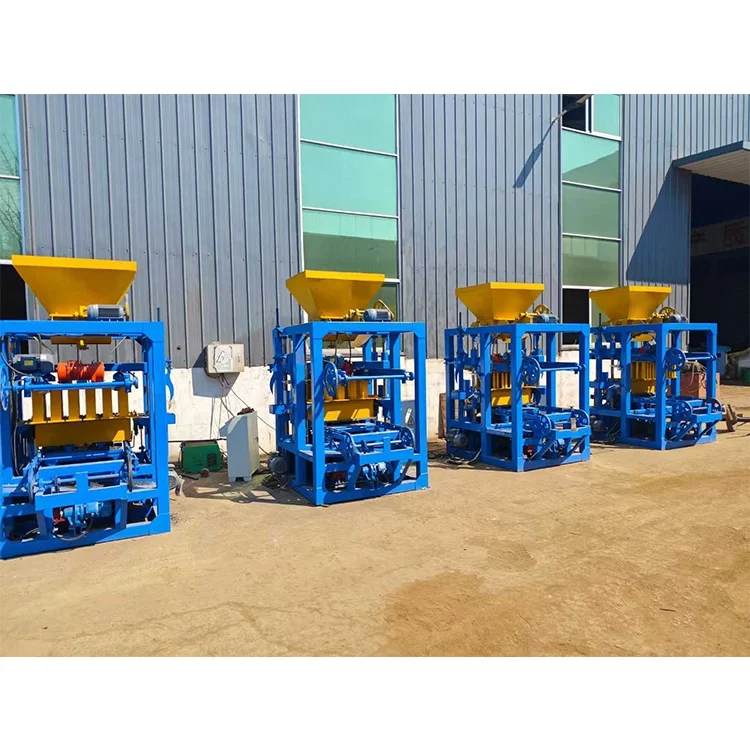
 High quality block machine