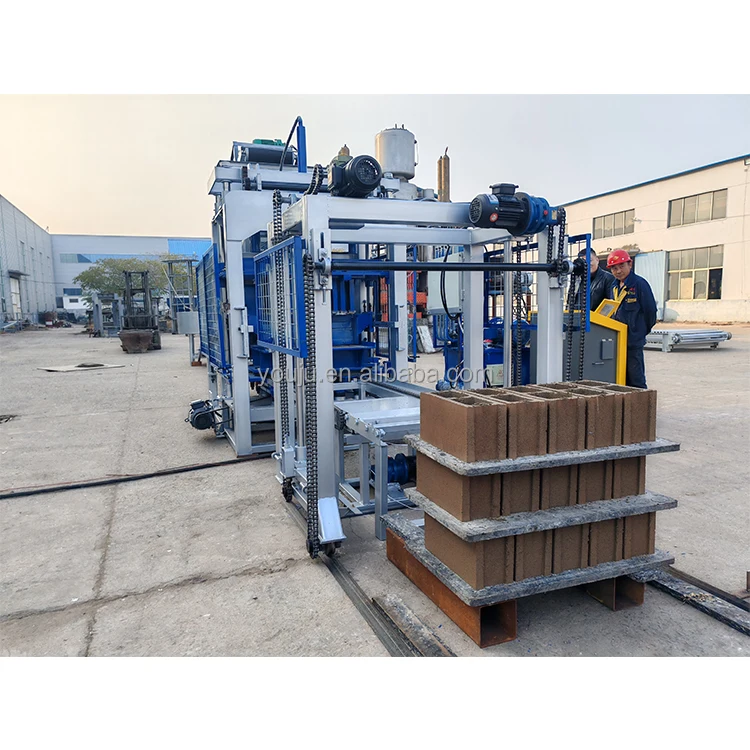
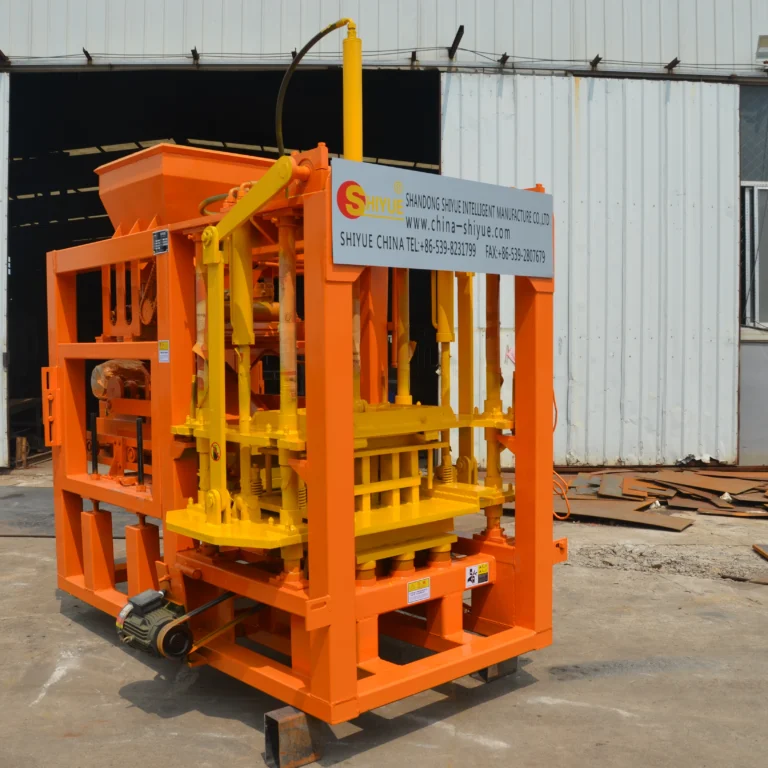
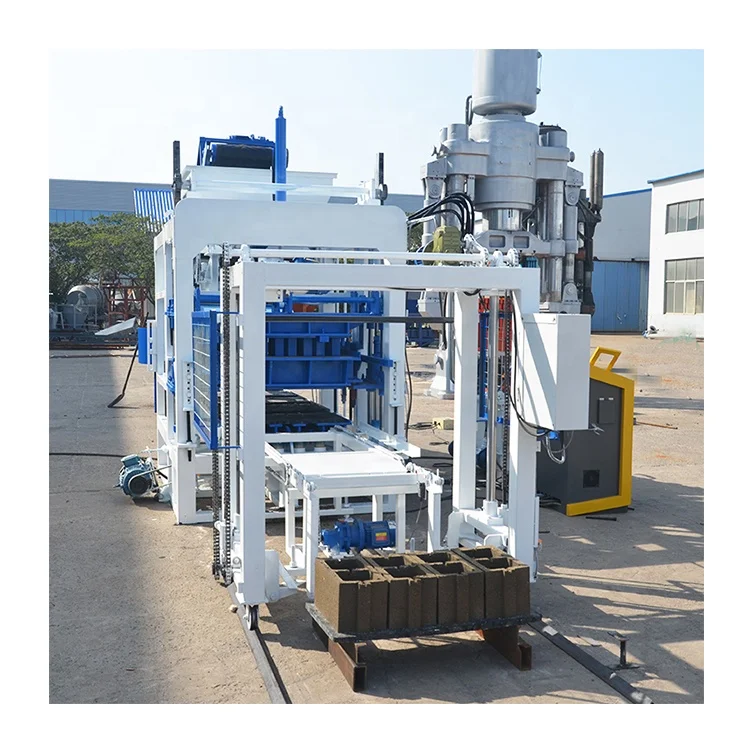
Single-focus machinery supply — The QTF3-20 is specified as one matched system including moulds, pallets, and handling rather than assembled from separate vendors, so capacity calculations reflect actual block formats you plan to produce.
Technical Specifications
| Parameter |
Value |
| Model |
QTF3-20 |
| Product Type |
Semi-Automatic Concrete Block Making Machine |
| Assembly State |
Stationary |
| Control System |
Semi-automatic |
| Hydraulic System |
Hydraulic press with vibration |
| Output Capacity (Paving Block) |
2,700 pcs/h (basis: 200×100×60mm paving block, 15 pcs/mould) |
| Output Capacity (Hollow Block) |
540 pcs/h (basis: 400×200×200mm hollow block, 3 pcs/mould) |
| Output Capacity (Interlocking Block) |
1,440 pcs/h (basis: 225×112.5×60mm interlocking block, 8 pcs/mould) |
| Daily Output 8h (Paving Block) |
21,600 pcs (basis: 200×100×60mm paving block) |
| Daily Output 8h (Hollow Block) |
4,320 pcs (basis: 400×200×200mm hollow block) |
| Daily Output 8h (Interlocking Block) |
11,520 pcs (basis: 225×112.5×60mm interlocking block) |
| Mould Format Options |
Paving block, hollow block, interlocking block |
| Voltage & Frequency |
Customizable to local grid (basis to be confirmed) |
| Warranty |
1 year (excluding wearing parts) |
| Key Features |
Multiple format support, upgradeable automation level |
Application Suitability
| Application |
Material or Output |
| Paving block production for walkways and driveways |
Crushed stone aggregate with cement binder, 200×100×60mm format |
| Hollow block production for load-bearing walls |
Local sand or volcanic ash blended with cement, 400×200×200mm format |
| Interlocking brick production for retaining walls |
Graded aggregate mix, 225×112.5×60mm format |
| On-site block production for housing projects |
Site-sourced aggregate tested for moisture and grading |
| Format expansion for existing block plants |
Additional mould sets matched to existing pallet inventory |
Why "2,700 Pieces per Hour" Can Mislead You
The honest figure depends entirely on which block you are pressing that day.
When a semi-automatic concrete block making machine manufacturer quotes a single capacity number without naming the block format, the buyer often discovers on commissioning day that real output is a fraction of what was promised. A mould producing 15 paving blocks per cycle will obviously outpace a mould producing 3 hollow blocks per cycle — yet many quotations blur this distinction. I have watched buyers in Southeast Asia sign contracts based on the higher figure, only to spend the first month producing hollow blocks and wondering where the missing two-thirds of their capacity went. [NEED_CITE: block format impact on daily output calculations]. The QTF3-20 range is quoted per format so you can plan shifts and raw material orders around the blocks you actually sell.

Where the QTF3-20 Sits in the Full Machine Range
The QTF3-20 occupies the semi-automatic tier of our stationary block machine lineup. It delivers hydraulic pressing combined with vibration for consistent block density, while leaving pallet handling and stacking to manual or conveyor-assisted labor. For a buyer surveying options for a first plant or a replacement machine, this model represents a practical entry point — the capital outlay is moderate, the footprint is manageable, and the automation level leaves a clear upgrade path when production volume justifies moving to a fully automatic line.
Understanding the Semi-Automatic Tier
Semi-automatic means the press cycle — material feeding, pressing, and demoulding — runs under controlled sequencing, but the operator still manages pallet movement between the press and the curing area. This configuration suits contractors who produce blocks on their own construction site and need format flexibility without investing in full automatic stacking. It also suits entrepreneurs launching a first block plant where labor costs remain low and the priority is getting multiple block formats into the local market quickly. [NEED_CITE: semi-automatic block production labor requirements]. As your daily volume grows, the QTF3-20 platform can be paired with automatic pallet feeders and stackers to reduce the manual portion of the cycle.
Hydraulic Pressure, Vibration, and Block Density
Two forces determine whether your blocks survive demoulding and reach the curing rack intact: hydraulic pressure and vibration amplitude. The hydraulic system compacts the concrete mix from above while the vibration table settles the aggregate from below. If vibration force is too low for a coarse local aggregate, voids remain inside the block and compressive strength drops. If hydraulic pressure is insufficient for a high-slump mix, the block slumps at the edges before it can be palletized. The QTF3-20 uses a combined hydraulic-vibration press, but the exact pressure and vibration settings must be matched to your specific mix design and aggregate grading — a configuration step we confirm before production, not after the machine arrives. Pallet dimensions also need to align with the mould footprint and the curing rack spacing in your yard, so forklift handling does not become a bottleneck.
The Hidden Cost of Skipping the Mix Test
I spent weeks in Indonesia after a customer received a block machine that had been tested on standard silica sand at the factory. His local volcanic ash aggregate carried high moisture, and blocks collapsed at the edges the moment the mould lifted. Real daily output fell to half the quoted figure because half the production was scrap. [NEED_CITE: aggregate moisture effects on concrete block forming]. That experience changed how every quotation is prepared here. Before a QTF3-20 order is confirmed, we ask the buyer to ship a sample of the local aggregate so we can run press trials and adjust vibration frequency, hydraulic pressure, and cycle timing to that specific material. Skipping this step means you are paying for a machine configured for someone else’s raw material.
Why Buyers Source the QTF3-20 Through This Range
Block machinery is the single focus of this operation, so the QTF3-20 is never shipped as a standalone press disconnected from its moulds and pallets. Every configuration proposal starts with your target block format, your local aggregate sample, and your site conditions — not a catalogue default. Mould design covers the formats your market actually demands, including custom drawings if your region requires a non-standard kerbstone or interlocking profile. The semi-automatic tier lets you begin production at a moderate investment and add automation stations later, rather than over-specifying on day one. Installation support includes operator training so your crew understands mould changeover, hydraulic pressure adjustment, and daily maintenance before the service engineer leaves the site.
Documentation & Verification
- Line layout drawing with capacity stated per block format, not a single blended figure
- Machine specification sheet confirming hydraulic pressure and vibration force against your aggregate test results
- Mould drawing and format list provided for approval before production begins
- Voltage, frequency, and control language confirmation document signed before shipment
- Factory test record showing press cycles run on your submitted raw material sample
- Packing photographs and customs documentation support for container loading
Installation, Commissioning & Support
- Foundation pad leveled to the QTF3-20 footprint with anchor bolt positions marked before machine arrival
- Dedicated power circuit sized to the confirmed voltage and frequency, with correct phase rotation verified at the panel
- Machine arrives in dismantled state for container loading; reassembly and alignment completed on your foundation
- First production run supervised by a commissioning engineer who sets cycle timing to your confirmed mix design
- Operator training covers mould changeover procedure, hydraulic pressure checks, and vibration table inspection
- Wear parts list and mould maintenance schedule provided for your first year of production
Before You Request a Quotation
Send your target block formats with dimensions, the daily output you need per format, and a description of your local aggregate including moisture content if known. Confirm your site voltage, frequency, and the language your operators will read on the control panel. Let us know your available curing yard area and the forklift or pallet jack you already have, so pallet sizing fits your existing handling flow.
Frequently Asked Questions
Q: How is the output capacity calculated, and which block format does each figure assume?
A: Every capacity figure for the QTF3-20 names the exact block dimensions, pieces per mould, and cycle basis. For example, 2,700 pcs/h applies to 200×100×60mm paving blocks at 15 pieces per mould, while 540 pcs/h applies to 400×200×200mm hollow blocks at 3 pieces per mould. We provide a written capacity calculation document so you can plan production around the formats you actually sell.
Q: Where does the QTF3-20 sit in the full machine range, and when should I consider a higher tier?
A: The QTF3-20 is in the semi-automatic stationary tier, suitable for buyers starting a first plant or adding format flexibility without full automation investment. If your daily volume consistently exceeds what manual pallet handling can support, the next tier adds automatic pallet feeding, stacking, and cubing. The semi-automatic platform can be upgraded incrementally as your market grows.
Q: What does semi-automatic include, and what is the upgrade path?
A: Semi-automatic means the press cycle — feeding, pressing, and demoulding — runs under controlled sequencing, while pallet movement to the curing area remains manual or conveyor-assisted. The upgrade path adds automatic pallet feeding, stacking, and cubing stations that connect to the existing press. You can start with the QTF3-20 as delivered and add automation modules when production volume justifies the investment.
Q: How are voltage, frequency, and control language confirmed before shipment?
A: We request your site voltage, frequency, and preferred control panel language during the inquiry stage and confirm them in writing before production begins. This prevents commissioning delays caused by mismatched electrical supply or an interface your operators cannot read. The confirmation document becomes part of your shipment documentation package.
Q: What is the plant footprint, and how does this model compare to larger automatic lines?
A: The QTF3-20 footprint depends on the pallet size and curing yard layout you confirm during the proposal stage. As a semi-automatic stationary machine, it requires less space than a fully automatic line with integrated stacking and cubing. The smaller footprint suits contractors producing on-site and entrepreneurs setting up a first plant where land area is limited.

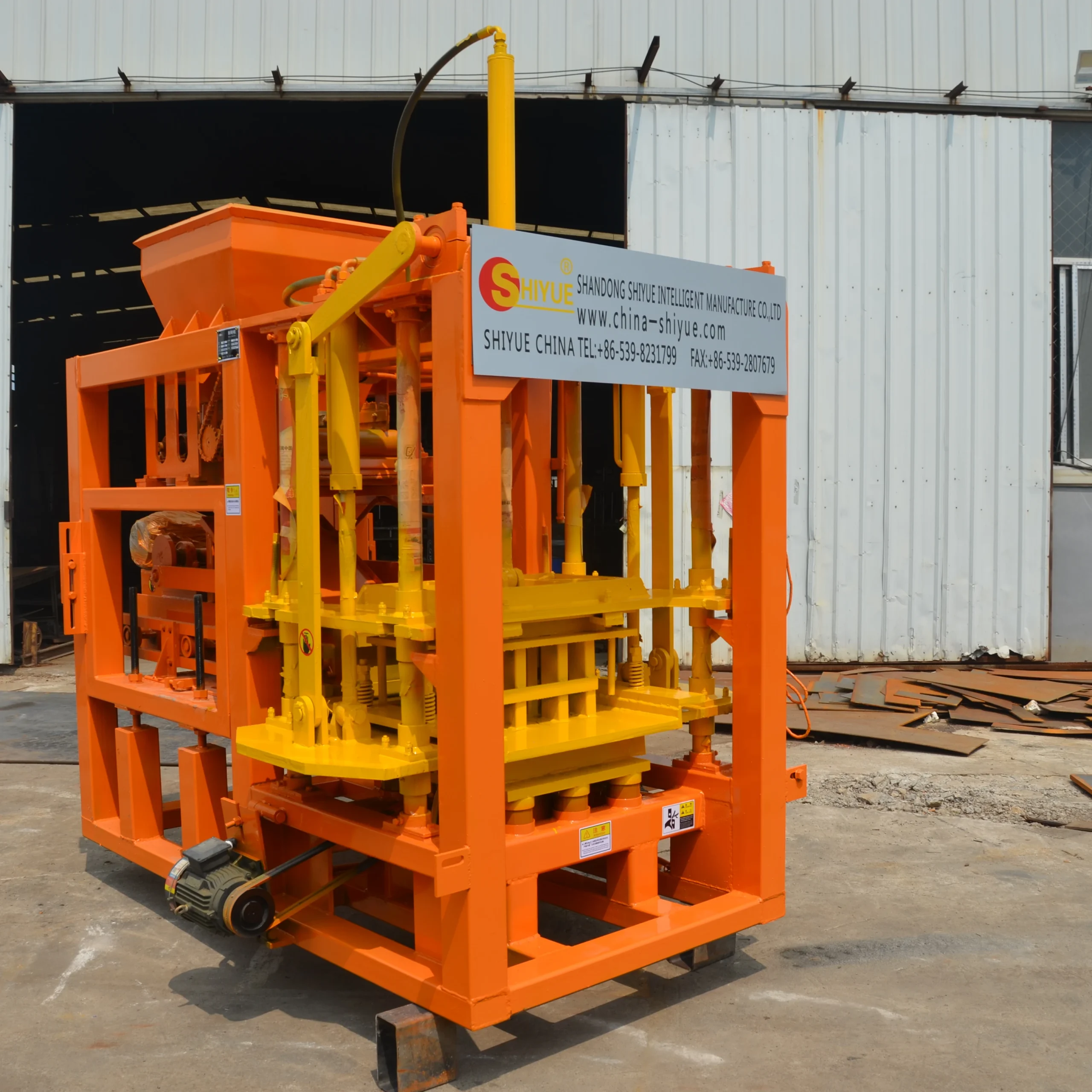
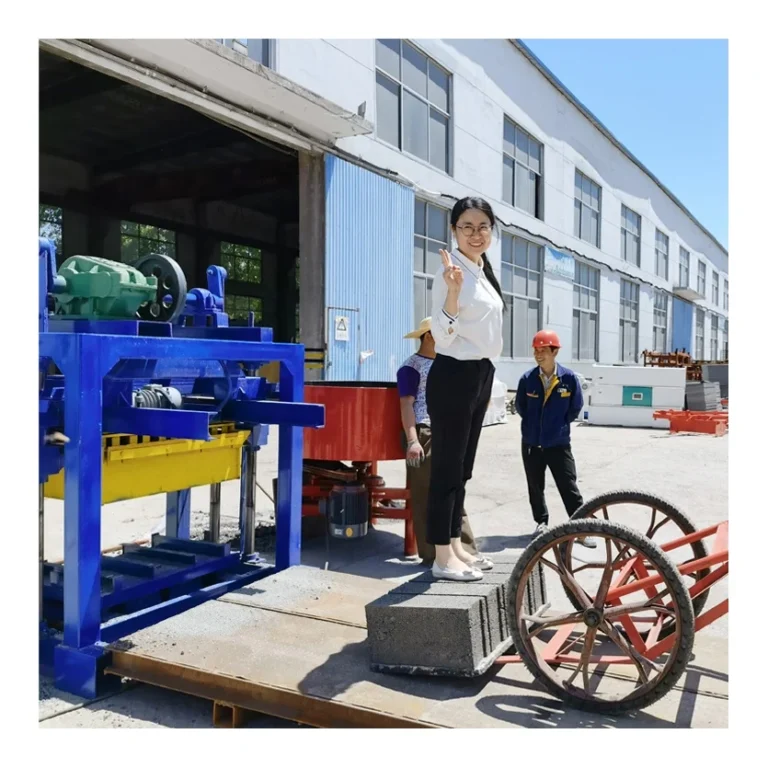 Stationary block machine