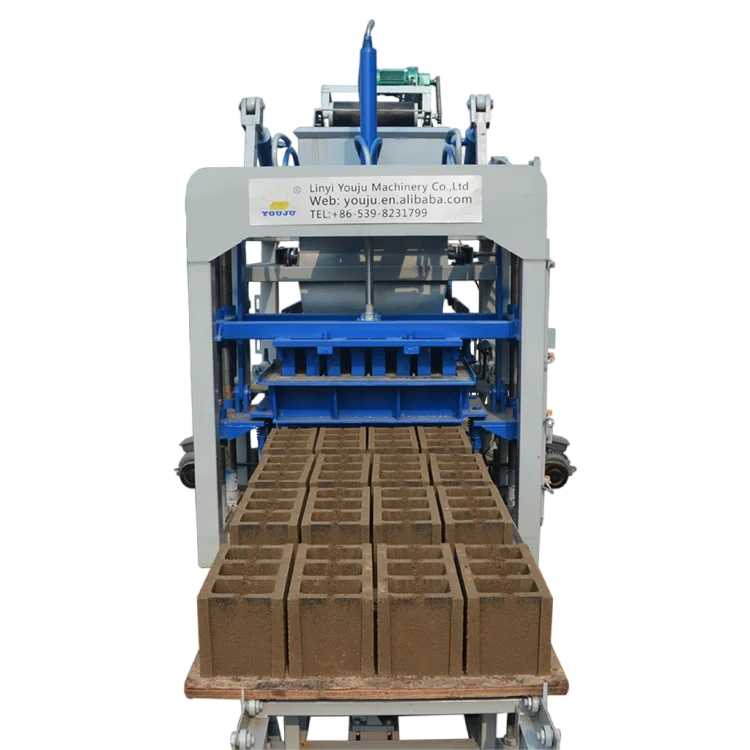
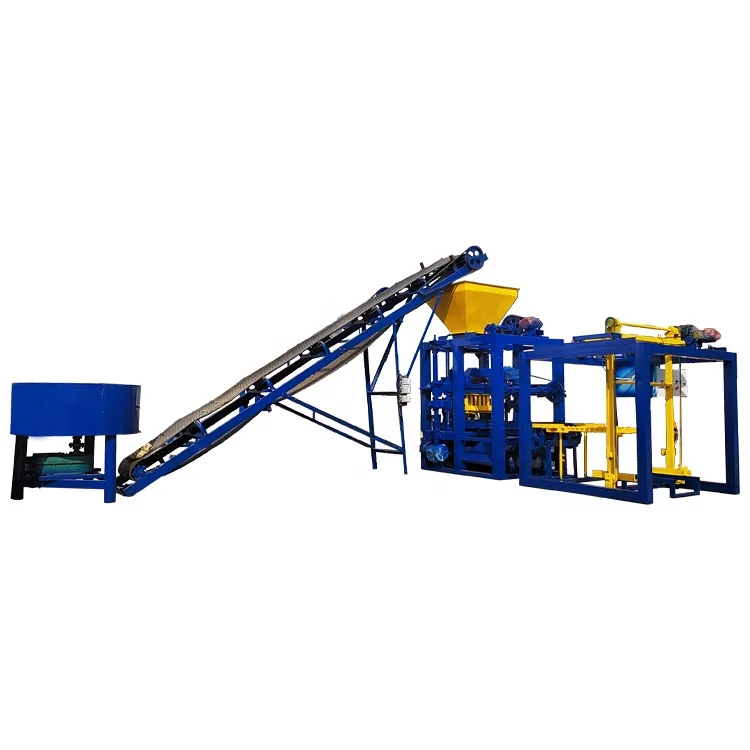
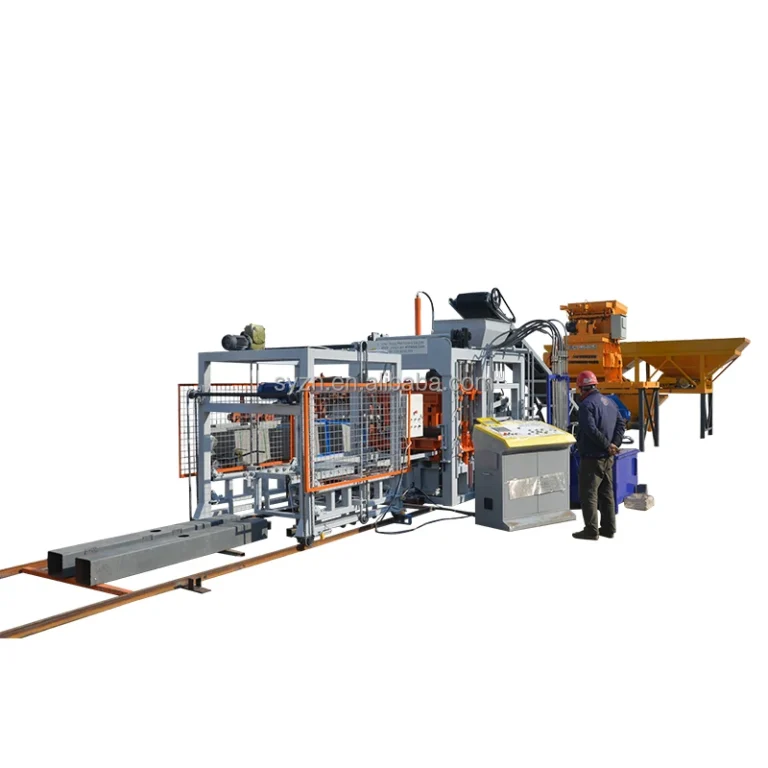
Matched System Design — the QT8-15 block machine, moulds, pallets and handling are specified together so cycle times match across every station instead of leaving the press idle.
Technical Specifications
| Parameter |
Value |
| Model |
QT8-15 |
| Product Type |
Hydraulic Concrete Block Making Machine |
| Overall Dimensions (L×W×H) |
8300×1860×3000 mm |
| Rated Pressure |
21 MPa |
| Vibration Force |
45 kN |
| Main Vibration Form |
Platform Vibration |
| Vibration Frequency |
2800–4500 r/min |
| Pallet Size |
950×900 mm |
| Molding Cycle |
15–20 s (basis not stated in source — confirm block format) |
| Overall Power |
55.5 kW |
| Total Mass |
8 T |
| Demolding Method |
Hydraulic |
| Recommended Factory Area |
300 m² |
| Voltage & Frequency |
Configurable (basis to be confirmed before order) |
| Control System |
Available with PLC or MCC control (basis to be confirmed) |
| Automation Level |
Available in semi-automatic or fully automatic configuration |
| Warranty |
1 year (whole machine, excluding spare parts) |
| Loading |
1×40HQ container (basic equipment) |
Application Suitability
| Application |
Material or Output |
| Hollow and solid block production plants |
Crushed stone, sand, cement, fly ash, gravel |
| Paver and interlocking brick manufacturing |
Dust, slag, cement, fine aggregate |
| On-site production by housing project contractors |
Local aggregate with cement binder |
| Building material distributors adding formats |
Kerbstone and colored pavers from standard mixes |
What "Cycles per Hour" Actually Means for Your Daily Output
Capacity figures only matter when tied to the exact block format you intend to produce.
Catalogues often list a concrete block making machine manufacturer’s output as cycles per hour, but that number assumes a specific block size, thickness, and mix. A standard hollow block might complete a cycle in the lower end of the range, while a dense interlocking paver demands longer vibration and slower demolding. If the cycle time is quoted without the format, the daily output number is essentially a guess [NEED_CITE: block format and cycle time relationship in hydraulic block presses]. I have seen buyers in Central America calculate shift output from a catalogue figure, only to find their local high-clay aggregate forced longer cycles and real production landed well below expectation. The QT8-15 sits in the upper-mid tier of our automatic range, but its actual throughput depends entirely on your product mix.

Where the QT8-15 Sits in the Full Machine Range
Buyers surveying options typically start by understanding the spread from small workshop machines to high-capacity automatic lines. The QT8-15 occupies the tier where a plant moves past manual pallet handling and basic vibration into hydraulic demolding with platform vibration, making it a practical step for a first automatic investment. It covers the middle ground between semi-automatic models suited for lower volumes and large-capacity lines that demand significant floor space and upstream batching infrastructure.
Output Tiers and the Automation Decision
Choosing a tier is not just about maximum capacity — it is about matching the machine to the automation level your operation can support. A semi-automatic plant keeps pallet handling and stacking manual, which lowers the initial outlay but caps realistic daily output. The QT8-15 tier introduces automatic pallet feeding and can be configured with stacking and cubing as the plant grows. This upgrade path matters because a buyer who starts with the right frame and hydraulic system can add automation stations later without replacing the press [NEED_CITE: automation upgrade paths in block making lines].
Pressure, Vibration and What They Mean for Block Density
The 21 MPa rated pressure and 45 kN vibration force work together to compact the mix into a dense, uniform block. Platform vibration at 2800–4500 r/min distributes energy across the full pallet area, which is critical when switching between a tall hollow block that needs deep compaction and a thin paver that requires surface finish. The 950×900 mm pallet size determines how many blocks fit per cycle, and that pallet must be compatible with whatever curing racks and forklifts you already have on site. The 55.5 kW overall power rating covers the hydraulic pump, vibration motors, and conveyor drives, so your electrical supply must support sustained draw at that level.
The Cost of Skipping Configuration Details
When pallet size is chosen without checking the curing area dimensions, pallets pile up on the floor because the racks were built for a different size. When voltage and PLC language are left unconfirmed, the machine arrives and sits idle while the electrician sources a transformer and the operator tries to navigate a foreign-language display [NEED_CITE: voltage and frequency standards by export market]. These are not rare mistakes — they show up regularly when a buyer focuses on the press price and treats the rest of the line as an afterthought.
Why Source This Tier Here
Block machinery is our single focus, so the QT8-15 is specified as part of a matched system rather than a standalone press. Configuration is set against your actual mix design and local aggregate, not a catalogue default. Moulds are designed for the formats your market sells, including custom drawings if your product range has non-standard dimensions. The automation level is selectable, meaning you can start semi-automatic and add stacking or cubing later. Installation support includes operator training so the crew running the line on day one understands cycle adjustments and mould changes.
Documentation & Verification
- Line layout showing station spacing and pallet flow for the 950×900 mm pallet size
- Capacity calculation stating the block format assumed for the cycle time figure
- Machine specification sheet with voltage, frequency and PLC language confirmed
- Mould drawing and format list matching your target product range
- Hydraulic and electrical schematic for local maintenance teams
- Factory test record on your block format before dispatch
Installation, Commissioning & Support
- Foundation must support the 8 T total mass and dynamic vibration loads at 45 kN
- Dedicated electrical circuit rated for 55.5 kW continuous draw with confirmed voltage and frequency
- Machine dismantled for 40HQ container loading and reassembled on site with alignment checks
- First-run commissioning includes cycle time tuning for your specific block format and mix
- Operator training covers mould change procedure, PLC navigation and daily maintenance points
- Wear parts list with hydraulic seal and vibration motor specifications for local sourcing
What We Need to Size Your Line
Tell us the block formats your market sells, the local aggregate type and cement ratio you plan to use, and your target daily output. Confirm your site voltage, frequency, and the language you need on the PLC display. Share your available floor area and whether you already have curing racks and forklifts, so the pallet specification matches your existing handling setup.
Frequently Asked Questions
Q: Where does the QT8-15 sit compared to semi-automatic and higher-capacity tiers?
A: It is the upper-mid tier in our automatic range. Below it, semi-automatic models suit lower output with manual pallet handling. Above it, high-capacity lines require larger pallets, more floor space and full batching infrastructure. The QT8-15 bridges that gap for buyers stepping into their first automatic plant.
Q: How do I get a capacity calculation for my specific block format?
A: We need your target block dimensions, mix design and local aggregate details. The 15–20 second molding cycle varies by format, so we calculate realistic daily output based on your actual product, not a catalogue default. This calculation is included with every quotation.
Q: What voltage and PLC language options are available?
A: Voltage and frequency are configured to your local supply before production. PLC display language is confirmed during the quotation stage so operators can navigate the control system from day one without translation delays.
Q: What plant footprint does this model require compared to smaller machines?
A: The recommended factory area is 300 m² for the press and immediate supporting stations. Total line footprint depends on pallet circulation, curing rack layout and stacking configuration. We provide a line layout drawing showing every station before order confirmation.
Q: Can I start semi-automatic and upgrade later?
A: Yes. The QT8-15 can be configured semi-automatic initially with manual pallet handling, then upgraded with automatic pallet feeding, stacking and cubing as output grows. The core hydraulic and vibration systems remain the same through the upgrade path.

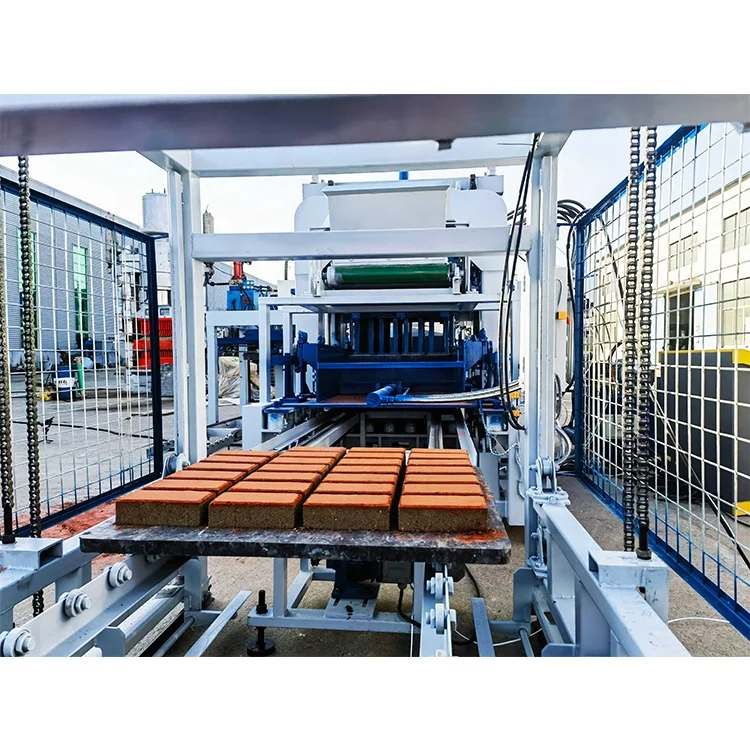
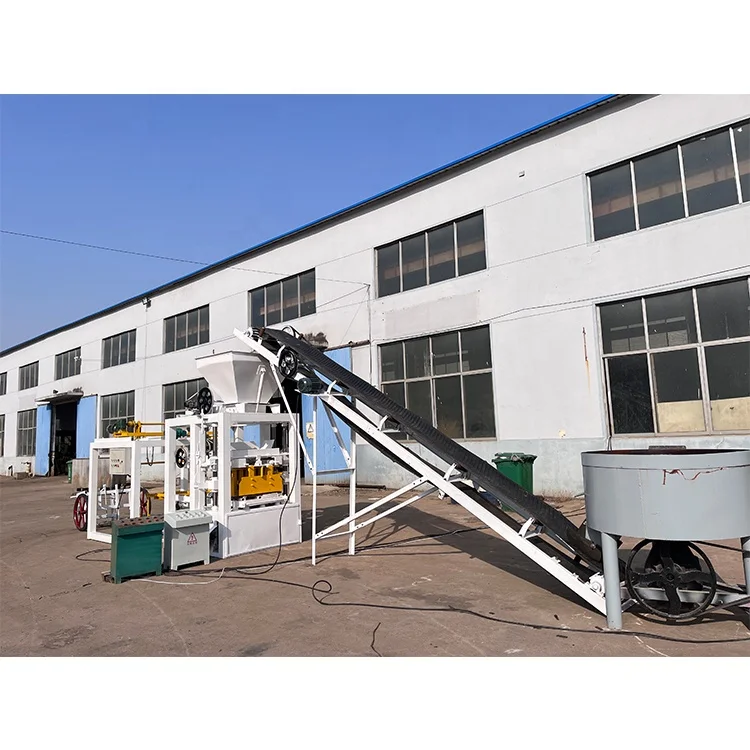 High quality block machine