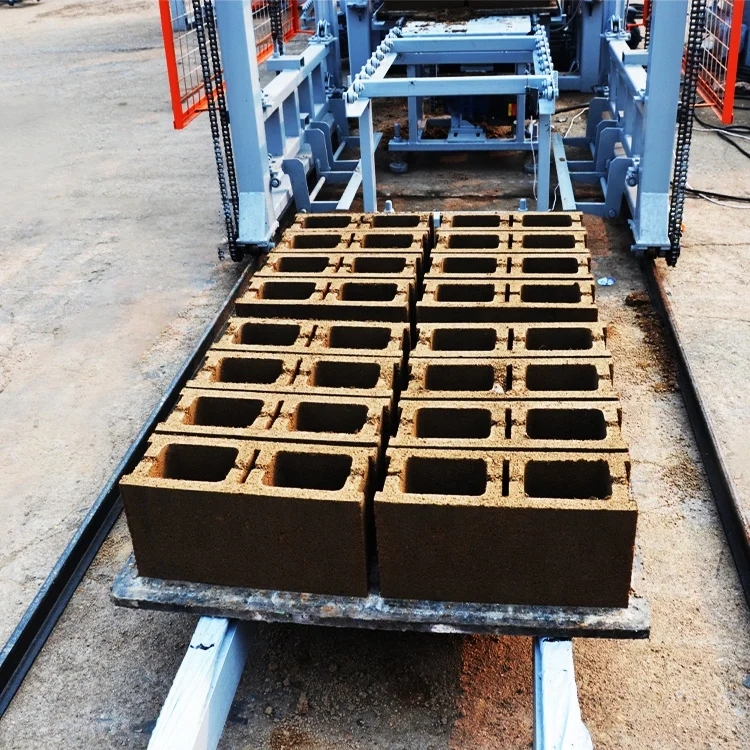
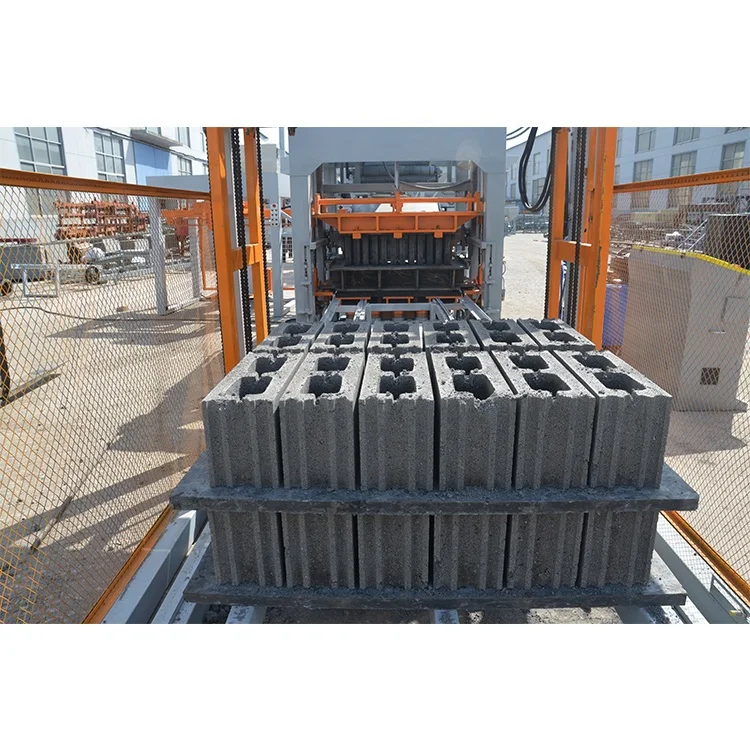
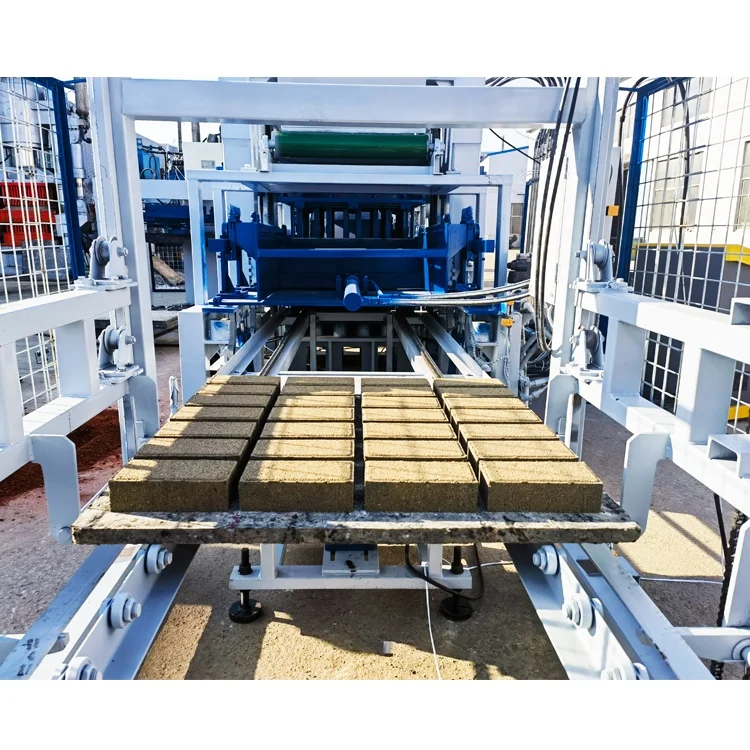
Matched system configuration — Every QT8-15 line is specified against the buyer’s actual block format, local aggregate and existing pallet fleet rather than a catalogue default.
Technical Specifications
| Parameter |
Value |
| Model |
QT8-15 |
| Product Type |
Automatic Cement Interlocking Block Making Machine |
| Dimension of Host Machine |
5870 × 2220 × 2850 mm |
| Weight of Host Machine |
10 Tons |
| Molding Area |
950 × 900 mm |
| Workshop Area |
200 m² (source value — verify against site layout) |
| Host Machine Power |
47 kW |
| Vibration Force |
100 kN |
| Vibration Method |
Hydraulic + Platform Vibration |
| Vibration Frequency |
2800–4500 Times/Minute |
| Pallet Size |
950 × 900 × 25 mm |
| Voltage |
220/380/415/440V (Customized) |
| Molding Period |
15 Seconds |
| Control System |
Siemens PLC with independently developed program |
| Motor |
Germany SIEMENS or CE standard brand |
| Travel Switch |
France Schneider and Japan Omron |
| Mould Treatment |
Carburizing, 54–58 HRC, lifespan over 100,000 cycles |
| Welding |
CO₂ protection welding, CE standard materials |
| Output Capacity |
Basis not stated in source — confirm block format and material |
| Batching Machine |
PLD1200, 1200L hopper, ±2% ingredient precision |
| Concrete Mixer |
JS750, 750L discharge, 35 m³/h (basis to be confirmed) |
| Stacker |
SY-8, 3 kW, mobile pallet stack |
| Grouped Equipment |
Pallet feeder, brick receiver, hydraulic station, batching machine, mixer, conveyor belt, hydraulic trolley, stacker |
| Automation Level |
Automatic |
| Warranty |
1 year (whole machine, excluding spare parts) |
Application Suitability
| Application |
Material or Output |
| Interlocking brick production |
Cement, sand, crushed stone, fly ash blends |
| Hollow brick production |
Lightweight aggregate and standard concrete mixes |
| Paving brick production |
Dense aggregate with high vibration demand |
| Solid brick production |
Standard concrete mixes with fine aggregate |
| Color paver production |
Two-layer feeding with color face mix option |
What "15-Second Molding Cycle" Actually Means for Your Output
A cycle time only becomes real output when you know which block format fills that pallet.
The QT8-15 Automatic Block Making Machine for sale is quoted with a 15-second molding cycle, but the number of blocks per pallet changes entirely depending on whether you are pressing hollow blocks, interlocking pavers or solid bricks. A buyer who sizes their plant on hollow block throughput and later switches to a denser interlocking format will see daily output shift without any machine fault. I have watched buyers in northern Europe commit to a line based on a catalogue figure, only to find their local volcanic aggregate was too heavy for the standard vibration profile — the machine ran fine, but the pressing density fell short and daily saleable output dropped noticeably. [NEED_CITE: aggregate density impact on block compaction and cycle yield]

Where the QT8-15 Sits Across the Full SHIYUE Range
The SHIYUE range spans mobile egg-laying units, semi-automatic workshop machines and fully automatic lines like the QT8-15. This model occupies the high-capacity automatic tier, designed for buyers who need consistent daily volume and plan to run multiple block formats across a dedicated curing area.
Choosing Between Automatic, Semi-Automatic and Mobile Tiers
A mobile machine suits a contractor producing blocks on a single project site with no fixed plant investment. A semi-automatic tier fits a smaller workshop where pallets are handled manually and capital is limited. The QT8-15 and its grouped equipment line — batching, mixing, pallet feeding, stacking — targets buyers who want the press to run continuously without manual pallet transfer. Moving up the range is not just about more blocks per hour; it is about removing labour from the cycle and letting the operator supervise rather than lift. [NEED_CITE: labour allocation in semi-automatic versus automatic block plants]
Reading the Specs That Determine Real Plant Behaviour
The 100 kN vibration force combined with hydraulic pressure determines how densely the concrete is compacted into the mould. When vibration force is too low for a heavy aggregate mix, the block emerges with weak edges and inconsistent weight. The 950 × 900 mm pallet size must match the curing racks and forklifts already in your yard — specifying a different pallet dimension later means replacing your entire handling infrastructure. The Siemens PLC with an independently developed program controls cycle timing, feed volume and vibration duration per format, so the operator selects a recipe rather than adjusting valves manually. Carburizing treatment at 54–58 HRC keeps the mould cavity dimensionally stable across tens of thousands of press cycles, which matters when your market demands tight tolerances on interlocking profiles.
The Cost of Skipping the Format Conversation
When a quotation lists cycles per hour without naming the block format behind that number, the buyer assumes the best-case figure applies to every product. Months later, the plant is running a slower format at a fraction of expected revenue and the buyer blames the machine. Mould change time compounds this — if the mould clamping system is slow, a plant that planned to run three formats in a week may only manage two, losing the flexibility it paid for. [NEED_CITE: mould change duration and weekly format rotation in block plants]
Why Buyers Source This Tier from SHIYUE
Block machinery is our single focus, so the QT8-15 is specified as a matched system: the batching machine, mixer, pallet feeder, press and stacker are selected together so cycle times align and the press is never left waiting for material or an empty pallet. Configuration is set against your actual mix design and local aggregate, not a catalogue default. We supply moulds for the formats your market sells, including custom drawings when standard formats do not match local demand. Automation level is selectable — a buyer can start with the semi-automatic tier and move to this full line as volume justifies it. Installation, commissioning and operator training are included so the first production week is not spent troubleshooting mismatched stations.
Documentation & Verification
- Line layout showing QT8-15 station positions, conveyor routing and curing area footprint
- Capacity calculation sheet stating the exact block format behind each output figure
- Mould drawing and format list covering the profiles your local market requires
- Voltage, frequency and PLC display language confirmation signed before production
- Factory test record with photographs of the QT8-15 running your specified block format
- Packing photographs and customs documentation support for container loading
Installation, Commissioning & Support
- Foundation plan matching the 5870 × 2220 mm host machine footprint and 10-ton operating weight
- Dedicated electrical circuit sized for the 47 kW host plus mixer and batching loads
- Equipment arrives dismantled for container loading; reassembly supervised on site
- First-run commissioning with vibration frequency and hydraulic pressure tuned to your aggregate
- Operator training on PLC format selection, mould change procedure and daily maintenance points
- Wear parts and mould list provided so first replacement orders can be placed before stock runs out
What We Need to Specify Your Line
To size the QT8-15 correctly for your plant, share the block formats your market sells, the daily volume you need per format, and the raw materials available locally including aggregate type and source. We also need your site voltage and frequency, the PLC display language your operators will use, and the dimensions of your existing curing area and forklift capacity so the pallet specification aligns with your handling setup.
Frequently Asked Questions
Q: How do I verify the QT8-15 output capacity and what block format is it based on?
A: We provide a capacity calculation sheet that states the exact block format, mould cavity count and cycle time behind each output figure. Without naming the format, a cycle-per-hour number is meaningless. Ask for this document before placing any order so you can match quoted throughput against the formats your market actually buys.
Q: Where does the QT8-15 sit in the range — automatic vs semi-automatic vs mobile?
A: The QT8-15 occupies the high-capacity automatic tier with grouped batching, mixing, pallet feeding and stacking equipment. Semi-automatic models suit smaller workshops with manual pallet handling, and mobile units serve on-site contractors without a fixed plant. The choice depends on your daily volume target, available labour and capital budget.
Q: What plant footprint does the QT8-15 require compared to smaller models?
A: The host machine alone measures 5870 × 2220 mm, and the full line including batching, mixer, conveyors and stacker requires a workshop area in the range of 200 square metres, plus external curing space. Smaller semi-automatic and mobile models need considerably less. We provide a line layout drawing so you can verify fit before committing.
Q: What voltage options are available and how is the control language confirmed?
A: Voltage is configurable across 220V, 380V, 415V and 440V to match your local supply. The Siemens PLC display language is confirmed in writing before production begins. We ask for both specifications during the quotation stage so there are no commissioning delays when the line arrives at your facility.
Q: What is included in the grouped equipment and what might I need separately?
A: The standard line includes the PLD1200 batching machine, JS750 mixer, conveyor belt, pallet feeder, brick receiver, hydraulic trolley and SY-8 stacker alongside the QT8-15 press. Buyers typically need to source curing racks, forklifts and raw material storage separately. We clarify the scope boundary in the quotation so nothing is left to assumption.

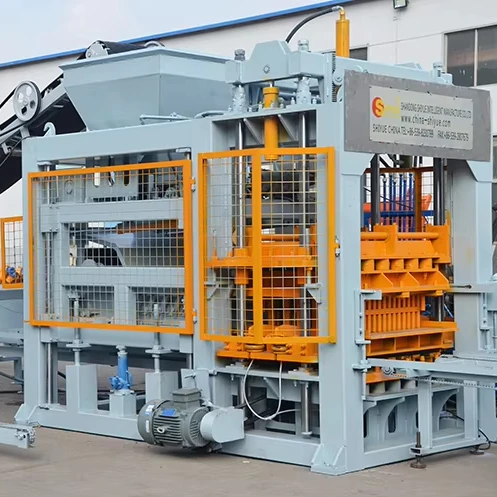
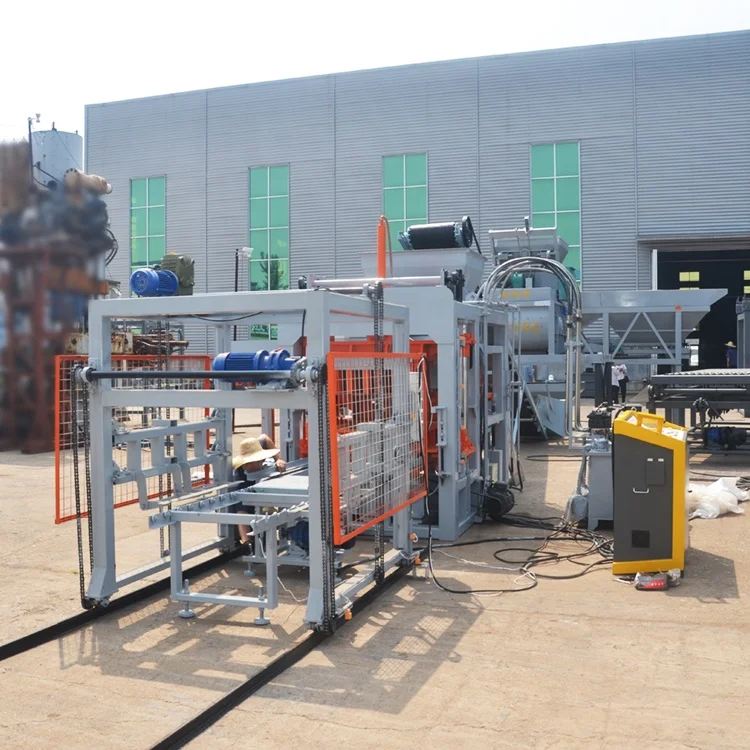 High quality block machine