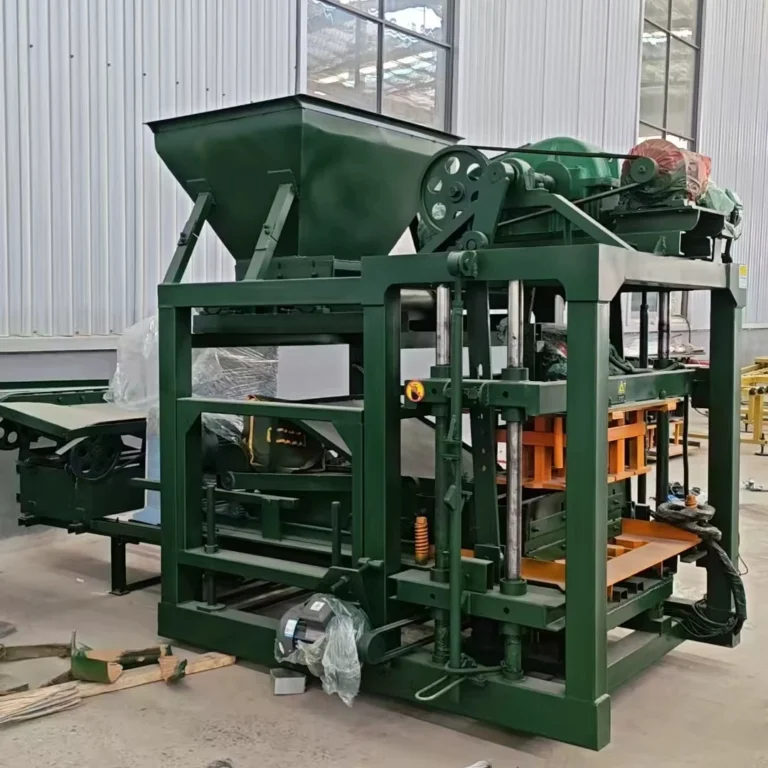
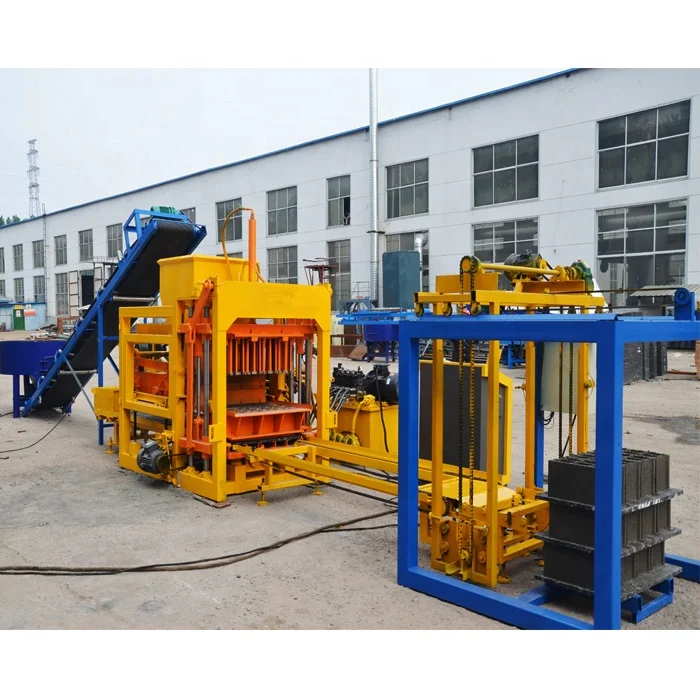
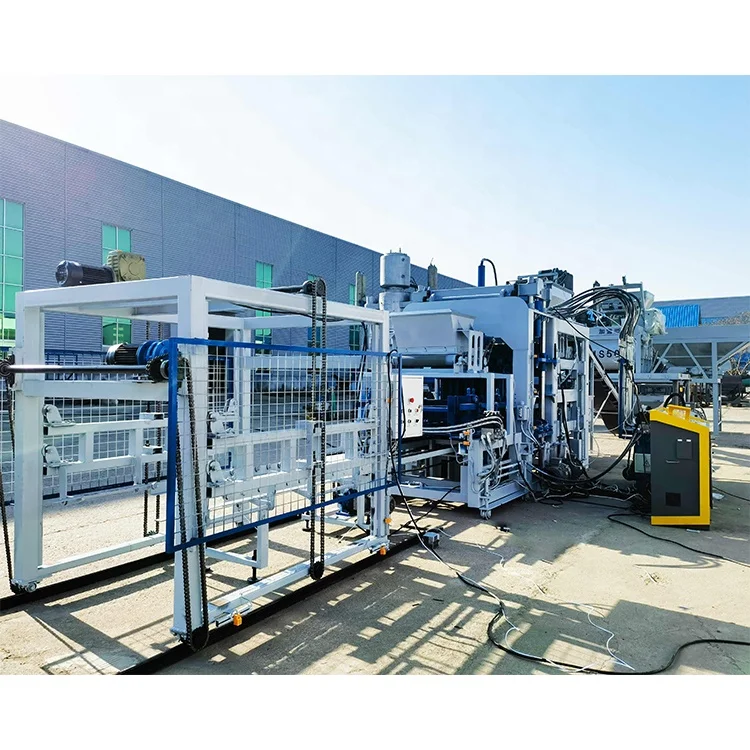
Mid-tier range anchor — the QT8-15 defines the middle output tier in our stationary block machine lineup, letting buyers map automation and footprint before committing to a higher or lower configuration.
Technical Specifications
| Parameter |
Value |
| Model |
QT8-15 |
| Product Type |
Automatic Concrete Block Making Machine |
| Overall Dimensions (L×W×H) |
8300 × 1860 × 3000 mm |
| Pallet Size |
950 × 900 mm |
| Main Vibration Form |
Platform Vibration |
| Vibration Frequency |
2800–4500 r/min |
| Vibration Force |
60 kN |
| Rated Hydraulic Pressure |
21 MPa |
| Molding Cycle |
15–25 s |
| Demolding Method |
Hydraulic |
| Feeding System |
Semi-closed screen reticular rotational feeding |
| Control System |
PLC with human-machine interface |
| Overall Power |
55.5 kW |
| Total Mass |
9 T |
| General Water Consumption |
12 T/Day |
| Factory Area |
600 m² |
| Automation Level |
Fully automatic |
Application Suitability
| Application |
Material or Output |
| Hollow block production for residential and commercial walls |
Crushed stone, sand, cement, fly ash |
| Solid block manufacturing for load-bearing structures |
Gravel, sand, cement, slag |
| Paving slab and colored paver production for walkways and plazas |
Fine aggregate, cement, pigment |
| Interlocking block forming for retaining walls and slopes |
Crushed stone, sand, cement |
| Curbstone production for road and kerb lines |
Coarse aggregate, cement, sand |
What "Cycles per Hour" Hides From the Automatic Concrete Block Making Machine Buyer
Cycle time only becomes real output when you state the block format it was measured on.
I have watched buyers sign off on an automatic concrete block making machine manufacturer quote that promises a certain cycles-per-hour number, only to discover on site that the figure assumed a thin paving slab while their actual product is a 200 mm hollow block requiring longer vibration and a slower press close. The daily throughput then falls far short of what the proforma suggested, and the project schedule absorbs the gap [NEED_CITE: block format assumptions in capacity quotations]. Without a format-specific capacity sheet, the buyer is essentially guessing.

Placing the QT8-15 on the Stationary Range
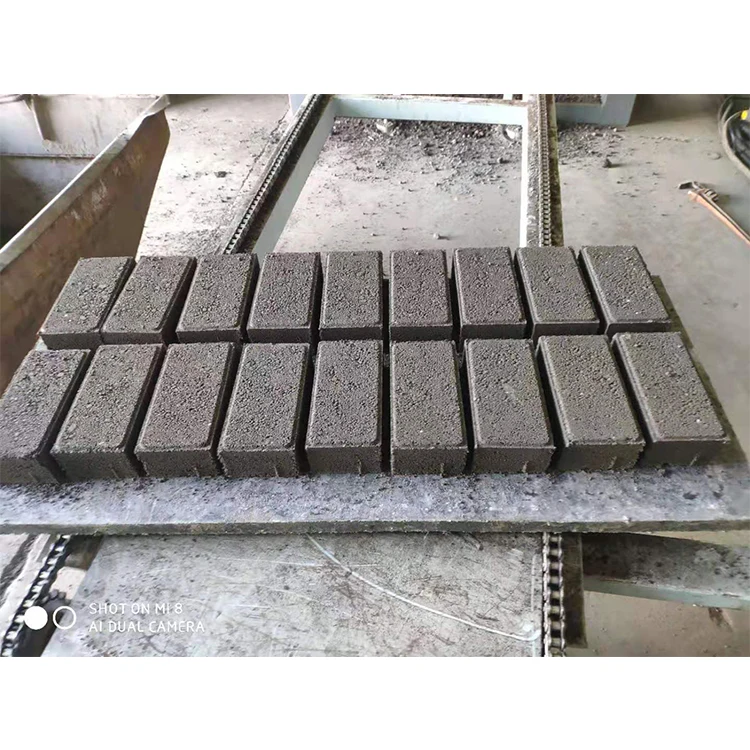
The QT8-15 occupies the mid-to-high output position in our stationary block machine lineup. Buyers stepping up from a semi-automatic plant find it delivers fully automatic pallet feeding, PLC-controlled pressing, and hydraulic demolding without jumping to the footprint and power demand of a high-capacity line. For a first-time block plant, it offers a realistic entry point where the 600 m² factory area and 55.5 kW total power remain manageable for a standard industrial shed.
Automation Tier and Future Expansion Path
A buyer surveying the automatic concrete block making machine manufacturer range needs to see where each tier sits in terms of labor, floor space, and capital. The QT8-15’s PLC with human-machine interface handles signal analysis and cycle optimization, removing much of the manual timing work from the operator. If production demand later grows, the pallet size and line layout leave room to add automatic stacking and cubing stations without replacing the press itself [NEED_CITE: automation upgrade paths in stationary block lines].
Reading the Specs That Actually Shape Your Block
The 21 MPa rated hydraulic pressure combined with 60 kN vibration force determines how densely the mix is compacted inside the mould. Insufficient pressure on a coarse aggregate blend leaves hollow blocks with weak webs that crack during pallet handling. The 2800–4500 r/min vibration frequency range lets the operator tune resonance to the specific mix — finer fly-ash blends need higher frequency for proper flow, while gravel-heavy mixes respond to lower frequency and greater amplitude. The 950 × 900 mm pallet size must match the curing rack spacing and forklift tine width already in use at the plant; a mismatch means buying an entirely new fleet of racks. Semi-closed screen reticular rotational feeding distributes material evenly across the mould cavity, reducing density variation between the left and right sides of each block.
The Hidden Cost of Skipping Format-Specific Configuration
When a machine is configured for a catalogue-default mix rather than the buyer’s local aggregate, the vibration and pressure settings never quite match reality. Blocks emerge with inconsistent weight, curing racks fill with product that fails the drop test, and the operator spends shifts adjusting parameters that should have been set at the factory [NEED_CITE: aggregate variability effects on block compressive strength]. The pallet handling system may also be left out of the initial quotation, forcing hand-stacking that erases the throughput advantage the buyer paid for.
Why Source This Tier From a Single-Focus Block Line Supplier
Block machinery is our only product line, so the QT8-15 press, mould, pallet, and handling equipment are specified as one matched system rather than assembled from separate vendors. Configuration starts with the buyer’s actual mix design and target block format, not a default table. Mould design covers the formats the buyer’s local market sells, including custom drawings when standard cavities do not fit. Voltage, frequency, and PLC display language are confirmed before production begins, avoiding commissioning delays on arrival. Factory testing runs the exact block format the buyer intends to produce, so the test record reflects real output rather than a generic demonstration.
Documentation & Verification
- Line layout and capacity calculation stating the block format assumed for each output figure
- Machine specification sheet listing pallet size, vibration force, and cycle time per format
- Mould drawing and format list matching the buyer’s market product range
- Voltage, frequency, and PLC display language confirmation record before production
- Factory test record demonstrating performance on the buyer’s target block format
- Hydraulic and electrical schematic for on-site maintenance reference
Installation, Commissioning & Support
- 600 m² factory area requirement with level concrete floor and drainage for 12 T/day water use
- Dedicated 55.5 kW power circuit matching confirmed voltage and frequency before dispatch
- Machine shipped in dismantled modules for standard container loading and reassembly on site
- First-run commissioning includes PLC dialogue system calibration to the buyer’s mix design
- Operator training covers mould change procedure, vibration frequency tuning, and daily inspection points
- Wear parts and mould list supplied with recommended replacement intervals
Before You Request a Quote
Tell us which block format your market actually sells — hollow, solid, paver, or interlocking — along with the daily output you need to hit. Share your local aggregate type, available cement grade, and any existing curing racks or forklifts so we can confirm pallet compatibility. We also need your site voltage, frequency, and preferred PLC display language to lock in the electrical configuration before production starts.
Frequently Asked Questions
Q: How is the QT8-15’s output capacity calculated, and which block format is assumed?
A: Capacity depends entirely on the block format, wall thickness, and mix design. A thin paver cycles faster than a 200 mm hollow block. We provide a format-by-format capacity sheet that states the assumed product dimensions, molding cycle, and resulting daily output so the figure reflects what you will actually produce.
Q: What separates the QT8-15 from other tiers in the automatic block machine range?
A: The QT8-15 sits in the mid-to-high output tier with a 950 × 900 mm pallet and fully automatic PLC control. Lower tiers use smaller pallets and semi-automatic handling, while higher tiers add larger pallets, higher vibration force, and automatic cubing. The right tier depends on your target daily volume and available factory area.
Q: What plant footprint does the QT8-15 require compared to a semi-automatic model?
A: The QT8-15 press itself fits within a 600 m² factory area when paired with standard curing space. Semi-automatic models have a smaller press footprint but require more manual handling room around the machine. The total site area depends on curing rack layout and raw material storage, which we map in the line layout document.
Q: Can I upgrade the automation level later if I start with a semi-automatic configuration?
A: Yes. The pallet size and line layout are shared across tiers, so a buyer who begins with semi-automatic handling can later add automatic pallet feeding, stacking, and cubing stations without replacing the press. The upgrade path is documented in the initial proposal so electrical and mechanical interfaces are reserved.
Q: What pallet size does the QT8-15 use, and is it compatible with standard curing racks?
A: The QT8-15 uses a 950 × 900 mm pallet. We confirm compatibility with the buyer’s existing curing rack spacing and forklift tine width before finalizing the order. If the buyer has not yet purchased racks, we specify rack dimensions that match the pallet and fit the available curing area.

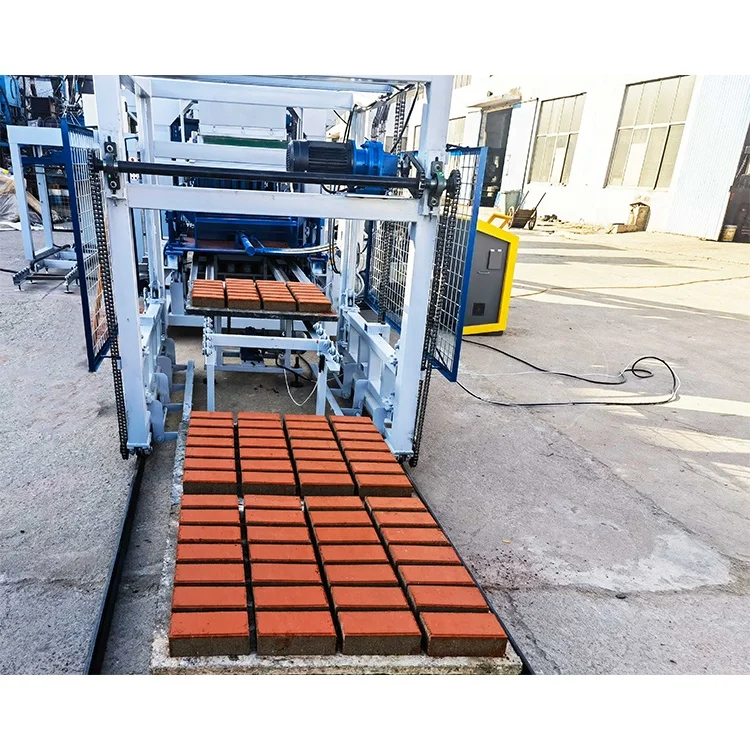
 Stationary block machine