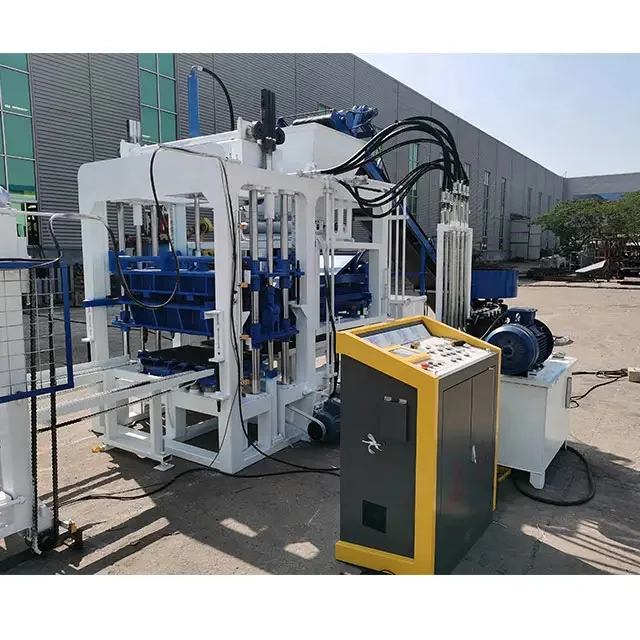
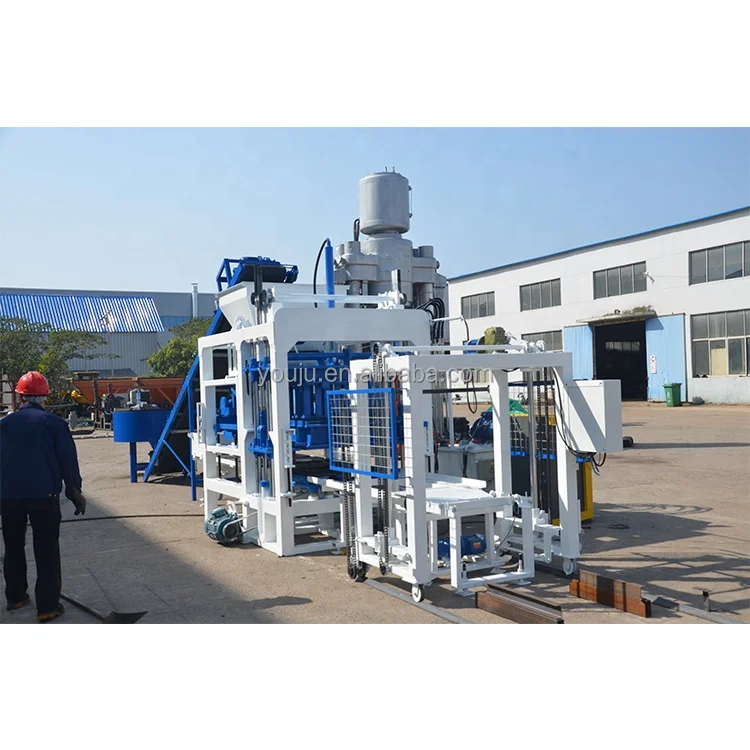
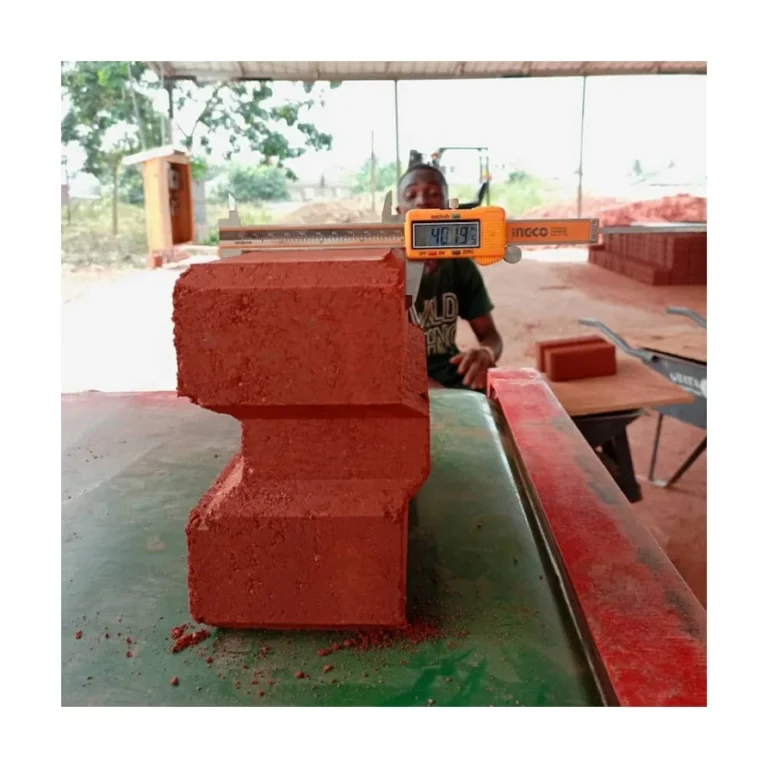
Integrated Line Match — every QT8-15 configuration is specified against your local aggregate, target block format and existing pallet fleet so the press, moulds, and handling equipment arrive as one verified system.
Technical Specifications
| Parameter |
Value |
| Model |
QT8-15 |
| Product Type |
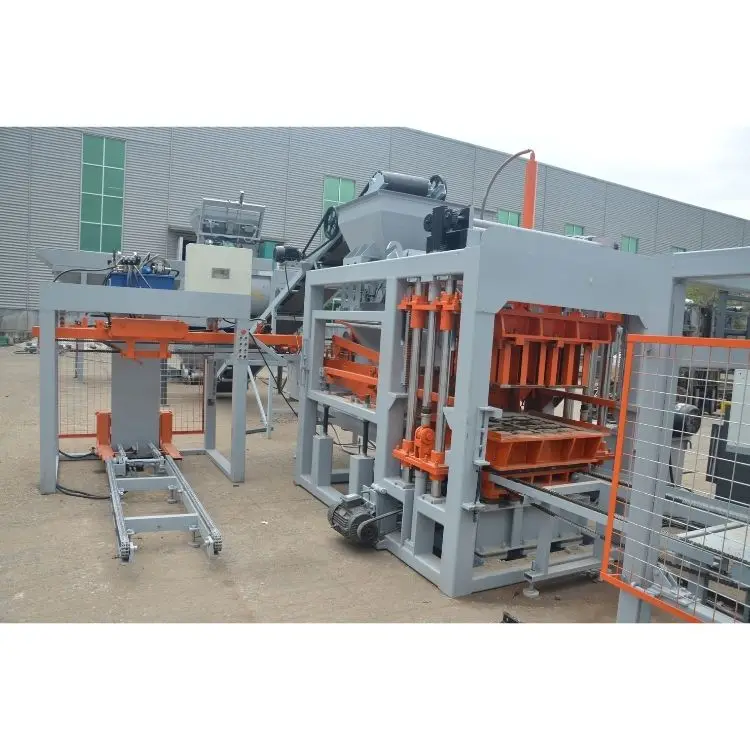
Automatic Concrete Block Making Machine |
| Automation Level |
Automatic with hydraulic pressure and vibration system |
| Cycle Time |
15–20 seconds |
| Output Capacity — Hollow Block 400×200×200mm |
1,600–1,900 pcs/h (8 pcs/mould, basis: 400×200×200mm hollow block) |
| Output Capacity — Solid Brick 240×115×53mm |
8,000–10,000 pcs/h (45 pcs/mould, basis: 240×115×53mm solid brick) |
| Output Capacity — Paver 200×160×60mm |
3,000–3,600 pcs/h (15 pcs/mould, basis: 200×160×60mm paver) |
| Output Capacity — Paver 225×112.5×60mm |
4,000–5,000 pcs/h (24 pcs/mould, basis: 225×112.5×60mm paver) |
| Mould Treatment |
Heat-treated for extended service life |
| Hydraulic System |
Advanced hydraulic pressure technology (rated pressure basis to be confirmed) |
| Vibration System |
Latest vibration system (force rating in kN basis to be confirmed) |
| Control System |
PLC (brand and language options basis to be confirmed) |
| Voltage & Frequency |
Configurable (basis to be confirmed for target market) |
| Warranty |
1 year |
| After-Sales Support |
24-hour online technical support; engineer available for overseas installation and operator training |
Application Suitability
| Application |
Material or Output |
| Concrete hollow block production for building construction |
Crushed stone, cement, sand, and water mix designs |
| Solid brick manufacturing for masonry applications |
Fly ash, cement, and local aggregate blends |
| Paving block production for roads and walkways |
High-strength concrete with fine aggregate grading |
| Kerbstone and curb production for infrastructure |
Dense concrete mixes with coarse aggregate |
| Block plants serving construction contractors |
Multi-format output from a single press platform |
What "15–20 Seconds per Cycle" Leaves Out for the QT8-15 Automatic Block Machine Manufacturer
Cycle time only becomes daily output when the block format, mould cavity count, and pallet return speed are all factored in.
A 15–20 second cycle sounds consistent across every format, but eight hollow blocks per mould and forty-five solid bricks per mould produce vastly different shift totals. Buyers who compare machines on cycle time alone often find their actual daily volume falls short once pallet handling delays and mould change downtime enter the equation [NEED_CITE: common capacity calculation errors in block machine procurement]. The QT8-15 automatic block machine manufacturer must state output per format, not just per hour, so the buyer’s investment decision rests on the product they actually sell.

Positioning the QT8-15 Across the Shiyue Range
The QT8-15 sits in the upper-mid output tier of the complete Shiyue block machine lineup. Smaller semi-automatic models serve workshops producing under a thousand hollow blocks per hour, while the QT8-15 delivers between 1,600 and 1,900 hollow blocks per hour based on the 400×200×200mm format with eight cavities per mould. This positioning helps first-time plant entrepreneurs and established contractors alike see where the machine fits before committing to a footprint and supporting equipment budget.
How Multi-Format Capability Shapes the Investment Decision
A single QT8-15 platform handles hollow blocks, solid bricks, interlocking pavers, and curbstones through mould changeovers. Heat-treated moulds extend the interval before the first replacement set is needed, which matters when comparing this tier against smaller machines that may require earlier mould investment. Buyers planning to serve both masonry and paving markets can phase their format rollout without replacing the press itself, keeping the initial capital focused on the core product their local demand supports [NEED_CITE: mould service life expectations for heat-treated block moulds].
Matching Hydraulic Pressure and Vibration to Your Mix Design
The QT8-15 uses a combined hydraulic pressure and vibration system to compact concrete into the mould cavity. The actual density and block strength depend on how well those two forces match the buyer’s specific aggregate grading and cement ratio. A mix with high clay content from a local riverbed, for instance, absorbs vibration differently than washed crushed stone, meaning the same machine can produce inconsistent strength if the force settings are not calibrated to the material on hand. Pallet size must also align with the curing yard dimensions and the forklift capacity already available at the buyer’s site, otherwise freshly pressed blocks bottleneck before they even reach the rack.
The Hidden Cost of Skipping Configuration Details
Ordering a QT8-15 without confirming voltage, frequency, and PLC display language often delays commissioning by days or weeks after the container arrives. A 380V/50Hz machine shipped to a 440V/60Hz market will not run without a transformer, and an operator who cannot read the control screen makes mistakes during the critical first production runs [NEED_CITE: voltage and frequency mismatches in exported industrial machinery]. Pallet handling, stacking, and curing equipment left out of the initial quotation force the buyer to source those stations separately, breaking the matched-system logic that keeps cycle times consistent.
Why Source the QT8-15 Through a Single-Focus Supplier
Shiyue concentrates exclusively on block machinery, meaning the press, moulds, pallets, and handling equipment are specified as one system rather than assembled from unrelated vendors. Configuration is set against the buyer’s actual mix design and local aggregate, not a catalogue default. Mould design covers the specific formats the buyer’s market demands, including custom drawings when standard cavities do not match local dimensions. Automation level is selectable, so a plant can start with semi-automatic pallet handling and add automatic stacking later as volume grows. Installation support includes operator training, and wear parts availability is confirmed before the first replacement cycle is due.
Documentation & Verification
- Line layout and capacity calculation stating the block format assumed for each QT8-15 output figure
- Machine specification sheet confirming hydraulic pressure, vibration force, pallet size, and voltage for your market
- Mould drawing and format list with heat treatment confirmation and estimated service life per cavity
- Voltage, frequency, and PLC display language confirmation signed off before production begins
- Factory test record on your specific block format before container loading
Installation, Commissioning & Support
- Foundation plan matching the QT8-15 vibration table footprint and hydraulic power unit weight distribution
- Dedicated electrical circuit sized to the confirmed voltage and frequency for the hydraulic pump and vibration motors
- Container dismantling sequence documented so reassembly on-site follows the correct station order
- First-run parameter setting for hydraulic pressure and vibration duration matched to your local aggregate
- Operator training covering mould changeover procedure and daily lubrication points on the QT8-15 press
- Wear parts and mould replacement list provided with part numbers for reordering
What to Share Before Requesting a QT8-15 Quotation
Provide the specific block formats your market buys, along with the daily volume you need to hit for each format. Share your local raw material source and any aggregate test data you have, including moisture and clay content. Confirm the voltage and frequency at your site, the PLC language your operators read, and the pallet size your curing yard and forklift already accommodate. Mention any existing upstream mixers or downstream stacking equipment the QT8-15 must connect to.
Frequently Asked Questions
Q: Where does the QT8-15 sit in the full Shiyue machine range?
A: The QT8-15 occupies the upper-mid output tier. Smaller semi-automatic models serve workshops below a thousand hollow blocks per hour, while the QT8-15 produces 1,600–1,900 hollow blocks per hour based on the 400×200×200mm format. It bridges the gap between entry-level plants and high-capacity fully automatic lines, offering a platform buyers can expand with additional automation later.
Q: How is capacity verified for each block format on the QT8-15?
A: Every output figure is stated per format with mould cavity count and cycle time included. For example, solid brick output of 8,000–10,000 pieces per hour assumes forty-five cavities per mould and a 15–20 second cycle. The capacity calculation document provided with your quotation names the exact format and assumptions used, so you can compare tiers honestly.
Q: Can I start with the QT8-15 in a semi-automatic setup and add automation later?
A: Yes. The QT8-15 platform allows buyers to begin with manual or semi-automatic pallet handling and upgrade to automatic stacking and cubing as production volume grows. The press and mould configuration remain the same, so the upgrade adds handling stations without replacing the core machine or re-commissioning the hydraulic and vibration systems.
Q: What voltage, frequency, and PLC language options are available?
A: Voltage and frequency are configurable to match your local supply, and PLC display language is confirmed before production. The quotation process requires written sign-off on these parameters so the QT8-15 arrives ready to connect without transformers or control screen translation delays on site.
Q: What plant footprint does the QT8-15 tier require compared to smaller models?
A: The QT8-15 requires a larger press pit, a longer pallet return conveyor, and more curing rack space than semi-automatic or mobile machines due to its higher output. A line layout drawing provided during the quotation stage shows the exact station arrangement, including raw material feeding, mixer placement, and stacking area, so you can verify the footprint against your available floor space.

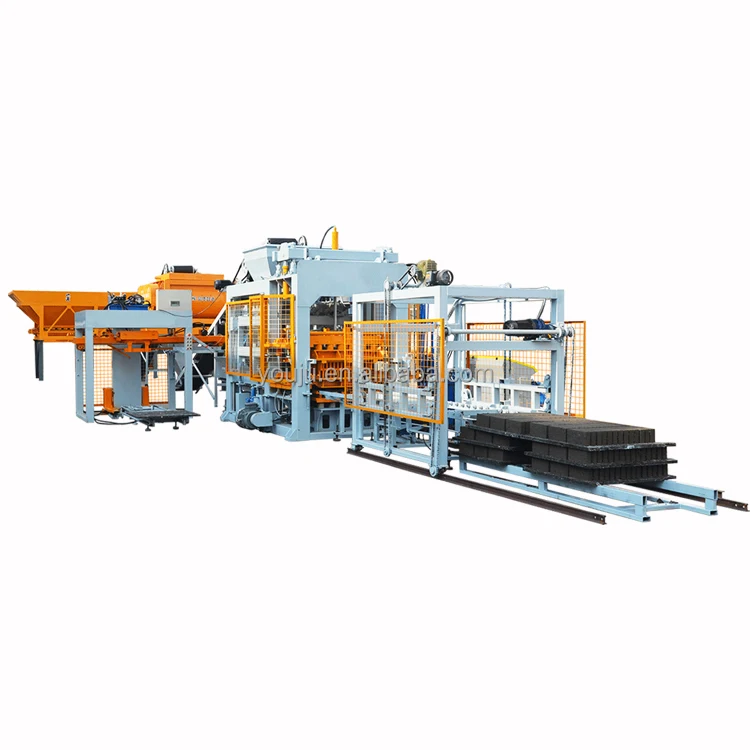
 Semi automatic block