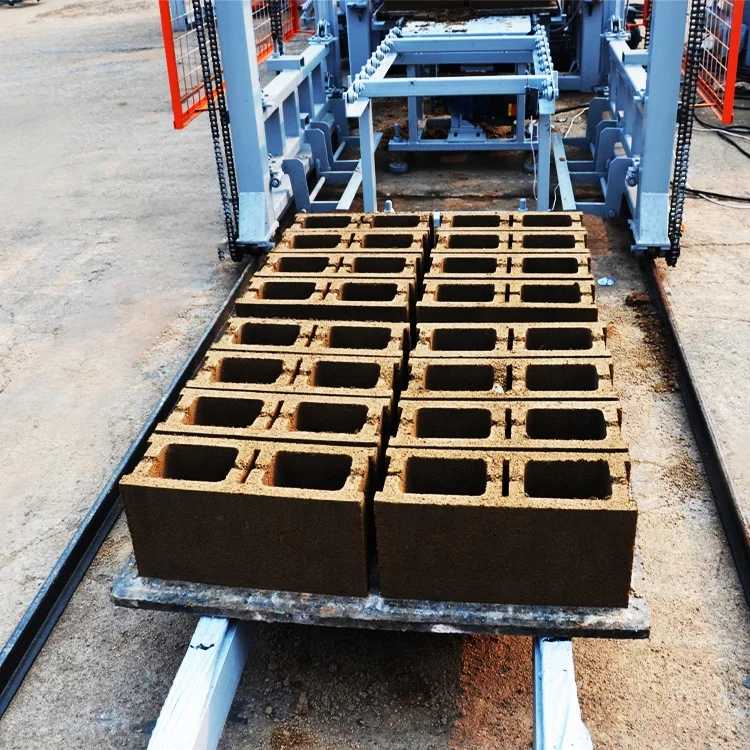
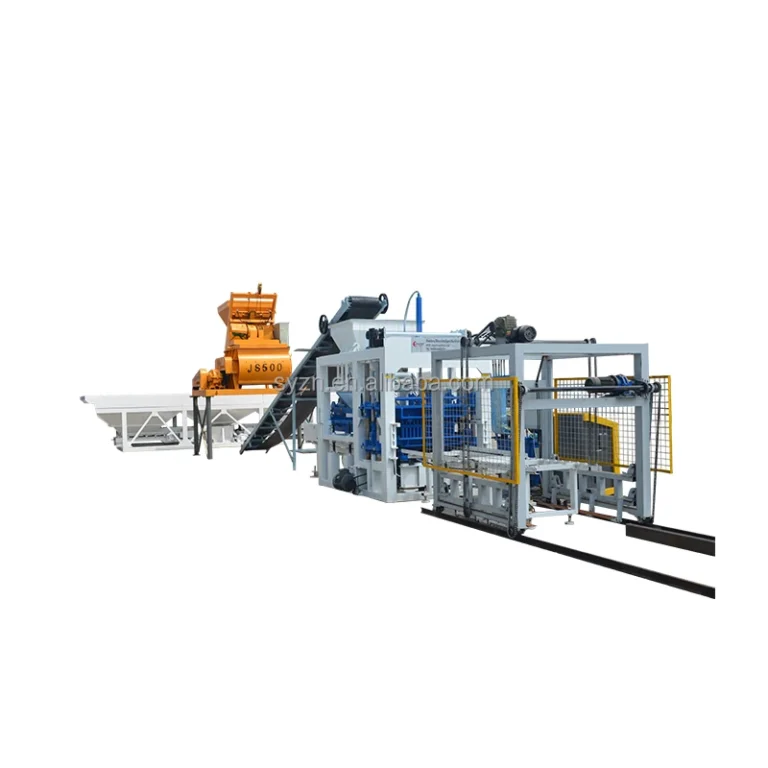
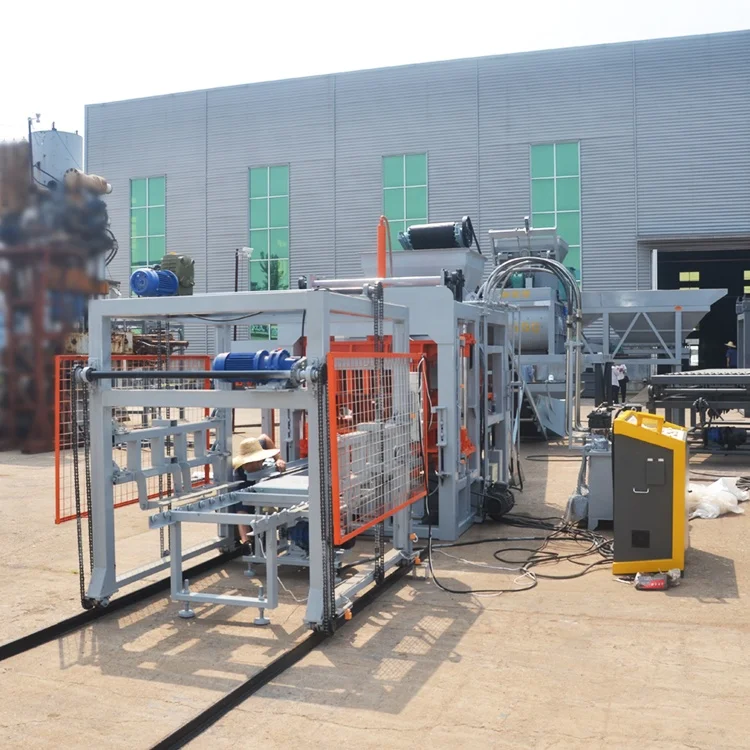
Single-Focus Machinery Match — the QT6-15 is specified as a matched system of press, mould, pallet, and handling rather than assembled from disconnected component quotes.
Technical Specifications
| Parameter |
Value |
| Product Type |
Interlocking Block Making Machine |
| Model |
QT6-15 |
| Overall Dimensions (L×W×H) |
8200×1700×2950 mm |
| Total Mass |
7 T |
| Overall Power |
37 kW |
| Vibration Form |
Platform Vibration |
| Vibration Frequency |
0-60 Hz (adjustable) |
| Vibration Force |
45 kN |
| Pallet Size |
880×850 mm |
| Moulding Mode |
Automatic loading, vibration moulding |
| Demolding Method |
Hydraulic |
| Molding Cycle |
15-20 s (basis not stated in source — confirm block format / material / thickness) |
| Control System |
PLC with touch screen HMI |
| Hydraulic System |
Independent integrated hydraulic station |
| Recommended Factory Area |
1200 m² |
| Block Compressive Strength |
>15 MPa |
| Output — Hollow Block 400×200×200 mm |
1080-1440 pcs/h, 6 pcs/mould, 15-20 s cycle |
| Output — Hollow Block 400×150×200 mm |
1440-1920 pcs/h, 8 pcs/mould, 15-20 s cycle |
| Output — Solid Brick 240×115×53 mm |
5760-7680 pcs/h, 32 pcs/mould, 15-20 s cycle |
| Output — Rectangular Paver 200×100×60 mm |
2160-2880 pcs/h, 21 pcs/mould, 20-25 s cycle |
| Output — Zigzag Paver 225×112.5×60 mm |
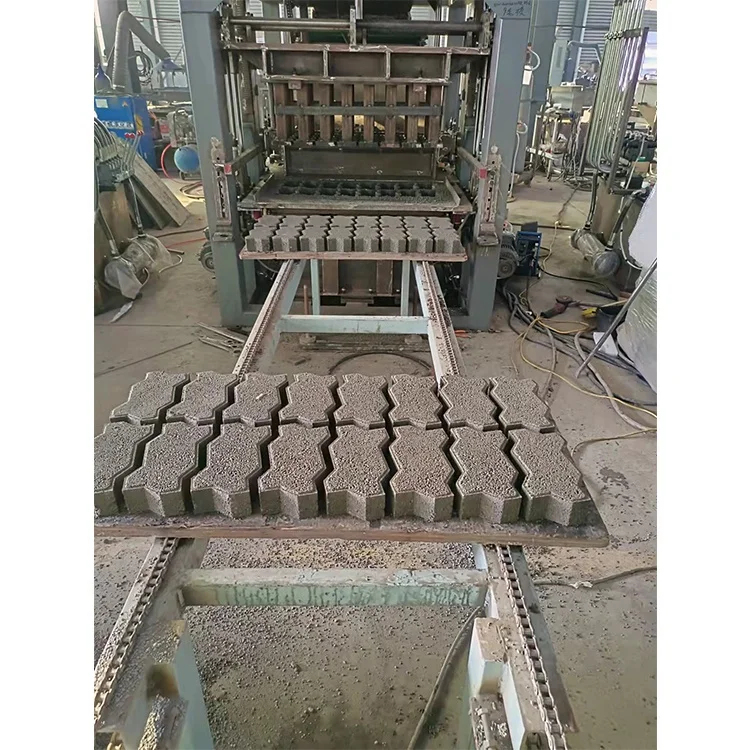
2160-2880 pcs/h, 15 pcs/mould, 20-25 s cycle |
| Key Features |
PLC touch screen with fault diagnosis, independent hydraulic station, adjustable vibration frequency, hydraulic demolding |
Application Suitability
| Application |
Material or Output |
| Hollow block production for wall construction |
Crushed stone, sand, cement blends; 400×200×200 mm and 400×150×200 mm formats |
| Solid brick manufacturing |
Local aggregate and cement mixes for load-bearing and partition formats |
| Rectangular paving brick production |
Dense aggregate blends for 200×100×60 mm driveway and walkway pavers |
| Zigzag and interlocking paver production |
High-strength concrete mixes for 225×112.5×60 mm interlocking surface formats |
| Waste material block production |
Fly ash, slag, and recycled aggregate with reduced cement dosage |
Why "Pieces per Hour" Is a Meaningless Number Without Context
Real output only matters when tied to the exact block format and mould cavity count your market actually buys.
Capacity figures get thrown around in quotations with no reference to the block being produced. A machine rated at thousands of pieces per hour might be running tiny solid bricks that your construction clients never order. I have watched buyers sign purchase orders based on headline throughput numbers, only to arrive on site and discover their daily hollow block output covers barely half the pallets they prepared. Every capacity figure quoted here names the specific format, mould cavity count, and cycle range it assumes, so you can cross-reference directly against your local demand. [NEED_CITE: common capacity misrepresentation in block machinery quotations]

Where the QT6-15 Sits in the Full Automatic Range
The Shiyue block machine line spans from small workshop units through to high-capacity automatic lines with full stacking and cubing. The QT6-15 occupies the mid-output tier, positioned for plants that have outgrown semi-automatic operation but do not yet need the capital commitment of a top-tier continuous line. For a buyer surveying options, this model represents the point where automatic pallet feeding, PLC-controlled vibration moulding, and hydraulic demolding come together as standard rather than as added options.
Automatic Versus Semi-Automatic — Knowing When to Cross the Line
Semi-automatic machines suit smaller plants where labour is plentiful and capital budgets are constrained. The step to a fully automatic block making machine manufacturer configuration like this one pays off when daily output targets, consistency requirements, and labour costs make manual pallet handling the bottleneck. The 880×850 mm pallet size and the 37 kW power draw reflect a machine sized for sustained production shifts. Buyers who plan to run multiple formats across a single shift benefit most from the automatic loading cycle, because each format change relies on the PLC retaining the vibration frequency and cycle parameters for that specific mould. [NEED_CITE: automation decision factors in block plant investment]
Reading the Numbers That Actually Matter on Site
The 45 kN vibration force combined with platform vibration at 0-60 Hz determines how densely the concrete mix packs into the mould cavity before hydraulic demolding locks the shape. Higher vibration force drives stronger blocks but requires a mix with the right moisture content — too dry and the block crumbles on stripping, too wet and it slumps before curing begins. The independent integrated hydraulic station sits away from the main vibration zone, which keeps hydraulic seals and valves out of the dust and shock that degrade components mounted directly on the press frame. The 8200×1700 mm footprint tells you the press itself fits within a standard bay, but the 1200 m² recommended factory area accounts for raw material storage, curing racks, and pallet circulation paths that a mid-tier automatic line demands.
The Commissioning Delay Nobody Warns You About
Machines arrive with the PLC display locked to the language of the factory where they were built. I once saw a mid-tier automatic press stand idle for several days on a Middle East site because every menu, alarm message, and parameter label was in Chinese. The operators could not navigate the fault diagnosis screen, and waiting for a remote software update added unplanned downtime to an already tight project schedule. Confirming the control language and voltage frequency before the machine enters production avoids a delay that has nothing to do with the hardware itself. [NEED_CITE: PLC language and voltage mismatch in export machinery commissioning]
What the Purchase Conversation Should Actually Cover
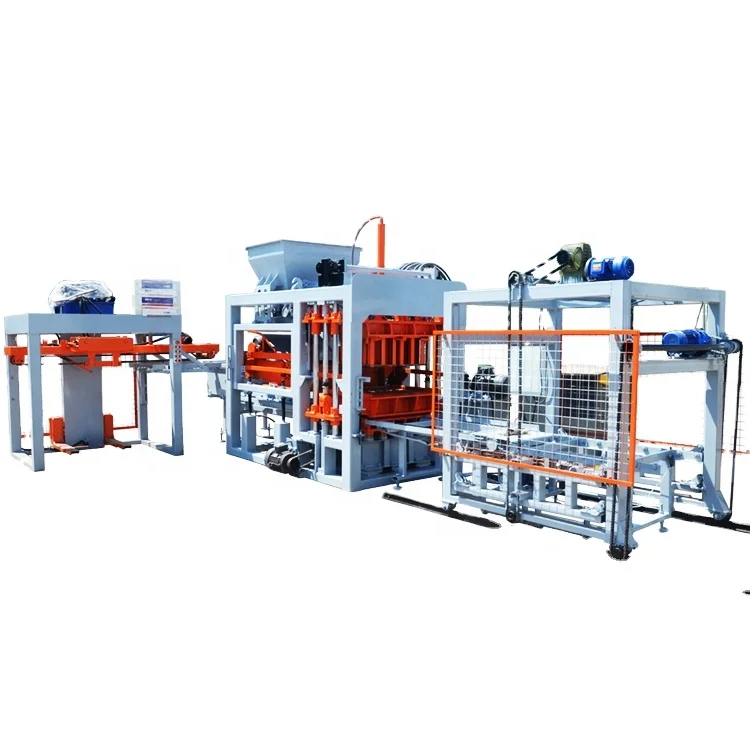
The QT6-15 is specified against the buyer’s block format, local aggregate, and daily target rather than pulled from a default catalogue page. The machine, mould, pallet, and handling equipment are quoted as one matched system, which eliminates the mismatch that occurs when each component comes from a separate supplier. Mould design covers the exact formats the buyer’s market sells, and custom drawings are available when a project specifies a non-standard block profile. The automation level is selectable, allowing a plant to begin at a semi-automatic configuration and upgrade to full stacking and cubing as volumes grow. Installation support includes operator training on the PLC interface and maintenance routines for the hydraulic station.
Documentation & Verification
- Line layout and capacity calculation stating each block format assumed
- Machine specification sheet with vibration force matched to your mix design
- Mould drawing and format list showing cavity count per block type
- Pallet specification matched to your curing area dimensions
- Voltage, frequency, and PLC display language confirmation before production
- Factory test record on your target block format before dispatch
Installation, Commissioning & Support
- Foundation pad sized for the 8200×1700 mm footprint with drainage provisions
- Dedicated 37 kW power circuit with voltage and frequency confirmed pre-shipment
- Machine dismantled for container loading with reassembly guidance on arrival
- PLC touch screen commissioning with language and parameter verification on site
- Operator training covering automatic loading cycle and fault diagnosis navigation
- Wear parts and mould replacement list provided with the operation manual
Before You Request a Quote, Prepare These Details
A meaningful proposal requires the specific block formats you intend to produce, the daily output target for each format, and the raw materials available in your area. We also need your site voltage and frequency, the preferred PLC display language, and the dimensions of any existing curing yard or forklift fleet so that pallet size aligns with your current handling infrastructure.
Frequently Asked Questions
Q: How is the quoted capacity verified and what block format does it assume?
A: Every output figure listed for this interlocking block machine for sale names the exact block dimensions, mould cavity count, and cycle range it assumes. For example, the hollow block capacity of 1080-1440 pieces per hour applies specifically to the 400×200×200 mm format with 6 cavities per mould and a 15-20 second cycle. Switching to a different format changes both cavity count and cycle time, so the daily total must be recalculated per product.
Q: Where does the QT6-15 sit in the full machine range?
A: This model is a mid-output automatic press within the Shiyue block machine line, positioned between smaller semi-automatic units and high-capacity continuous production systems. It includes automatic loading, PLC vibration control, and hydraulic demolding as standard. Buyers with higher volume targets or full cubing requirements should evaluate the next tier up in the range.
Q: What plant footprint and factory area does this tier require?
A: The press itself measures 8200×1700×2950 mm, but the recommended factory area is 1200 m². That total accounts for raw material storage, the mixer station, pallet return paths, curing rack zones, and space for finished product staging. A smaller site will constrain pallet circulation and reduce effective daily output.
Q: Which voltage, frequency, and control language options are available?
A: The electrical system is configured to match the destination market’s voltage and frequency before the machine enters production. The PLC touch screen HMI language is confirmed during the order process so that all menus, alarms, and parameter labels are readable by your operators on day one of commissioning.
Q: What is the investment difference between this tier and the next capacity level?
A: Moving to a higher tier adds output capacity through larger pallets, more mould cavities, and often full automatic stacking and cubing systems. The investment increase covers not only the larger press but also the expanded handling and curing infrastructure needed to keep the faster cycle productive. A detailed capacity comparison by block format is provided on request.

 High quality block machine