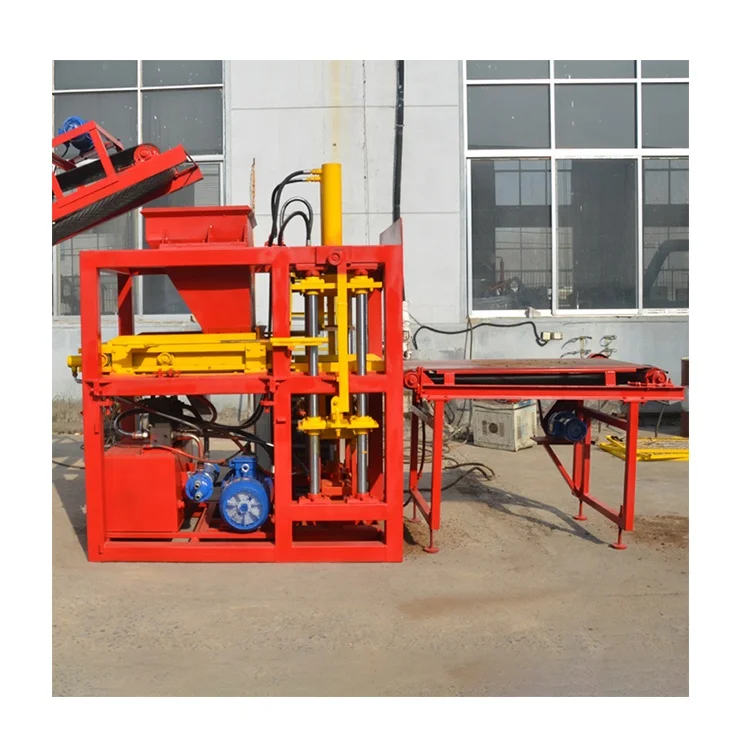
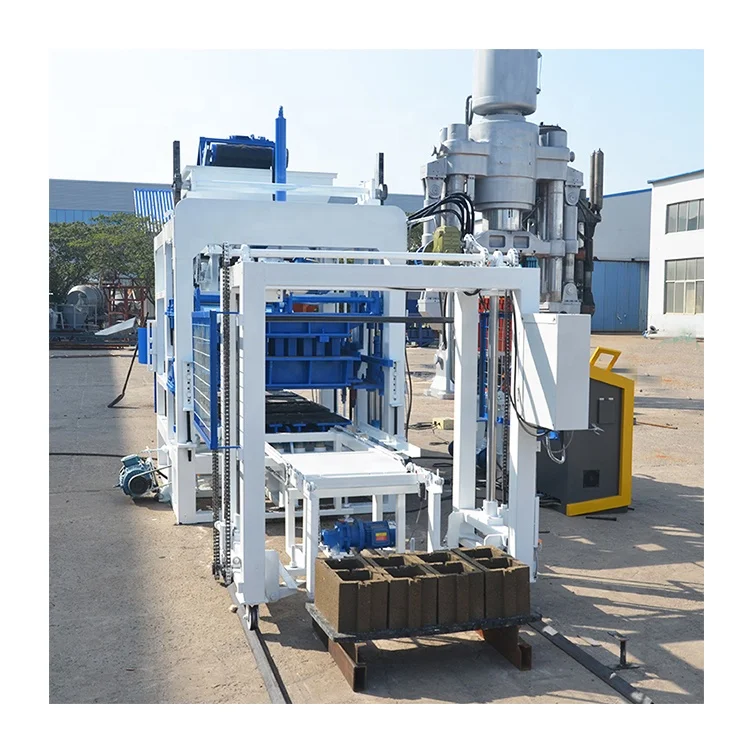
Matched System Spec — Every QT6-15 block line we quote is configured around the buyer’s actual block format, local aggregate and target automation level, so the press, mould, pallet and handling arrive as one verified system rather than a catalogue default.
Technical Specifications
| Parameter |
Value |
| Model |
QT6-15 |
| Product Type |
Automatic Concrete Block Making Machine |
| Molding Way |
Vibration and hydraulic pressing |
| Rated Pressure |
21 MPa |
| Molding Cycle |
15s–20s (basis not stated in source — confirm block format / material / thickness) |
| Pallet Size |
900×700 mm |
| Main Machine Weight |
6000 kg |
| Output Capacity (Hollow Block 400×200×200 mm) |
6 pcs/pallet, 1440 pcs/h, 11520 pcs/8h |
| Output Capacity (Paving Brick 200×100×60 mm) |
21 pcs/pallet, 5040 pcs/h, 40320 pcs/8h |
| Output Capacity (Solid Brick 240×115×53 mm) |
32 pcs/pallet, 7680 pcs/h, 61440 pcs/8h |
| Raw Materials |
Cement, sand, fly ash, stone powder, slag |
| Compatible Products |
Hollow blocks, paving bricks, solid bricks, curbstones, interlocking bricks |
| Simple Line Configuration |
JS500 mixer, 8 m conveyor belt, automatic stacker |
| Full Line Configuration |
Cement silo, screw conveyor, cement scale, batching machine, pallet loader, block and pallet separator |
| Voltage |
Customizable to local voltage |
| Warranty |
1 year (excluding wearing parts) |
Application Suitability
| Application |
Material or Output |
| Hollow block production for building construction |
Cement, sand, fly ash, stone powder mixed with local aggregate |
| Color paving brick and sidewalk brick production |
Crushed stone and cement with pigment additives |
| Solid brick and curbstone manufacturing |
Slag, stone powder and cement blends |
| On-site concrete product manufacturing |
Site-sourced aggregate with cement binder |
What "11520 Blocks per Shift" Actually Assumes
The daily output figure only holds when your block format, mix design and pallet handling match the test conditions behind it.
I once watched a buyer receive a mid-tier machine rated for a strong shift output, only to find the number assumed a hollow block his market never ordered. When he switched to the interlocking paver his customers wanted, the cycle stretched and pallets backed up at the stacker. The QT6-15 concrete block making machine manufacturer you work with should show capacity against the exact format you sell, not the one that looks best on paper. [NEED_CITE: block format impact on cycle time and daily throughput]

Where the QT6-15 Sits in the Machine Range
The QT6-15 occupies the mid-to-upper output tier in our block machine lineup. Buyers starting a first block plant often land here because the semi-automatic simple line keeps initial investment contained while leaving room to add batching and pallet handling later. Those replacing an older press that can no longer keep up with growing paver demand move to the full line configuration to remove manual pallet feeding from the workflow.
From Semi-Automatic Start to Full Line Growth
A simple line pairs the press with a JS500 mixer, an 8 m conveyor belt and an automatic stacker — enough to run consistent shifts without a dedicated batching operator. When production volume justifies it, the full line adds a cement silo, screw conveyor, cement scale, batching machine and pallet loader so the press is never waiting on material or pallets. The QT6-15 concrete block making machine manufacturer builds both tiers on the same press platform, meaning a buyer can begin semi-automatic and expand without replacing the core machine. [NEED_CITE: block plant automation upgrade paths for growing producers]
Reading the Pressure and Pallet Specs That Matter
The 21 MPa rated hydraulic pressure works with the vibration system to compact the mix into dense, consistent blocks — but only when the vibration force and pressure are matched to your specific aggregate and cement ratio. A mix high in fine sand reacts differently under pressure than one loaded with coarse crushed stone, and I have seen operators chase weak blocks for weeks before realizing the vibration setting needed adjustment for their local material. The 900×700 mm pallet size must align with your existing curing racks and forklift capacity; if your curing yard was laid out for a different pallet dimension, every rack and transport step becomes a daily friction point. The molding cycle of 15–20 seconds is a starting range that shifts depending on block thickness and material, so treat any single cycle number as a reference until your own mix is tested on the machine.
The Cost of Skipping the Format Conversation
Buyers who confirm price before format end up with a mould inventory that does not match local demand, and a press running below its real capacity because the assumed block never entered production. Pallets specified without checking the curing area lead to hand-stacking that erases the automation benefit the buyer paid for. Voltage and control language left unconfirmed before shipment delay commissioning by days or weeks while panels are rewired or displays translated on site. [NEED_CITE: common commissioning delays from unconfirmed electrical specifications]
Why Buyers Source This Range Through Us
Block machinery is our single focus, so the QT6-15 is quoted as a matched system — press, mould, pallet and handling — not assembled from unrelated suppliers. Every configuration is set against the buyer’s actual mix design and local aggregate, not a catalogue default. Mould design covers the formats the buyer’s market actually sells, with custom drawings available when standard options fall short. Automation level is selectable, letting a buyer start with the simple semi-automatic line and add full batching and pallet handling as volume grows. Installation and commissioning support includes operator training so the crew running the press on day one knows the mould change procedure and basic maintenance schedule.
Documentation & Verification
- Line layout and capacity calculation stating the block format assumed for each output figure
- Machine specification sheet confirming voltage, frequency and PLC display language before production
- Mould drawing and format list matching the products your local market sells
- Factory test record with packing photographs to verify condition before dispatch
- Hydraulic and electrical schematic for local maintenance team reference
Installation, Commissioning & Support
- Foundation plan matched to the 6000 kg main machine weight and vibration load
- Electrical supply verified against customizable voltage before the QT6-15 leaves the factory
- Machine dismantling for container loading with reassembly guidance on arrival
- First-run commissioning with vibration and pressure tuning to your local aggregate mix
- Operator training covering mould change, pallet loading and daily maintenance routines
- Wear parts and mould list supplied so first replacements can be ordered in advance
What to Prepare Before Your Inquiry
Share the block format and dimensions your market sells most, along with your target daily output and the raw materials you can source locally. Include your site voltage and frequency, the language you need on the control display, and the pallet size your existing curing area and forklift can handle. If you are adding this machine to an existing line, tell us what upstream and downstream equipment is already in place.
Frequently Asked Questions
Q: How is the output capacity calculated, and which block format does each figure assume?
A: Each capacity figure on the QT6-15 is tied to a specific block size. The hollow block output of 11520 pieces per 8-hour shift assumes a 400×200×200 mm format at 6 pieces per pallet. Paving brick and solid brick figures use their own format and pallet count. We provide a written capacity calculation stating the exact format behind every number so you can compare against your real product mix.
Q: What automation levels are available, and how does the simple line differ from the full line?
A: The QT6-15 concrete block making machine manufacturer offers a simple semi-automatic line with a JS500 mixer, conveyor and stacker, and a full automatic line that adds a cement silo, batching machine, pallet loader and block separator. The simple line suits first-time plants keeping investment contained. The full line removes manual pallet handling and batching, letting the press run continuously without operator intervention between cycles.
Q: How do I confirm voltage, frequency and control language before shipment?
A: Voltage is customizable to your local supply. During the quotation stage we confirm your site voltage, frequency and the language required on the control display. These details are recorded on the machine specification sheet and verified during the factory test so the press is ready for commissioning when it arrives, avoiding on-site rewiring or display changes.
Q: Where does the QT6-15 sit compared to smaller or higher-capacity models?
A: The QT6-15 sits in the mid-to-upper output tier of our range. Buyers below this tier typically run smaller workshops with lower daily targets. Buyers above it need high-capacity automatic lines for large-volume paver or block contracts. We help you place your operation on the range based on your format, daily output target and available plant footprint before narrowing down.
Q: What supporting equipment is included versus what needs separate sourcing?
A: The quotation specifies whether you receive the simple line or full line configuration. Items like the curing racks, forklift and yard space are buyer-supplied. We confirm pallet size against your existing curing setup and forklift capacity so the handling equipment we supply integrates with what you already have on site.

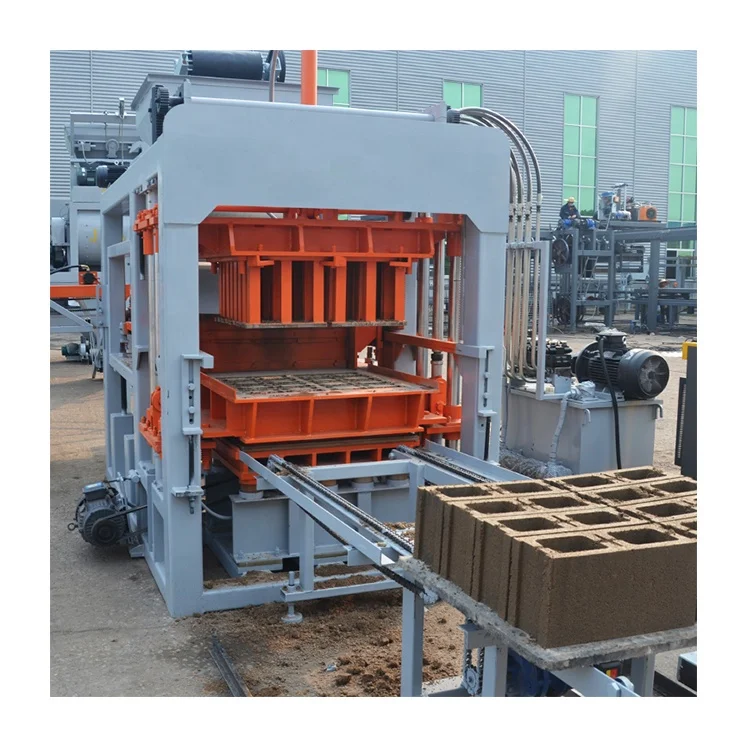
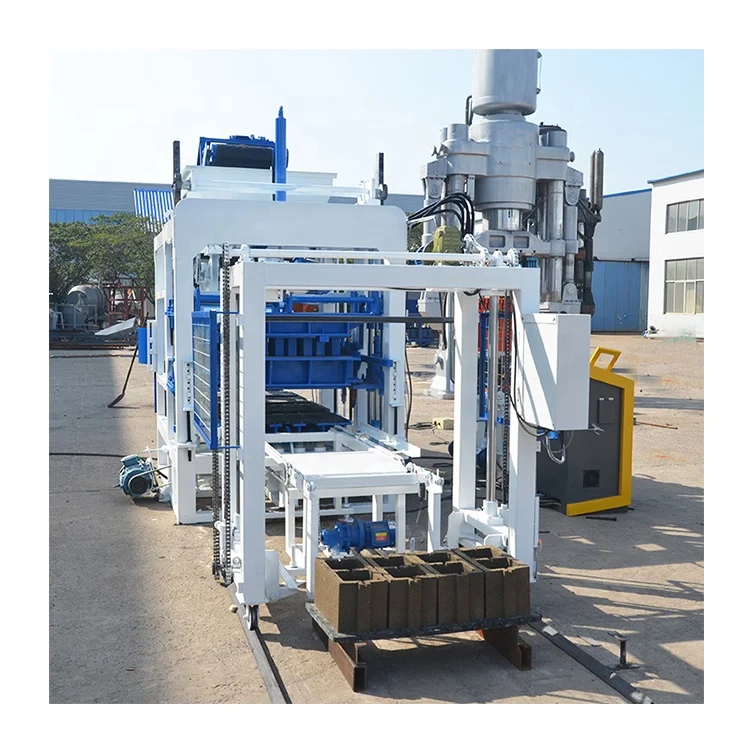 Semi automatic block