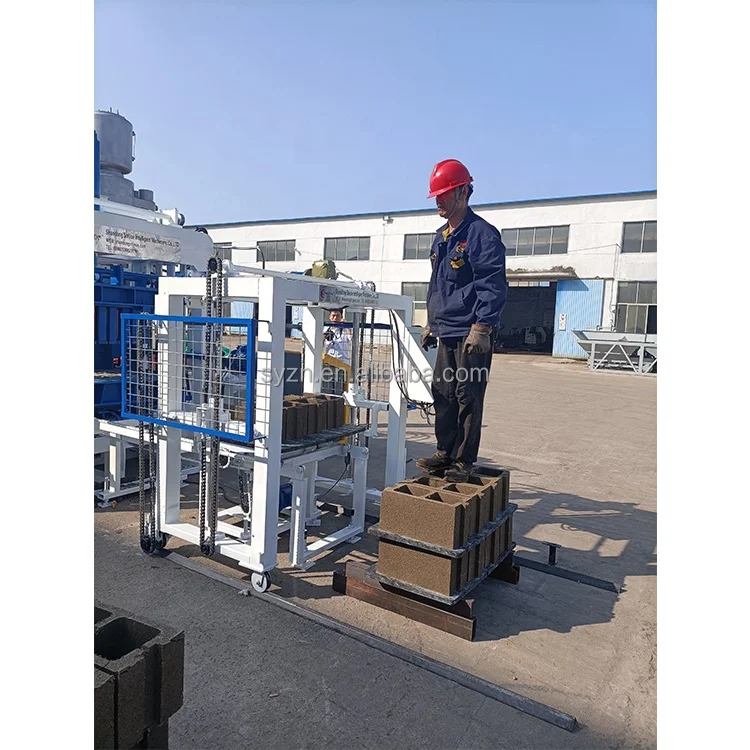
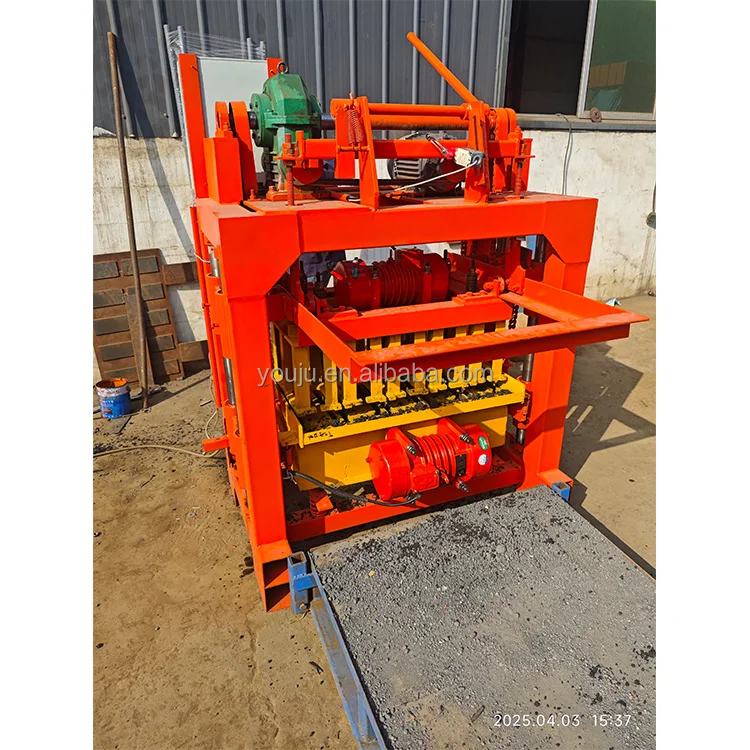
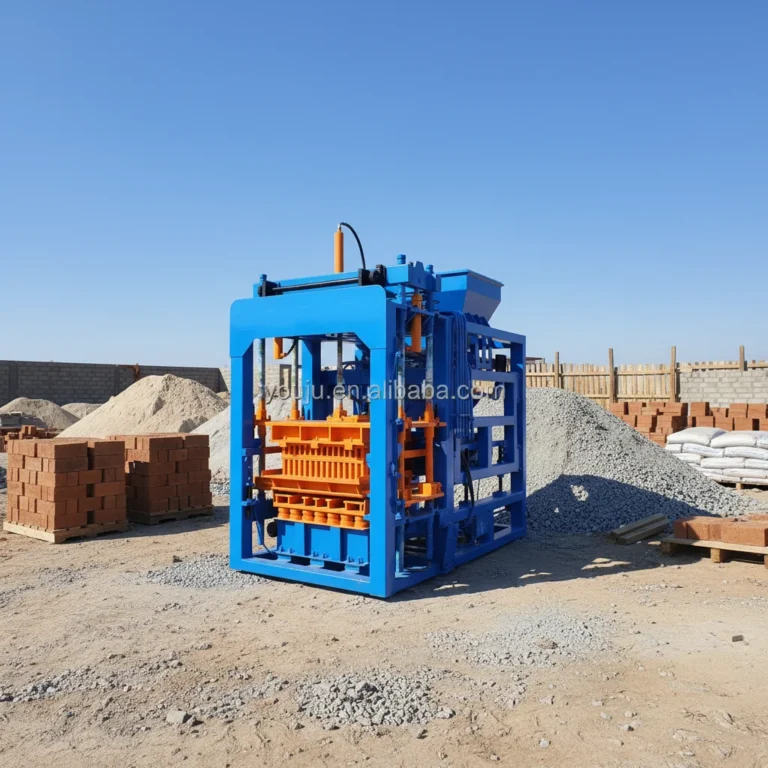
Balanced mid-tier footprint — the QT5-15 delivers automatic output without the floor space demands of high-capacity lines, giving first-time plant operators a realistic starting point.
Technical Specifications
| Parameter |
Value |
| Model |
QT5-15 |
| Product Type |
Automatic Brick Making Machine |
| Overall Dimension |
7400 × 1950 × 2800 mm |
| Rated Pressure |
21 MPa |
| Main Vibration Form |
Platform Vibration |
| Vibration Frequency |
2800–4500 r/min |
| Pallet Size |
1100 × 550 mm |
| Molding Cycle |
15–25 s |
| Overall Power |
26.5 kW |
| Demolding Method |
Hydraulic |
| Output (Hollow brick 400×200×200 mm) |
1800 pcs/h |
| Output (Hollow block 400×150×200 mm) |
1300 pcs/h |
| Output (S paver 225×112.5×60 mm) |
3700 pcs/h |
| Raw Materials |
Crushed stone, sand, cement, dust, fly ash, gravel, slag |
| Applied Products |
Concrete blocks, hollow/solid blocks, pavers, interlocking blocks, curbstone, colored pavers |
| Standards |
CE |
Application Suitability
| Application |
Material or Output |
| Hollow block production for building walls |
Crushed stone, sand, cement, fly ash blends |
| Solid block manufacturing for load-bearing structures |
Gravel, cement, slag aggregates |
| Interlocking paver runs for roads and walkways |
Fine sand, cement, pigment additives |
| Curbstone and kerb production for municipal projects |
Coarse aggregate, cement mixes |
| On-site block supply for housing developments |
Locally sourced aggregate and cement |
What "1800 Pieces per Hour" Actually Means on the QT5-15
Output figures only hold when the block format, mix design, and cycle time all align with the stated assumption.
Capacity numbers printed in a catalogue often come from a single ideal format under controlled conditions. When a buyer switches to a different block shape or works with a heavier, stickier local aggregate, the real daily volume can drop significantly below what the brochure suggests. With the QT5-15 Automatic Brick Making Machine manufacturer specifications, every capacity figure we quote is tied to a named format — 1800 pcs/h for 400×200×200 mm hollow bricks, 1300 pcs/h for 400×150×200 mm hollow blocks, 3700 pcs/h for S pavers. I once worked with a buyer in West Africa whose laterite-rich soil cut his actual yield nearly in half compared with the catalogue number because the vibration profile was never adjusted for that material. [NEED_CITE: impact of aggregate type on block machine cycle time]

Where the QT5-15 Fits in the Full Machine Range
The QT5-15 occupies the mid-tier automatic segment, positioned above semi-automatic and mobile egg-laying models but below high-capacity fully automatic lines. For an entrepreneur setting up a first block plant, this tier offers automatic pallet feeding and hydraulic demolding without requiring the large curing yard and heavy forklift fleet that a bigger line demands. The 7400 × 1950 mm footprint leaves room for future expansion while keeping the initial investment manageable.
Choosing Between Automatic Tiers Without Overbuying
A common mistake is jumping straight to a high-capacity line because the per-block cost looks lower on paper. The reality is that a large line running at partial capacity burns more energy and wears pallets faster than a mid-tier Automatic Brick Making Machine running near its design point. The QT5-15 Automatic Brick Making Machine manufacturer configuration allows buyers to start at this tier and add automatic stacking or cubing modules later as demand grows, rather than paying for capacity they will not fill in the first year. [NEED_CITE: block plant capacity planning and tier selection]
Reading the Specs That Actually Shape Daily Output
The platform vibration system operating at 2800–4500 r/min is adjustable, which matters because different block formats need different vibration profiles. A thin paver requires a higher frequency for surface finish, while a thick hollow block needs a lower frequency with longer dwell time to consolidate the core. The 21 MPa rated hydraulic pressure works together with vibration to compress the mix — pressure alone cannot achieve target density if vibration frequency is mismatched. The 1100 × 550 mm pallet size is a standard dimension that fits most curing rack systems and forklift tine widths already in use at established plants. A molding cycle of 15–25 seconds means faster formats like pavers cycle at the lower end while larger hollow blocks sit at the upper end, and this range is what determines the per-format output numbers in the specification table.
The Cost of Skipping Material Testing Before Configuration
When a machine is configured around a default mix and the buyer’s actual aggregate has different moisture retention or particle shape, blocks can crack during curing or fail compression tests. I have seen entire production runs rejected because the vibration force was calibrated for river sand while the plant was using crushed quarry dust. The QT5-15 platform vibration frequency range exists precisely to accommodate these variations, but the correct setting must be established before production starts, not discovered through weeks of wasted material. [NEED_CITE: block compression testing standards for masonry products]
Why Sourcing the QT5-15 Through a Single-Focus Supplier Matters
Block machinery is our only product line, so the machine, mould, pallet, and handling equipment are specified as one matched system. We set the QT5-15 configuration against your actual mix design and target block format rather than shipping a catalogue default. Moulds are designed for the formats your market actually sells, including custom drawings when standard shapes do not apply. Automation level is selectable — start with semi-automatic pallet handling and upgrade to full stacking later. Installation support includes operator training so the crew understands cycle time adjustments from day one. [NEED_CITE: advantages of single-supplier block line configuration]
Documentation & Verification
- Line layout drawing showing QT5-15 placement with pallet flow direction
- Capacity calculation sheet stating block format assumed for each output figure
- Machine specification sheet with voltage and control language confirmed
- Pallet specification matched to buyer’s curing rack and forklift dimensions
- Factory test record on buyer’s target block format before dispatch
- Operation and maintenance manual with mould change procedure
Installation, Commissioning & Support
- Foundation slab must support the 7400 × 1950 mm footprint with level tolerance for platform vibration stability
- 26.5 kW total power requires a dedicated three-phase circuit at confirmed voltage and frequency
- Machine ships in modular sections for container loading and reassembly on site
- First production run includes vibration frequency adjustment to buyer’s local aggregate
- Operator training covers mould change sequence and hydraulic pressure verification
- Wear parts list and mould inventory included for first replacement planning
Before You Request a Quote
To match the QT5-15 to your operation, we need the specific block formats you plan to produce, your target daily volume per format, and the aggregate materials available at your site. Please also confirm the local voltage and frequency supply along with the preferred PLC display language. If you already have pallets or curing racks in use, send their dimensions so we can verify compatibility before configuration.
Frequently Asked Questions
Q: How is output capacity calculated and which block format does it assume?
A: Each capacity figure for the QT5-15 is calculated from a specific block format and a set molding cycle. For example, 1800 pcs/h applies only to 400×200×200 mm hollow bricks, while 1300 pcs/h applies to 400×150×200 mm hollow blocks. If your target format differs, the cycle time and output will change accordingly, and we provide a revised calculation before confirming the order.
Q: What automation level does the QT5-15 offer and can it be upgraded later?
A: The QT5-15 ships with automatic pallet feeding and hydraulic demolding as standard. Buyers can start with manual stacking and add automatic stacking or cubing modules as production volume grows. This tiered approach lets you match the initial investment to current demand while preserving the upgrade path.
Q: How does the QT5-15 compare to smaller or larger models in the range?
A: The QT5-15 sits between semi-automatic models suited for small workshops and high-capacity automatic lines designed for continuous two-shift operation. It offers automatic operation with a moderate plant footprint, making it appropriate for buyers scaling up from manual production or starting a new plant with room to expand later.
Q: What pallet size does the QT5-15 use and is it compatible with my existing equipment?
A: The QT5-15 uses 1100 × 550 mm pallets, a standard size that fits most curing rack systems and forklift tine configurations. If your existing racks or handling equipment use a different dimension, we confirm compatibility during the proposal stage and adjust pallet specification if needed.
Q: What is the plant footprint and installation requirement for this tier?
A: The machine itself measures 7400 × 1950 × 2800 mm, but the full working area including pallet return and block discharge requires additional surrounding space. A level concrete foundation and a dedicated 26.5 kW three-phase power circuit are required. We provide a line layout drawing showing clearances before installation begins.

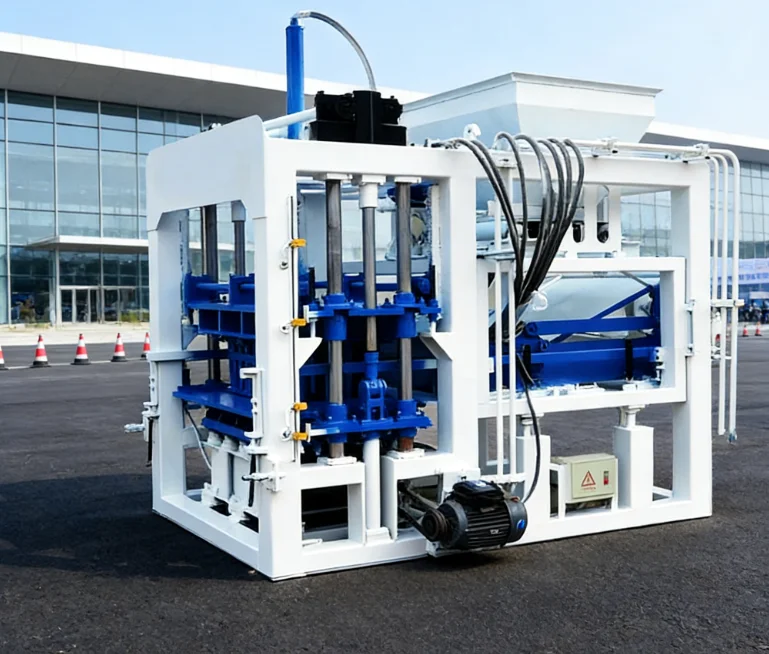
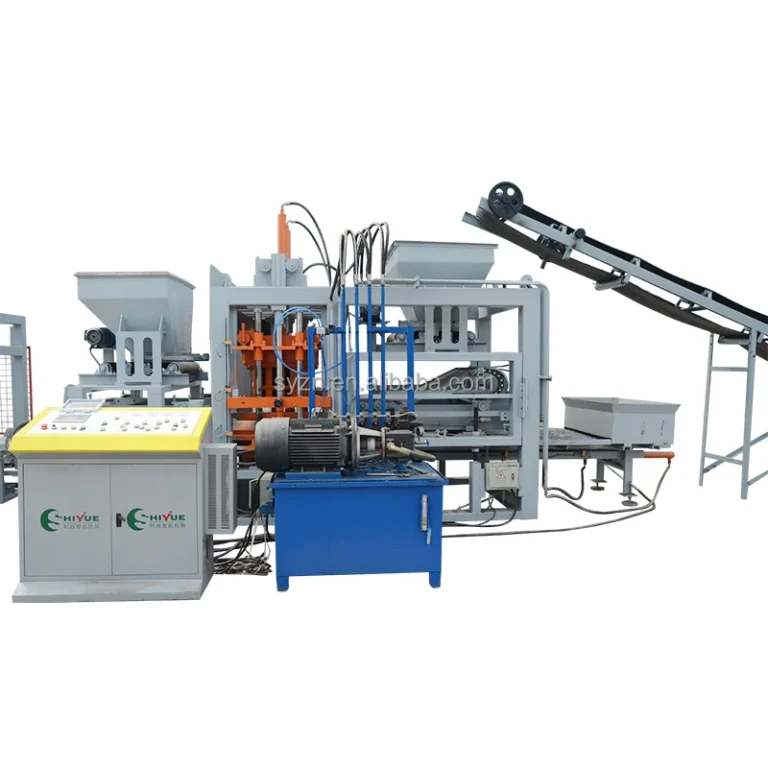 Stationary block machine