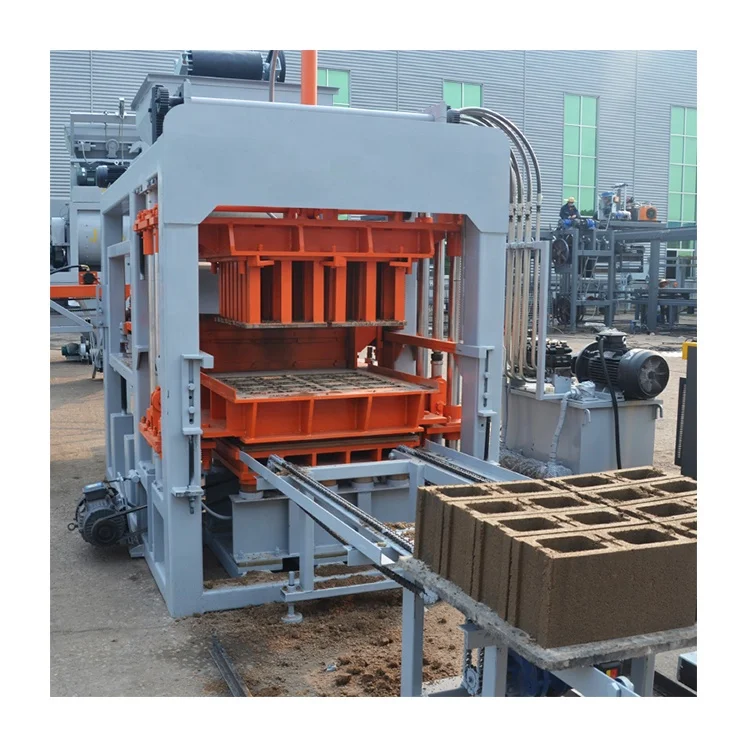
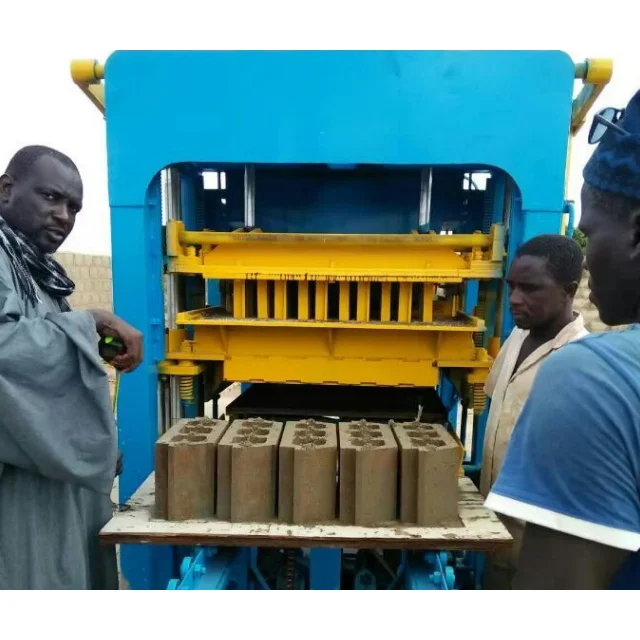
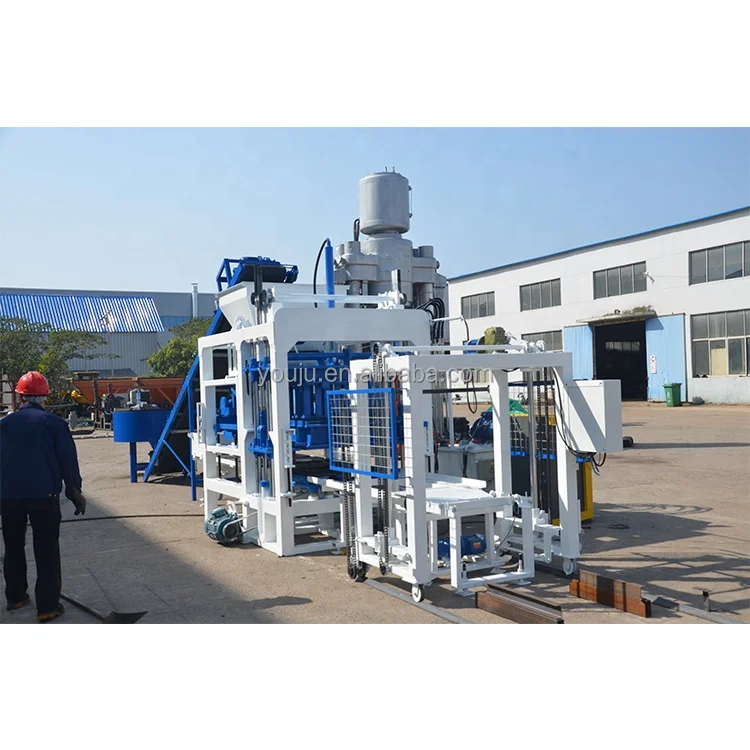
Matched System Configuration — the QT5-15 block machine, moulds, pallets, and handling equipment are specified together as one coordinated production line rather than sourced from separate suppliers, ensuring every component aligns with your target block format and local raw material conditions.
Technical Specifications
| Parameter |
Value |
| Model |
QT5-15 |
| Product Type |
Interlocking Brick Making Machine |
| Overall Dimensions (L×W×H) |
7400×1950×2800 mm |
| Total Mass |
5000 kg |
| Vibration Form |
Platform Vibration |
| Vibration Frequency |
0-60 Hz |
| Vibration Force |
80 kN |
| Overall Power |
32 kW |
| Moulding Mode |
Automatic loading, vibration moulding |
| Demolding Method |
Hydraulic |
| Pallet Size |
1100×550 mm |
| Molding Cycle |
15-20 s (basis not stated in source — confirm block format / material / thickness) |
| Control System |
PLC with touch screen interface |
| Hydraulic System |
Independent integrated hydraulic station |
| Automation Level |
Automatic (pallet feeding, material feeding, vibrating, demoulding) |
| Block Compressive Strength |
>15 MPa |
| Flyash Content Capacity |
Up to 70% |
| Factory Area Required |
1000 m² |
| Output — Hollow Block 400×200×200 mm |
900-1200 pcs/h (5 pcs/mould, 15-20s cycle) |
| Output — Hollow Block 400×150×200 mm |
1080-1440 pcs/h (6 pcs/mould, 15-20s cycle) |
| Output — Solid Brick 240×115×53 mm |
5760-7680 pcs/h (32 pcs/mould, 15-20s cycle) |
| Output — Rectangular Paver 200×100×60 mm |
3600-4500 pcs/h (25 pcs/mould, 20-25s cycle) |
| Output — Zigzag Paver 225×112.5×60 mm |
2304-2880 pcs/h (16 pcs/mould, 20-25s cycle) |
Application Suitability
| Application |
Material or Output |
| Hollow block production |
Crushed stone, sand, cement, flyash blends |
| Solid brick manufacturing |
Flyash (up to 70%), slag, gangue, cement |
| Rectangular paving brick |
Sand, crushed stone, cement aggregates |
| Zigzag interlocking paver |
Standard concrete mix with local aggregates |
| Interlocking brick production |
Industrial residue blends with cement binder |
Why the Voltage Question Must Come Before the Quotation
A machine built for the wrong voltage will sit dead on your site until a variable frequency drive retrofit is completed.
I once shipped a mid-tier automatic block machine to the Philippines without locking down the final electrical specification with the buyer. The factory wired it for 380V/50Hz based on early correspondence. The site was running 220V/60Hz. The machine could not power on upon arrival. We spent nearly three weeks sourcing and installing a frequency conversion setup while the contractor’s masonry crews had no blocks to lay. That delay cost the project far more than the machine itself [NEED_CITE: voltage and frequency standards by export market]. With the QT5-15 interlocking brick making machine, confirming your site voltage, frequency, and PLC display language happens before production starts, not after the container arrives.
Where the QT5-15 Sits in the Full Machine Range
Buyers evaluating the Shiyue lineup need to understand the output tiers before committing capital. The QT5-15 interlocking brick making machine occupies the mid-tier automatic category, positioned between compact semi-automatic models suited to small workshops and high-capacity fully automatic lines designed for continuous multi-shift operation. It serves buyers who have outgrown manual pallet handling and egg-laying mobile machines but are not yet ready to invest in a plant that demands dedicated curing rack systems and automatic cubing stations.
Automation Level and the Upgrade Path Forward
The automatic cycle on this model covers pallet feeding, material distribution, vibration, and hydraulic demoulding without operator intervention at each stage. This removes the most physically demanding tasks from the production floor and reduces cycle-to-cycle variation caused by inconsistent manual timing. Buyers who prefer to start with semi-automatic operation and add automated stacking or pallet return conveyors later can specify the QT5-15 with a base configuration and plan the upgrade path around actual production volume growth [NEED_CITE: CE machinery directive requirements for industrial equipment]. The PLC touch screen interface supports multiple display languages, which matters when your operators need to read fault codes in their own language during a midnight shift.
Matching Vibration Force to Block Density Requirements
Platform vibration at 0-60 Hz combined with 80 kN of vibration force determines how tightly the aggregate particles pack during moulding. Higher frequency and force produce denser blocks with greater compressive strength — the QT5-15 delivers above 15 MPa, which meets structural hollow block standards in most markets. The hydraulic demoulding system works in tandem with this vibration profile: too little pressure and the block crumbles on release; too much and the pallet surface scores prematurely. The independent integrated hydraulic station sits isolated from the main vibration frame, which extends seal and hose life by reducing fatigue from constant oscillation. Pallet size at 1100×550 mm must match the curing rack dimensions and forklift tine spacing you already have on site — a mismatch here means either replacing your material handling equipment or reconfiguring your entire curing area.

The Hidden Cost of an Underspecified Line
Quoted capacity figures often assume a specific block format and cycle time that may not match what you actually sell. A buyer who ordered a machine rated for high output on thin pavers discovered their primary product — a 200 mm hollow block — cycled slower and produced far fewer units per shift than projected. The pallet handling system was not included in the original quotation, so wet blocks piled up on the factory floor waiting for manual stacking, creating bottlenecks that no amount of press speed could solve [NEED_CITE: block production line matching and throughput losses]. These gaps surface only after installation, when the cost of correction is highest.
Why Buyers Specify Through This Range
Every configuration proposal ties output figures to a named block format, mould cavity count, and verified cycle time rather than a single headline number. The machine, mould, pallet, and handling equipment are quoted as one matched system, eliminating the finger-pointing that happens when components arrive from separate vendors. Mould design covers the block formats your market actually buys, with custom drawings available when standard catalog options do not match local building codes. Voltage, frequency, and control language are confirmed in writing before the machine enters production, preventing the commissioning delays that come from electrical mismatches. Factory testing runs on your specified block format before the machine is dismantled for shipment.
Documentation & Verification
- Line layout drawing with capacity calculation tied to your specific block format
- Machine specification sheet confirming pallet size against your curing area dimensions
- Mould drawing and format list covering all block types for your local market
- Voltage, frequency, and PLC display language confirmation record before production
- Factory test record on your block format before container loading
- Hydraulic and electrical schematic for local maintenance teams
Installation, Commissioning & Support
- Foundation must support 5000 kg total mass across the 7400 mm machine length
- Electrical supply must match confirmed voltage and frequency with dedicated 32 kW circuit
- Machine ships dismantled for container loading with reassembly on prepared slab
- First commissioning run verifies cycle time on your confirmed block format and mix design
- Operator training covers PLC touch screen fault diagnosis and mould change procedure
- Wear parts and mould replacement list provided with initial spare parts recommendation
What We Need to Configure Your Line
Before preparing a quotation, we need your primary block format and target daily output so we can calculate realistic capacity on that specific product. Confirm your site voltage, frequency, and the language your operators read on a control screen. Share your local aggregate type and any industrial residue you plan to incorporate, as the mix design directly affects vibration settings and achievable block strength.
Frequently Asked Questions
Q: Where does the QT5-15 fit compared to smaller and larger models in the range?
A: The QT5-15 occupies the mid-tier automatic position. It offers more output and automation than small workshop semi-automatic machines while requiring less investment and plant footprint than high-capacity fully automatic lines with curing rack handling and automatic cubing. Buyers scaling up from manual egg-laying machines or starting a first serious block plant typically land in this tier.
Q: What is the realistic daily output for my block format?
A: Output depends entirely on which block you produce. The QT5-15 delivers 900-1200 hollow blocks per hour based on 400×200×200 mm format with 5 cavities per mould and a 15-20 second cycle. Solid bricks at 240×115×53 mm reach higher counts per hour due to 32 cavities per mould. Your quotation will state capacity for your specific format.
Q: Can I start with semi-automatic operation and upgrade later?
A: Yes. The machine platform supports a base semi-automatic configuration with manual pallet handling, and automation stations like automatic pallet feeding and stacking can be added as production volume justifies the investment. The PLC control system accommodates these additions without requiring a full control cabinet replacement.
Q: How are voltage and PLC language confirmed before shipment?
A: We confirm your site voltage, frequency, and preferred PLC display language in writing before the machine enters production. This prevents the situation where a machine arrives wired for 380V/50Hz but the site runs 220V/60Hz — a mismatch that can delay commissioning by several weeks while electrical conversion is arranged.
Q: What mould formats are available, and how long does a change take?
A: Standard moulds cover hollow blocks, solid bricks, rectangular pavers, and zigzag pavers. Custom moulds can be designed to your drawings for formats specific to your local market. Mould change time depends on the quick-release system fitted to your configuration and is confirmed during your line layout proposal.

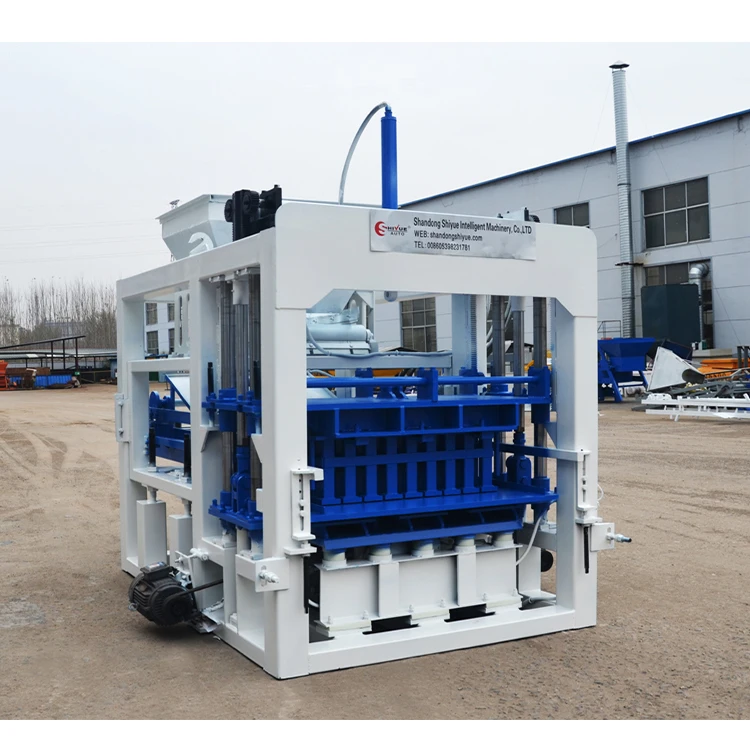
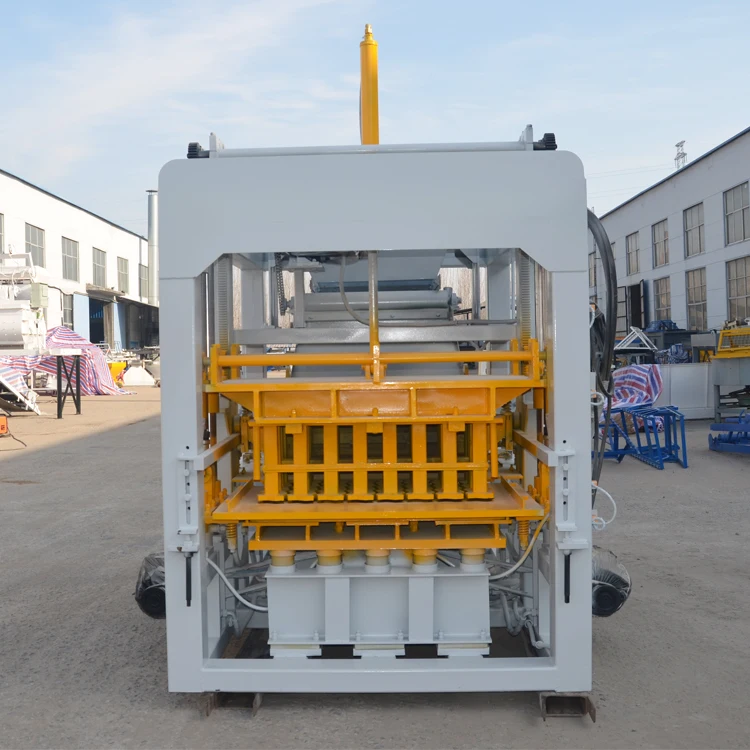 Automatic block machine