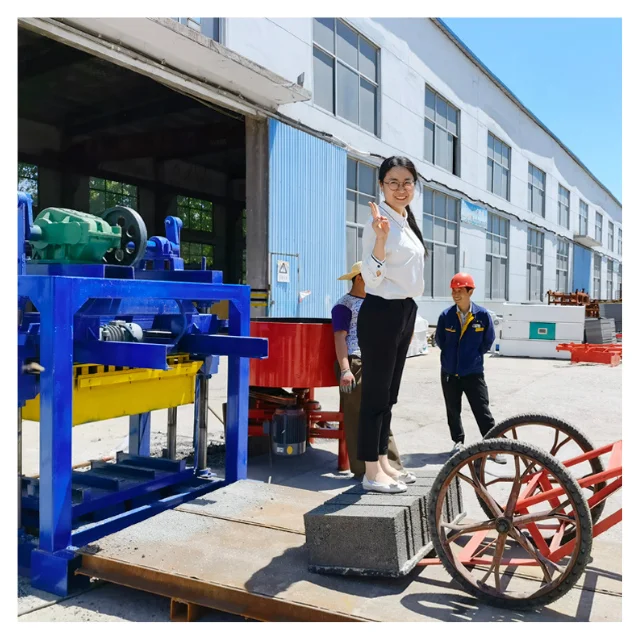
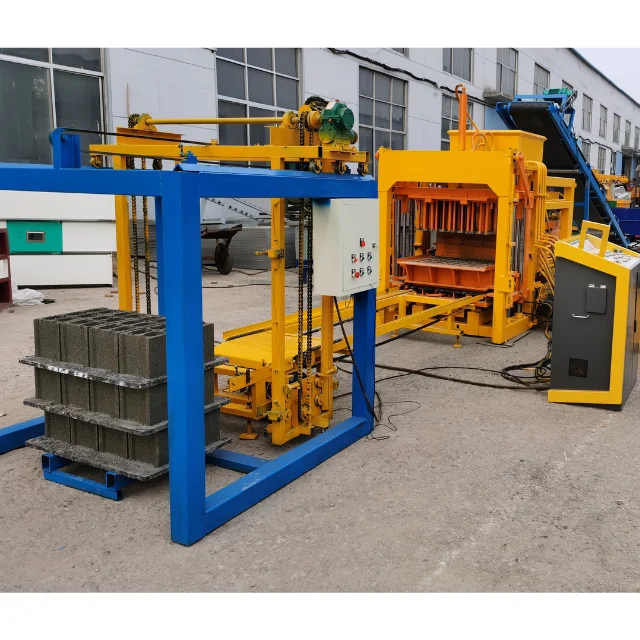
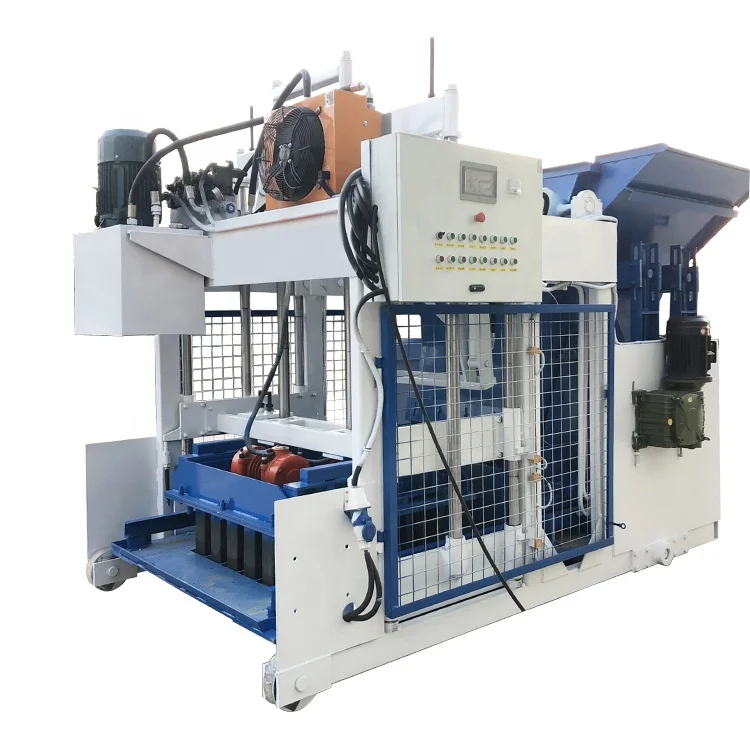
Specified as one matched system — the QT5-15 block machine, mould, pallet and handling equipment are configured together against the buyer’s actual mix and format, not pulled from separate catalogues.
Technical Specifications
| Parameter |
Value |
| Model |
QT5-15 |
| Product Type |
Fully Automatic Concrete Block Making Machine |
| Overall Dimensions (L×W×H) |
7400×1950×2800 mm |
| Total Mass |
5000 kgs |
| Overall Power |
32 kW |
| Vibration Force |
80 kN |
| Vibration Frequency |
0-60 Hz |
| Vibration Form |
Platform Vibration |
| Moulding Mode |
Load automatically, vibration moulding |
| Demolding Method |
Hydraulic |
| Pallet Size |
1100×550 mm |
| Molding Cycle |
15-20 s |
| Control System |
PLC intelligent control with touch screen |
| Factory Area Required |
1000 m² |
| Output Capacity (Hollow block 400×200×200 mm) |
900-1200 pcs/hour, 7200-9600 pcs/8hr |
| Output Capacity (Hollow block 400×150×200 mm) |
1080-1440 pcs/hour, 8640-11520 pcs/8hr |
| Output Capacity (Solid brick 240×115×53 mm) |
5760-7680 pcs/hour, 46080-61440 pcs/8hr |
| Output Capacity (Rectangular brick 200×100×60 mm) |
3600-4500 pcs/hour (20-25s cycle), 28800-36000 pcs/8hr |
| Output Capacity (Zigzag brick 225×112.5×60 mm) |
2304-2880 pcs/hour (20-25s cycle), 18432-23040 pcs/8hr |
| Automation Level |
Fully automatic (pallet feeding, material feeding, vibrating, demoulding) |
| Hydraulic System |
Independent integrated hydraulic station |
| Raw Material Compatibility |
Flyash (up to 70%), slag, gangue, sand, crushed stone, cement, water |
| Block Compressive Strength |
More than 15 MPa |
| Voltage & Frequency |
Configurable (basis to be confirmed with buyer’s local grid) |
| PLC Display Language |
Configurable (basis to be confirmed with buyer) |
| Warranty |
1 year for the whole machine (without spare parts) |
Application Suitability
| Application |
Material or Output |
| Hollow block production for building walls |
Crushed stone, sand, cement, flyash blends |
| Solid brick manufacturing |
Sand, gangue, slag and cement mixes |
| Rectangular paving brick laying |
Fine aggregate and cement with colour pigment |
| Zigzag interlocking paver production |
High-strength concrete mixes with angular aggregate |
| On-site block production for housing projects |
Locally sourced aggregate and cement |
| Block plant format expansion |
Multiple mould changes across hollow, solid and paver formats |
What "900 to 1200 Pieces per Hour" Actually Means for the QT5-15 Fully Automatic Block Machine Manufacturer
Every output figure on this page is tied to a specific block size and moulding cycle.
Buyers often receive quotations that state a single capacity number — cycles per hour or pieces per shift — without disclosing which block format that number assumes. When the machine arrives and production begins on the format the local market actually buys, the real daily output falls noticeably short of the quoted expectation. The QT5-15 fully automatic block machine manufacturer approach here is to state capacity per format: 900-1200 pieces per hour rated at 400×200×200 mm hollow block, or 3600-4500 pieces per hour rated at 200×100×60 mm rectangular paver on a 20-25 second cycle. These numbers shift when your local aggregate, moisture content and mix design differ from the test conditions [NEED_CITE: effect of aggregate grading and moisture on block machine cycle time].
Placing the QT5-15 Within the Full Machine Spectrum
The QT5-15 sits in the mid-tier of the Shiyue fully automatic range. Below it are semi-automatic machines for smaller workshops where pallet handling remains partly manual and the investment threshold is lower. Above it are higher-capacity automatic lines with larger pallet sizes, faster cycle times and fully integrated stacking and cubing systems. For a buyer surveying options, this model represents the entry point into PLC-controlled, fully automatic production while keeping the plant footprint to approximately 1000 m².
How Automation Level Changes the Daily Operation
On the QT5-15, pallet feeding, material feeding, vibration and hydraulic demoulding all run under PLC control with a touch screen interface. What the operator manages is raw material supply to the hopper, mould change procedures and finished block handling off the line. This positions the machine for buyers who want consistent block quality across shifts without the labour cost of manual pallet handling, yet do not need the investment level of a fully automatic stacking and cubing system [NEED_CITE: labour requirements at different automation tiers in block production].
Reading the Specifications That Actually Matter
The 80 kN vibration force combined with variable 0-60 Hz frequency is what determines block density and surface finish. Lower frequency with higher amplitude suits larger hollow blocks where aggregate consolidation matters most; higher frequency tightens the surface on pavers and smaller solid bricks. The independent integrated hydraulic station sits apart from the main frame vibration and dust exposure, which keeps seal life and valve response predictable over long production runs. Moulding cycles between 15 and 20 seconds apply to standard hollow block formats — paver formats on the 1100×550 mm pallet typically extend to 20-25 seconds because of the higher compaction requirement. The 32 kW total power draw means most installations need a dedicated supply circuit, and voltage and frequency must be confirmed against the buyer’s local grid before the electrical cabinet is built [NEED_CITE: industrial voltage and frequency standards across export markets].

What Happens When Configuration Is Skipped
A machine set to a default mix design that the buyer cannot source locally forces a material change or compromises block strength from day one. Pallet size chosen without considering the curing area dimensions and the forklift the buyer already owns means pallets either do not fit the racks or cannot be moved efficiently. Voltage and PLC display language left unconfirmed until after shipment delays commissioning while components are swapped or reprogrammed. These are not theoretical problems — they appear regularly when the quotation stage skips the site condition and material survey [NEED_CITE: common commissioning delays in exported concrete block machinery].
Why Buyers Source This Tier from Shiyue
Block machinery is the single focus here, so the QT5-15 machine, mould, pallet and handling equipment are specified as one matched system rather than assembled from separate suppliers. Configuration is set against the buyer’s actual mix design and local aggregate, not a catalogue default. Mould design covers the formats the buyer’s market sells, including custom drawings for non-standard block dimensions. Automation level is selectable — a buyer can start with semi-automatic pallet handling and add automatic stacking later as production volume justifies the investment. Installation and commissioning support includes operator training on the specific formats and mix ratios the plant will run.
Documentation & Verification
- Line layout with capacity calculation stating the block format assumed for each output figure
- Machine specification sheet confirming voltage, frequency and PLC display language before production
- Mould drawing and format list matching the buyer’s local market block dimensions
- Factory test record on the buyer’s target block format before dispatch
- Packing photographs showing crate and container loading arrangement
Installation, Commissioning & Support
- Foundation pad level within tolerance across the 7400×1950 mm machine footprint
- Dedicated 32 kW supply circuit with voltage and frequency confirmed before cabinet build
- Machine arrives with hydraulic station pre-assembled; on-site connection to frame and mould
- PLC touch screen configured to buyer’s language; parameter tuning on buyer’s actual mix
- Operator training covering mould change procedure across hollow, solid and paver formats
- Wear parts list with hydraulic seal and mould liner replacement intervals defined
What to Include in Your Enquiry
Send the block format your market sells most, the daily output target for that format and the aggregate materials available locally with their typical grading and moisture range. Include your site supply voltage, frequency and preferred PLC display language. If you have an existing curing area or forklift, share the dimensions so pallet size can be matched from the start.
Frequently Asked Questions
Q: How do I verify the real daily output for the block format my market sells?
A: Output figures differ by format and cycle time. Request a capacity calculation document that states the exact block dimensions, moulding cycle and pallet configuration assumed. The QT5-15 delivers 900-1200 pieces per hour on 400×200×200 mm hollow block, but paver formats extend the cycle and change the hourly rate. Ask for a factory test on your target format before shipment.
Q: Where does the QT5-15 sit in the full machine range?
A: It occupies the mid-tier automatic position. Below it are semi-automatic machines with manual pallet handling and lower investment. Above it are high-capacity lines with larger pallets, faster cycles and automatic stacking. Buyers evaluating a first block plant or replacing a manual setup typically start their comparison here before moving up or down.
Q: What voltage, frequency and PLC language options are available?
A: Voltage and frequency are configured to the buyer’s local grid standard before the electrical cabinet is built. The PLC touch screen display language is confirmed during the order stage. Providing your site supply specifications early avoids commissioning delays caused by component swaps after the machine arrives at your facility.
Q: How much factory space does the QT5-15 require?
A: The machine itself measures 7400×1950×2800 mm, and the recommended factory area is approximately 1000 m² to accommodate the press, raw material storage, pallet circulation and cured block handling. Actual layout depends on whether you add automatic stacking and how your curing racks are arranged within the available floor space.
Q: Can I start semi-automatic and upgrade to this tier later?
A: Yes. The automation level is selectable, and buyers can begin with semi-automatic pallet handling to reduce initial investment. As production volume grows, automatic pallet feeding, stacking and cubing modules can be added to the line. The machine frame and hydraulic platform remain the same through the upgrade path.

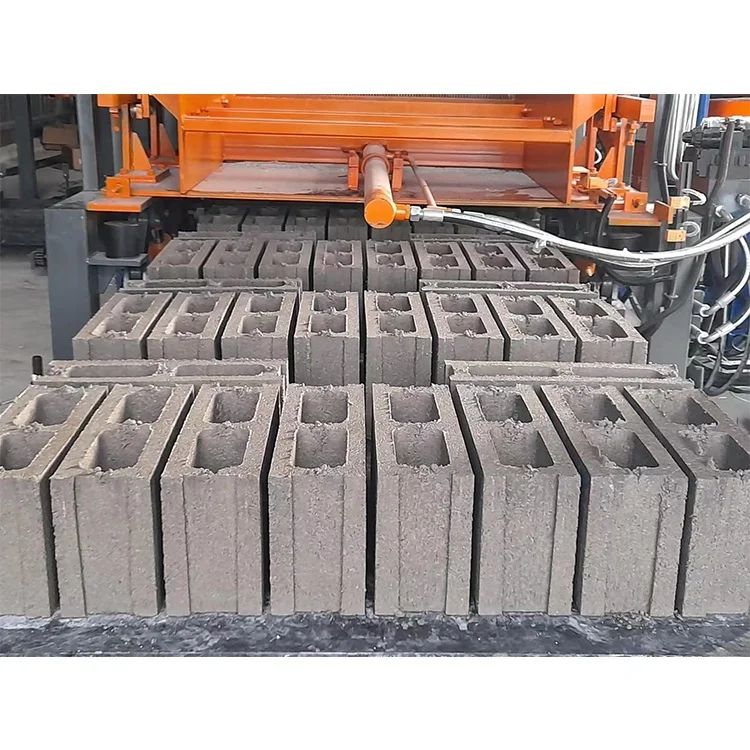
 High quality block machine