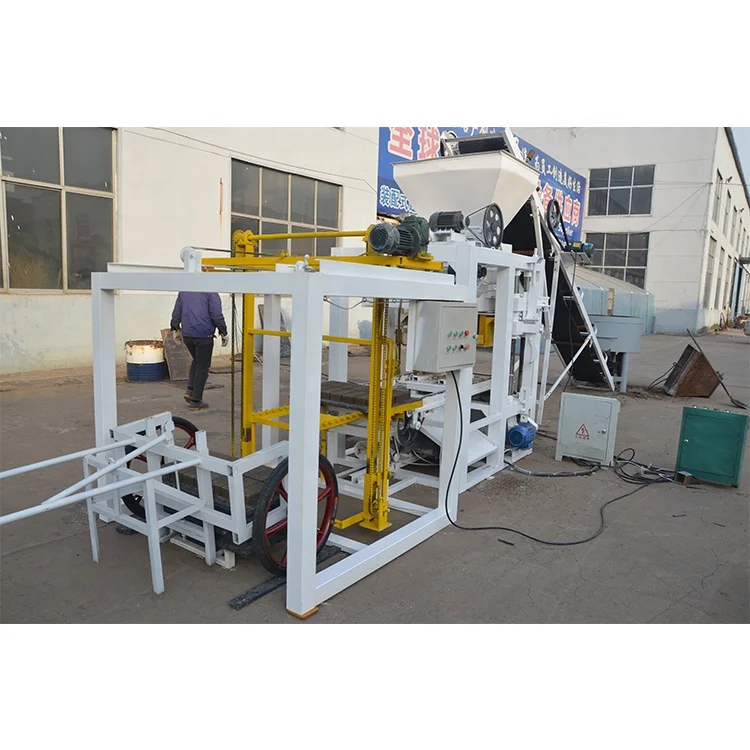
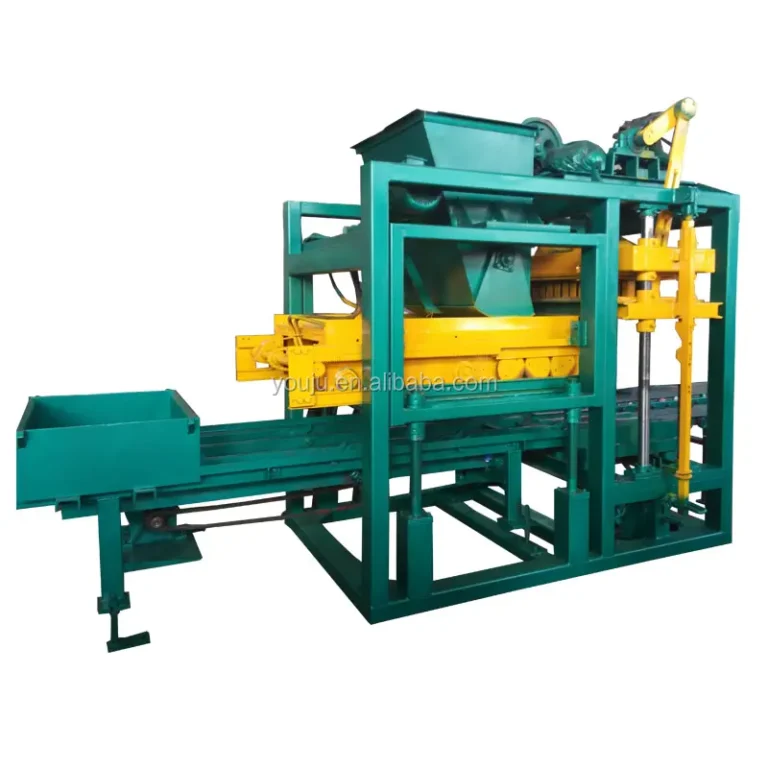
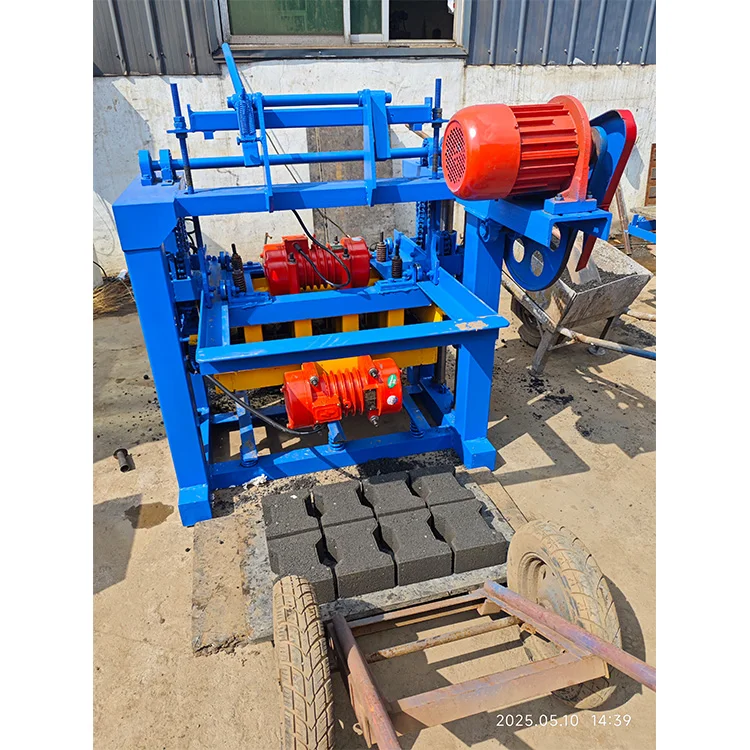
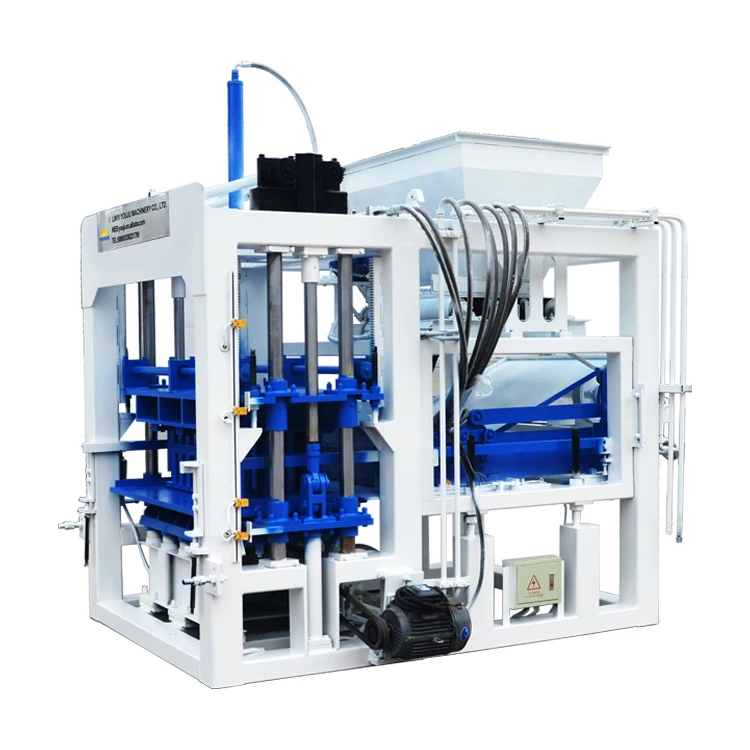
Matched System Engineering — The QT4-20 block machine, mould, pallet, and handling are specified as one coordinated line rather than assembled from separate suppliers, ensuring the hydraulic pressure, vibration force, and cycle timing work together from day one.
Technical Specifications
| Parameter |
Value |
| Model |
QT4-20 |
| Product Type |
Stationary Hydraulic Block Making Machine |
| Overall Dimensions (L×W×H) |
7100×1600×2610 mm |
| Rated Pressure |
16-21 MPa |
| Vibration Form |
Platform Vibration |
| Vibration Frequency |
4600 r/min |
| Vibration Force |
40 kN |
| Pallet Size |
1020×570 mm |
| Molding Cycle |
15-25 s |
| Overall Power |
27.5 kW |
| Total Mass |
5 T |
| Demolding Method |
Hydraulic |
| Molding Area |
400×800 mm |
| Recommended Factory Area |
500 m² |
| Control System |
PLC (Intelligent) |
| Voltage & Frequency |
Configurable to buyer site (basis to be confirmed) |
| Automation Level |
Automatic |
| Certification |
CE |
| Warranty |
One year for the whole machine |
Application Suitability
| Application |
Material or Output |
| Hollow block production (400×200×200 mm) |
Crushed stone, sand, cement, fly ash — 4 pcs/mold, 7200-9600 pcs/day based on 15-20s cycle |
| Porous brick production (240×115×90 mm) |
Sand, cement, gravel, slag — 14 pcs/mold, 20200-26800 pcs/day based on 15-20s cycle |
| Standard solid brick (240×115×53 mm) |
Cement, dust, fly ash — 28 pcs/mold, 47400-53700 pcs/day based on 15-17s cycle |
| Paving block production |
Local aggregates matched to mix design and strength requirement |
What "Automatic" Really Means When You Place the QT4-20 in the Full Range
The QT4-20 occupies the mid-tier of our stationary block machine range, giving buyers a fixed hydraulic plant without the footprint of a high-capacity automatic line.
Many buyers see "automatic" and assume the machine handles everything from raw material infeed to pallet stacking. In reality, automation level varies significantly across the range. The QT4-20 block machine manufacturer configures this model with intelligent PLC control and hydraulic demolding, but pallet feeding and stacking still depend on the supporting equipment you pair with it [NEED_CITE: automation level definitions in block making industry]. Buyers who skip this distinction often find themselves manually moving wet blocks off the press — exactly the bottleneck they paid to eliminate.
Positioning the QT4-20 Within the Stationary Line
The stationary block making machine for sale under this designation sits between entry-level semi-automatic presses and high-output automatic plants. It delivers hydraulic pressure combined with platform vibration at 4600 r/min, which produces denser blocks than a simple mechanical press. For an entrepreneur moving from a mobile egg-layer to a first fixed plant, the QT4-20 offers a realistic step up without requiring a 2000 m² facility.
Output Tiers and Where This Machine Fits
Our range spans from small workshop machines producing a few thousand standard bricks daily to fully automatic lines running continuous shifts. The QT4-20 holds the middle ground. A building material distributor evaluating mid-tier stationary machines will find it covers the most common hollow block and paver formats at volumes suitable for regional supply contracts. The 27.5 kW overall power draw keeps electrical infrastructure demands moderate [NEED_CITE: typical power supply requirements for mid-tier block plants].
Reading the Specs That Actually Matter
Hydraulic pressure and vibration force work together to determine block density. The QT4-20 delivers 16-21 MPa rated pressure alongside 40 kN vibration force at the platform. This combination compacts the mix from both static and dynamic directions, producing blocks that meet structural strength requirements without relying on excessive cement content. The pallet size of 1020×570 mm defines the maximum molding area and dictates which block formats can fit per cycle — a 400×200×200 mm hollow block fits four per pallet, while a standard brick fits twenty-eight. The 15-25 second molding cycle varies with format complexity; deeper hollow blocks need longer vibration to fully consolidate the core walls.

The Hidden Cost of Skipping the Line Layout
Buyers who purchase the press alone and source pallets, mixers, and stacking from separate vendors frequently encounter cycle mismatches. The press finishes a pallet in twenty seconds, but the mixer takes forty seconds to deliver the next batch — output drops and the QT4-20 stationary block making machine for sale sits idle between cycles [NEED_CITE: block line bottleneck analysis]. Pallet size mismatches cause another common failure: a buyer orders pallets that do not fit the curing racks already installed in their yard, forcing a complete rack rebuild or a pallet reorder before the first production run.
Why Source the QT4-20 Here
Block machinery is our single focus, so the QT4-20 arrives as a matched system — press, mould, pallet, and handling specified together. We configure the machine against your actual mix design and local aggregate, not a catalogue default. Mould design covers the block formats your market sells, with custom drawings available. The automation level is selectable, so you can start with manual pallet handling and add automatic stacking later. Installation includes operator training, and the one-year warranty covers the complete machine.
Documentation & Verification
- Line layout showing QT4-20 placement within a 500 m² factory with pallet flow direction
- Capacity calculation stating the exact block format assumed for each daily output figure
- Machine specification sheet confirming hydraulic pressure, vibration force, and pallet size as a matched set
- Mould drawing and format list showing which block types the 1020×570 mm pallet accommodates
- Voltage, frequency, and PLC display language confirmation signed off before production begins
- Factory test record on your target block format before dispatch
Installation, Commissioning & Support
- Foundation plan for the 7100×1600 mm footprint with anchor bolt positions and curing area adjacency
- Dedicated 27.5 kW power circuit with voltage and frequency matching your site supply confirmed before shipment
- Machine arrives dismantled for container loading; reassembly supervised on site during commissioning
- First-run parameter setting for your local aggregate, adjusting vibration time and hydraulic pressure to target block strength
- Operator training covering PLC interface, mould change procedure, and daily maintenance checkpoints
- Wear parts list and mould spares identified before shipment so first replacements are on hand
Before You Send an Inquiry
To configure the QT4-20 correctly, we need your target block format and the daily output you must hit, your local raw material source and typical aggregate grading, the voltage and frequency available at your site, and the dimensions of your planned production area. If you already operate a curing yard or forklift, share the pallet size those systems accept so the QT4-20 block machine manufacturer can align the pallet specification from the start.
Frequently Asked Questions
Q: How is the daily capacity of the QT4-20 calculated, and which block format does each figure assume?
A: Each daily output figure is tied to a specific block size and molding cycle. For example, 7200-9600 hollow blocks per day assumes a 400×200×200 mm format at 4 pieces per mold and a 15-20 second cycle. Different formats produce different daily totals because the number of cavities per mold and the required vibration time both change. Always ask which format a capacity quote is based on.
Q: Where does the QT4-20 sit in the range compared to semi-automatic and higher-capacity automatic models?
A: The QT4-20 occupies the mid-tier of our stationary block making machine for sale range. It offers full PLC control and hydraulic pressing, placing it above semi-automatic models that require manual pallet handling. It sits below high-capacity automatic lines that include integrated batching, automatic stacking, and cubing systems for larger plant volumes.
Q: What plant footprint and supporting equipment does the QT4-20 require?
A: The recommended factory area is 500 m² to accommodate the press, raw material storage, mixer, pallet circulation, and a section of curing racks. Supporting equipment includes a mixer matched to the QT4-20 cycle time, pallet feeding system, and a stacking arrangement sized to your daily output. We provide a line layout showing how each station connects.
Q: Can I start with the QT4-20 and upgrade to a higher automation level later?
A: Yes. The automation level is selectable. You can begin with the QT4-20 block machine manufacturer supplying the press with manual pallet handling and add automatic pallet feeding, stacking, or cubing modules as production volume grows. The PLC control system supports these additions without requiring a full control replacement.
Q: What voltage, frequency, and PLC language options are confirmed before shipment?
A: These parameters are confirmed during the quotation stage, before production begins. We match the motor and control voltage to your site supply, set the frequency to your local standard, and configure the PLC display language to your operator preference. A signed confirmation document is issued to prevent commissioning delays on arrival [NEED_CITE: electrical standards alignment for exported machinery].

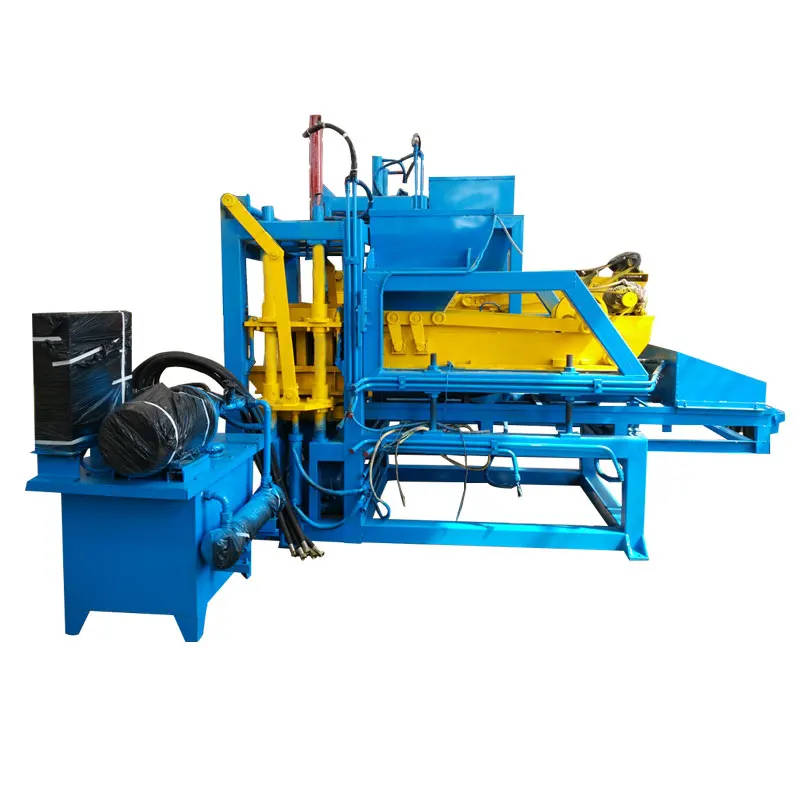
 Stationary block machine