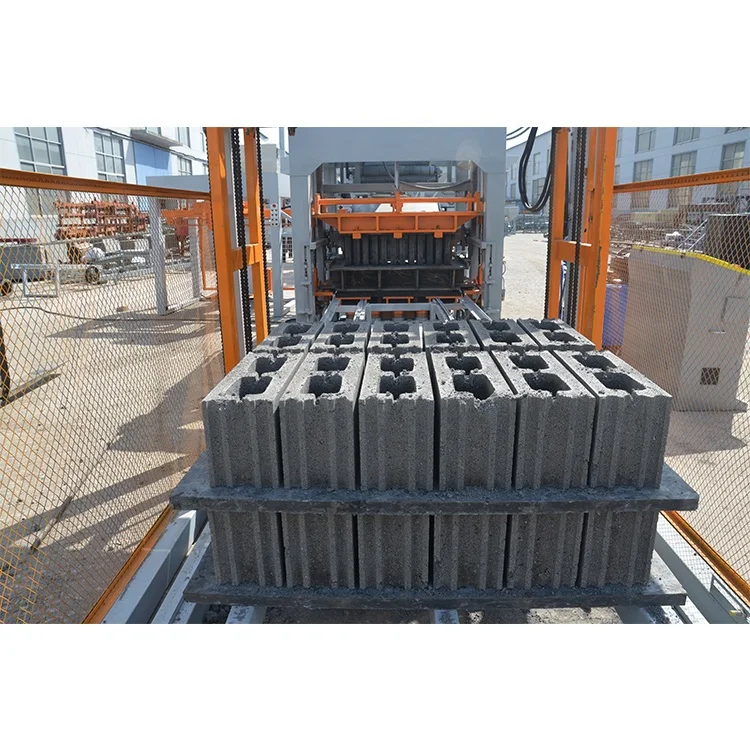
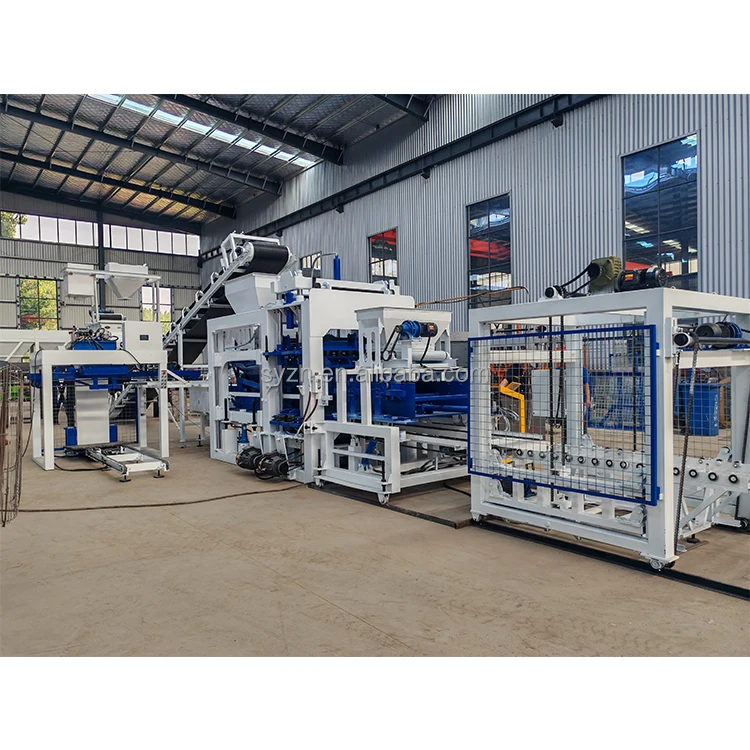
Matched System Supply — the QT4-18 is specified with its mixer, pallet size, and hydraulic station as a single coordinated line, not assembled from unmatched components.
Technical Specifications
| Parameter |
Value |
| Model |
QT4-18 |
| Product Type |
Hydraulic Concrete Block Making Machine |
| Overall Dimensions (L×W×H) |
3900×1600×2300 mm |
| Total Weight |
3T |
| Rated Power |
24KW |
| Molding Cycle |
15-25s (basis to be confirmed) |
| Vibration Force (Exciting Power) |
40-50KN |
| Mixer Model |
JQ350 |
| Pallet Size |
850×550×25mm |
| Applied Products |
Paver, solid, hollow, curbstone |
| Raw Materials |
Crushed stones, sand, cement, dust, fly ash |
| Hydraulic Station |
Equipped |
| Automation Level |
Semi-automatic |
| Output Capacity (Hollow block 400×200×200mm) |
1200-1680 pcs/hr (9600-13440 pcs/8hr) |
| Output Capacity (Hollow block 400×150×200mm) |
1800-2400 pcs/hr (14400-19200 pcs/8hr) |
| Output Capacity (Solid brick 240×115×53mm) |
3240 pcs/hr (16200-19440 pcs/8hr) |
| Voltage & Frequency |
Configurable (basis to be confirmed) |
| Control System |
Configurable (basis to be confirmed) |
| Certification |
CE declaration where applicable |
Application Suitability
| Application |
Material or Output |
| On-site hollow block production for housing projects |
Crushed stone, sand, cement, fly ash mixes forming 400×200×200mm and 400×150×200mm blocks |
| Paver and curbstone manufacturing for local building material distributors |
Interlocking paver and kerbstone formats using standard aggregate and cement |
| Solid brick runs for concrete product manufacturers |
Standard 240×115×53mm solid bricks from locally sourced sand and cement |
| First plant setup by entrepreneurs entering block production |
Semi-automatic line with moderate daily output across multiple block formats |
What "1200 Pieces per Hour" Leaves Out for the QT4-18 concrete block making machine manufacturer
Cycle time only translates to real output when the block format, mix design, and pallet handling are all stated.
Buyers often receive a single headline capacity figure without knowing which block size or material that number assumes. The QT4-18 produces at different rates depending on the format — the 400×200×200mm hollow block cycle yields a different daily total than the 240×115×53mm solid brick run. When a quotation quotes one number for all formats, the buyer’s actual production planning starts from a false baseline. A reliable QT4-18 concrete block making machine manufacturer will state the assumed format beside every capacity claim [NEED_CITE: block machine capacity calculation standards by format and material].

Where the QT4-18 Sits Across the Machine Range
The QT4-18 occupies the mid-tier of our block machine lineup. It bridges the gap between small workshop machines that handle limited pallet sizes and high-capacity fully automatic lines that demand significant floor space and capital. For a buyer surveying options, this model offers hydraulic pressure and vibration force that exceed manual or egg-laying machines while keeping the investment and plant footprint manageable. The 850×550mm pallet size places it above entry-level presses, meaning the cured blocks can move to standard rack systems without custom forklift attachments.
Semi-Automatic Operation and the Upgrade Path
Semi-automatic operation on the QT4-18 means the press cycle runs under hydraulic control, but pallet feeding and stacking involve manual or semi-manual handling. This configuration suits plants where labor cost is moderate and the buyer prefers to manage capital expenditure in stages. When production volume grows, the same host machine can be paired with automatic pallet feeders and stackers. The QT4-18 concrete block making machine manufacturer specifies the automation level against the buyer’s current workforce and planned expansion, so the initial purchase does not become obsolete within a year [NEED_CITE: semi-automatic to automatic block line upgrade paths].
How Pressure, Vibration, and Pallet Size Shape Block Quality
The 40-50KN vibration force and equipped hydraulic station work together to compact the mix into the mould cavity. Vibration settles the aggregate particles while hydraulic pressure applies the final densification — if either is too low for the local mix design, the block emerges with weak edges or inconsistent density. The 850×550×25mm pallet size determines how many blocks form per cycle and must align with the curing racks and forklift the buyer already operates. A mismatch here forces the plant to buy new handling equipment or accept slower curing throughput. The JQ350 mixer is specified to deliver enough batch volume so the press does not idle between cycles, keeping the 15-25s molding cycle achievable under normal operating conditions.
The Hidden Cost of Skipping Configuration Verification
When voltage and frequency are not confirmed in writing before shipment, the motor can burn out within hours of first start-up at the destination site. I have seen 380V/50Hz motors fail on 415V grids, leaving an entire line idle for weeks while a replacement is air-freighted. Beyond the motor itself, the control panel language may not match the operator’s working language, turning commissioning into a guessing exercise. These delays compound: the curing area sits empty, raw material ages in stockpiles, and the project deadline slips [NEED_CITE: electrical supply standards for industrial machinery across export markets].
Why Source the QT4-18 Through a Single-System Supplier
The machine, mould, pallet, and handling equipment are specified as one matched system rather than sourced from separate vendors and bolted together. Each mould is designed for the block formats the buyer’s market actually sells, with custom drawings available when standard formats do not cover local demand. Configuration starts from the buyer’s actual mix design and local aggregate, not a catalogue default that assumes materials unavailable at the destination. The automation level is selectable, so a plant can start semi-automatic on the QT4-18 and add automatic pallet handling later without replacing the press. Installation support includes operator training on the specific mould change procedure and maintenance intervals for this model.
Documentation & Verification
- Line layout drawing stating which block format the capacity calculation assumes for the QT4-18
- Machine specification sheet covering hydraulic pressure, vibration force, and pallet dimensions
- Mould drawing and format list showing every block type included in the quotation
- Voltage, frequency, and control panel language confirmation signed before production
- Factory test record on the buyer’s specified block format prior to dispatch
- Hydraulic and electrical schematic for local maintenance teams
Installation, Commissioning & Support
- Foundation pad must accommodate 3900×1600mm footprint with level tolerance for stable hydraulic operation
- Dedicated power circuit rated for 24KW continuous draw at the confirmed site voltage and frequency
- Machine ships partially assembled; hydraulic station and vibration system are connected on-site during commissioning
- First production run verifies molding cycle, block density, and pallet alignment before handover
- Operator training covers mould change procedure and daily lubrication of the 40-50KN vibration assembly
- Wear parts list for hydraulic seals and mould liners provided with recommended replacement intervals
What to Prepare Before Requesting a Quote
To size the QT4-18 correctly for your plant, provide the block formats your market sells along with the daily output target for each format. Share your local raw material source and a sample of the aggregate, since the mix design directly affects the vibration and pressure settings needed. Confirm the site voltage, frequency, and preferred control panel language so the electrical package is built right before dispatch. If you already have curing racks and forklifts, send their dimensions so the 850×550mm pallet is verified against your existing handling equipment.
Frequently Asked Questions
Q: How does the QT4-18 semi-automatic tier compare to fully automatic lines in labor and footprint?
A: The semi-automatic QT4-18 requires operators for pallet feeding and stacking, which keeps the machine cost and plant footprint lower than a fully automatic line. Fully automatic systems add pallet feeders, stackers, and cubing units that extend the line length. The semi-automatic tier suits plants with moderate daily targets where labor is available and capital is staged over time.
Q: What is the realistic daily output for the specific block format I intend to sell?
A: Daily output depends on the exact block format, mix design, and pallet handling speed. The QT4-18 rates vary by format — for example, 400×200×200mm hollow blocks yield a different total per 8-hour shift than 240×115×53mm solid bricks. Request a capacity calculation that names your target format so the figure reflects your actual production plan.
Q: Is the 850×550×25mm pallet size compatible with standard curing racks and forklifts?
A: The 850×550mm pallet is a common size in block production, but compatibility depends on your existing rack spacing and forklift tine width. Before confirming the order, share your rack dimensions and forklift specifications so the pallet size is verified. A mismatch here means buying new handling equipment or reconfiguring the curing area.
Q: What supporting equipment is needed to complete the line around the QT4-18?
A: The QT4-18 is supplied with the JQ350 mixer as standard. A complete line also needs raw material feeding, pallet circulation, and a curing area with racks. Depending on the automation level chosen, manual or automatic stacking equipment is added. The line layout drawing specifies every station so the press is not left waiting for material or boards.
Q: How long does a mould change take on this semi-automatic model?
A: Mould change time depends on the operator’s familiarity with the procedure and whether the mould is pre-assembled with its wear plate. On semi-automatic machines of this class, a trained operator can typically complete the change within a portion of a shift. The training session at commissioning covers the exact steps and tools required for the QT4-18.

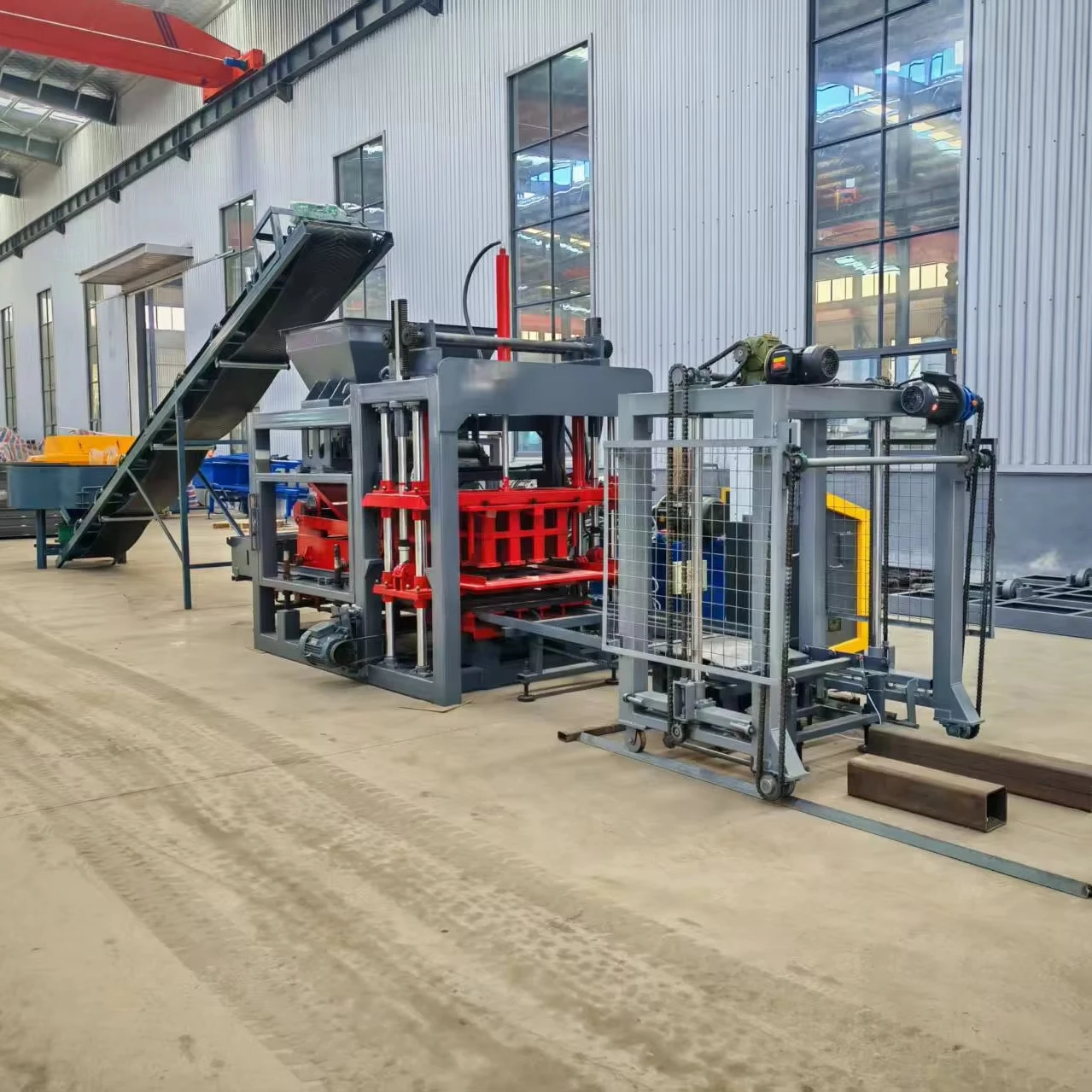
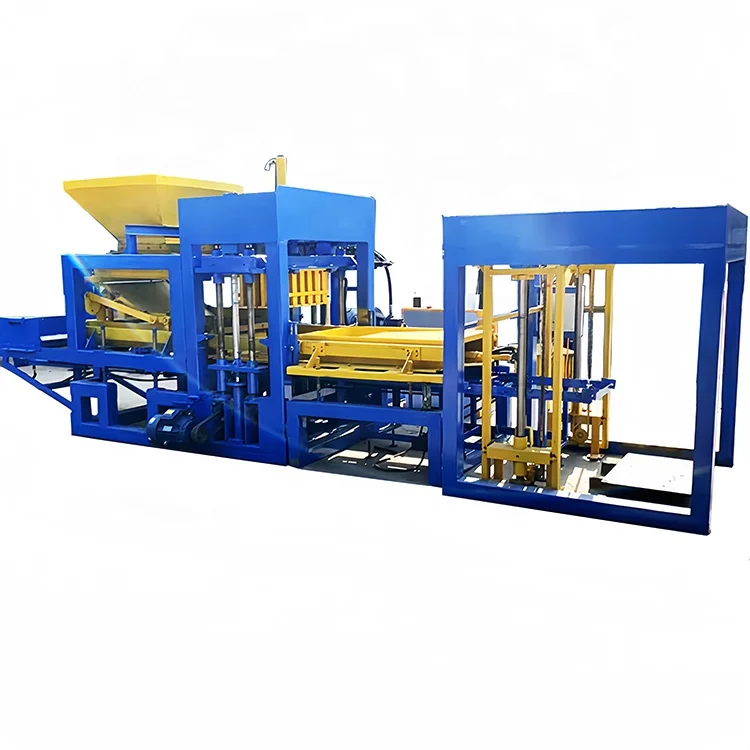 High quality block machine