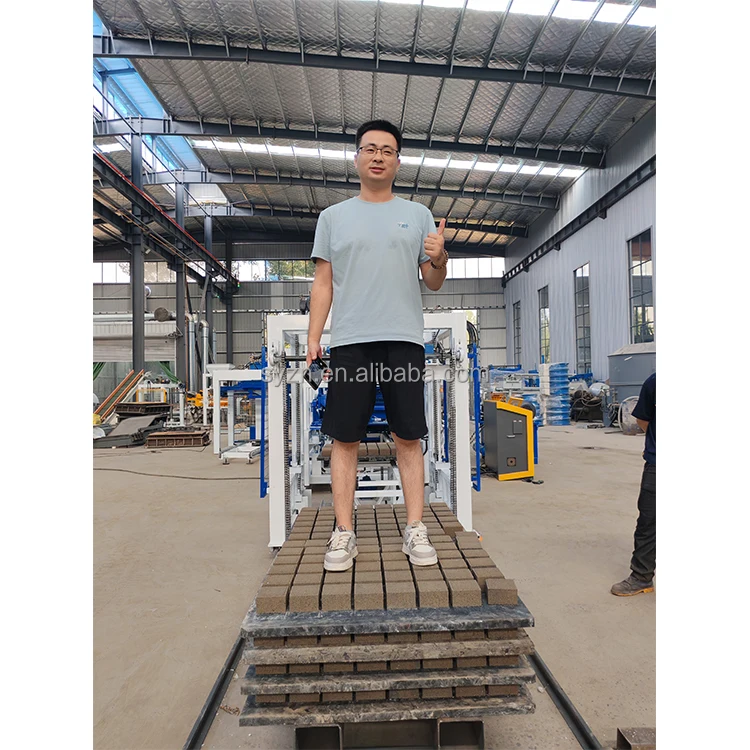
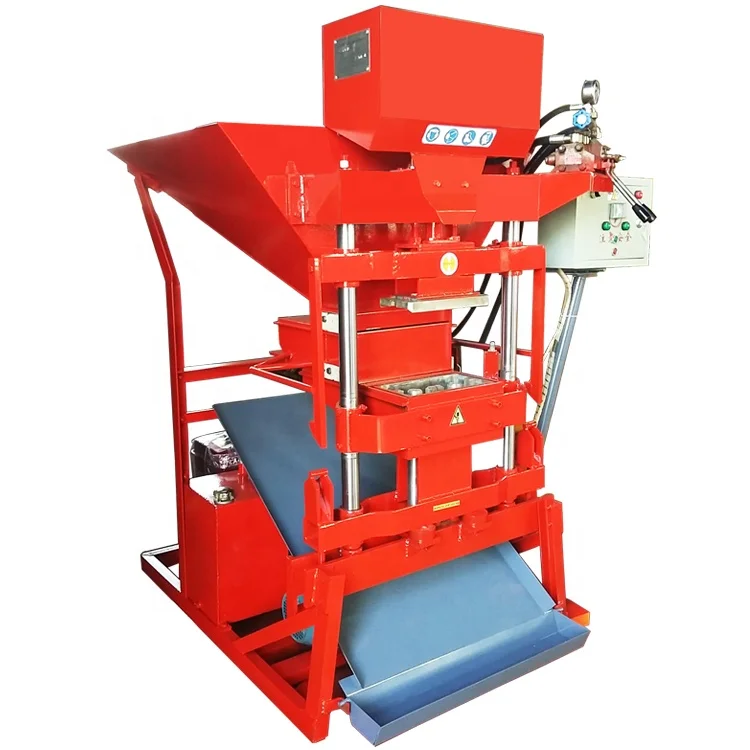
Mid-range automation entry — The QT4-18 sits at the pivot point where buyers transition from manual pallet handling to PLC-controlled cycles, and we configure it against your actual block format, local aggregate, and daily output target rather than a generic catalogue default.
Technical Specifications
| Parameter |
Value |
| Model |
QT4-18 |
| Product Type |
Automatic Concrete Block Making Machine |
| Overall Dimensions (L×W×H) |
2500×1750×2200mm |
| Rated Pressure |
16MPa |
| Vibration Form |
Platform Vibration |
| Pallet Size |
950×550mm |
| Molding Cycle |
18–25s (basis not stated in source — confirm block format / material / thickness) |
| Overall Power |
27.5kW |
| Control System |
PLC with frequency converter |
| Electrical Components |
Schneider brand |
| Mold Lifting Mechanism |
Double-sided synchronous gears |
| Material Feeder System |
Distribution belt hopper, feeding box, feeding platform, conveyor system |
| Block Receiver |
Frame, conveyor system, idler wheels, motor and reducer with triangle belt |
| Pallet Feeder Power Source |
Hydro-cylinder |
| Automation Level |
Automatic (with manual pallet handling option) |
| Output Capacity |
Basis to be confirmed per block format and mix design |
Application Suitability
| Application |
Material or Output |
| Concrete hollow block production |
Cement, crushed stone, sand, and water in standard masonry ratios |
| Solid block production |
Dense aggregate mixes for load-bearing and partition walls |
| Cement brick making |
Fine sand and cement blends for standard building brick formats |
| On-site contractor production |
Project-site batching with locally sourced aggregate and limited curing space |
| Small to medium block plants |
First-line automatic production for entrepreneurs and distributors expanding inventory |
What "18–25 Seconds per Cycle" Actually Means for Your Daily Output
The cycle time only translates to real daily volume once you pin down the block format, wall thickness, and the density your local aggregate can sustain.
I have watched buyers compare two quotations side by side, both listing a cycle time in the same range, and assume the daily output would be identical. The gap between hollow blocks and solid blocks on the same machine is substantial — hollow blocks fill faster, demand less vibration energy, and demould cleanly at shorter cycles, while solid blocks require extended vibration and longer curing before stacking. Without stating the assumed format, a cycle number becomes a marketing placeholder rather than a planning figure. [NEED_CITE: block format and cycle time relationship in hydraulic press operations] When a supplier quotes output in cycles per hour, the first question should always be which block that number was measured on, and whether the mix design in your region supports the same compaction speed.

Where the QT4-18 Fits in a Growing Block Plant
Buyers evaluating a first automatic line or replacing an aging semi-automatic press often land on the QT4-18 automatic block machine manufacturer range because it covers the middle ground: PLC-controlled cycles with frequency converter precision, yet compact enough to fit a modest workshop footprint. The 950×550mm pallet size aligns with standard curing rack dimensions, so existing forklifts and yard layouts do not need reworking. For an entrepreneur moving beyond egg-laying or manual machines, this model introduces consistent cycle timing and block density without the capital commitment of a high-capacity line.
Automation That Matches Your Current Labour Setup
The hydro-cylinder pallet feeder and distribution belt hopper remove two of the most labour-intensive steps — pallet placement and material spreading — while the block receiver conveyor carries finished units to the stacking area. Buyers who are not yet ready for full automatic stacking and cubing can run the QT4-18 with manual pallet handling at the rear, then add automated stackers later as production volume justifies the investment. This staged approach keeps the initial line configuration honest about what the operator still does by hand. [NEED_CITE: staged automation adoption in small concrete product plants]
Reading the Specifications Beyond the Brochure Numbers
The 16MPa rated hydraulic pressure works in tandem with platform vibration to compact the mix; the balance between pressure and vibration frequency determines whether a hollow block holds its shape at demould or slumps at the corners. Double-sided synchronous gears on the mold lifting mechanism keep the upper and lower mold halves aligned during every cycle, reducing uneven wear that leads to mismatched block faces over thousands of cycles. The 27.5kW overall power draw reflects the combined demand of the hydraulic pump, vibration motor, conveyor drives, and PLC cabinet — buyers should confirm their site transformer can handle the starting current surge. Schneider electrical components simplify local sourcing of contactors and relays when the first replacement is due, rather than waiting for a proprietary part shipped overseas. [NEED_CITE: hydraulic pressure and vibration force matching for concrete compaction]
The Cost of Skipping the Aggregate Conversation
When a machine is configured for a clean, well-graded sand that the buyer cannot actually source locally, the result is a cycle that runs but produces blocks with weak edges and inconsistent weight. The vibration force and hydraulic pressure were tuned for a different material. [NEED_CITE: impact of aggregate grading on concrete block density and strength] Buyers who confirm their mix design, sand origin, and moisture range before the machine is built avoid arriving at commissioning with a press that cannot produce saleable product on the first day.
Why Buyers Source This Model Through Our Range
Every QT4-18 we ship is configured against the buyer’s stated block format and local aggregate, not dispatched as a catalogue default. Machine, mold, pallet, and handling equipment are specified as one matched system from a single source, so cycle times at each station align and the press does not idle waiting for pallets. We confirm voltage, frequency, and PLC display language before production begins, preventing the delays that happen when a cabinet arrives wired for the wrong standard. Molds are designed to the formats the buyer’s market actually sells, with custom drawings available when a non-standard brick or paver is required. Installation support includes operator training on the frequency converter settings so the crew understands how to adjust cycle timing when switching between hollow and solid block molds.
Documentation & Verification
- Line layout drawing showing QT4-18 station spacing and pallet flow direction for your workshop
- Capacity calculation table stating the assumed block format behind the 18–25s cycle range
- Factory test record run on a mix proportioned to your local sand and cement grade
- Voltage and frequency confirmation sheet signed off before cabinet wiring begins
- Mold drawing package listing cavity count, block dimensions, and wall thickness for each format ordered
- Wear parts list identifying hydraulic seals, gear teeth, and vibration springs with replacement intervals
Installation, Commissioning & Support
- Foundation pad sized to the 2500×1750mm footprint with anchor bolt locations marked on the layout drawing
- Dedicated circuit rated for the 27.5kW total draw with voltage confirmed to your site transformer specification
- Machine shipped in dismantled modules for container loading, with reassembly sequence documented in the manual
- First-run commissioning includes PLC parameter tuning for your confirmed block format and mix proportion
- Operator training covers frequency converter adjustment for cycle timing changes between hollow and solid blocks
- Spare parts kit covers initial hydraulic seals and synchronous gear inspection points for the first production months
What to Share Before Requesting a Quotation
Send us the specific block formats your market demands — hollow, solid, paver, or interlocking — along with dimensions and target daily output. Tell us what aggregate is available locally, including sand type and any crushed stone grading. Confirm your site voltage and frequency, and let us know whether your existing curing area and forklift are already sized for the 950×550mm pallet or if we need to discuss alternatives.
Frequently Asked Questions
Q: What block format does the 18–25s cycle time assume, and how does daily output change between hollow and solid blocks?
A: The cycle range depends on block format, wall thickness, and your aggregate mix. Hollow blocks typically complete faster because they require less material fill and shorter vibration. Solid blocks need extended compaction and longer curing before handling. We provide a capacity calculation that states the exact format assumed so your daily output expectation is grounded in your actual product mix, not a generic figure.
Q: Where does the QT4-18 sit compared to semi-automatic and higher-capacity models in your range?
A: This model occupies the mid-range position, offering full PLC control and automated material feeding while keeping the footprint and investment below high-capacity lines. Buyers moving from manual or egg-laying machines find it a practical first automatic press. Those needing higher daily volumes or multiple shifts can look at the larger pallet and higher tonnage models above it in the range.
Q: Can I start with manual pallet handling and add automatic stacking later?
A: Yes. The QT4-18 can be configured with manual pallet collection at the block receiver end, reducing initial investment. As production volume grows and justifies the labour savings, an automatic stacker and cubing system can be integrated into the existing conveyor layout without replacing the press itself.
Q: What voltage and PLC language options are available for my country’s electrical standard?
A: Voltage and frequency are confirmed during the quotation stage to match your site supply. The PLC display language is set before the cabinet is wired so operators read instructions in a familiar language from the first day of commissioning. Schneider components are used throughout for easier local sourcing of replacements.
Q: What plant footprint and foundation does the QT4-18 require?
A: The machine frame measures 2500×1750mm, and the full line layout including material feeder, block receiver, and pallet return path requires additional length. We provide a layout drawing showing station spacing so your foundation pad and curing yard can be prepared before the machine arrives. The 950×550mm pallet size should be checked against your existing forklift and rack dimensions.

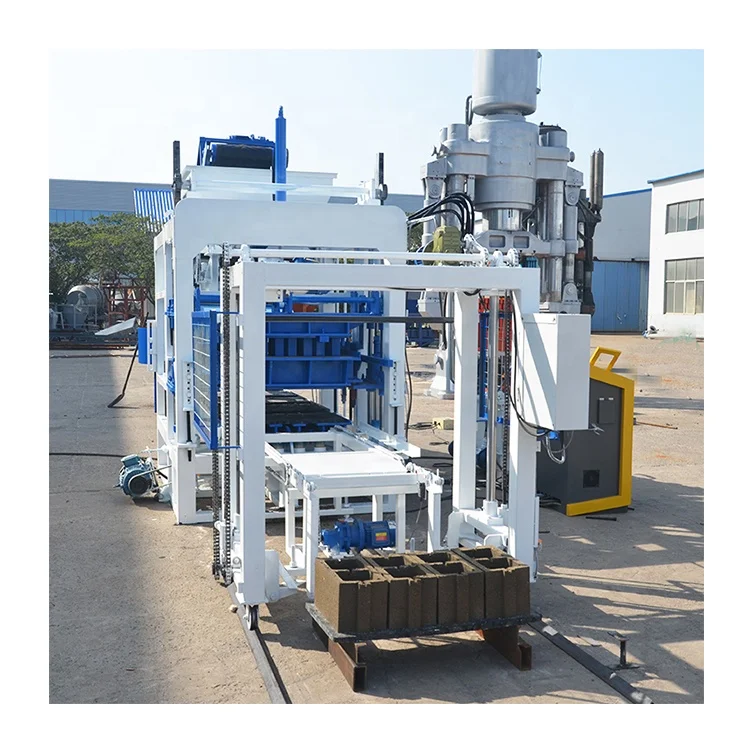
 Automatic block machine