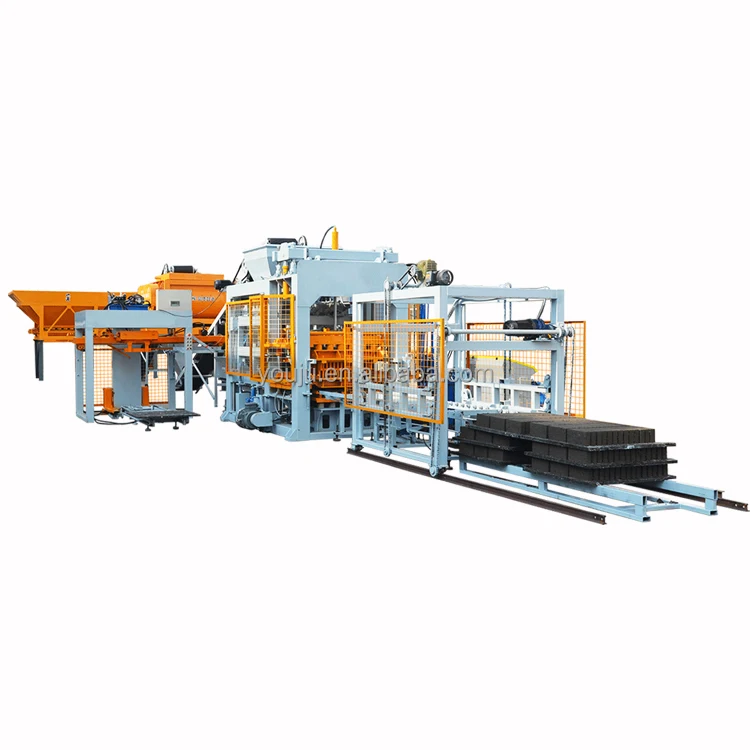
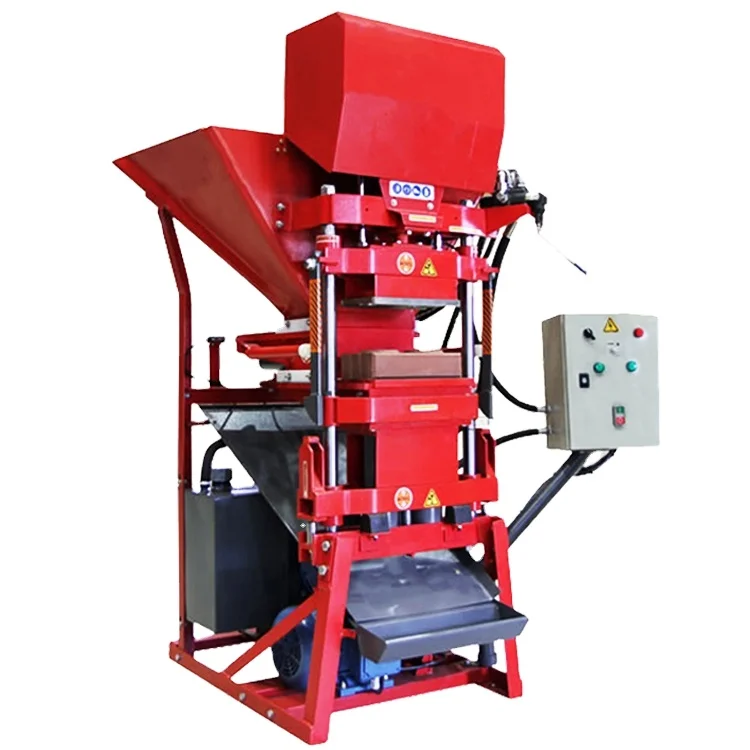
Single-focus engineering — Block machinery, moulds, pallets and handling are specified as one matched system, not assembled from separate suppliers, ensuring the press, curing racks and stacker all operate on compatible dimensions.
Technical Specifications
| Parameter |
Value |
| Model |
QT4-18 |
| Product Type |
Automatic Concrete Hollow Block Making Machine |
| Overall Dimensions (L×W×H) |
2500×1750×2200mm |
| Rated Hydraulic Pressure |
16MPa |
| Vibration Form |
Platform Vibration |
| Pallet Size |
950×550mm |
| Molding Cycle |
18–25s |
| Total Installed Power |
27.5kW |
| Control Architecture |
PLC with integrated frequency converter |
| Electrical Components |
Schneider specification |
| Mold Lifting Mechanism |
Double-sided synchronization gears |
| Material Feeding Arrangement |
Hopper, feeding box, platform and conveyor |
| Block Discharge System |
Motorized chassis transport with idlers |
| Automation Tier |
Automatic (single-operator PLC control) |
| Output Capacity |
(basis not stated in source — confirm block format / material) |
| Voltage & Frequency |
(to be confirmed for target market) |
Application Suitability
| Application Scenario |
Material or Output |
| Commercial hollow block production |
Crushed aggregate, cement, sand, water |
| Solid masonry unit manufacturing |
Local river sand or manufactured sand with cement binder |
| Paving and interlocking brick runs |
Finer aggregate blends with pigment additives |
| On-site contractor block production |
Variable local aggregates with adjusted cycle timing |
| First-plant entrepreneur setups |
Standard concrete mixes scaled to daily targets |
Why "Cycles per Hour" Means Nothing Without the Block Format
Capacity figures only matter when tied to a specific block size and mix.
When sourcing an automatic block machine manufacturer, buyers often see a single output number quoted without being told which block format it assumes. A machine might complete a cycle in 18 seconds on a thin solid paver but need the full 25 seconds on a thick hollow block [NEED_CITE: realistic molding cycle variations by block format]. That difference compounds across a shift, and if the supporting mixer or pallet return cannot keep pace, the press sits idle between cycles. The QT4-18 is quoted here with a range, and the realistic daily tonnage only becomes clear once the buyer’s target format and local aggregate are factored into the line calculation.

Placing the QT4-18 on the Investment Spectrum
Buyers surveying a complete block machine range need to understand where this model sits between entry-level semi-automatic presses and high-capacity continuous lines. The QT4-18 occupies the automatic tier with PLC-controlled single-operator functionality, meaning it removes the manual pallet handling and button-press coordination that define semi-automatic work. It still requires a downstream stacking decision — either a manual cure-area crew or an optional stacker — which directly affects the total headcount per shift.
How the Full Line Must Match the Press
An automatic block machine manufacturer delivers value only when the mixer output, belt conveyor speed, and pallet circulation all synchronize with the press cycle [NEED_CITE: block plant line synchronization requirements]. If the JQ500 mixer batch time exceeds the press hunger rate, the QT4-18 waits. If the 8-meter belt conveyor deposits material faster than the hopper can meter it, spillage accumulates. This model is specified alongside its supporting equipment so that each station’s throughput is calculated against the same block format before the order is finalized.
Reading the Specs That Actually Shape Your Daily Output
The 16MPa rated hydraulic pressure and platform vibration must work together — pressure compacts the mix while vibration settles the aggregate into the mould corners. If local sand carries high clay content, the vibration duration may need extension, which lengthens the molding cycle from the lower end of the 18–25s band toward the upper. The 950×550mm pallet size governs how many blocks form per cycle and must match the curing rack dimensions already in your yard or on order. Double-sided sync gears on the mould lift keep the demoulding motion level, reducing cracked edges on hollow cores. The 27.5kW total power draw tells your electrician whether the existing workshop supply can absorb the press alongside the mixer and conveyor running simultaneously [NEED_CITE: industrial power supply planning for block plants].
The Cost of Ordering the Press Without the Line
Specifying a press in isolation leads to pallets that do not fit the curing racks you already own, or a mixer that batches too slowly and starves the hopper [NEED_CITE: block machine supporting equipment mismatch consequences]. Voltage and frequency left unconfirmed at order stage can delay commissioning by weeks when the local supply does not match the motor windings. Buyers who skip the line-level capacity calculation often discover that their quoted daily output assumed a block format their market does not purchase, leaving them reordering moulds before the first production month ends.
What This Automatic Block Machine Manufacturer Builds Into the Proposal
Every configuration starts from the buyer’s actual aggregate sample and target block format, not a catalogue default, so the vibration force and hydraulic pressure are matched before production begins. Mould design covers the formats the buyer’s local market actually sells, including custom drawings for non-standard kerbstones or interlocking profiles. The automation level is selectable — a buyer can start with manual pallet return and add the stacker later without replacing the press. Supporting equipment from the JQ500 mixer through the belt conveyor and block gripper is quoted as one matched set, so arrival dates and interface dimensions align. Factory testing runs the buyer’s chosen mould on the actual press before crating, confirming cycle time and block density before shipment.
Documentation & Verification
- Line layout drawing with capacity calculated per your chosen block format
- Machine specification sheet confirming pallet size and hydraulic pressure
- Mould drawing and format list for every block profile in your order
- Voltage, frequency and PLC display language confirmation document
- Factory test record on your mould before dispatch
- Packing photographs and customs documentation support
Installation, Commissioning & Support
- Foundation plan matched to the 2500×1750mm footprint and dynamic vibration load
- Electrical schematic for the 27.5kW total draw confirming dedicated circuit requirements
- Machine shipped dismantled for container loading with reassembly supervised on site
- PLC parameter set against your mix design and molding cycle during commissioning
- Operator training covering mould change procedure on the sync-gear lift system
- Wear parts list and mould maintenance schedule provided at handover
- Schneider component identification for local electrical sourcing
Sizing Your Line Before You Commit
Provide your target block dimensions, daily volume requirement, and local aggregate source so the capacity calculation reflects reality rather than a catalogue assumption. Confirm your workshop voltage, supply frequency, and preferred PLC display language to avoid rewinding motors or reprogramming the interface after arrival. Indicate whether stacking and curing rack handling should enter the quotation or if your existing crew will manage those stations.
Frequently Asked Questions
Q: How does the QT4-18 compare to semi-automatic and higher-tier models on output and footprint?
A: The QT4-18 sits between manual-pallet semi-automatic presses and fully continuous high-capacity lines. It automates the molding cycle through PLC control while still allowing the buyer to choose manual or automatic stacking downstream. Footprint and investment scale accordingly — a buyer can start here and add cubing later without replacing the core press.
Q: What block format is assumed in the stated molding cycle, and what is realistic daily output?
A: The 18–25s cycle range covers different block profiles, with thinner solid pavers toward the lower end and taller hollow blocks toward the upper. Realistic daily output depends on the specific format, mix workability, and whether the mixer and pallet return keep the press fed continuously without idle gaps.
Q: Can the automation level be upgraded after the line is running?
A: Yes. A line that starts with manual pallet handling and hand stacking can later accept an automatic stacker and pallet return system. The QT4-18 PLC architecture accommodates these additions because the control logic already governs the press cycle and can extend signals to downstream stations.
Q: Which supporting equipment is included in the quotation, and which is optional?
A: The JQ500 mixer, belt conveyor, and block discharge chassis are typically specified alongside the press. The stacker, block gripper, extra moulds, and trolley are quoted based on the buyer’s curing method and labor plan. Every item is listed individually so the buyer sees exactly what enters the container.
Q: What are the installation foundation requirements, and how is the machine shipped?
A: The 2500×1750mm footprint requires a level concrete pad rated for the vibration load and 27.5kW power supply. The machine is dismantled for container loading, with reassembly, electrical connection, and PLC parameter tuning completed during on-site commissioning before the first production run.

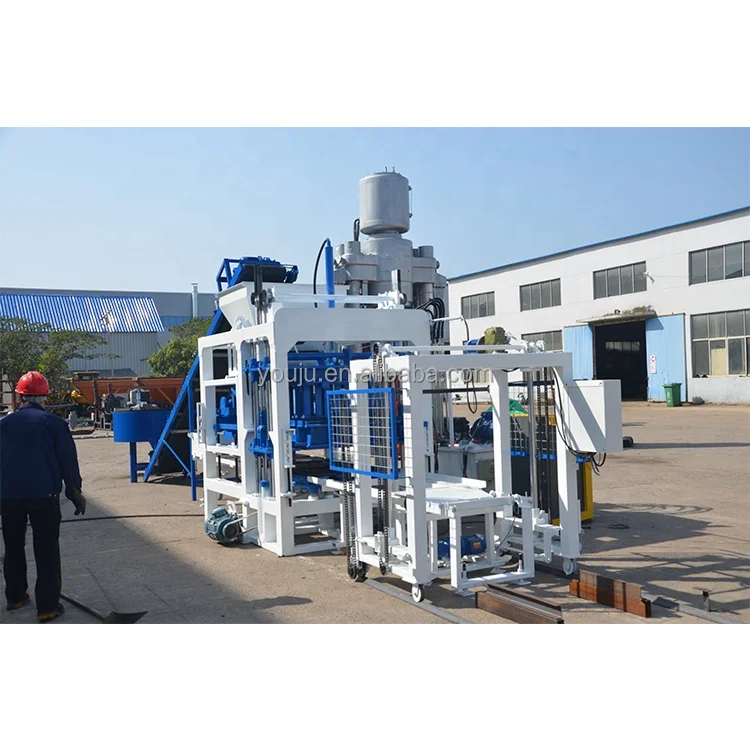
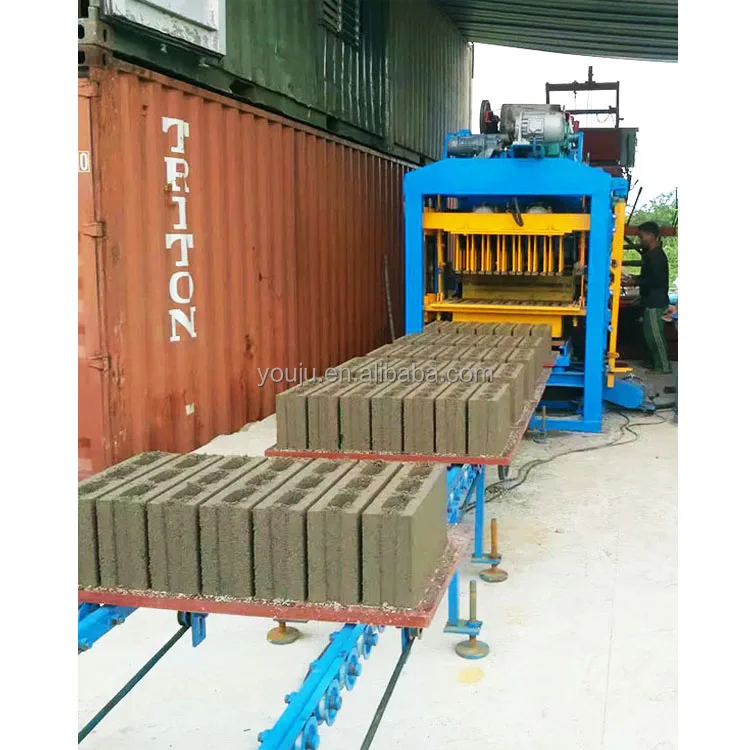 Automatic block machine