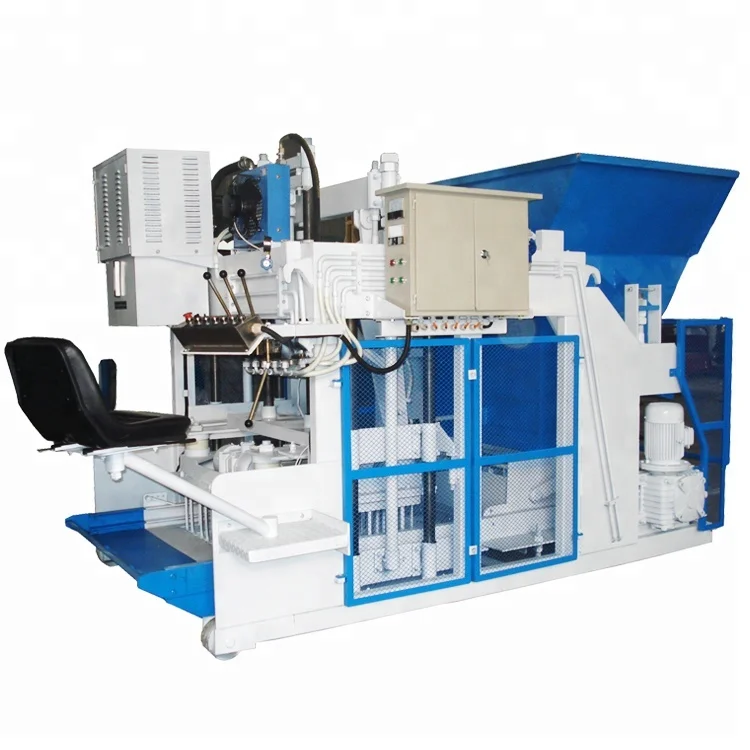
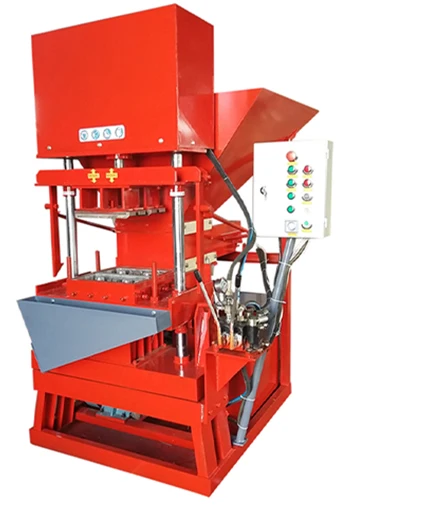
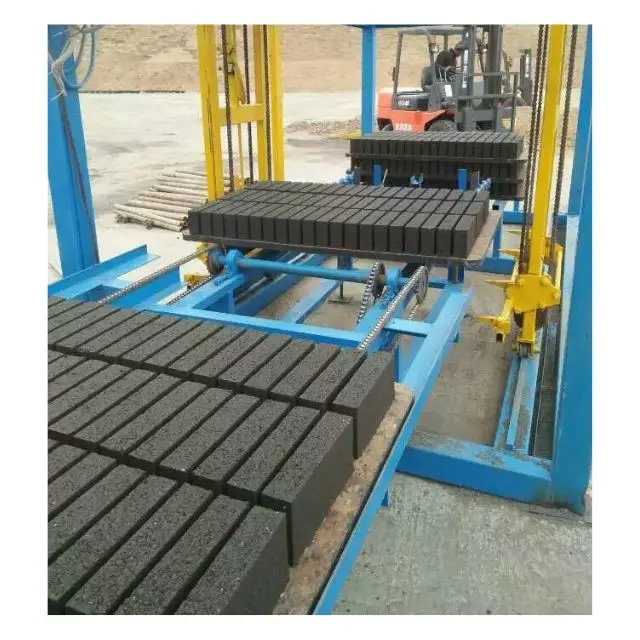
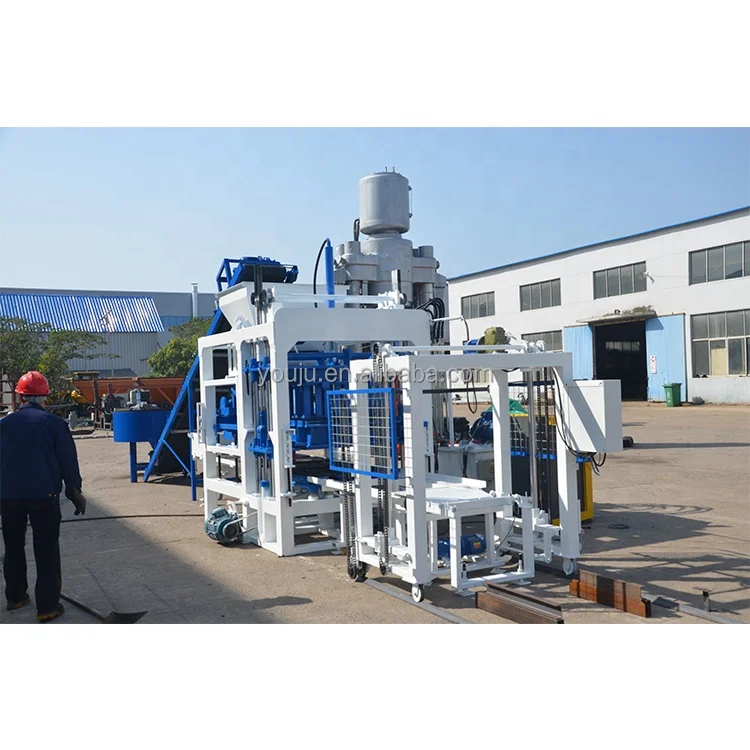
Matched System Configuration — The QT4-16 automatic block machine is specified as one integrated unit where press, mould, pallet, and handling equipment are sized together against your actual block format rather than quoted as standalone components.
Technical Specifications
| Parameter |
Value |
| Model |
QT4-16 |
| Product Type |
Automatic Hydraulic Concrete Block Making Machine |
| Overall Dimensions |
7400 × 1950 × 2800 mm |
| Total Mass |
5 T |
| Rated Pressure |
21 MPa |
| Vibration Force |
40 kN |
| Vibration Frequency |
2800–4500 r/min |
| Main Vibration Form |
Platform Vibration |
| Molding Cycle |
15–20 s (basis not stated in source — confirm block format, material, and thickness) |
| Pallet Size |
900 × 550 mm |
| Demolding Method |
Hydraulic |
| Machine Frame Material |
Manganese steel (China national standard) |
| Control System |
PLC intelligent control with man-machine interface, fault diagnosis, and remote control function |
| Factory Area Required |
600 m² |
| Applied Products |
Concrete hollow blocks, solid blocks, pavers, interlocking blocks, curbstone, colored pavers |
| Raw Materials |
Crushed stone, sand, cement, fly ash, gravel, slag, dust |
| Voltage & Frequency |
Configurable — confirm before shipment |
| PLC Display Language |
Configurable — confirm before production |
| CE Declaration |
Available where applicable |
Application Suitability
| Application |
Material or Output |
| Hollow block production for commercial and residential walls |
Crushed stone, sand, cement, fly ash blends |
| Solid block manufacturing for load-bearing structures |
Gravel, sand, cement mixes |
| Interlocking paver production for driveways and walkways |
Fine aggregate and cement with pigment |
| Kerbstone and curb production for road infrastructure |
Coarse aggregate, sand, cement |
| On-site block production for housing developments |
Locally sourced aggregate and cement |
| First plant setup for entrepreneurs entering block manufacturing |
Standard concrete raw materials |
What the Molding Cycle Figure Actually Means for Your Output
Cycle time only translates into daily capacity when the block format and mix design are fixed — quoting cycles alone tells you nothing about what you will produce.
When an automatic block machine manufacturer lists a 15–20 second molding cycle, the number sounds precise until you ask which block format was used to measure it. A 4-inch solid block and an 8-inch hollow block require different vibration duration, hydraulic dwell, and demolding travel on the same press. I have seen buyers sign contracts based on peak cycle figures, only to discover on commissioning day that the format they actually sell runs noticeably slower. The gap between quoted and actual output becomes a dispute that delays production for weeks [NEED_CITE: common contract disputes over capacity assumptions in block machinery procurement].

Where the QT4-16 Sits in a Complete Machine Range
The QT4-16 occupies the mid-tier of our automatic block machine range, positioned between smaller semi-automatic presses and high-capacity lines that demand larger factory footprints and higher capital outlay. It is built for buyers who need PLC-controlled hydraulic pressing with consistent cycle-to-cycle output, yet do not want to invest in a fully automatic stacking and cubing system from day one. The platform vibration system and hydraulic demolding give it the forming pressure needed for structural blocks, while the 600 m² factory area requirement keeps it accessible for medium-sized production sites.
Automation Tier and How It Connects to Your Plant Layout
This automatic block machine manufacturer supplies the QT4-16 as a press that can operate semi-automatically with manual pallet handling or integrate into a line with automatic pallet feeding, stacking, and curing rack transfer. The PLC control with man-machine interface manages cycle parameters and includes remote fault diagnosis, which means a technician can review error codes without being on the factory floor. For buyers surveying options, this selectable automation level allows a first plant to start with the press and a basic pallet circuit, then add stacking and cubing modules as volume grows [NEED_CITE: PLC remote diagnostics capability in mid-tier block making equipment].
How Pressure and Vibration Interact During Forming
The 21 MPa rated pressure and 40 kN vibration force on the QT4-16 work together — pressure compacts the mix vertically while platform vibration at 2800–4500 r/min rearranges particles into a denser matrix before the hydraulic head finishes its stroke. If vibration force is too low for the aggregate size in your mix, the block core remains porous and compressive strength drops. If pressure dominates without sufficient vibration, the surface finish cracks during demolding. The manganese steel frame absorbs the cyclic loading from both forces without deflection, which is what keeps dimensional tolerance tight across a full shift. The 900 × 550 mm pallet size determines how many blocks form per cycle and must match the curing rack spacing and forklift capacity you already have on site.
The Cost of Skipping Pallet and Handling Verification
Buyers who focus only on press specifications often discover after delivery that the pallet size does not fit their existing curing racks, forcing a complete rack replacement. Pallet material matters as well — bamboo, PVC, and steel pallets behave differently under repeated vibration and moisture exposure, and choosing the wrong type shortens pallet life and affects block surface quality. When stacking and curing are left out of the quotation, finished blocks pile up beside the press waiting for manual handling, which bottlenecks the very output the press was bought to achieve [NEED_CITE: pallet handling bottlenecks in block production plants].
Why Sourcing the Full Line from One Manufacturer Matters
Every QT4-16 leaves our facility with mould, pallet, and handling equipment specified as a matched set — not assembled from separate suppliers who each optimize their own component. The moulds are designed around the block formats your market actually sells, including custom drawings when standard formats do not match local demand. Machine configuration is set against your local aggregate and mix design, not a catalogue default, so the vibration and pressure settings suit the material you can actually source. Automation level is selectable, meaning the same press can start semi-automatic and accept stacking or cubing modules later without a full replacement. Installation support covers operator training and mould change procedure so format flexibility is real from the first week, not a promise that takes a month to learn. Documentation includes factory test records run on your target block format, not a generic bench test.
Documentation & Verification
- Line layout drawing with capacity calculation stated per block format and mix design
- Machine specification sheet confirming pallet size, vibration force, and hydraulic pressure
- Mould drawing and format list showing every block type the press will produce
- Voltage, frequency, and PLC display language confirmed in writing before production
- Factory test record on your specified block format with packing photographs before dispatch
- Customs documentation support and CE declaration where applicable
Installation, Commissioning & Support
- 600 m² factory area with level concrete foundation rated for 5 T static load plus dynamic vibration
- Voltage and frequency confirmed per your local grid before electrical panel wiring begins
- Machine shipped dismantled to fit container loading, with reassembly and alignment on site
- First-run commissioning with molding cycle adjustment to your actual mix and block format
- PLC man-machine interface set to your preferred operating language before trainer arrival
- Operator training covering mould change, fault diagnosis use, and daily maintenance schedule
- Wear parts list and hydraulic seal kit identified for first reorder cycle
What to Include in Your Inquiry
When evaluating where the QT4-16 fits your production plan, provide your target block formats with dimensions, the daily volume you need per format, and the raw materials available locally including aggregate grading. Share your existing curing area dimensions and any forklift or pallet rack already on site, so pallet size and handling can be matched. Confirm your local voltage, frequency, and preferred PLC display language so the electrical and control system ship configured for your market.
Frequently Asked Questions
Q: Where does the QT4-16 sit compared to semi-automatic and higher-output automatic models?
A: The QT4-16 is a mid-tier automatic press with PLC control and hydraulic demolding, positioned above manual and semi-automatic machines that lack programmable cycle management, and below high-capacity lines that require larger footprints and full automatic stacking. It suits buyers who need consistent daily output without the investment of a top-tier plant.
Q: How do I verify real daily output based on the block format I actually sell?
A: Request a capacity calculation document that states the molding cycle for each specific block format and mix you plan to run. The 15–20 second cycle figure applies to a reference format; your actual format may run faster or slower depending on block height, cavity count, and aggregate size.
Q: What plant footprint and supporting equipment does the QT4-16 require?
A: The press itself fits within a 600 m² factory area including raw material storage, mixing, curing racks, and block handling space. Supporting equipment includes a mixer, pallet feeder, and curing area sized to your daily output. Pallet and rack specifications should be confirmed before order to avoid post-delivery mismatches.
Q: Can I start with the QT4-16 semi-automatic and upgrade automation later?
A: Yes. The QT4-16 automation level is selectable, so you can begin with manual pallet handling and add automatic pallet feeding, stacking, or cubing modules as production volume grows, without replacing the press itself.
Q: What voltage, frequency, and PLC language options are available for my market?
A: Voltage and frequency are configurable and must be confirmed in writing before production. The PLC display language is also set to your preference during assembly, so the operator interface arrives in the language your team reads on day one.

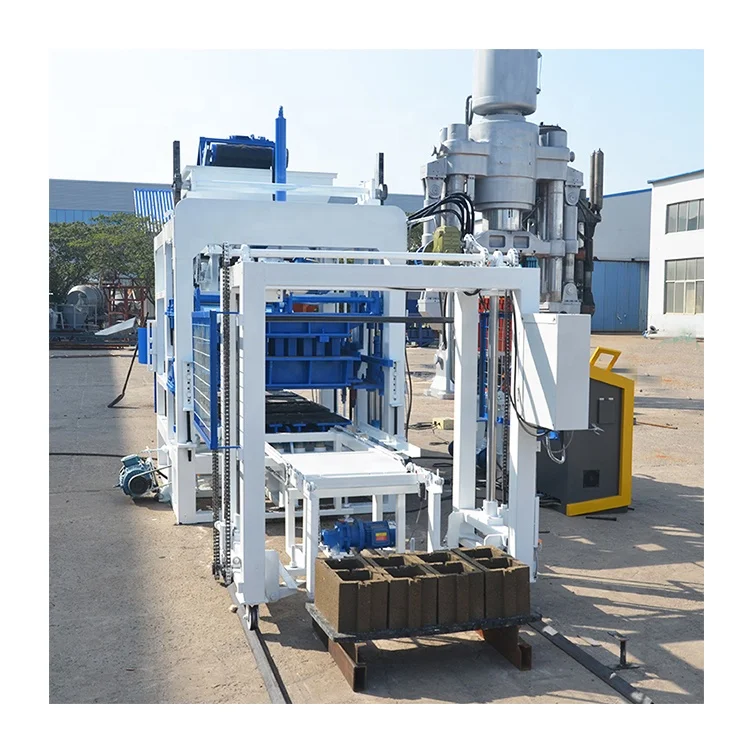
 Automatic block machine