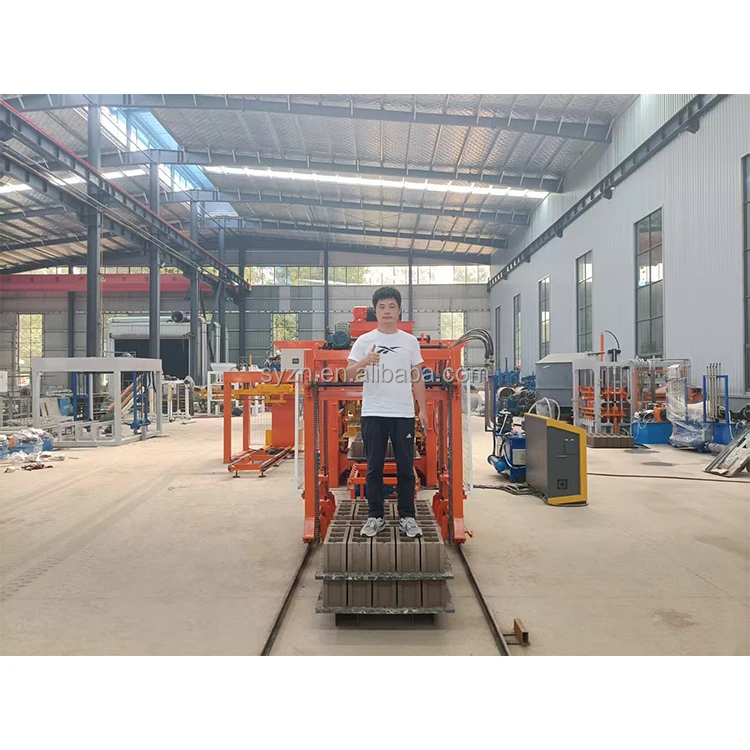
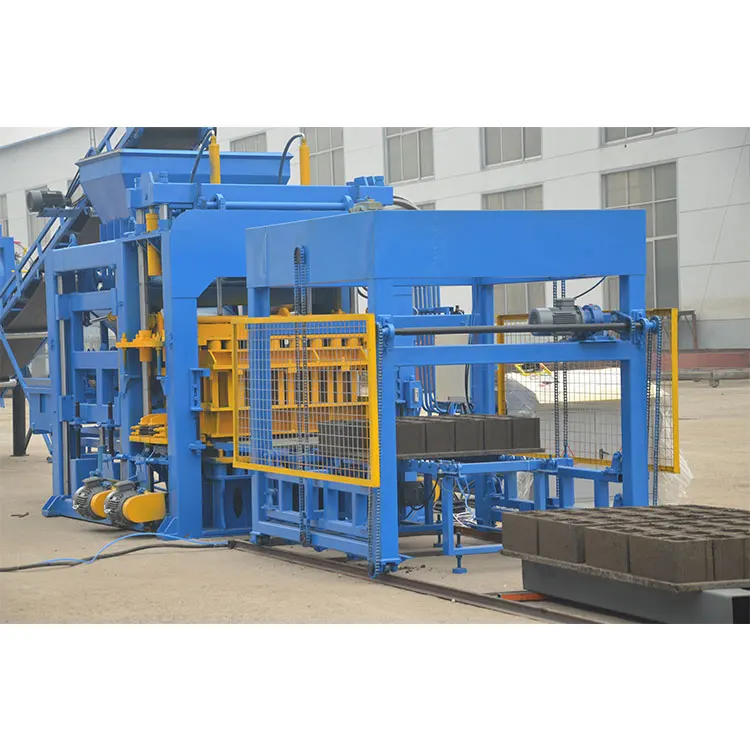
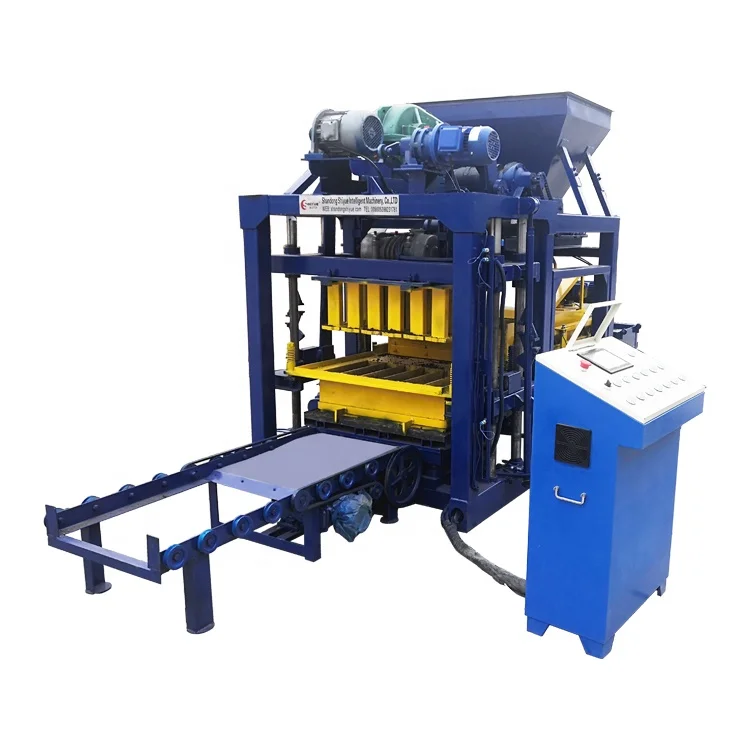
Single-focus block machinery — the QT4-16 press, pallet, mould and handling are specified as one matched system rather than assembled from separate suppliers, keeping cycle times aligned across every station.
Technical Specifications
| Parameter |
Value |
| Model |
QT4-16 |
| Product Type |
Automatic Hydraulic Concrete Block Making Machine |
| Overall Dimensions (L×W×H) |
7400 × 1950 × 2800 mm |
| Total Mass |
5 T |
| Rated Pressure |
21 MPa |
| Main Vibration Form |
Platform Vibration |
| Vibration Frequency |
2800 – 4500 r/min |
| Vibration Force |
40 KN |
| Pallet Size |
900 × 550 mm |
| Molding Cycle |
15 – 20 s (basis not stated in source — confirm block format, material and thickness) |
| Demolding Method |
Hydraulic |
| Control System |
PLC intelligent control with man-machine interface, remote control function |
| Factory Area |
600 m² |
| Raw Materials |
Crushed stone, sand, cement, dust, fly ash, gravel, slag |
| Applied Products |
Hollow/solid blocks, pavers, interlocking blocks, curbstone, colored pavers |
| Output Capacity |
(basis to be confirmed — depends on block format and mix design) |
Application Suitability
| Application |
Material or Output |
| Hollow block production plants |
Crushed stone, sand, cement, fly ash blends for load-bearing and partition walls |
| Solid block manufacturing |
Dense aggregate mixes for structural masonry |
| Paving block and colored paver runs |
Fine sand and cement with pigment additives |
| Interlocking brick and curbstone forming |
Gravel, slag and cement combinations |
| On-site contractor production for housing projects |
Locally sourced sand and crushed stone |
What "15-Second Cycle Time" Leaves Out
Cycle time means nothing without the block format it was measured against.
Many quotations list a single molding cycle as if it applies equally to a 400 mm hollow block, a 60 mm paver and an interlocking brick. In practice, a paver with high pigment content needs a longer vibration dwell than a standard hollow block, and a curbstone drawn from a wetter mix demands a different hydraulic profile. When the QT4-16 automatic block machine manufacturer quotes a cycle, it must be tied to the exact format and mix the buyer will run — otherwise the daily output figure on paper will not survive the first production shift [NEED_CITE: block format and cycle time relationship in hydraulic block presses].

Where the QT4-16 Sits in the Full Machine Range
The QT4-16 occupies the mid-tier of our automatic block machine lineup, positioned between entry-level semi-automatic presses and high-capacity fully automatic lines. Buyers stepping up from a mobile egg-layer or a manual press find the platform vibration and PLC-controlled hydraulic system a clear jump in consistency, without the footprint and capital of a large-scale plant.
Scaling Automation Without Replacing the Press
A buyer starting with manual pallet handling can specify the QT4-16 with basic conveyors and add automatic stacking and cubing modules later as volume grows. The PLC architecture supports this upgrade path because the man-machine interface already manages cycle logic that extends to downstream stations, meaning the press does not need to be swapped out when the line expands.
Reading the Specs That Actually Matter
The 21 MPa rated pressure and 40 KN vibration force work together to consolidate the mix into a dense, uniform block. Pressure alone compresses; vibration alone settles aggregate. Only when both are matched to the buyer’s local sand gradation and cement ratio does the block leave the mould with enough green strength to survive pallet transfer. The adjustable frequency range from 2800 to 4500 r/min lets the operator dial in the right energy level — coarser crushed stone typically needs a lower frequency with longer dwell, while fine fly ash blends respond to higher frequency bursts [NEED_CITE: vibration frequency tuning for different aggregate gradations].
The 900 × 550 mm pallet size was chosen to align with standard curing rack dimensions and common forklift tine widths. A pallet that is too large wastes curing space; one that is too small forces double-handling. Confirming pallet material — bamboo, PVC or steel — against the curing environment and forklift type prevents costly replacements within the first year.
The Hidden Cost of Skipping the Mix Audit
I have stood on a West African site watching freshly demoulded hollow blocks slump because the river sand carried a clay content the original quotation never accounted for. The vibration force was tuned for clean crushed stone, and the extra fines in the local sand absorbed water unpredictably, leaving blocks that cracked during curing. That four-day re-commissioning job could have been avoided with a single aggregate sample tested before the machine left the factory. When mix design and machine settings are misaligned, output drops and mould wear accelerates [NEED_CITE: aggregate clay content impact on block green strength].
Why Source the QT4-16 Automatic Block Machine Manufacturer Here
Block machinery is our only product line, so the press, mould, pallet and handling equipment are engineered together rather than bolted on from unrelated vendors. Every configuration starts from the buyer’s actual aggregate sample and target block format, not a catalogue default. Mould design covers the formats the buyer’s local market demands, including custom drawings for non-standard dimensions. Automation level is selectable at order and upgradable in the field, protecting the initial investment as production scales. Installation includes operator training on the PLC interface and maintenance routines specific to the buyer’s climate and dust conditions.
Documentation & Verification
- Line layout showing capacity calculation per block format for the QT4-16
- Mould drawing and format list issued with the quotation
- Voltage, frequency and PLC display language confirmed before production
- Factory test record on buyer’s specified block format before dispatch
- Packing photographs and customs documentation support
Installation, Commissioning & Support
- 600 m² factory area requirement with level concrete foundation for the 7400 mm machine length
- Dedicated power circuit matching confirmed voltage and frequency before the QT4-16 is energized
- Hydraulic manifold and vibration motor inspected on-site after transit dismantling
- PLC man-machine interface language and remote diagnostic link verified during first run
- Operator training covers mould change procedure and pallet alignment checks
- Wear parts and hydraulic seal list provided with recommended reorder intervals
What We Need Before Quoting
Send us the block formats your market sells most, the local aggregate type and any available sieve analysis, your target daily output per format, and the voltage and frequency standard at your site. If you already have curing racks or forklifts, share the dimensions so the 900 × 550 mm pallet can be confirmed or adjusted.
Frequently Asked Questions
Q: What is the realistic daily output of the QT4-16 per block format?
A: Daily output depends on the block format, mix design and pallet cycle time. A hollow block requires a different vibration dwell than a paver or interlocking brick, so a single cycle number does not apply across all formats. We provide a capacity calculation sheet that states the assumed format, molding cycle and shift hours so your projected output matches what the machine actually delivers on your floor.
Q: Where does the QT4-16 sit in the automatic versus semi-automatic range?
A: The QT4-16 is a mid-tier automatic press with PLC control and hydraulic demolding. It delivers more consistent output than a semi-automatic machine while keeping the plant footprint manageable. Buyers can begin with manual pallet handling and add automatic stacking and cubing later, because the control system is designed to integrate downstream modules without replacing the press.
Q: What plant footprint does the QT4-16 line require?
A: The press itself measures 7400 × 1950 × 2800 mm, and the recommended factory area is around 600 m² to include raw material storage, mixing, pallet circulation and curing rack access. Exact layout depends on the automation level chosen and the pallet return system. We issue a line layout drawing showing each station and the clearance needed for forklift movement.
Q: Which pallet size does the QT4-16 use and is it compatible with my curing setup?
A: The standard pallet size is 900 × 550 mm, chosen to match common curing rack widths and forklift tine spacing. Pallet material — bamboo, PVC or steel — is selected based on your curing environment and handling method. We confirm compatibility with your existing racks and forklifts before production to avoid double-handling or premature pallet replacement.
Q: What voltage, frequency and PLC language options are available?
A: Voltage and frequency are configured to match the buyer’s local grid standard, and the PLC display language is set before the machine leaves the factory. Confirming these details during the quotation stage prevents commissioning delays after arrival. The remote control function allows diagnostic support across different language and network environments.

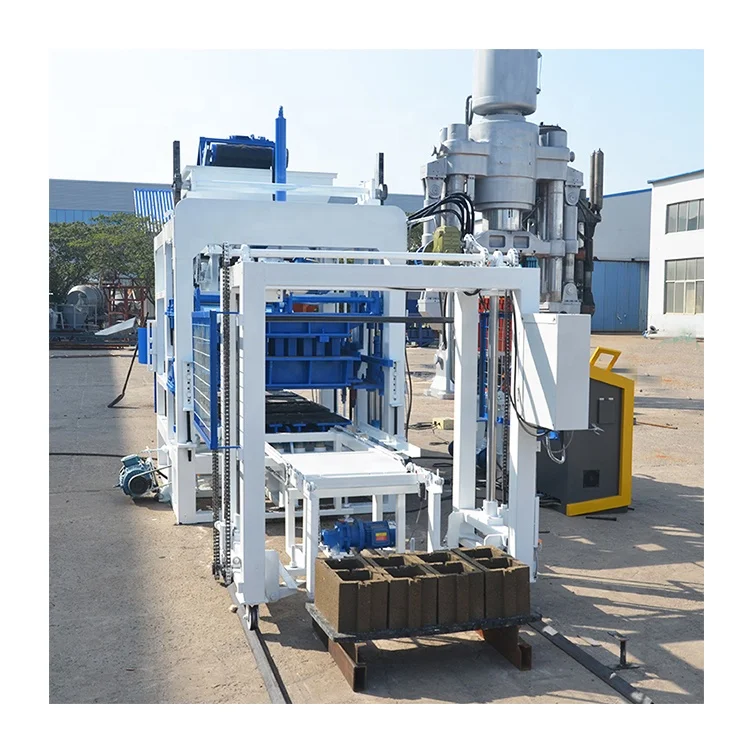
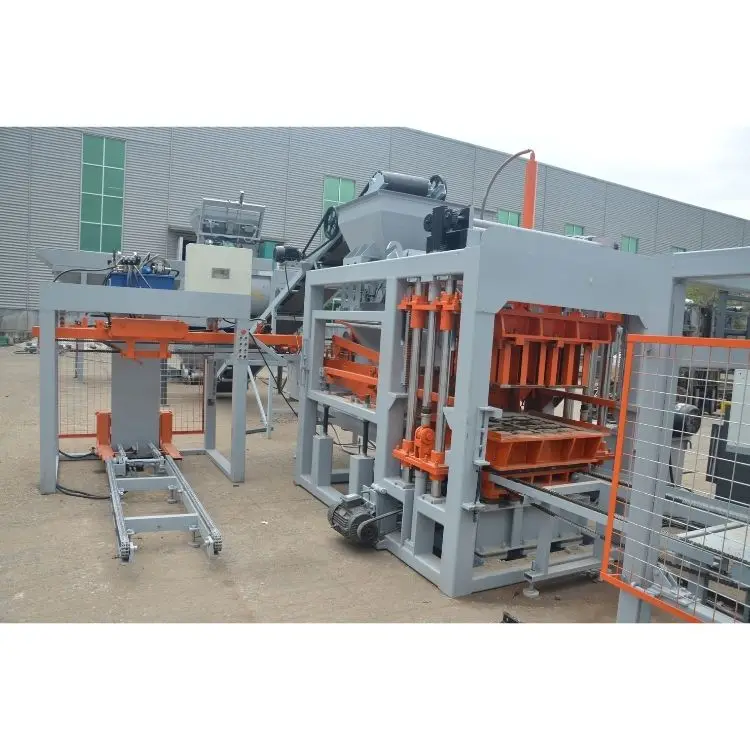 Automatic block machine