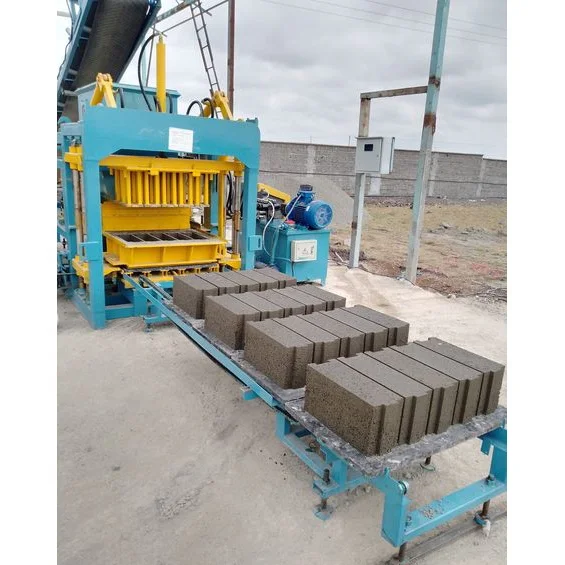
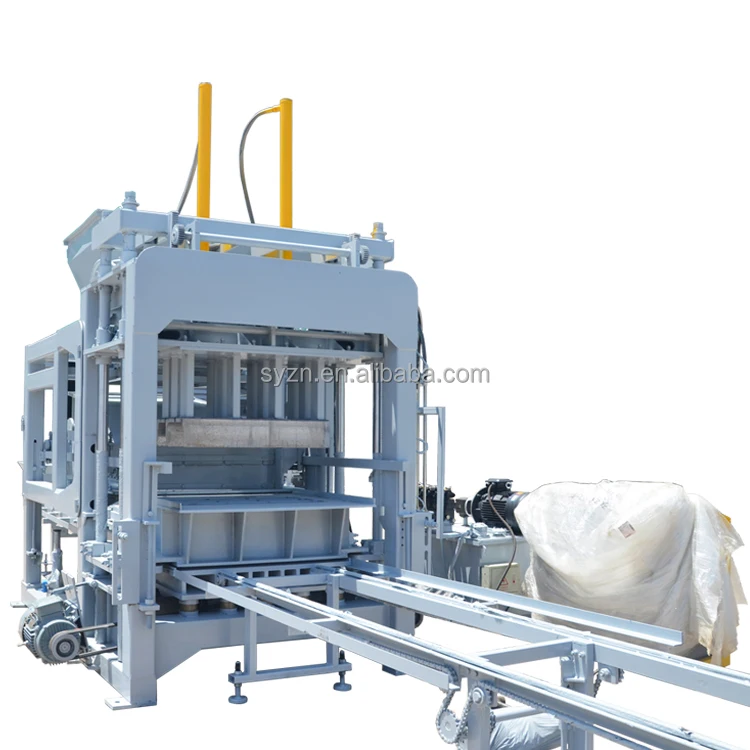
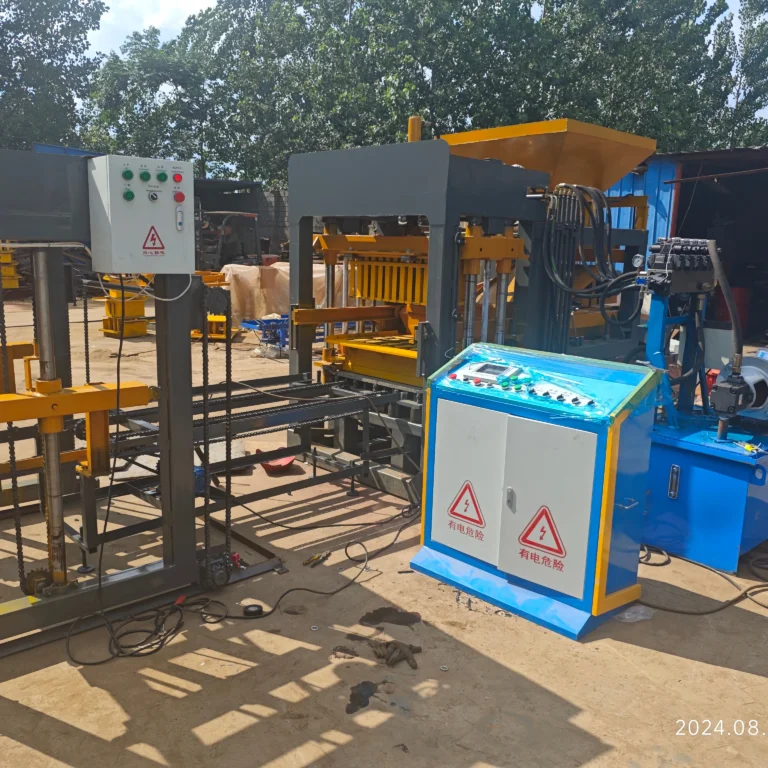
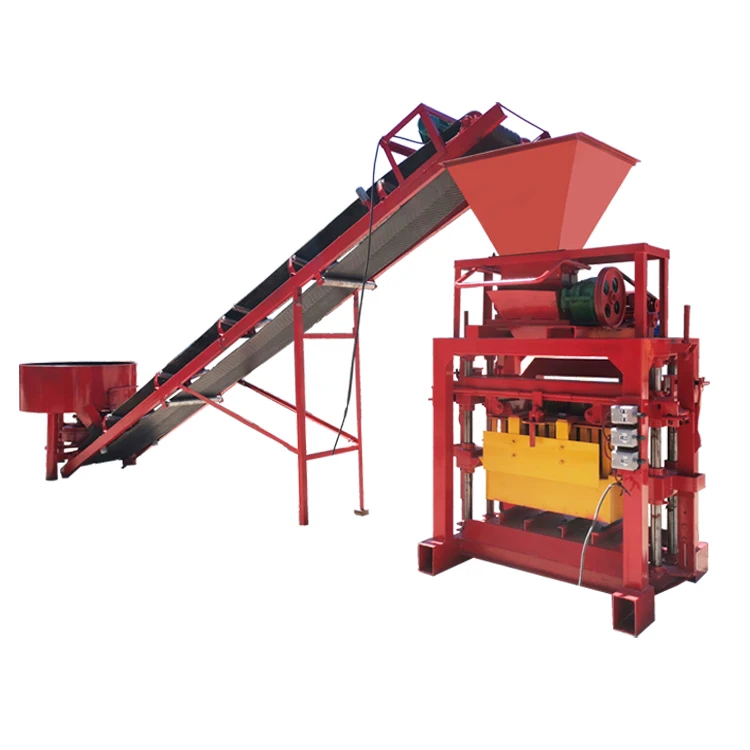
Matched System Design — The QT4-15A is specified as a complete line with pallet feeder, conveyor, and sweeper integrated from the start, so output does not bottleneck at the press.
Technical Specifications
| Parameter |
Value |
| Model |
QT4-15A |
| Product Type |
Automatic Concrete Block Making Machine |
| Overall Dimensions (L×W×H) |
7100×1600×2610 mm |
| Total Weight |
3 T |
| Molding Cycle |
15-25 s |
| Vibration Frequency |
4600 r/min |
| Exciting Power (Vibration Force) |
40-50 kN |
| Total Power |
18.45 kW |
| Mixer Model |
JQ350 |
| Pallet Size |
850×550×25 mm |
| Control System |
PLC control system |
| Hydraulic Station |
Included (high pressure) |
| Included Equipment |
Block making machine, hydraulic station, PLC control system, pallet feeder, brick conveyor, block sweeper |
| Free Accessories |
Manual hydraulic trolley, spare parts and tools |
| Output Capacity (Hollow 400×200×200mm, 4 pcs/mould) |
408 pcs/h; 3264 pcs per 8hr shift |
| Output Capacity (Hollow 400×150×200mm, 5 pcs/mould) |
510 pcs/h; 4080 pcs per 8hr shift |
| Output Capacity (Solid 240×115×53mm, 18 pcs/mould) |
2100 pcs/h; 17000 pcs per 8hr shift |
| Voltage & Frequency |
(basis to be confirmed) |
| Stacking Method |
(basis to be confirmed) |
| PLC Display Language |
(basis to be confirmed) |
| Certification |
(basis to be confirmed) |
Application Suitability
| Application |
Material or Output |
| Hollow Block Production |
Crushed stones, sand, cement, fly ash, dust |
| Solid Brick Production |
Crushed stones, sand, cement, fly ash, dust |
| Paver Production |
Crushed stones, sand, cement, fly ash, dust |
| Curbstone Production |
Crushed stones, sand, cement, fly ash, dust |
| On-site Construction Block Making |
Contractors producing hollow blocks and pavers locally |
| First Plant Setup |
Entrepreneurs evaluating investment tier for initial block line |
What "408 Pieces per Hour" Actually Assumes on the QT4-15A
Capacity is meaningless unless the block format, mould cavity count, and cycle time are stated together.
Many automatic block making machine manufacturer quotations lead with a single headline figure, often based on the smallest solid brick the press can physically cycle. When a buyer’s market demands 400×200×200mm hollow blocks, that headline capacity drops significantly. The QT4-15A outputs 408 pieces per hour only when running four-cavity hollow block moulds at that exact 400×200×200mm format, while solid 240×115×53mm bricks reach 2100 pieces per hour with eighteen-cavity moulds. Stating both figures with their format assumptions prevents the gap between quotation and daily reality [NEED_CITE: common block machine capacity quotation practices].

Where the QT4-15A Sits in the Range
The SHIYUE lineup spans mobile egg-laying machines at the entry level, semi-automatic stationary presses for smaller workshops, and high-capacity fully automatic lines with integrated stacking and cubing. The QT4-15A occupies the automatic tier with PLC control, hydraulic station, and pallet feeder included as standard, placing it above manual-pallet semi-automatic models and below lines that add automatic stackers and curing rack handlers. Buyers surveying options for a first or replacement machine can use this positioning to weigh whether the QT4-15A’s automation level matches their labour availability and output target.
Matching Output Tier to Your Project Scale
Selecting the right tier avoids over-investing in capacity you cannot cure or sell, or under-investing in a press that cannot meet contract deadlines. The QT4-15A’s total power of 18.45 kW and three-tonne footprint suit small-to-medium block plants that have a dedicated curing area but do not require the continuous throughput of a high-capacity line. Contractors producing blocks on-site for a specific housing or infrastructure project often find this tier aligns with their contract duration and available space [NEED_CITE: block plant investment tier selection factors].
How Vibration Force and Hydraulic Pressure Shape Block Density
The QT4-15A delivers 40-50 kN of vibration force at 4600 r/min, working in tandem with its hydraulic station to compact the mix inside the mould. Vibration settles aggregate particles into a dense arrangement, while hydraulic pressure applies the final compaction from above. If vibration frequency is high but hydraulic pressure is low, blocks may look well-formed on the surface yet crumble under load because internal voids remain. Conversely, excessive pressure without adequate vibration produces dense but brittle blocks with poor edge definition. Matching both parameters to the buyer’s specific mix design and local aggregate ensures consistent compressive strength across every batch.
The pallet size of 850×550×25 mm is specified as part of the integrated line rather than sourced separately, which matters because pallet dimensions dictate how many blocks fit per mould and how pallets move through the curing rack. A pallet sized without regard to the buyer’s existing forklift or curing area forces costly modifications after the machine arrives. The JQ350 mixer included in the line must match the press cycle so that fresh mix arrives before the hopper runs empty, avoiding idle press time that erodes the quoted capacity. Mould change time, though not confirmed in the source, directly affects how many format switches a single shift can accommodate without losing production hours.
The Cost of Skipping Voltage Confirmation Before Production
Arriving at a job site to find the local grid runs 440V/60Hz while the machine was built for 380V/50Hz means either a costly transformer installation or a motor rewind, both delaying commissioning by weeks. PLC display language is another detail that, if left unspecified, leaves operators staring at error codes in a language they cannot read, slowing fault diagnosis and increasing the risk of incorrect parameter changes [NEED_CITE: voltage and frequency standards by export market]. Confirming voltage, frequency, and control language in writing before the QT4-15A enters production removes these avoidable delays.
Why the QT4-15A Is Specified as a Complete Line
Block machinery is the single focus at SHIYUE, so the QT4-15A is not assembled from a press bought here and a pallet feeder sourced elsewhere. The machine, mould, pallet, and handling equipment are specified together so that cycle times match across every station. The configuration is set against the buyer’s actual mix design, local aggregate, and target block format rather than a catalogue default, which prevents the situation where a machine arrives configured for materials the buyer cannot source. Mould design covers the formats the buyer’s market actually sells, with custom drawings available for non-standard shapes. Automation level is selectable within the SHIYUE range, allowing a buyer to start with the QT4-15A’s automatic tier and add stacking or cubing stations later.
Documentation & Verification
- Line layout and capacity calculation stating the 400×200×200mm hollow block format assumption
- Machine specification sheet confirming hydraulic pressure, vibration force, and PLC configuration
- Mould drawing and format list showing included cavities and custom design options
- Pallet specification matching the 850×550×25 mm size to curing rack and forklift requirements
- Factory test record on buyer’s target block format before dispatch
- Packing photographs and customs documentation support for container loading
Installation, Commissioning & Support
- Foundation must accommodate the 7100×1600 mm footprint with level tolerance for hydraulic station alignment
- Dedicated electrical circuit sized for 18.45 kW total power with voltage and frequency confirmed before wiring
- Machine shipped with pallet feeder and conveyor separated for container loading, reassembled on-site
- PLC parameters set during commissioning against buyer’s target mould cycle of 15-25 seconds
- Operator training covers mould change procedure, pallet feeder adjustment, and hydraulic station maintenance
- Wear parts list and spare tools included free with initial delivery for first replacement cycle
What to Include in Your Inquiry
Provide your target block format and required daily output so the capacity calculation can be stated against your actual product, not a catalogue default. Specify the local raw materials available — crushed stone grading, sand type, cement grade, and any fly ash or dust proportion — so the mix design matches what you can source. Confirm your site voltage, frequency, and preferred PLC display language before the quotation is finalized.
Frequently Asked Questions
Q: How does the QT4-15A tier compare to semi-automatic and high-capacity lines?
A: The QT4-15A sits above manual-pallet semi-automatic presses with its PLC control, hydraulic station, and pallet feeder, but below high-capacity lines that add automatic stackers and curing rack handlers. Output ranges from 3264 hollow blocks to 17000 solid bricks per eight-hour shift depending on format. Buyers compare tiers based on labour availability, curing area, and investment budget before selecting.
Q: What block format is assumed when capacity is quoted?
A: Each capacity figure on the QT4-15A is stated with its format: 408 pcs/h assumes 400×200×200mm hollow blocks at four per mould, while 2100 pcs/h assumes 240×115×53mm solid bricks at eighteen per mould. Quoting without the format and cavity count makes comparison impossible. Always request the capacity calculation document tied to your specific target product.
Q: What plant footprint and curing area does the QT4-15A require?
A: The machine itself occupies 7100×1600 mm plus space for the JQ350 mixer and raw material feed. Curing area must accommodate the 850×550 mm pallets across the daily output — roughly 3264 pallets for hollow block production. Buyers should measure their existing curing racks and forklift capacity against these pallet dimensions before confirming the layout.
Q: Can I start with the QT4-15A and upgrade automation later?
A: Yes, the SHIYUE range allows progression from the QT4-15A’s automatic tier to higher automation levels that add stacking and cubing stations. The press, mould, and pallet system remain compatible, so the upgrade extends the line without replacing the core machine. Confirm the upgrade path during the initial configuration proposal.
Q: What voltage and control language options are available?
A: Voltage, frequency, and PLC display language are configurable and must be confirmed in writing before the QT4-15A enters production. Common export configurations include 380V/50Hz, 440V/60Hz, and other regional standards. Stating your site electrical supply and preferred operator language in the inquiry prevents commissioning delays after arrival.

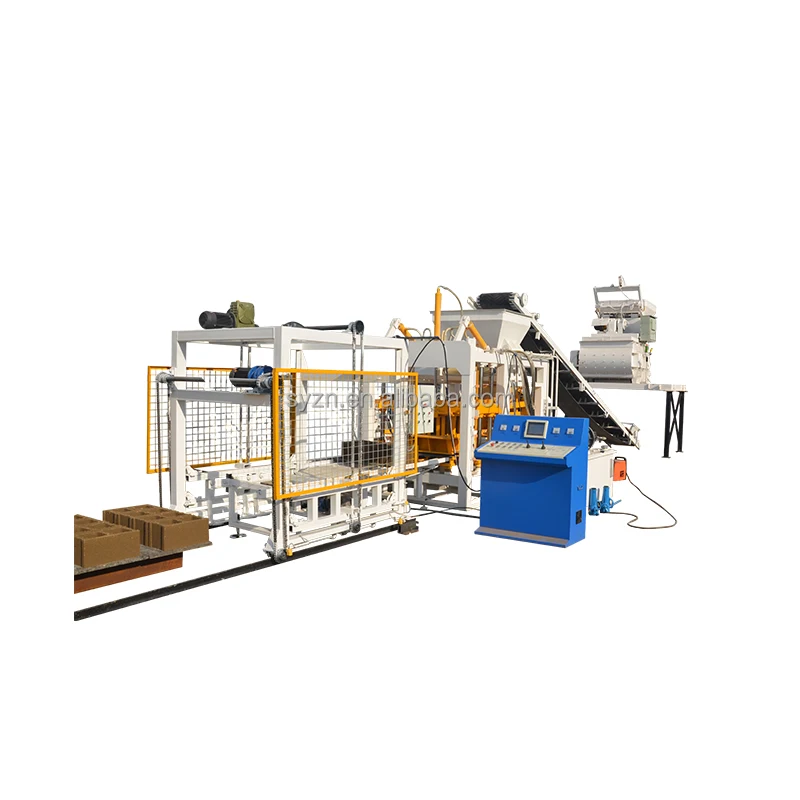
 High quality block machine