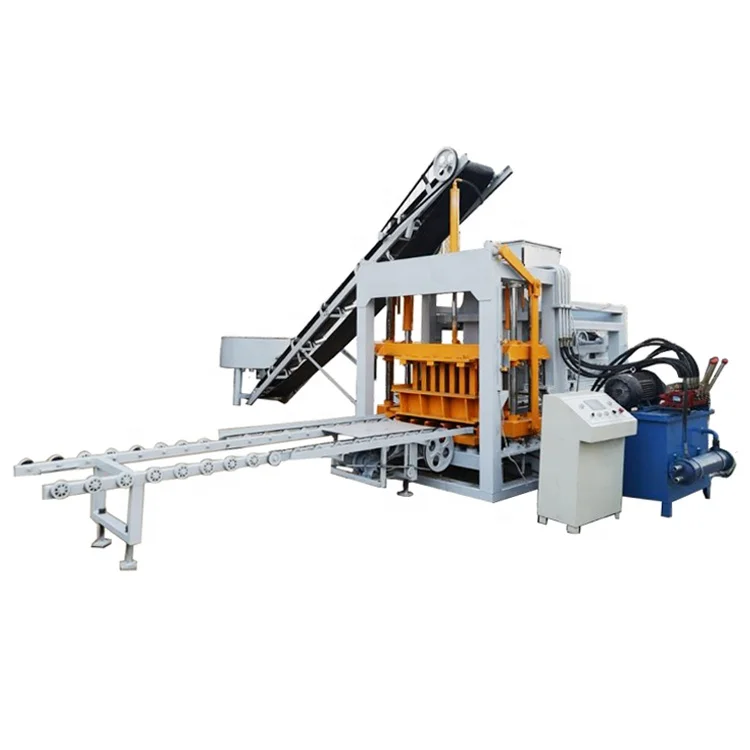
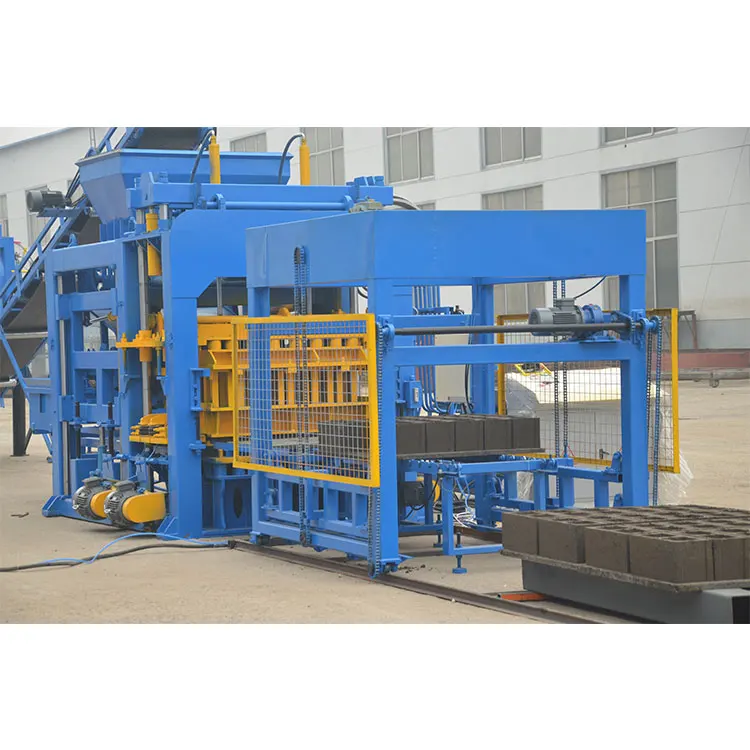
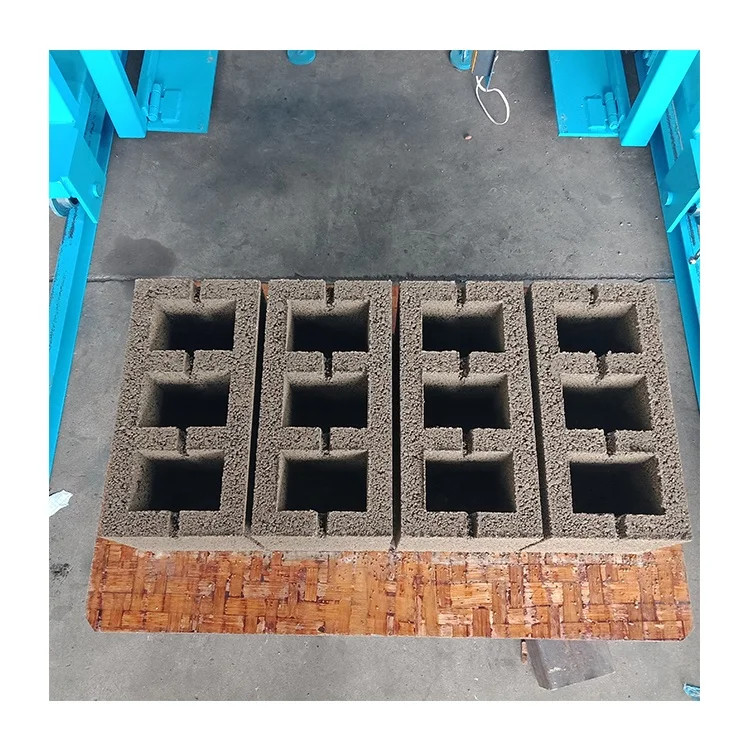
Matched System Approach — The QT4-15A is specified as one integrated unit with pallet, mixer and handling selected to match your actual block format, not quoted from a catalogue default.
Technical Specifications
| Parameter |
Value |
| Model |
QT4-15A |
| Product Type |
Automatic Concrete Block Making Machine |
| Overall Dimensions |
7100 × 1600 × 2610 mm |
| Rated Hydraulic Pressure |
16 MPa |
| Vibration Form |
Platform Vibration |
| Pallet Size |
1020 × 570 mm |
| Molding Cycle |
15–25 s (basis to be confirmed per block format) |
| Overall Power |
27.5 kW |
| Control System |
PLC electronic console |
| Automation Level |
Automatic — pallet feeder, material feeder, molding and block receiver integrated |
| Mixer |
JQ500 concrete pan mixer |
| Belt Conveyor |
8 m standard (6 m optional) |
| Stacking Method |
Stacker, layer by layer, then manual or machinery to curing yard |
| Mould Change System |
Manual bolt-fixed (M24 side bolts, four bolts on upper mould) |
| Standard Mould Included |
One hollow mould; additional moulds available at extra cost |
| Voltage & Frequency |
Configurable to buyer’s site (basis not stated in source — confirm before production) |
| Assembly State |
Requires foundation pouring per installation drawing |
Application Suitability
| Application |
Material or Output |
| Hollow block production for wall construction |
Crushed stone, sand, cement and water mix |
| Solid block manufacturing for load-bearing structures |
Dense aggregate and cement blend |
| Paving block production for walkways and yards |
Fine aggregate with cement binder |
| On-site block production for housing projects |
Locally sourced sand, gravel and bag cement |
What "15 Seconds Per Cycle" Actually Means for Your Daily Output
Cycle time is only meaningful when tied to the block format it was measured on.
An automatic block making machine manufacturer quoting a single cycle figure without naming the block size leaves buyers guessing. A hollow block at 400 × 200 × 200 mm takes longer to fill, vibrate and demould than a small paver. When the quoted cycle assumes a format you are not producing, your real daily output drops noticeably below expectation. I have seen buyers order a mid-tier press based on a number that applied to a completely different mould, then spend weeks re-planning their curing yard and shift schedule. [NEED_CITE: block format and cycle time assumptions in machinery quotations]

Where the QT4-15A Sits in the Full Range
The QT4-15A occupies the mid-tier of our automatic block machine lineup. Below it, semi-automatic machines require operators to handle pallets and stacking by hand — lower investment but higher labour. Above it, high-capacity automatic lines add full cubing and rack handling for continuous three-shift plants. The QT4-15A bridges that gap: PLC-controlled automatic cycling from pallet feed to block receiver, with stacking done layer by layer before transfer to the curing area. For a buyer moving past manual production but not yet ready for a full high-capacity line, this is the tier where automation begins to remove the operator from the press cycle itself.
How the Supporting Line Connects Around the Press
A block press does not run alone. The JQ500 pan mixer feeds the material hopper through the 8 m belt conveyor, and the pallet feeder must place a fresh pallet before each cycle starts. If the mixer batch is slow, the press sits idle. If the stacker cannot clear finished blocks fast enough, the receiver jams. Every station in the QT4-15A line is sized so the 15–25 s molding cycle is not interrupted by upstream or downstream bottlenecks. [NEED_CITE: matching cycle times across block production line stations]
Reading the Specs That Matter on the Shop Floor
Platform vibration combined with 16 MPa hydraulic pressure determines how densely the concrete is compacted in the mould. Higher pressure alone does not guarantee block strength — the vibration frequency must match the mix design and local aggregate particle size. The 1020 × 570 mm pallet size dictates how many blocks fit per cycle and must align with the curing racks and forklifts you already have on site. The 27.5 kW overall power draw tells your electrician what dedicated circuit to install before the machine arrives. Manual bolt-fixed mould change with M24 side bolts means your crew will need a set of spanners and a clear procedure; format flexibility is real, but the change takes measured time rather than a quick-release lever.
The Cost of Skipping the Voltage Question
Voltage, frequency and PLC display language are often left unconfirmed until the container arrives. A 50 Hz machine on a 60 Hz supply runs the vibration motor at a different speed, changing the compaction force and producing weaker blocks. A PLC screen in a language your operators cannot read turns a small sensor fault into a full shift of downtime. These are not factory defects — they are specification gaps that surface on day one of commissioning. [NEED_CITE: industrial motor frequency mismatch effects on vibration equipment]
Why Buyers Come Back for the Second Line
We specify the QT4-15A against your actual block format and local aggregate, not a generic data sheet. The mould included is the one your market sells, and additional moulds are designed from your drawings. The supporting line — mixer, conveyor, stacker, batching plant — is quoted as one matched package so cycle times align. Pallet size is checked against your curing yard dimensions before production starts. Installation includes foundation drawings, on-site commissioning and operator training so the crew can run the PLC cycle independently.
Documentation & Verification
- Line layout with capacity calculation stating the block format assumed for each cycle time
- Machine specification sheet confirming voltage, frequency and PLC display language
- Mould drawing and format list for every block type in the quotation
- Hydraulic and electrical schematic matching the as-built configuration
- Factory test record with pallet and mould installed before dispatch
- Packing photographs showing dismantling and container loading arrangement
Installation, Commissioning & Support
- Foundation pouring per the QT4-15A installation drawing, accounting for 7100 mm machine length
- Dedicated electrical circuit sized for 27.5 kW overall power at confirmed voltage and frequency
- Machine delivered in dismantled state; reassembly and alignment performed on-site
- PLC console commissioned with display language confirmed before the first production run
- Operator training covering mould change procedure using M24 bolt system
- Wear parts list provided with recommended reorder intervals for hydraulic and vibration components
Before You Send the Inquiry
Tell us the block formats your market actually sells and the daily volume you need per format. Share the local aggregate type — river sand, crushed stone, or a blend — and whether you use bag cement or bulk silos. Confirm your site voltage, frequency and preferred PLC language so the electrical package is locked before production. If you already have curing racks or forklifts, send the pallet dimensions they accept so we match the 1020 × 570 mm spec or adjust accordingly.
Frequently Asked Questions
Q: How is daily output calculated and which block format does the cycle time assume?
A: Daily output depends on the block format loaded in the mould. The 15–25 s molding cycle applies to a specific block size, and we state which one in the capacity calculation. A larger hollow block fills and demoulds slower than a small paver. Ask for the capacity table broken down by every format you plan to produce.
Q: Where does the QT4-15A sit in the range compared to semi-automatic and higher-tier models?
A: The QT4-15A is the mid-tier automatic option. Semi-automatic machines below it require manual pallet handling and stacking. Higher-tier models above it add full cubing and automatic curing rack handling. The QT4-15A automates the press cycle from pallet feed to block receiver while stacking remains layer by layer.
Q: What voltage, frequency and PLC language options are available for my market?
A: Voltage and frequency are configured to match your local grid. The PLC display language is confirmed during the quotation stage so operators can read alarms and cycle counters. These details are locked on the specification sheet before production begins, not adjusted on arrival.
Q: Can I start with the QT4-15A and add moulds or automation later?
A: Yes. The manual bolt-fixed mould system accepts additional moulds designed to the same 1020 × 570 mm pallet size. Supporting equipment such as an upgraded stacker or batching plant can be added to the line later. The PLC control accommodates new mould programs when additional formats are introduced.

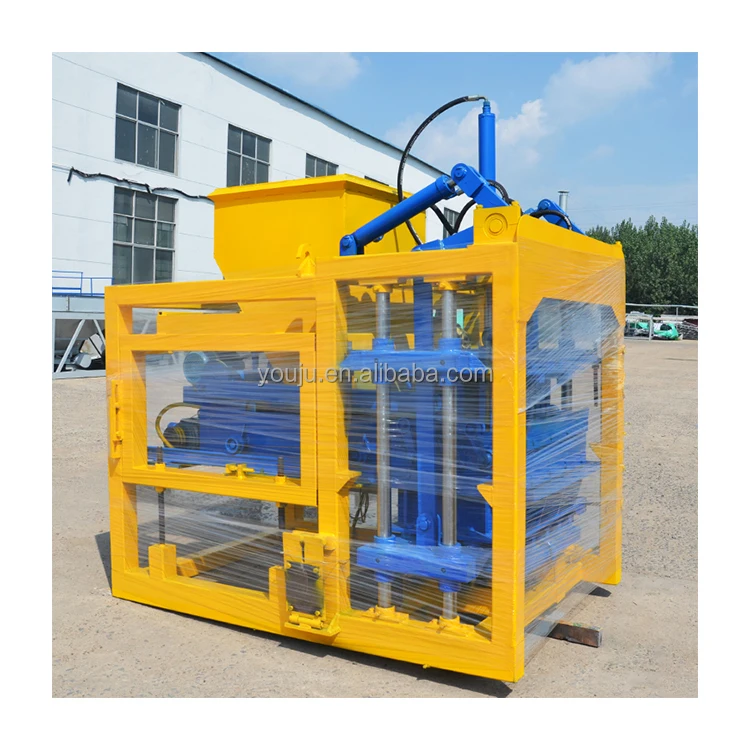
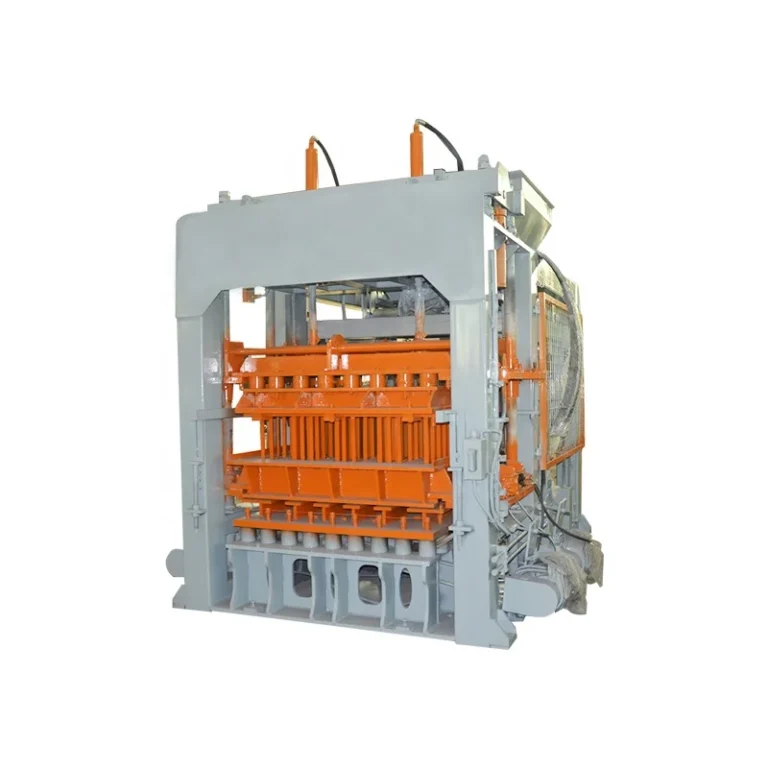 Automatic block machine