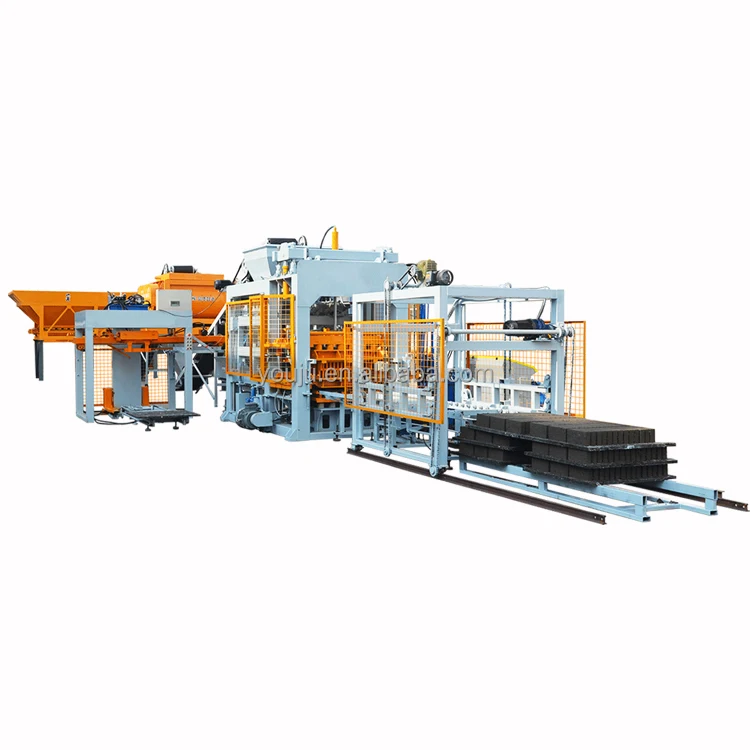
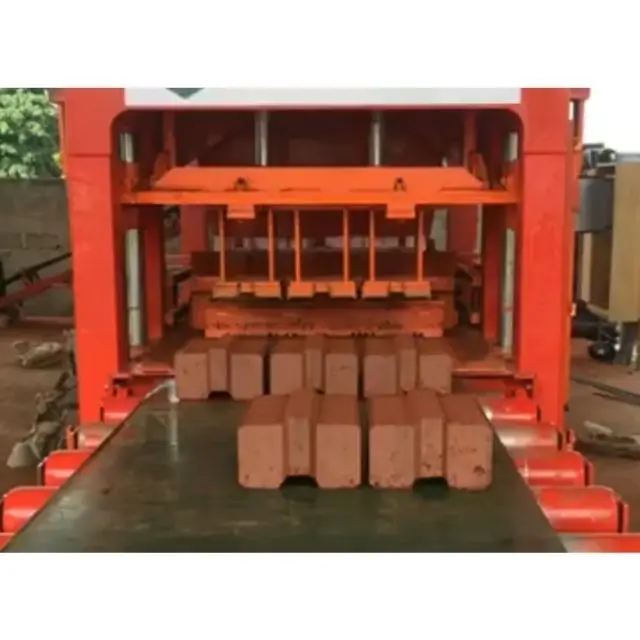
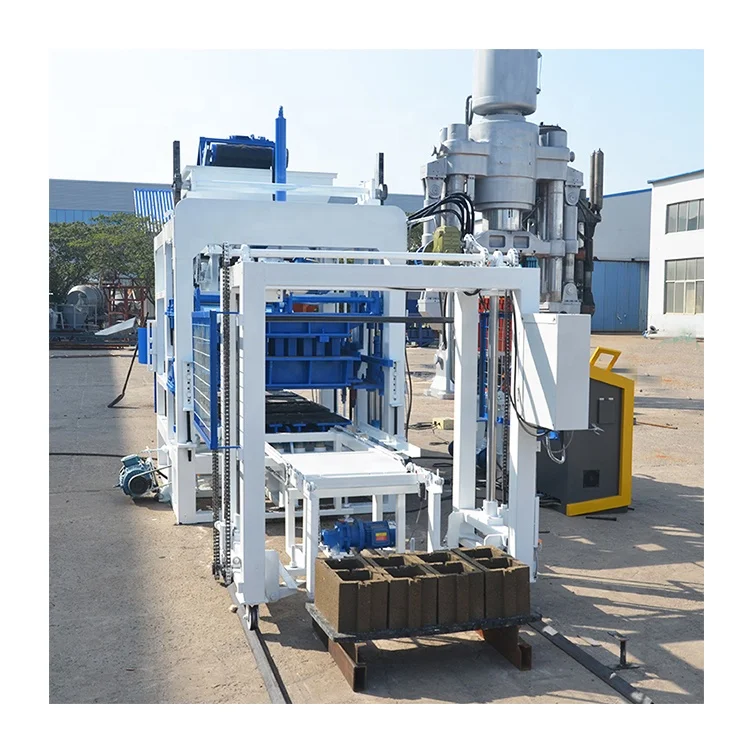
Matched System Configuration — Every station from raw material feeding to automatic stacking is specified as one integrated line around the QT4-15A, eliminating mismatched cycle times between independently sourced components.
Technical Specifications
| Parameter |
Value |
| Model |
QT4-15A |
| Product Type |
Fully Automatic Hollow Block Making Machine |
| Overall Dimensions (L×W×H) |
7100×1700×2610 mm |
| Main Vibration Form |
Platform vibration |
| Vibration Frequency |
4600 r/min |
| Exciting Power (Vibration Force) |
35.5 kN |
| Rated Hydraulic Pressure |
16 MPa |
| Pallet Size |
900×500×25 mm |
| Molding Cycle |
15-20 s (basis not stated in source) |
| Total Power |
25.7 kW |
| Voltage & Frequency |
380V, 3-phase, 50Hz (customizable) |
| Control System |
Electro-mechanical integration (PLC) |
| Automation Level |
Fully automatic |
| Mould System |
Exchangeable moulds |
| Container Loading |
Whole line in one 20-foot container |
| Warranty |
1 year (excluding wearing parts) |
Application Suitability
| Application |
Material or Output |
| Hollow block production |
Crushed stone, river sand, cement, fly ash |
| Solid block production |
Concrete mix with local aggregate blends |
| Paving block production |
High-density concrete with pigment additives |
| On-site housing project block making |
Standard masonry mixes for local construction |
What the "15-20 Second Cycle" Actually Means for Your Daily Output
A cycle time is meaningless unless you know which block format and material it was measured on.
Buyers often receive quotations quoting a single cycle figure, then discover on-site that their target hollow block format takes considerably longer. The QT4-15A automatic block machine manufacturer specifies a 15-20 second molding cycle, but the source does not confirm which block dimensions or mix design produced that number [NEED_CITE: standard testing formats for block machine cycle ratings]. A 400×200×200mm hollow block behaves very differently in the mould than a thin paving block, and volcanic ash aggregate compacts at a different rate than crushed granite. Real daily output depends entirely on matching the cycle calculation to your actual product.

Where the QT4-15A Sits in the Automatic Range
The QT4-15A occupies the mid-tier position in the automatic block machine range. It delivers a fully automatic line — meaning the main press, mixer, belt conveyor, automatic stacker, automatic pallet feeder, batching plant, and cement silo are all included as one package. This positions it above semi-automatic setups where pallet handling and stacking still require manual labour, while remaining accessible for entrepreneurs setting up a first block plant.
How the Stations Connect to Keep the Press Running
The critical factor in any fully automatic hollow block machine for sale is whether the supporting stations can keep pace with the press. If the mixer batch cycle is slower than the press cycle, the machine sits idle waiting for material. If the automatic stacker cannot clear cured pallets fast enough, the pallet feeder runs out of return pallets. The QT4-15A line is designed so that raw material feeding, mixing, pallet feeding, pressing, stacking, and curing rack handling are specified together, with cycle times matched across every station [NEED_CITE: block production line station synchronization principles].
Platform Vibration and Hydraulic Pressure Working Together
The 4600 r/min platform vibration combined with 35.5 kN exciting force and 16 MPa rated hydraulic pressure determines the compaction density of every block produced. Vibration settles the concrete mix into the mould cavity, while hydraulic pressure compresses it from above. If vibration is strong but pressure is weak, blocks emerge with air pockets in the upper section. If pressure dominates without sufficient vibration, the mix does not flow into the mould corners. The QT4-15A pairs these two forces at levels suited to standard concrete masonry mixes. The 900×500×25 mm pallet size also dictates the maximum mould footprint, which directly governs how many blocks are produced per cycle.
The Hidden Cost of Skipping Configuration Checks
When a block line arrives on-site configured for a mix the buyer cannot source locally, the entire production schedule stalls while alternative materials are found and tested. If the pallet size does not match the curing area racks or the forklift the buyer already owns, blocks must be restacked by hand. When voltage and PLC display language are not confirmed before production, commissioning extends from days into weeks [NEED_CITE: electrical standard mismatches in exported machinery]. These are not theoretical risks — they are the most common reasons automatic block machine installations underperform in their first months.
Why Buyers Source This Machine Here
Block machinery is the single focus of Shandong Shiyue Intelligent Machinery Co., Ltd, so the QT4-15A is specified as a matched system rather than assembled from separate suppliers. Configuration is set against the buyer’s actual mix design, local aggregate, and target block format rather than a catalogue default. Mould design covers the formats the buyer’s market sells, including custom mould design to buyer drawings. Automation level is selectable, allowing a buyer to start semi-automatic and upgrade. Installation support includes on-site commissioning and operator training.
Documentation & Verification
- Line layout and capacity calculation stating the specific block format assumed for the QT4-15A
- Machine specification sheet confirming vibration force, hydraulic pressure, and pallet size
- Voltage, frequency, and PLC display language confirmation before production begins
- Mould drawing and format list covering every block type included in the quotation
- Factory test record documenting the QT4-15A running before dispatch
Installation, Commissioning & Support
- Foundation requirements based on the 7100×1700×2610 mm machine footprint and dynamic vibration loads
- Dedicated 3-phase 380V power circuit sized for the 25.7 kW total load of the complete line
- Dismantling and container loading plan fitting the entire QT4-15A line into one 20-foot container
- On-site commissioning with vibration frequency and hydraulic pressure set to your local aggregate
- Operator training covering mould change procedures and exchangeable mould handling
- Wear parts and mould replacement list provided with the QT4-15A documentation package
What to Include in Your Inquiry
To receive an accurate configuration proposal for the QT4-15A, specify your target block format dimensions, required daily output, and the local raw materials available including aggregate type and cement grade. Confirm your site voltage, frequency, and preferred PLC display language. Provide the dimensions of your curing area and any existing forklift or handling equipment so pallet size can be matched.
Frequently Asked Questions
Q: How is the QT4-15A capacity calculated, and which block format is the cycle time based on?
A: The quoted 15-20 second molding cycle does not specify a block format in the source data. A proper capacity calculation must state the exact block dimensions and mix design assumed. We provide a line layout document that breaks down realistic daily output for your specific target block format rather than a generic cycle count.
Q: Where does the QT4-15A sit compared to semi-automatic and higher-tier automatic models?
A: The QT4-15A is a mid-tier fully automatic line that includes mixer, conveyor, stacker, pallet feeder, batching plant, and cement silo. It sits above semi-automatic models that require manual pallet handling, and below higher-tier lines designed for larger output volumes. This makes it suited for first plant setups or contractors adding automatic production.
Q: What automation level does the QT4-15A provide, and can I start semi-automatic and upgrade later?
A: The QT4-15A ships as a fully automatic line with automatic stacking, pallet feeding, and batching. The automation level is configurable, and buyers can discuss starting at a semi-automatic configuration and adding automatic stations later as production volume grows.
Q: How is the mould change performed, and what formats are available?
A: The QT4-15A uses an exchangeable mould system, allowing the same press to produce hollow blocks, solid blocks, paving blocks, and other concrete masonry units. Custom mould design to buyer drawings is available. Mould change procedure and estimated time are documented in the operation manual provided with the machine.
Q: What supporting equipment is included so the press is never left waiting?
A: The complete QT4-15A line includes a mixer, belt conveyor, automatic stacker, automatic pallet feeder, batching plant, and cement silo. Each station is specified so its cycle time matches the press, preventing bottlenecks where the machine sits idle waiting for material, pallets, or stacking capacity.

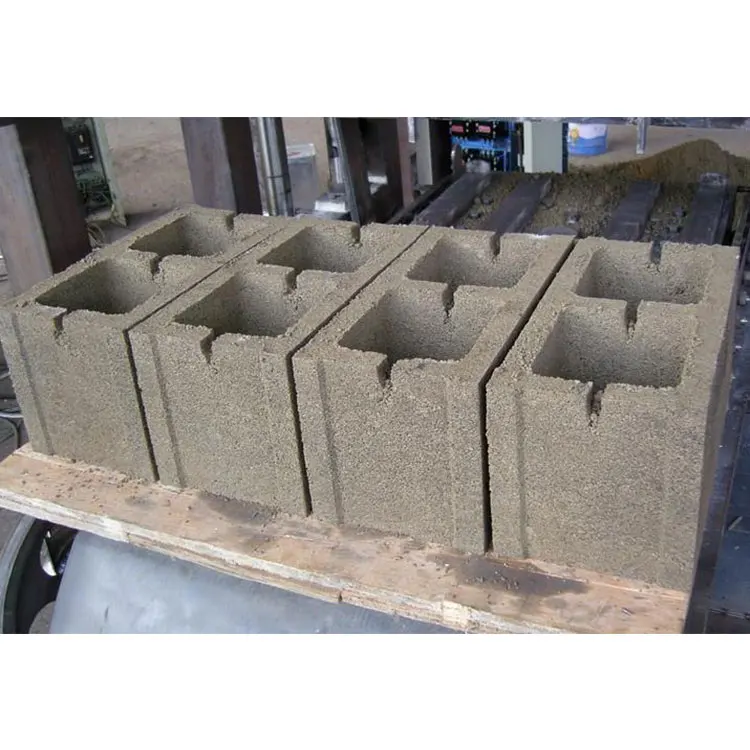
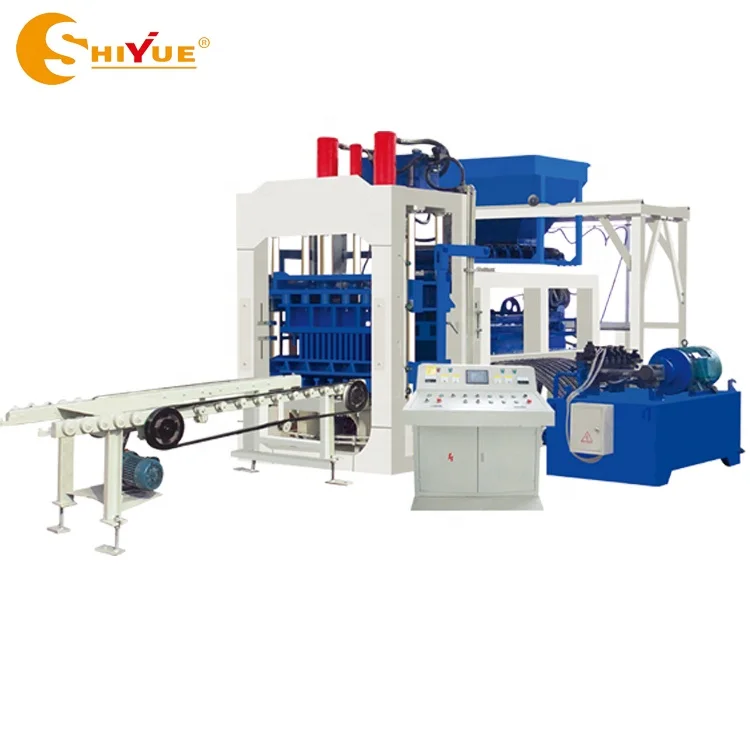 Automatic block machine