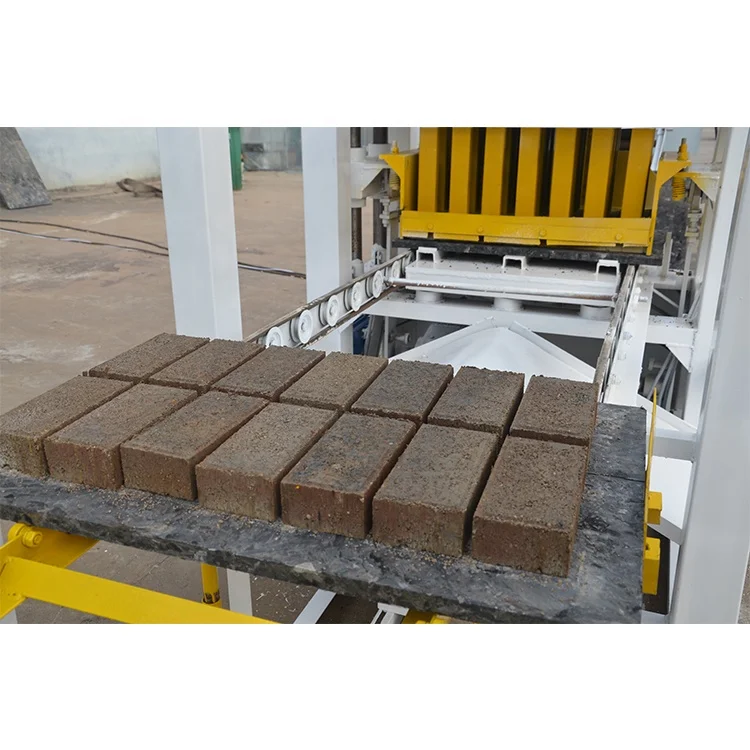
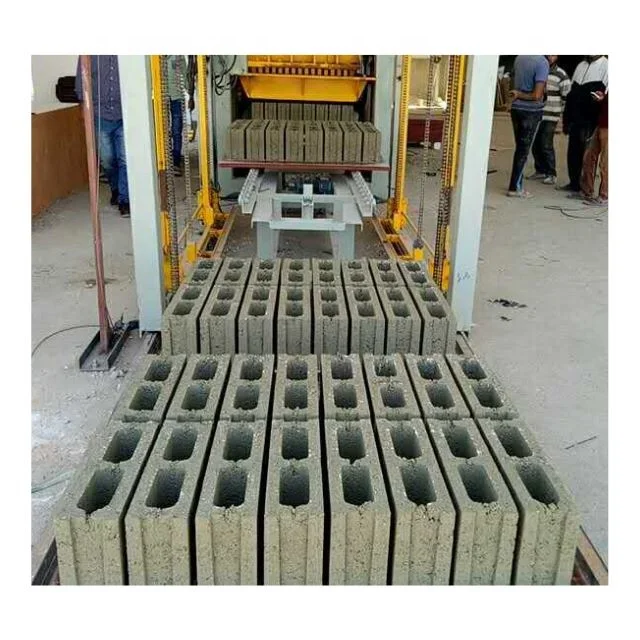
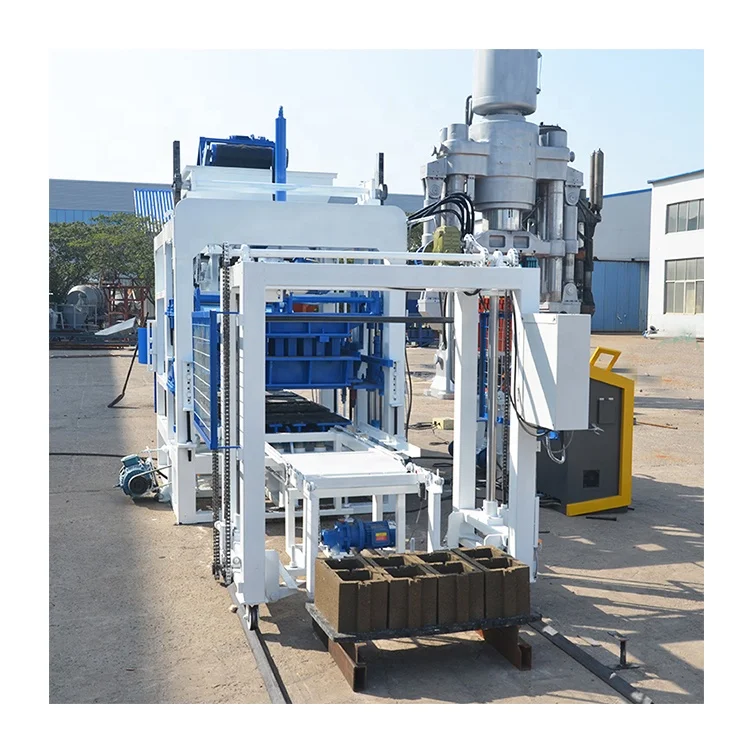
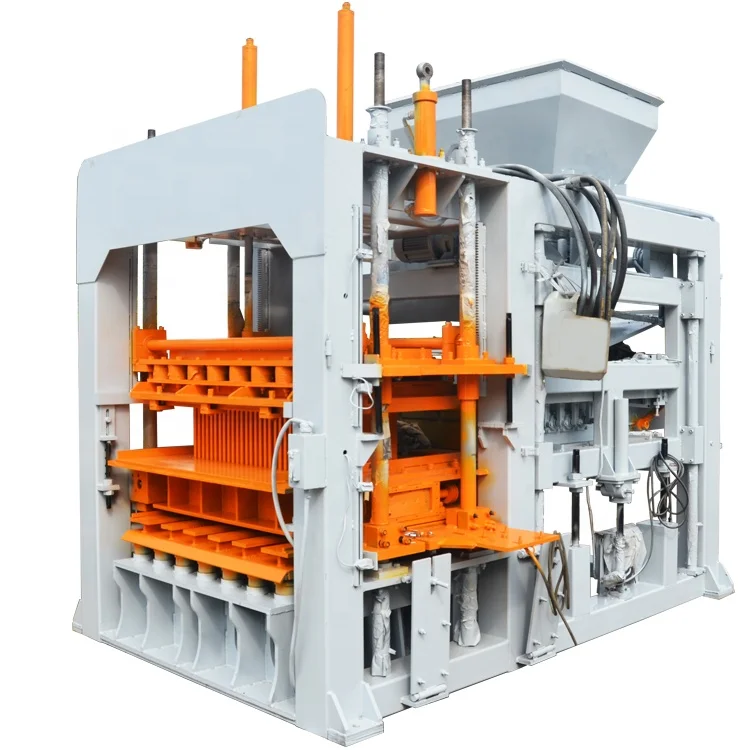
Balanced Mid-Tier Automation — the QT4-15A positions buyers between entry-level semi-automatic setups and high-capacity lines, letting first-time investors step into fully automatic block production without overcommitting plant footprint or capital.
Technical Specifications
| Parameter |
Value |
| Model |
QT4-15A |
| Product Type |
Fully Automatic Concrete Block Making Machine |
| Overall Dimensions (L×W×H) |
4100×1600×2600 mm |
| Rated Pressure |
16–21 MPa |
| Main Vibration Form |
Platform Vibration |
| Vibration Frequency |
4200 r/min |
| Vibration Force |
55 kN |
| Pallet Size |
880×550 mm |
| Molding Cycle |
25–30 s (basis not stated in source — confirm block format / material / thickness) |
| Overall Power |
18.45 kW |
| Total Mass |
4 T |
| Demolding Method |
Hydraulic |
| Factory Area Required |
300 m² |
| Warranty |
1 year (whole machine, excluding spare parts) |
| Loading |
1×40HQ container (basic equipment) |
Application Suitability
| Application |
Material or Output |
| Hollow block production |
Crushed stone, sand, cement, fly ash |
| Solid block manufacturing |
Gravel, slag, cement blends |
| Paving block and colored paver runs |
Fine aggregate with pigment additives |
| Interlocking brick and curbstone |
Standard concrete mix with local aggregate |
What Buyers Miss When Quoted Capacity Ignores Block Format
Cycle time only matters when tied to the exact block you intend to sell.
A fully automatic block machine manufacturer may list a molding cycle of 25–30 seconds, but that figure shifts depending on whether you are pressing a thin paver or a tall hollow block. I have watched buyers in Latin America sign contracts based on a headline output number, only to find their actual daily production fell well short once the machine started running their specific format. The mismatch is rarely intentional — it comes from quoting capacity without naming the block dimensions, mix density, or curing conditions assumed [NEED_CITE: block format impact on cycle time and daily output].

Where the QT4-15A Sits Across the Output Tiers
The QT4-15A occupies the middle ground of the automatic range. Below it, semi-automatic models demand more manual pallet handling and operator attention but require less capital. Above it, high-capacity lines add automatic stacking, cubing, and curing rack systems that multiply throughput but also multiply the plant footprint. This model gives a fully automatic block machine manufacturer a credible step-up option for buyers who have outgrown manual operation but are not yet ready to fill a 1,000 m² facility.
Matching the Line to Your Actual Market
Before selecting a tier, map the block formats your market moves fastest. If your region sells mostly 400×200×200 mm hollow blocks, the pallet size and vibration force must be matched to that specific format. If pavers and interlocking bricks dominate, mould change speed and pallet surface finish become the priority. The QT4-15A supports multiple applied products — hollow blocks, solid blocks, pavers, interlocking blocks, and curbstone — but the daily output for each format will differ [NEED_CITE: matching block format to regional demand].
Reading the Specs That Shape Real Production
Platform vibration at 4200 r/min with 55 kN force delivers the compaction energy needed for dense concrete blocks. The hydraulic pressure range of 16–21 MPa works alongside vibration to push mix into mould corners, particularly important for interlocking brick profiles with thin webs. The 880×550 mm pallet size determines how many blocks fit per cycle and must align with your curing rack dimensions and forklift capacity. A pallet that does not match your existing handling equipment creates bottlenecks downstream from the press. The 4 T total mass reflects a frame built to absorb repeated vibration cycles without structural fatigue over years of operation.
The Hidden Cost of Skipping Configuration Details
Buyers who confirm price before confirming voltage, PLC language, or pallet material often face delays at commissioning. A machine wired for 380V/50Hz shipped to a 440V/60Hz market will not run until a transformer or motor swap is arranged. A PLC display in a language the operator cannot read turns troubleshooting into guesswork. I have seen machines sit idle for weeks after arrival because the buyer assumed these details would be sorted on-site [NEED_CITE: voltage and frequency standards by export market].
Why Procurement Through a Block-Focused Supplier Matters
Block machinery is the single focus here, meaning the press, mould, pallet, and handling equipment are specified as one matched system rather than assembled from separate vendors. Configuration starts from your actual mix design and local aggregate, not a catalogue default. Mould design covers the formats your market sells, including custom drawings when standard options do not fit. The automation level is selectable, so a buyer can begin with semi-automatic operation and add stacking or cubing modules later. Installation support includes operator training and a documented wear parts list shipped with the container — an approach shaped by hard lessons from machines stranded without spares.
Documentation & Verification
- Line layout drawing stating block format assumed for capacity calculation
- Machine specification sheet with pallet size and mould format list
- Hydraulic and electrical schematic matching your confirmed voltage
- Factory test record with photographs before container loading
- Operation and maintenance manual with wear parts replacement schedule
Installation, Commissioning & Support
- 300 m² minimum factory area with level concrete floor for stable QT4-15A placement
- Dedicated power circuit matching confirmed voltage and frequency before arrival
- Machine shipped in one 40HQ container with dismantled components for reassembly
- First-run commissioning with parameter adjustment to your local aggregate mix
- Operator training covering mould change procedure and daily maintenance routines
- Wear parts list and initial spare set included to prevent early downtime
Preparing Your Inquiry
To receive a configuration that matches your site, share the block formats you plan to produce, your target daily output per format, and the raw materials available locally. Specify your plant’s voltage and frequency standard, the PLC display language your operators need, and the pallet handling or curing equipment already in place. These details allow a fully automatic block machine manufacturer to return a proposal you can compare against your actual production plan.
Frequently Asked Questions
Q: How is the QT4-15A daily output calculated and which block format is assumed?
A: The molding cycle is listed as 25–30 seconds, but daily output depends on the block format, mix design, and curing method used. Request a capacity calculation that names the specific block dimensions assumed so you can compare the quoted figure against your actual product plan rather than a generic best-case number.
Q: Where does this model sit in the full range — semi-automatic, automatic, or high-capacity line?
A: The QT4-15A is a mid-tier fully automatic block machine. It sits above semi-automatic models that require manual pallet handling and below high-capacity lines that add automatic stacking, cubing, and curing rack systems. It suits buyers stepping up from manual operation without needing maximum throughput.
Q: What voltage and frequency configurations are available for different export markets?
A: Voltage and frequency are configured to match the buyer’s local electrical standard before production begins. Confirming these details during the quotation stage prevents commissioning delays. The PLC display language is also set at this point so operators can read controls from the first day of production.
Q: What is the plant footprint and minimum factory area required for this tier?
A: The QT4-15A requires approximately 300 m² of factory area for the press and immediate material handling. Total site space must also account for raw material storage, curing zones, and finished block yard area, which vary depending on your production volume and pallet circulation method.
Q: Can the automation level be upgraded later from semi-automatic to fully automatic?
A: Yes. The system is designed so buyers can start at a lower automation tier and add modules such as automatic pallet feeding, stacking, or cubing as production volume grows. This upgrade path protects the initial investment while allowing the plant to scale with market demand.

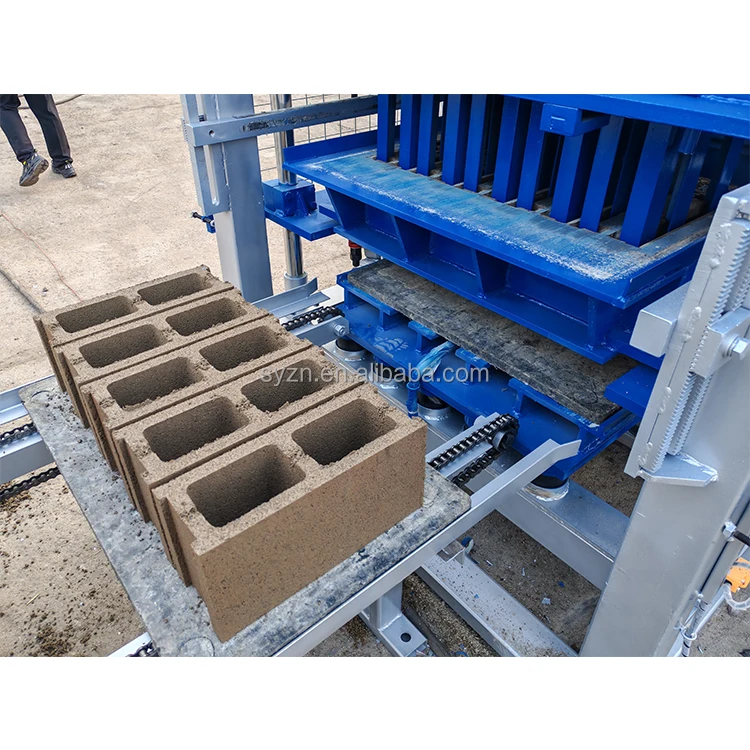
 High quality block machine