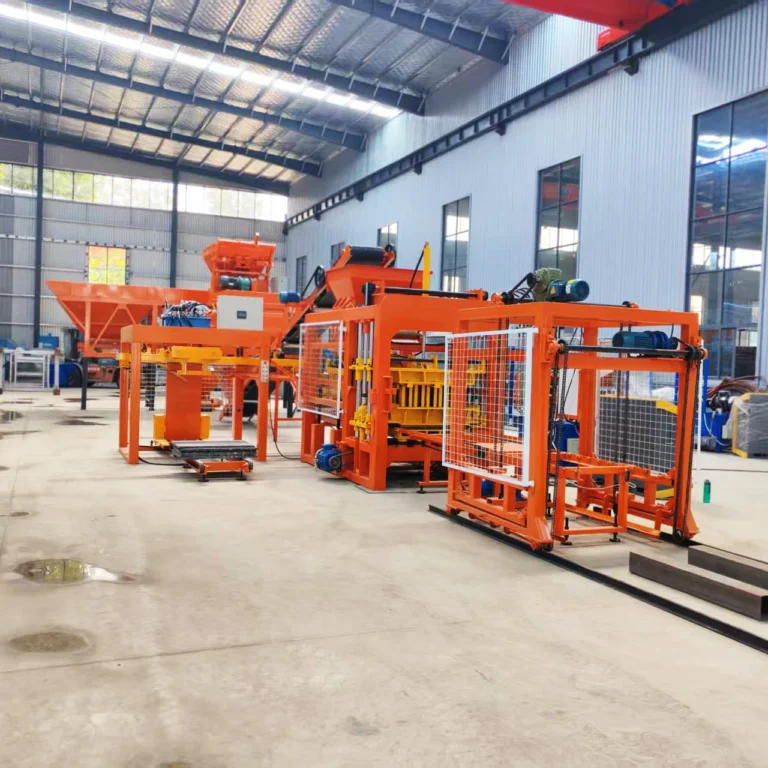
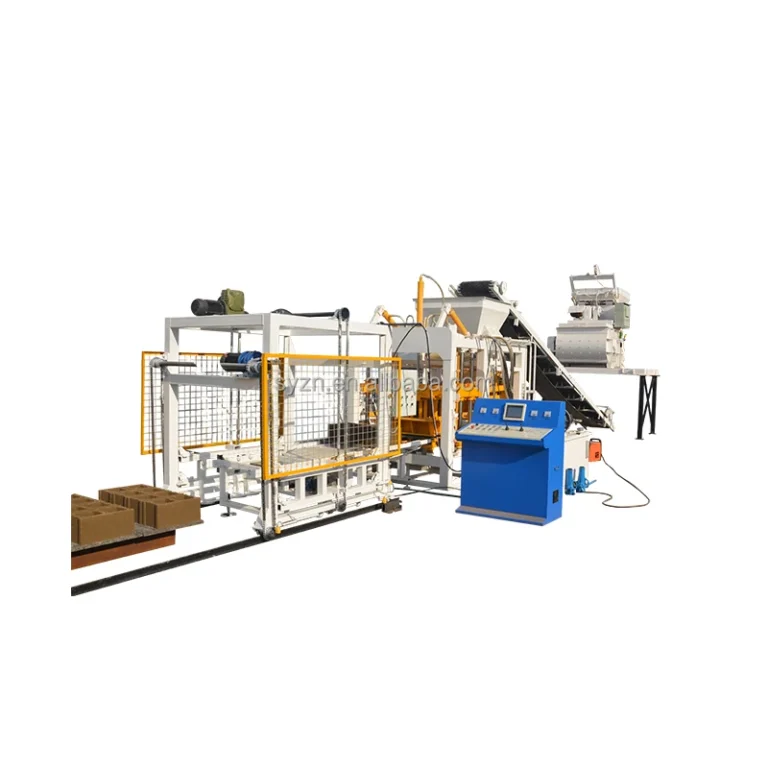
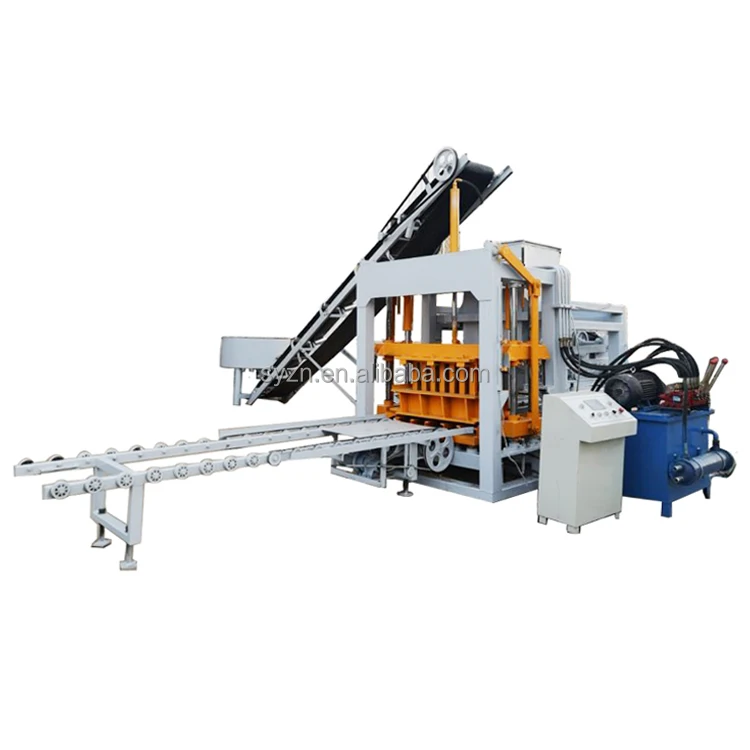
Configuration Against Your Actual Mix — we ask for your aggregate source and block format before locking the QT4-15A line layout, so the cycle time on paper matches what you see on the pallet.
Technical Specifications
| Parameter |
Value |
| Model |
QT4-15A |
| Product Type |
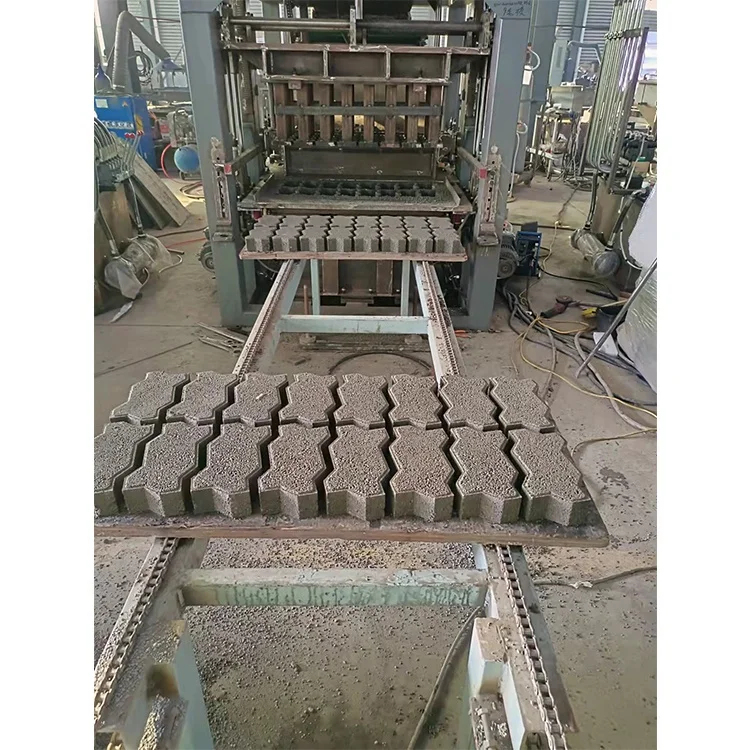
Fully Automatic Hydraulic Concrete Block Making Machine |
| Overall Dimensions (L×W×H) |
4100×1600×2600 mm |
| Rated Pressure |
16–21 MPa |
| Main Vibration Form |
Platform Vibration |
| Vibration Frequency |
4200 r/min |
| Vibration Force |
55 kN |
| Pallet Size |
880×550 mm |
| Molding Cycle |
25–30 s (basis not stated in source — confirm block format / material / thickness) |
| Total Mass |
4 T |
| Demolding Method |
Hydraulic |
| Recommended Factory Area |
300 m² |
| Automation Level |
Fully automatic |
| Warranty |
1 year (whole machine, excluding spare parts) |
| Loading |
1×40HQ container (basic equipment) |
Application Suitability
| Application |
Material or Output |
| Hollow block production plants |
Crushed stone, sand, cement, fly ash blends |
| Paver and interlocking brick manufacturing |
Colored concrete mixes with fine aggregate |
| Project-site block supply for contractors |
Local river sand, gravel, slag, dust |
| First-tier block plant setups |
Standard concrete mixes with moderate daily volume |
Why the Molding Cycle Figure Is Not the Whole Story
A 25–30 second cycle on the QT4-15A automatic block making machine manufacturer spec sheet only translates to daily output once the block format, wall thickness, and local aggregate are pinned down. I once watched a mid-tier press run at half its quoted cycles because the river sand available on site carried a high clay fraction, demanding longer vibration to achieve acceptable density. Buyers who plan production schedules around a single cycle-time number often find the reality different once raw materials enter the mixer. Specifying the exact block format and running a trial with your actual aggregate before the machine ships removes that gap. [NEED_CITE: effect of aggregate clay content on concrete vibration time]

Where the QT4-15A Sits in the Full Machine Range
The QT4-15A occupies the mid-tier automatic position in our block machine lineup, above semi-automatic egg-laying models and below high-capacity lines built for continuous three-shift operation. This tier targets buyers moving from manual pallet handling to an automatic press with hydraulic demolding, yet who do not need the output volume that justifies a larger pallet format. Understanding this placement helps you decide whether to step up to a higher tier or save capital by staying semi-automatic.
How the Line Connects Around the Press
A press is only as productive as the stations feeding and clearing it. Raw material batching, mixing, pallet feeding, and wet-side stacking must each complete their task within the QT4-15A molding cycle, or the press sits idle waiting for the next pallet. When we lay out a 300 m² plant for this model, we calculate conveyor speeds, mixer batch sizes, and stacker indexing so no station becomes the bottleneck. [NEED_CITE: concrete block plant material flow synchronization]
Reading the Pressure and Vibration Numbers Together
Rated pressure of 16–21 MPa and platform vibration at 55 kN work as a pair: hydraulic pressure compacts the mix while vibration settles fine particles into voids. A block made with coarse crushed stone may need more vibration force to achieve target density, whereas a fly-ash-rich mix responds more to sustained pressure. The 880×550 mm pallet size determines how many blocks per cycle and must align with the curing rack spacing and forklift tine width already in your yard. Molding cycle figures of 25–30 s assume a specific block height and mix; thicker kerbstones or interlocking pavers typically extend that window.
The Cost of Skipping Pallet and Voltage Checks
Ordering without confirming pallet material and size against your curing area means pallets may not stack on your existing racks, forcing a full rack replacement after arrival. Voltage and frequency left unspecified until the machine is crated can delay commissioning by weeks while transformers or motor swaps are arranged. These oversights do not show up on a quotation but surface once the container is opened on site. [NEED_CITE: industrial motor voltage and frequency standards by region]
What Shapes a Reliable QT4-15A Purchase
Block machinery is our single focus, so the QT4-15A is specified as a matched system of press, mould, pallet, and handling rather than assembled from separate vendors. We set configuration against your local aggregate and target block format, not a catalogue default. Mould design covers the formats your market actually sells, with custom drawings available. Automation level is selectable, allowing a semi-automatic start with a later upgrade path. Factory testing uses your confirmed block dimensions before the machine is dismantled for shipment.
Documentation & Verification
- Line layout and capacity calculation stating the block format assumed for the QT4-15A
- Machine specification sheet confirming voltage, frequency, and PLC display language
- Mould drawing and format list showing every block type this model can produce
- Pallet specification matched to your curing rack dimensions and forklift capacity
- Factory test record run on your chosen block format before container loading
- Operation and maintenance manual with wear parts and mould replacement schedule
Installation, Commissioning & Support
- Foundation plan sized to the QT4-15A 4100×1600 mm footprint and 4 T mass
- Dedicated power circuit matching confirmed kW load and local voltage
- Machine reassembly from 40HQ container dismantled state with alignment checks
- First-run parameter tuning against your actual mix and block format
- Operator training covering mould change procedure and daily maintenance points
- Wear parts list with reorder intervals for hydraulic seals and vibration components
What to Include in Your Inquiry
Send us the block formats your market sells, your target daily volume per format, and the source of your sand and aggregate. We also need your site voltage and frequency, available factory floor area, and whether you already have curing racks and forklifts so the pallet system can be matched from the start.
Frequently Asked Questions
Q: How is daily output determined for the QT4-15A, and which block format does it assume?
A: The molding cycle of 25–30 s is a starting point that must be confirmed against your specific block format, wall thickness, and mix design. Daily output is then calculated by multiplying cycles per hour by the number of blocks per pallet, adjusted for shift length and mould change stops. We provide a capacity table listing each format separately.
Q: Where does this model fit compared to semi-automatic and higher-tier automatic machines?
A: The QT4-15A sits in the mid-tier automatic range, offering hydraulic demolding and platform vibration above semi-automatic models, while remaining below high-capacity lines designed for three-shift continuous output. It suits buyers who want automatic pressing without the capital commitment of a full high-volume plant.
Q: How does the 880×550 mm pallet size affect my curing area and stacking setup?
A: Pallet dimensions determine rack spacing, forklift tine width, and stacking height in the curing yard. If your existing racks or forklifts were set up for a different pallet size, we adjust the pallet specification before production so that handling equipment on site remains compatible.
Q: Which voltage and control language options can be set before shipment?
A: Voltage and frequency are confirmed during the quotation stage to match your local supply. PLC display language is selected at the same point so operators can read controls in their working language from the first day of commissioning.
Q: What factory area should I plan for a basic QT4-15A line?
A: Approximately 300 m² is recommended for the press, mixer, pallet return, and basic stacking area. This figure excludes raw material stockyard and curing yard space, which depend on your daily output target and local climate conditions for block curing time.

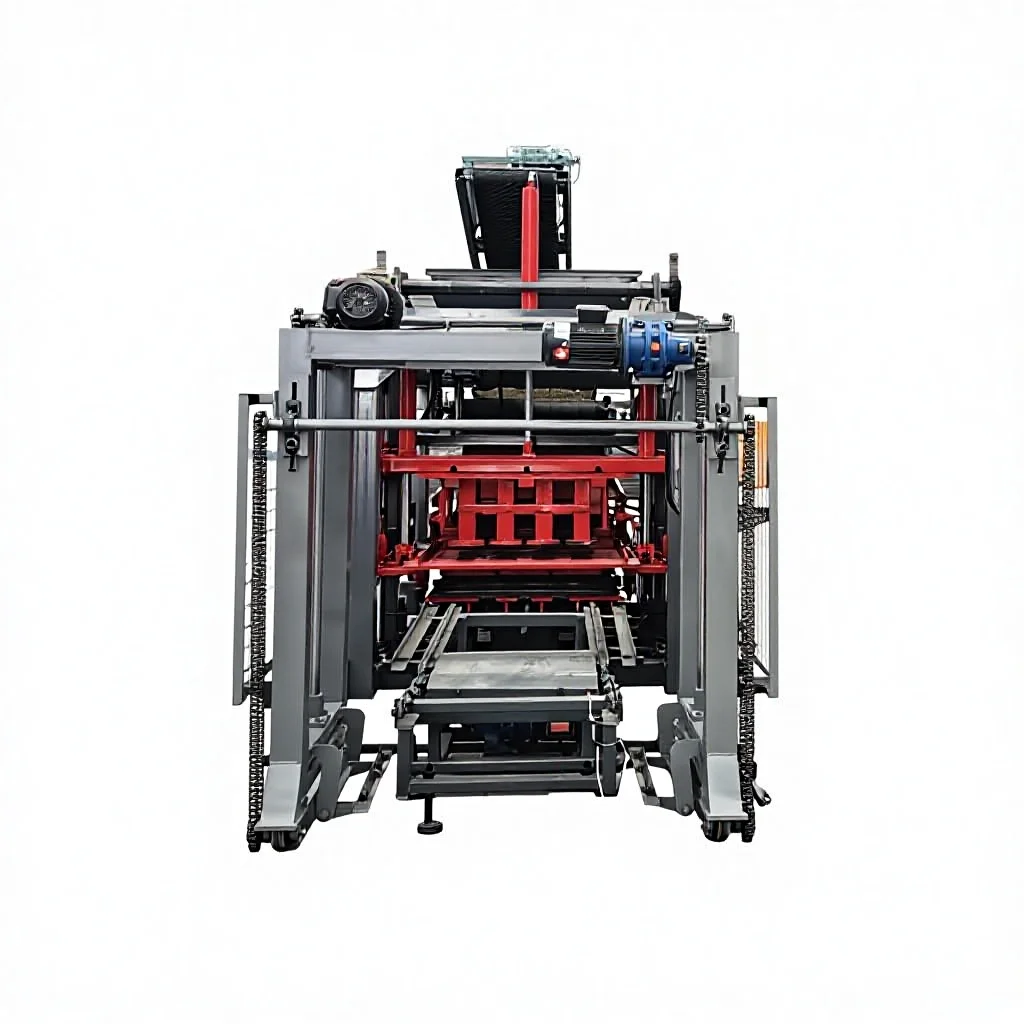
 High quality block machine