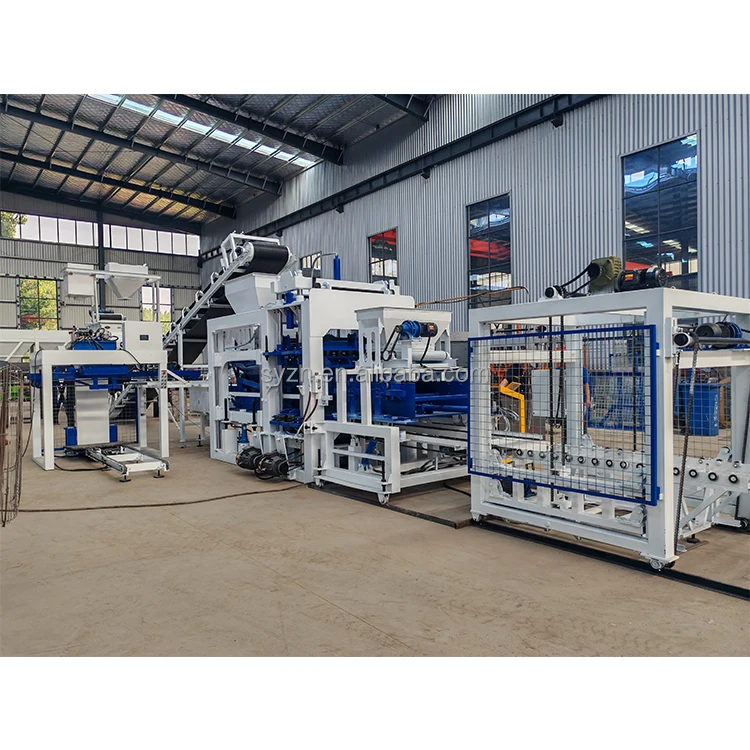
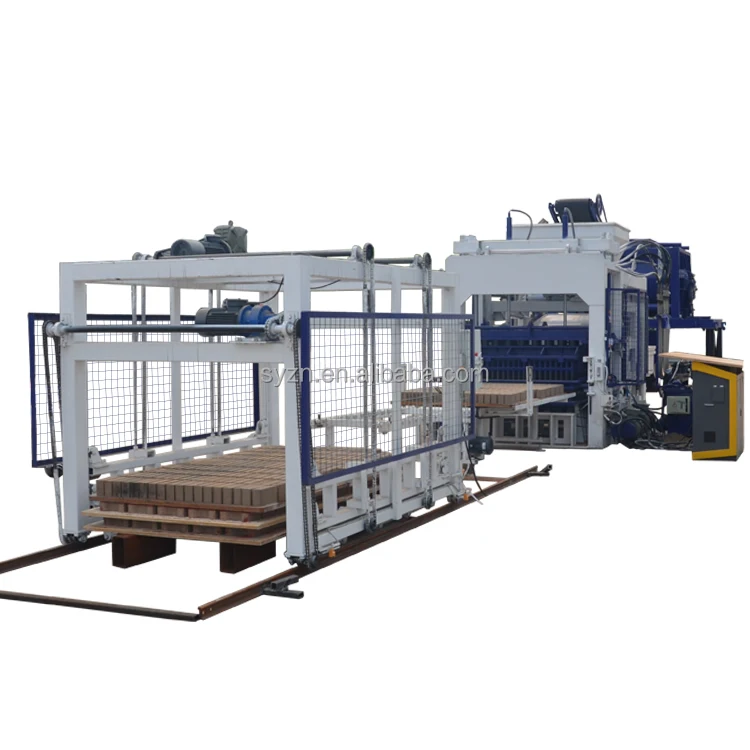
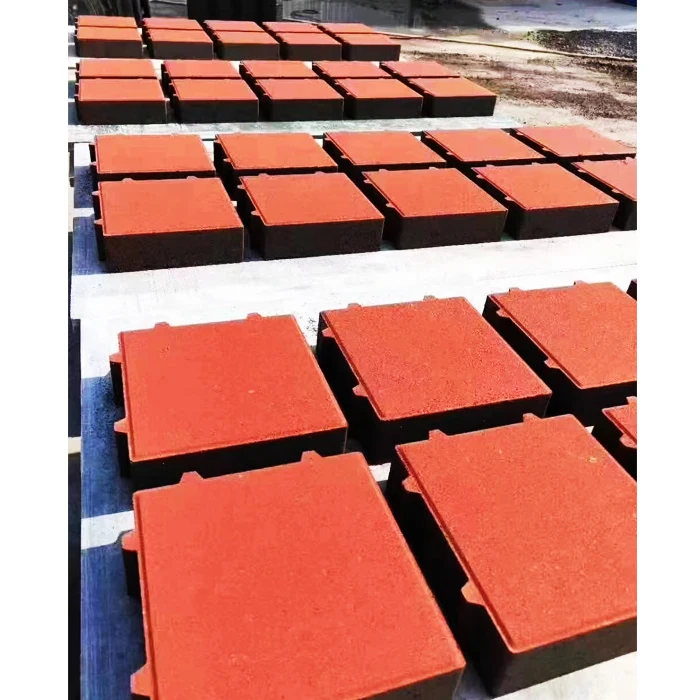
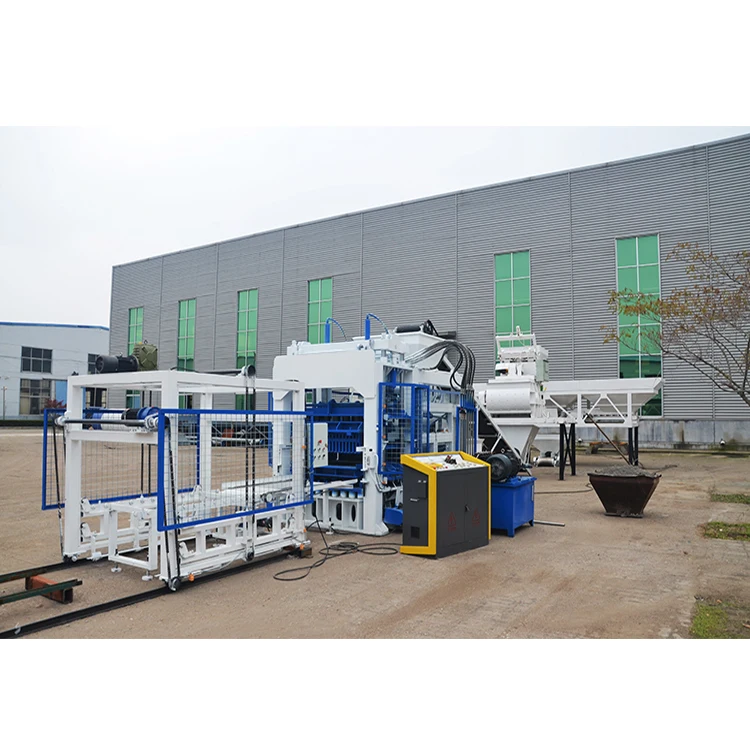
System-matched configuration — the QT4-15 is specified against your actual mix design and target block format, so cycle time and daily output reflect what your plant will produce, not a catalogue default.
Technical Specifications
| Parameter |
Value |
| Model |
QT4-15 |
| Product Type |
Automatic Concrete Block Making Machine |
| Overall Dimensions (L×W×H) |
4100×1600×2600 mm |
| Rated Pressure |
16–21 MPa |
| Main Vibration Form |
Platform Vibration |
| Vibration Frequency |
4200 r/min |
| Vibration Force |
55 kN |
| Pallet Size |
880×550 mm |
| Molding Cycle |
25–30 s (basis not stated in source — confirm block format / material / thickness) |
| Overall Power |
18.45 kW |
| Total Mass |
4 T |
| Demolding Method |
Hydraulic |
| Factory Area |
300 m² |
| Automation Level |
Fully automatic |
| Applied Products |
Hollow blocks, solid blocks, pavers, interlocking blocks, curbstone, colored pavers |
| Raw Materials |
Crushed stone, sand, cement, fly ash, gravel, slag |
| Warranty |
1 year (whole machine, excluding spare parts) |
Application Suitability
| Application |
Material or Output |
| Hollow block production for residential and commercial walls |
Crushed stone, sand, cement, fly ash blends |
| Solid block manufacturing for load-bearing structures |
Gravel, sand, cement with high-density compaction |
| Paving brick and colored paver runs for roads and walkways |
Fine aggregate, cement, pigment additives |
| Interlocking block and curbstone forming for landscaping |
Slag, dust, cement mixtures |
| On-site block production for housing project contractors |
Locally sourced aggregate and cement |
What "Cycles Per Hour" Leaves Out When Sizing an Automatic Concrete Block Making Machine
Capacity numbers mean nothing without the block format they assume.
I spent years on the assembly floor before moving into technical sales, and the most common complaint I hear from buyers is that their new machine never reached the quoted daily output. The reason is almost always the same: the supplier quoted cycles per hour based on a small solid block, but the buyer’s market actually sells 200 mm hollow blocks that take longer to fill, vibrate, and demold. When you evaluate the QT4-15 or any automatic concrete block making machine manufacturer offer, the first document you should request is a capacity table that lists every block format with its individual cycle time. Without that table, you are buying blind [NEED_CITE: standard capacity disclosure practices in block machinery trade].

Placing the QT4-15 Within the Full Machine Range
The Shiyue lineup spans mobile egg-laying machines for small on-site jobs, semi-automatic presses for lower-investment startups, and high-capacity fully automatic lines for established block plants. The QT4-15 sits in the mid-tier of the fully automatic segment, offering a balance between output volume and capital outlay. Buyers stepping up from a semi-automatic press often find this tier gives them consistent block quality and reduced labor without the footprint and power draw of a top-tier line. Understanding where this automatic concrete block making machine fits helps you decide whether to start here or jump straight to a higher-capacity configuration.
How Output Tiers Shape Your Plant Footprint
Every tier in the range demands a different factory area, curing space, and pallet circuit. The QT4-15 requires roughly 300 m² of production floor, which includes room for the press, raw material feeding, pallet circulation, and a curing rack zone. Higher-capacity lines can need double that area once you add automatic stacking and cubing stations. Before you commit, compare the footprint of each tier against the land you have available. A mid-tier press that fills your site is better than a high-tier line that leaves no room for curing racks or forklift movement [NEED_CITE: typical block plant layout planning guidelines].
Reading the Specs That Actually Matter
Rated pressure between 16 and 21 MPa and a vibration force of 55 kN work together to compact the mix into a dense block. If the hydraulic pressure is too low for a stiff, low-water mix, the block comes out weak; if vibration force is excessive for a fine sand blend, the surface cracks. The platform vibration at 4200 r/min is tuned for standard concrete mixes, but local aggregate with high clay or silt content absorbs vibration differently, which is why a trial batch with your actual material is necessary before finalizing settings. The 880×550 mm pallet size was chosen to match common forklift dimensions and curing rack widths, reducing double-handling after demolding.
The Cost of Skipping Configuration Checks
When voltage, frequency, and PLC language are not confirmed before production, the machine arrives on site and sits idle while transformers are sourced or control panels are rewired. I have seen a mid-tier automatic press wait weeks in a West African port because the buyer’s grid runs at 50 Hz but the machine was built for 60 Hz. Pallet handling and stacking equipment left out of the quotation means blocks are moved by hand, cutting real daily output and raising labor cost. These are not rare edge cases — they are the most frequent reasons a block plant misses its first-month production target [NEED_CITE: common commissioning delays in exported block machinery].
Why Buyers Source This Tier From Shiyue
Block machinery is our single focus, so the QT4-15 is quoted as one matched system: press, moulds, pallets, and handling equipment specified together rather than assembled from separate suppliers. Configuration is set against the buyer’s actual mix design and local aggregate, not a catalogue default. Mould design covers the formats your market sells — hollow, solid, paving, interlocking, curbstone — and we accept custom drawings for non-standard shapes. Automation is selectable, so you can start with the QT4-15 at its current level and add automatic stacking or cubing later as demand grows. Every shipment includes installation and commissioning support with operator training so your crew can run the press independently from day one.
Documentation & Verification
- Line layout and capacity calculation stating the exact block format assumed for the QT4-15 cycle time
- Machine specification sheet confirming hydraulic pressure, vibration force, pallet size, and overall power
- Mould drawing and format list covering every block shape with individual cycle data
- Voltage, frequency, and PLC display language confirmation signed before production begins
- Factory test record using your target mix design before dispatch
- Packing photographs and customs documentation support for smooth import clearance
Installation, Commissioning & Support
- Foundation plan matched to the QT4-15 footprint and 4-tonne operating mass
- Dedicated power circuit sized for 18.45 kW total draw at confirmed voltage and frequency
- Machine dismantled for container loading and reassembled on site with alignment checks
- First-run parameter tuning against your local aggregate and target block strength
- Operator training covering mould change, pallet feeding, and daily maintenance routines
- Wear parts list and mould inventory supplied for first replacement cycle planning
Before You Request a Quote
Send us your target block formats with dimensions, the daily volume your market absorbs, and a sample of your local aggregate so we can run a trial mix. Confirm your site voltage, frequency, and preferred PLC display language. If you already operate forklifts or curing racks, share their dimensions so the pallet circuit is designed around your existing equipment.
Frequently Asked Questions
Q: How is the QT4-15 capacity calculated and which block format is assumed?
A: Capacity is derived from the molding cycle per format, not a single blanket figure. We provide a table listing each block type — hollow, solid, paver, interlocking — with its individual cycle time so you can calculate realistic daily output for the format your market actually buys.
Q: Where does the QT4-15 sit in the full Shiyue range?
A: It occupies the mid-tier of our fully automatic segment. Below it are semi-automatic and mobile machines for smaller plants; above it are higher-capacity automatic lines with larger pallets and faster cycles. This placement helps buyers balance investment against output needs.
Q: What plant footprint does the QT4-15 require?
A: Approximately 300 m² of production floor, including space for the press, material feeding, pallet circulation, and curing racks. Higher tiers need more area, while semi-automatic units need less. We provide a line layout showing exact station positions before you commit.
Q: Can the automation level be upgraded later?
A: Yes. The QT4-15 can start with manual pallet handling and add automatic stacking or cubing modules as your production volume grows. The press frame and control architecture are designed to accept these additions without a full machine replacement.
Q: What mould formats are included and can I request custom designs?
A: Standard coverage includes hollow, solid, paving, interlocking, and curbstone formats. We also design moulds from buyer-supplied drawings for non-standard shapes, with cycle time validated on your specific format before the mould ships.

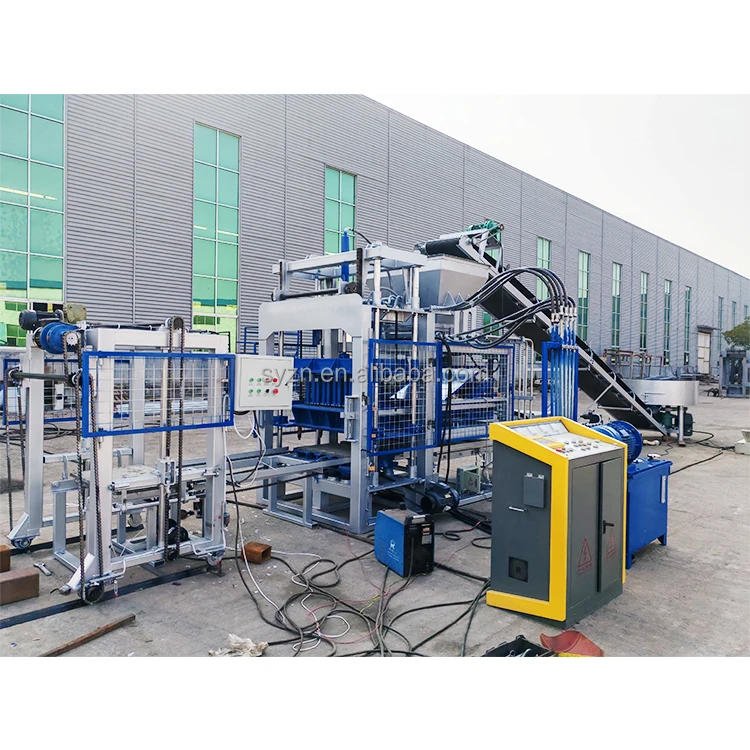
 High quality block machine