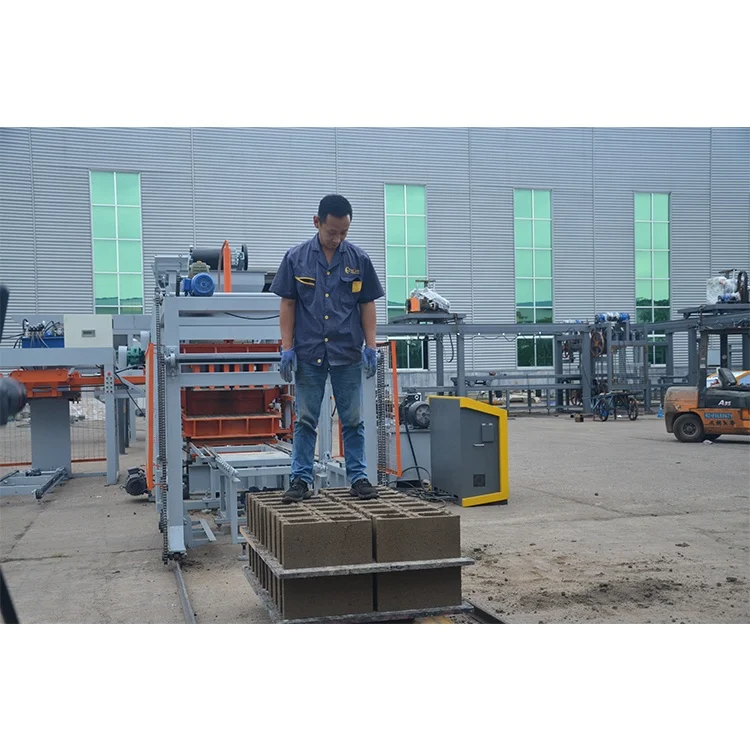
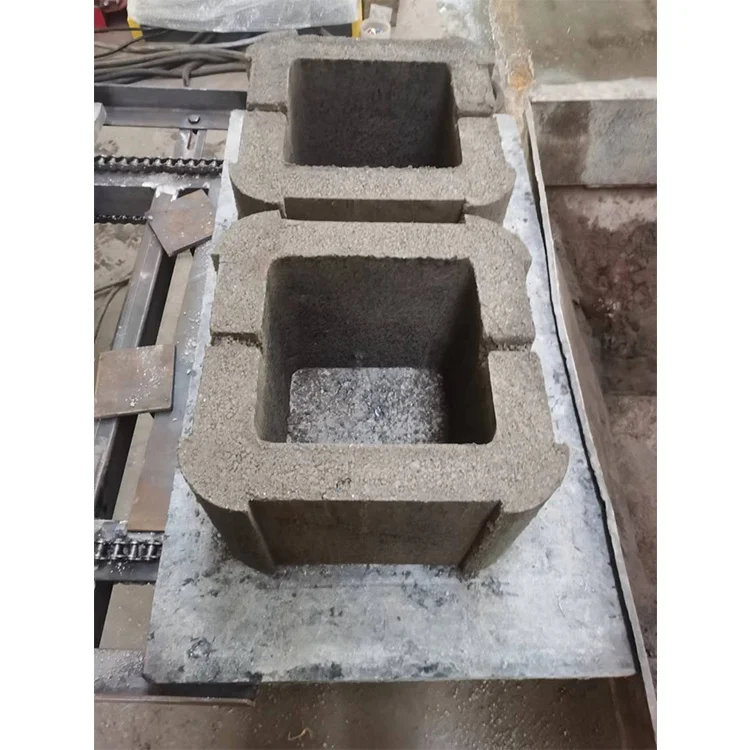
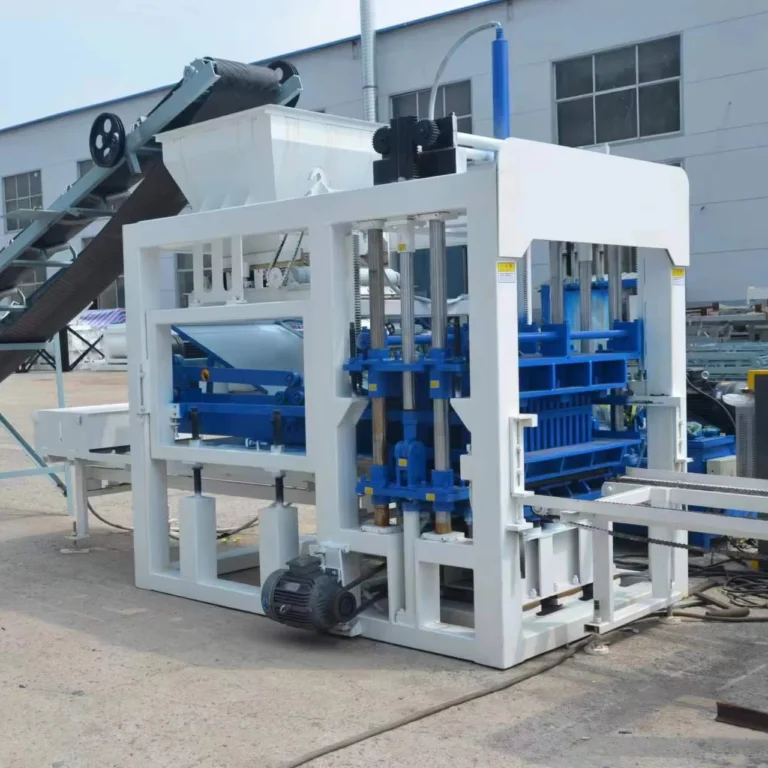
System-Matched Configuration — Every QT4-15 proposal pairs the press, pallet size, and hydraulic circuit to your actual mix and target format before we confirm a build slot, not after.
Technical Specifications
| Parameter |
Value |
| Model |
QT4-15 |
| Product Type |
Fully Automatic Concrete Block Making Machine |
| Overall Dimensions (L×W×H) |
4100×1600×2600 mm |
| Rated Pressure |
16–21 MPa |
| Main Vibration Form |
Platform Vibration |
| Vibration Frequency |
4200 r/min |
| Vibration Force |
55 kN |
| Pallet Size |
880×550 mm |
| Molding Cycle |
25–30 s (basis not stated in source) |
| Overall Power |
18.45 kW |
| Demolding Method |
Hydraulic |
| Total Mass |
4 T |
| Factory Area Required |
300 m² |
| Control System |
PLC |
| Automation Level |
Fully Automatic |
| Warranty |
1 year |
Application Suitability
| Application |
Material or Output |
| Hollow block production plants |
Concrete mixes with crushed stone, sand, cement, fly ash, and slag |
| Solid block manufacturing for housing projects |
Aggregates including gravel, dust, and local sand variants |
| Paving and interlocking brick facilities |
Colored concrete mixes requiring consistent surface finish |
| Curbstone and kerb production |
Heavy aggregate mixes demanding high hydraulic compaction |
What "Cycles Per Hour" Hides About Your Daily Output
The 25–30 s molding cycle of the QT4-15 automatic block making machine full range only tells half the story — the other half is which block format you are actually pressing.
Most quotations lead with cycles per hour as if every block size takes the same time. A thin paver and a 200 mm hollow block do not cycle identically, and vibration tuning shifts depending on the mix weight. I have watched buyers receive a machine rated for an impressive hourly figure, only to discover the number assumed a small solid block they never planned to make. When they switched to their real product — a taller hollow block with lighter aggregate — the cycle stretched and daily volume dropped noticeably. Confirming the cycle against your specific format and material before signing a contract prevents that gap [NEED_CITE: capacity calculation methods in concrete block production].

Placing the QT4-15 Within the Automatic Tier
The QT4-15 sits at the entry point of the fully automatic category, bridging the gap between semi-automatic workshops and high-capacity continuous lines. Buyers stepping up from manual pallet handling find this tier introduces hydraulic demolding and PLC-controlled sequencing without demanding the footprint of a large-scale plant. The 300 m² factory area requirement keeps the investment grounded for first-time block plant entrepreneurs who need automation but cannot justify a sprawling facility.
Why Pallet Size Dictates More Than Block Count
An 880×550 mm pallet defines not only how many blocks emerge per cycle but also what your curing racks must accommodate and which forklift can handle loaded stacks. Buyers who overlook this dimension often arrive at commissioning to find their existing racks are too narrow or their forklift forks too short. We specify pallet dimensions against your curing area layout and material handling equipment so the line flows from press to stack without a bottleneck at the rack [NEED_CITE: pallet handling and curing logistics in block plants].
Reading the Pressure and Vibration Numbers Together
Platform vibration at 4200 r/min delivers 55 kN of force across the mold cavity, while the hydraulic circuit applies 16–21 MPa of compaction pressure. These two values work as a pair — vibration loosens the mix so it fills the mold corners, and pressure locks it into a dense form before demolding. If your local aggregate is heavier than standard sand, such as volcanic scoria or dense river gravel, the vibration force must be sufficient to fluidize that mass. A mismatch shows up as cracked edges on release or weak blocks that crumble during curing.
The Cost of Skipping Mix Verification
Sending a sample of your local aggregate before finalizing the machine configuration is not a formality — it is the step that prevents a machine tuned for one material from struggling with another. When vibration force and hydraulic pressure are set against a catalog default rather than your actual mix, blocks may release with fractures or fail to reach the target strength. The cost of reconfiguring hydraulics and vibration settings after the machine arrives on site far outweighs the time spent testing a material sample upfront [NEED_CITE: aggregate variability effects on block strength].
Why Buyers Specify With Us
Block machinery is our single focus, meaning the QT4-15 press, molds, pallets, and handling stations are configured as one system rather than sourced from unrelated vendors. We set the vibration and pressure against your submitted mix sample and target block format, not a generic table. Automation is selectable, so you can begin at the semi-automatic end of this platform and add stacking or cubing modules as volume grows. Molds are designed and built for the formats your market actually sells, including custom drawings when standard options do not cover your specification.
Documentation & Verification
- Line layout and capacity calculation stating the exact block format assumed for each output figure
- Machine specification sheet covering QT4-15 hydraulic ratings, vibration force, and pallet dimensions
- Voltage, frequency, and PLC display language confirmation signed before production begins
- Factory test record on your submitted mix material before dispatch authorization
- Mold drawing and format list matching your target product catalog
- Operation and maintenance manual with wear parts schedule
Installation, Commissioning & Support
- Foundation plan aligned to the 4100×1600 mm footprint and 4 T operating mass
- Power circuit sized for the 18.45 kW total draw with dedicated breaker provisioning
- Machine dismantled for container loading and reassembled with alignment verification on site
- PLC language and parameter settings confirmed for your operator team during commissioning
- Mold change procedure trained against your actual format changeover sequence
- Wear parts list and reorder schedule provided for hydraulic and vibration components
What We Need to Quote Accurately
To size the QT4-15 to your operation, share your target block formats with dimensions, the daily volume you need to hit, and the local aggregate and cement you plan to run. Include your available factory space, local voltage and frequency, and whether your curing racks and forklifts already exist or need to be part of the scope. If you can send a sample of your aggregate, we will test it before locking the configuration.
Frequently Asked Questions
Q: How do I verify the QT4-15’s real daily output for my specific block format?
A: We provide a capacity calculation document that states the molding cycle and pieces per cycle for each block format you plan to produce — not a single headline number. This lets you multiply by your planned shift hours and see what the machine actually delivers against your product mix.
Q: Where does the QT4-15 sit in the Shiyue range, and when should I step up or down?
A: The QT4-15 occupies the entry-automatic tier. Buyers with lower volume or tighter space may choose a semi-automatic model, while those targeting continuous high-volume output move to a larger press with bigger pallets. We map your daily target and site constraints to the right tier.
Q: What plant footprint and utility connections does the QT4-15 require?
A: The press itself fits within a 300 m² production area including material feed and pallet return space. You will need a power circuit supporting 18.45 kW at your local voltage and frequency, which we confirm before building. Water supply for mixing is handled by your batching setup.
Q: Which pallet size does this machine use, and will it fit my existing equipment?
A: The standard pallet is 880×550 mm. We verify this dimension against your curing rack spacing and forklift capacity before finalizing the order, so loaded pallets move from press to rack without a handling mismatch at your site.
Q: Can I start semi-automatic and add automation to the QT4-15 later?
A: Yes. The platform supports selectable automation levels. You can begin with manual pallet handling and basic PLC control, then add automatic stacking or cubing modules as production volume justifies the investment, without replacing the core press.

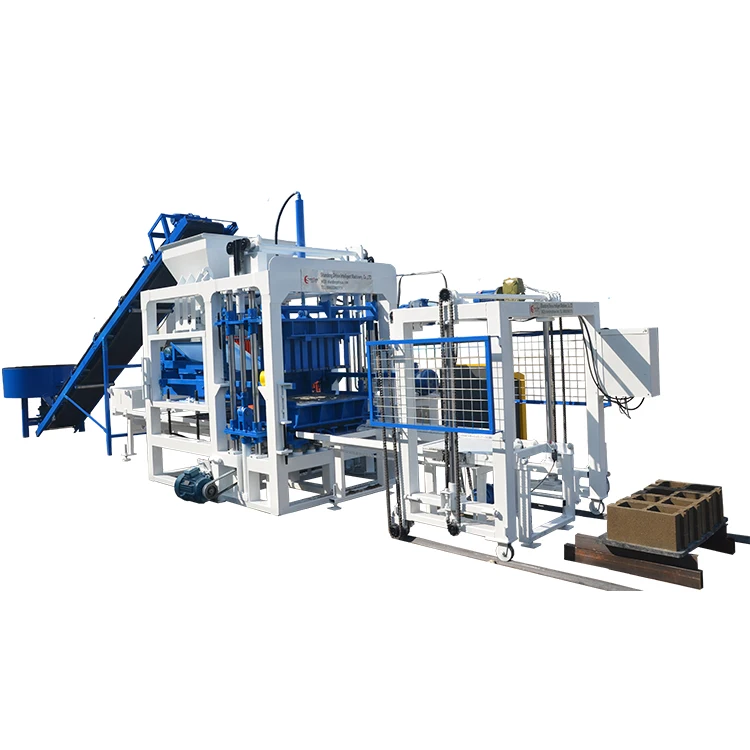
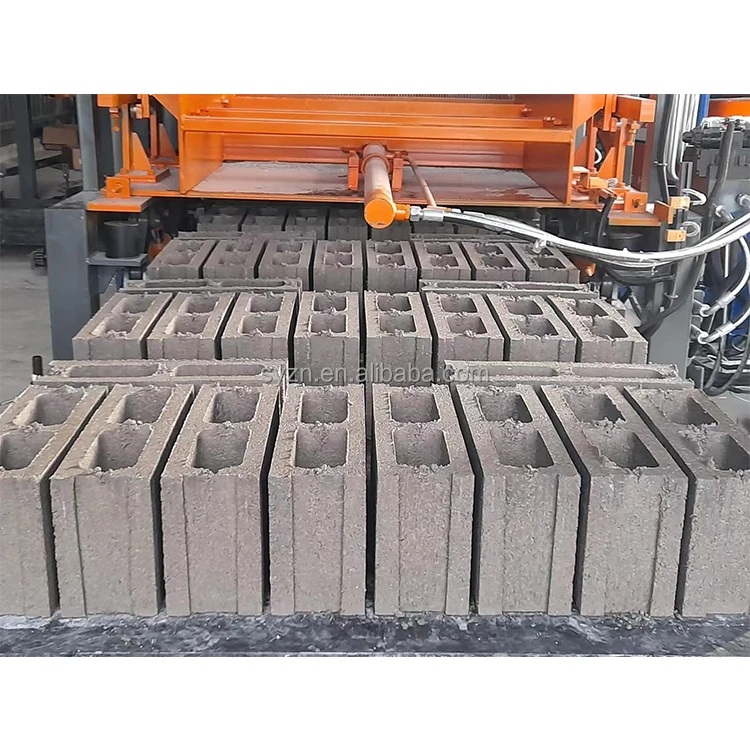 High quality block machine