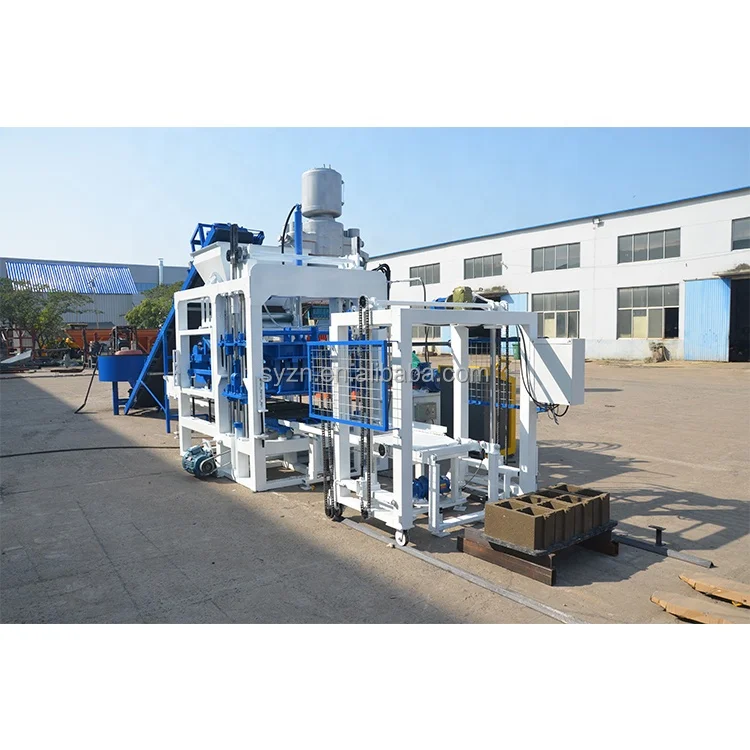
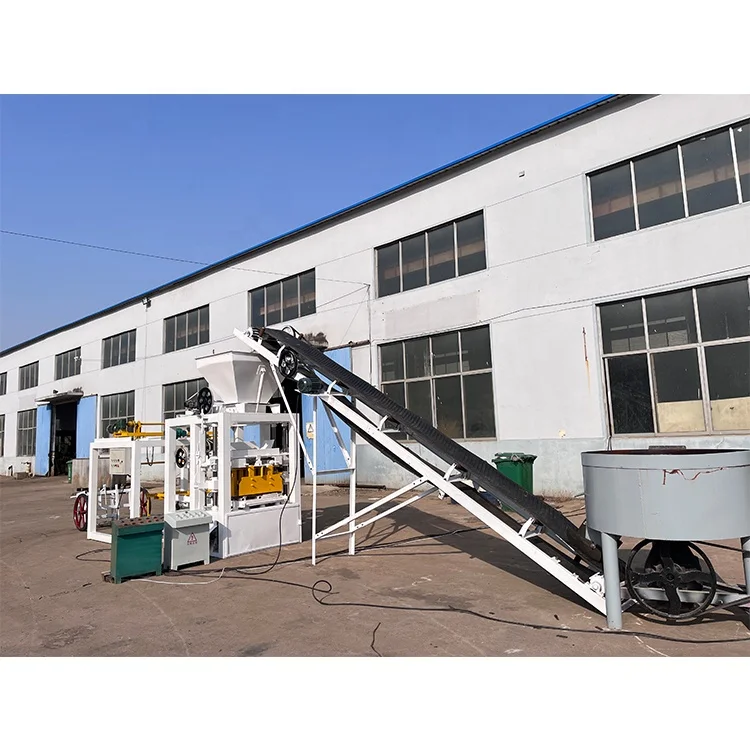
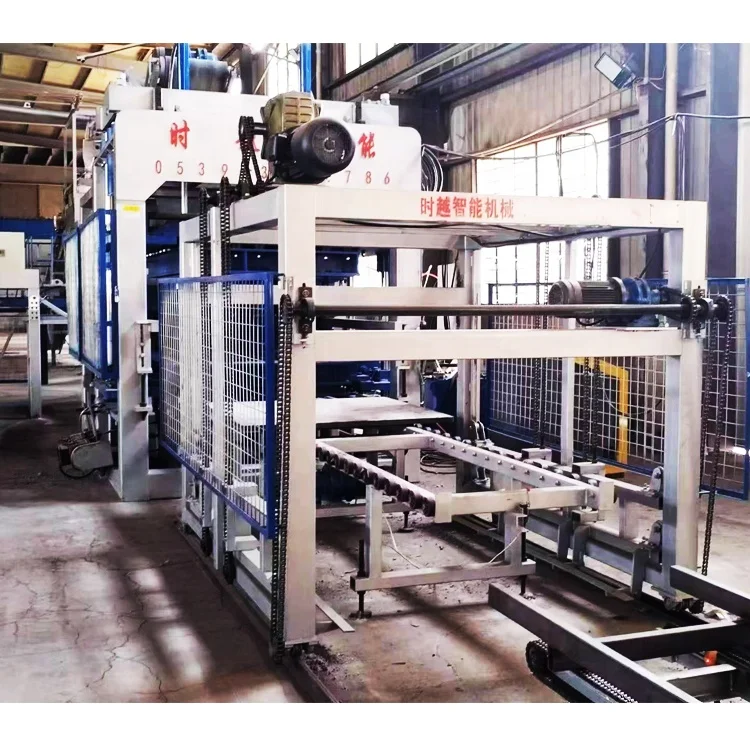
Matched System Approach — Every component from the press to the pallet is specified as one coordinated unit, eliminating integration gaps that typically stall commissioning.
Technical Specifications
| Parameter |
Value |
| Model |
QT4-15 |
| Product Type |
Hydraulic Automatic Block Making Machine |
| Molding Cycle |
15-30s depending on block format |
| Pallet Size |
900x500mm |
| Vibration Type |
Platform vibration |
| Vibration Frequency |
50-70Hz |
| Product Height Range |
50-220mm |
| Overall Power |
24.5kW |
| Demolding Method |
Hydraulic |
| Control System |
PLC controlled |
| Automation Level |
Automatic (pallet feeding, material feeding, vibrating, demoulding) |
| Block Compressive Strength |
More than 15 MPa |
| Output Capacity (Hollow Block 400x200x200mm) |
900-1200 pcs/hour, 7200-9600 pcs/8hr (basis: 400x200x200mm format) |
| Output Capacity (Paver 200x100x60mm) |
2880-3840 pcs/hour, 23040-30720 pcs/8hr (basis: 200x100x60mm format) |
| Output Capacity (Solid Brick 240x115x53mm) |
5930-6720 pcs/hour, 47400-53700 pcs/8hr (basis: 240x115x53mm format) |
| Mould Compatibility |
Hollow block, paver brick, solid brick (interchangeable moulds) |
| Raw Materials |
Fly ash, slag, gangue, sand, crushed stone, cement, water |
Application Suitability
| Application |
Material or Output |
| Hollow block production |
Crushed stone, sand, cement, fly ash mixtures |
| Solid brick production |
Sand, cement, slag blends for load-bearing formats |
| Paver brick production |
Fine aggregate with cement for 200x100x60mm interlocking formats |
| Industrial residue utilization |
Fly ash, slag, gangue combined with local aggregate |
| Mid-size block plant operation |
Multiple format production on a single 900x500mm pallet system |
What "900 to 1200 Pieces Per Hour" Actually Means for Your Plant
Capacity figures are meaningless without the block format attached. The QT4-15 automatic block making machine for sale is rated at 900-1200 pieces per hour based specifically on a 400×200×200mm hollow block format.
I once reviewed a quotation from another supplier that promised "up to 6000 blocks per hour" on a machine in this class. The buyer signed, the machine arrived, and actual output on their standard hollow block barely reached half that figure. The missing detail was the format assumption: that 6000-piece claim was based on thin solid bricks, not the hollow blocks the buyer’s market actually demanded. This is the most common reason buyers feel misled after commissioning [NEED_CITE: block machine capacity claims and format assumptions]. When you evaluate the QT4-15, every output number we provide states exactly which block dimensions and cycle time it assumes, so your daily planning matches reality.

Where the QT4-15 Sits in the Stationary Range
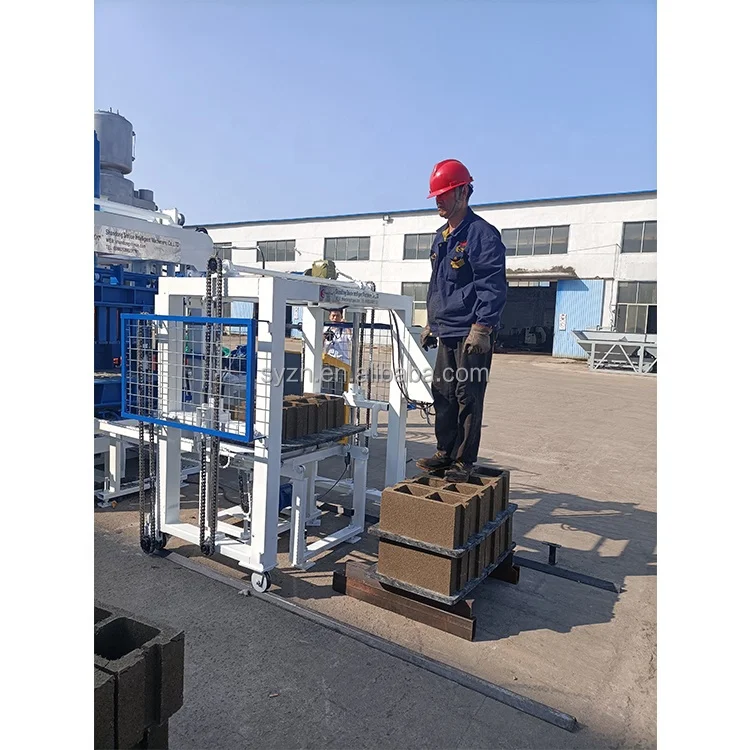
The QT4-15 occupies the mid-tier position in the Shiyue stationary block machine lineup, filling the gap between semi-automatic workshop machines that require manual pallet handling and high-capacity lines built for continuous three-shift operation. Buyers who have outgrown egg-laying or mobile machines but are not yet ready to commit the floor space and capital of a full automatic stacking and cubing system typically land here. The machine runs a complete PLC-controlled cycle — pallet feeding, material distribution, platform vibration, and hydraulic demoulding — as one coordinated sequence without operator intervention during the press stroke.
Understanding the Full Machine Range Before You Commit
Choosing the right tier is not about picking the highest output number. A buyer producing exclusively hollow blocks for a local housing project may find the QT4-15 delivers exactly the daily volume needed, while adding paver capability for a secondary revenue stream using the same 900×500mm pallet system. Conversely, a buyer targeting kerbstone and large-format porous brick may need to step up to a higher tier with a larger pallet and greater vibration force. The emphasis here is helping you place your operation on the range before narrowing down, so you do not over-invest in capacity you cannot fill or under-invest and hit a ceiling within eighteen months [NEED_CITE: block plant capacity planning and market demand matching].
Reading the Specs That Actually Determine Block Quality
The vibration frequency range of 50-70Hz on the QT4-15 automatic block making machine for sale works in concert with hydraulic-pressure-assisted demoulding to compact the mix into consistent density before the block leaves the mould. Platform vibration transmits energy through the pallet into the material bed, and the frequency must match the particle size distribution of your local aggregate — finer sand requires different frequency tuning than coarse crushed stone. The 50-220mm product height range means the same press handles 60mm pavers and 220mm hollow blocks simply by changing the mould and adjusting the fill depth in the PLC parameters. The 24.5kW overall power rating covers the hydraulic pump, vibration motors, and material feed system running simultaneously, which is a critical figure for sizing your site transformer and dedicated circuit before the machine arrives.
The Hidden Cost of Skipping Voltage Confirmation
I learned this the hard way when a QT4-15 shipped to Nigeria arrived with its PLC display locked in Chinese. The local operators stared at the screen for an entire day before anyone could navigate a single menu. We spent two days remotely swapping language packs while the machine sat idle on the factory floor. That single oversight cost the buyer a full week of production and strained the relationship before the first block was made. Voltage, frequency, and control language are not minor details — they are the difference between a machine that runs on day one and one that sits in a crate while you source a step-down transformer [NEED_CITE: voltage and frequency standards by export market]. Every QT4-15 leaving our facility has these three parameters confirmed in writing and verified on the factory test bench before the container is sealed.
Why Buyers Source This Machine Range Through Shiyue
The QT4-15 and its supporting pallets, moulds, and handling equipment are specified as one matched system rather than assembled from separate vendors, which means cycle times between stations are calculated to prevent the press from waiting on upstream feed or downstream removal. Machine configuration is set against your actual mix design and local aggregate, not a catalogue default that assumes materials you cannot source. Mould design covers the specific formats your market sells, and custom drawings are available when standard cavity counts do not match local demand. The automation level is selectable, allowing a buyer to start with basic automatic cycling and add pallet stacking or curing rack handling as volume grows. Installation support includes operator training so your team understands mould change procedures and PLC parameter adjustment before the technician leaves site.
Documentation & Verification
- Line layout drawing showing QT4-15 footprint with pallet feed and block exit clearances
- Capacity calculation document stating output per hollow block, paver, and solid brick format
- Machine specification sheet confirming hydraulic pressure, vibration force, and pallet size
- Mould drawing and format list for every block type included in your quotation
- Voltage, frequency, and PLC display language confirmed in writing before production begins
Installation, Commissioning & Support
- Foundation slab must support the QT4-15 operating weight with vibration isolation mounts rated for 50-70Hz frequency
- Dedicated electrical circuit sized for 24.5kW continuous draw with correct voltage and phase confirmed before energizing
- PLC display language and all menu labels verified against buyer requirement before the machine leaves the factory
- Mould change procedure trained on-site using the specific interchangeable moulds supplied with your order
- Wear parts list provided covering hydraulic seals, vibration motor brushes, and pallet guide rollers specific to this model
- Daily maintenance checklist aligned with the QT4-15 hydraulic and vibration system service intervals
Before You Request a Quotation
To size the QT4-15 automatic block making machine for sale to your operation, share the specific block formats your market demands along with target daily output for each. Confirm your local voltage and frequency so the electrical package is built correctly from the start, and specify the PLC display language your operators need. If you already have pallets, a curing area, or a forklift on site, provide those dimensions so the pallet specification and handling layout match your existing infrastructure.
Frequently Asked Questions
Q: How is output capacity verified and what block format is each figure based on?
A: Every capacity figure for the QT4-15 states the exact block dimensions and cycle time it assumes. For example, the 900-1200 pieces per hour rating applies specifically to 400×200×200mm hollow blocks. Different formats such as pavers or solid bricks have separate calculations. We provide a written capacity document with your quotation so there is no ambiguity about daily output expectations.
Q: Which automation level does the QT4-15 cover, and can I start basic and add automation later?
A: The machine runs a full automatic cycle including pallet feeding, material distribution, vibration, and hydraulic demoulding. Downstream automation such as automatic stacking or curing rack handling can be added as separate modules. This lets you start with the press itself and expand the line as production volume justifies the additional investment.
Q: What voltage, frequency, and PLC language options are available for my market?
A: Voltage and frequency are configured to match your local grid before production begins. The PLC display language is confirmed in writing and loaded during factory testing so operators see their own language from the first power-on. These three parameters are locked into your order documentation to prevent the commissioning delays we have seen happen when they are left unspecified.
Q: What supporting equipment do I need around this press to run a complete line?
A: The QT4-15 requires a raw material batching and mixing station upstream, a pallet return system, and a block handling method downstream — whether manual, semi-automatic stacking, or full cubing. We specify pallet size and material to match your curing area and existing forklift, then provide a line layout showing how each station connects and where cycle times must align.

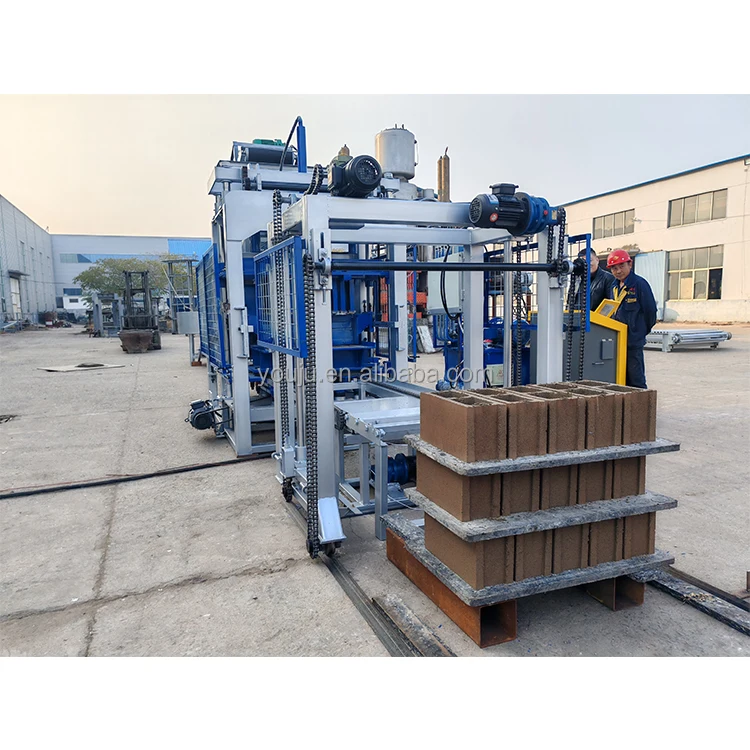
 Stationary block machine