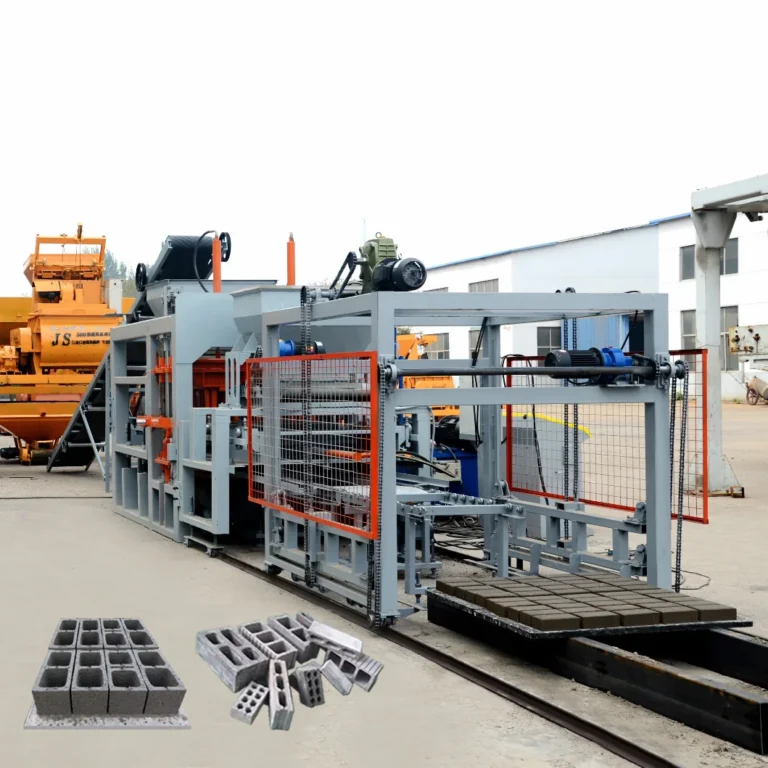
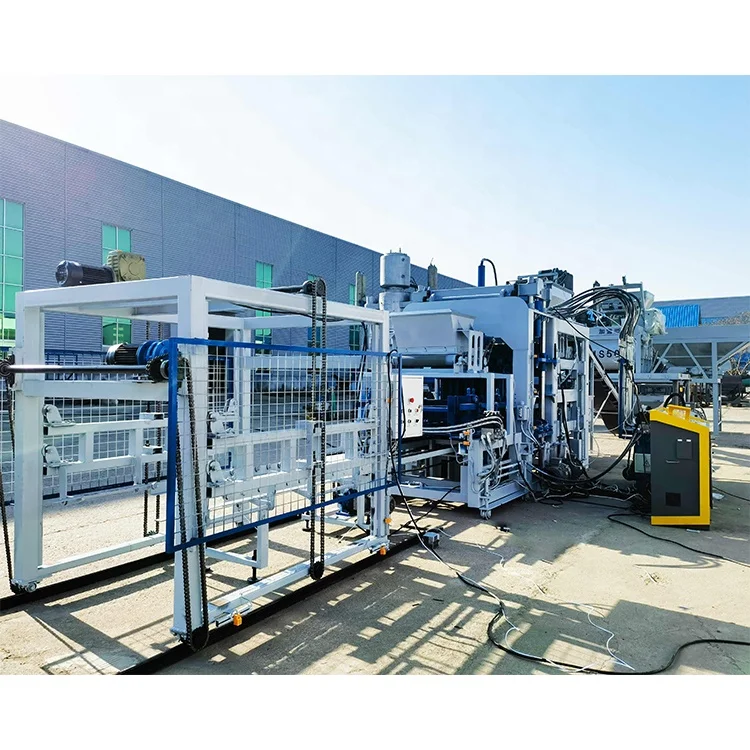
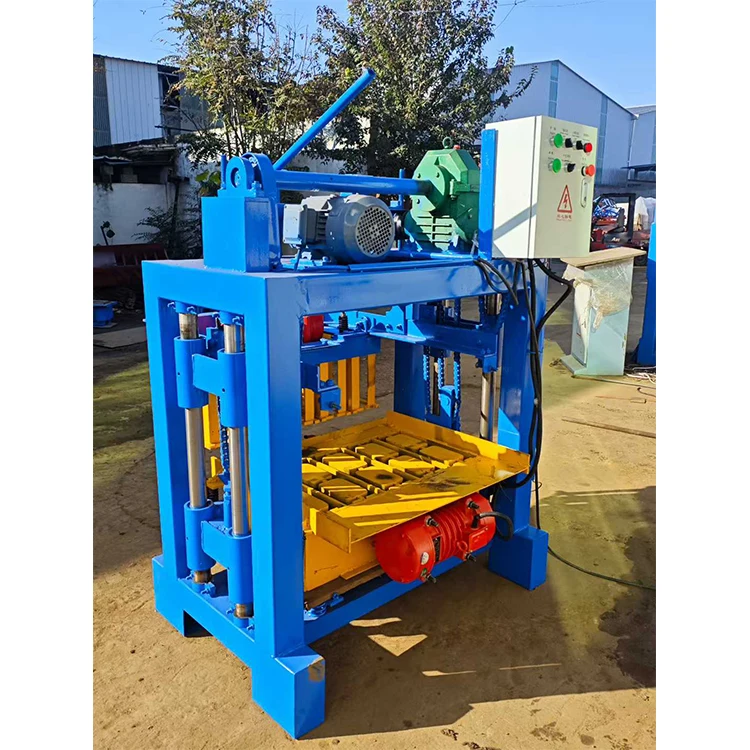
Matched System Configuration — the QT18-25 is engineered as a single integrated line where press, stacking and curing are sized together, eliminating the mismatch risk that occurs when buyers assemble pallet-based stations from separate vendors.
Technical Specifications
| Parameter |
Value |
| Model |
QT18-25 |
| Product Type |
Fully Automatic Pallet-free Hollow Block Making Machine |
| Brick Height Range |
50–300 mm |
| Stacking Height |
0–1200 mm |
| Main Vibration Form |
Platform Vibration |
| Vibration Frequency |
2800–4500 r/min |
| Vibration Power |
60 kW |
| Hydraulic System Power |
59 kW |
| Diving Method |
Hydraulic |
| Demolding Method |
Vibration and Hydraulic |
| Molding Cycle |
15–25 s (basis to be confirmed per block format) |
| Pallet Size |
1350×1350×120 mm (basis not stated in source — confirm if pallet is used, as machine is described as pallet-free) |
| General Water Consumption |
8 T/Day |
| Factory Area |
2000 m² |
| Control System |
PLC with person-machine conversation interface |
| Automation Level |
Fully Automatic (blocks stacked directly after moulding, no pallet required) |
| Applied Products |
Concrete hollow/solid blocks, pavers, interlocking blocks, curbstone, colored pavers |
| Raw Materials |
Crushed stone, sand, cement, dust, fly ash, gravel, slag |
| Warranty |
1st year spare parts (except quick-wear parts) and repair |
| Installation Support |
On-site machine installation and operation training, approx. 1 week |
Application Suitability
| Application |
Material or Output |
| Hollow block production for commercial and residential construction |
Crushed stone, sand, cement, fly ash blends |
| Solid load-bearing block manufacturing |
Gravel, cement, slag aggregates |
| Interlocking paver production for roads and walkways |
Fine sand, cement, colored pigment |
| Kerbstone and curb production for municipal infrastructure |
Coarse aggregate, cement, high-density mix |
| On-site block production for housing development projects |
Locally sourced stone dust, sand, cement |
Why "15 Seconds per Cycle" Can Mislead Buyers
The QT18-25 automatic hollow block making machine manufacturer quotes a 15–25 s molding cycle, but the real output depends entirely on which block format fills that cycle.
When I first started in after-sales support, I saw buyers in West Africa order machines based on a single cycle time number, then discover their daily hollow block count was half the brochure figure. The discrepancy was not a machine fault — it was a mismatch between the quoted cycle and the block geometry they actually produced. Taller hollow blocks require longer vibration and hydraulic dwell, pushing the cycle toward the upper end of the range. [NEED_CITE: industry capacity quotation practices for concrete block presses]

Where the QT18-25 Sits on the Output Tier Ladder
The QT18-25 occupies the high-capacity fully automatic tier, designed for plants targeting continuous daily production. Below it sit semi-automatic models that require manual pallet handling, and above it are multi-line configurations with integrated cubing systems. Buyers evaluating their first automatic hollow block making machine manufacturer should use this model as the reference point for what a pallet-free, single-press automatic line demands in terms of site area and supporting infrastructure.
Pallet-Free Design and What It Removes from Your Investment
A conventional pallet-based line requires ongoing pallet purchase, storage, handling labor and curing rack systems. The QT18-25 stacks blocks directly after molding to a height of 0–1200 mm, removing pallet cost and handling from the equation entirely. For a plant owner replacing an older line, this means the total capital outlay comparison must include the pallet inventory and rack infrastructure that a pallet-based system demands — items that rarely appear on the press quotation itself. [NEED_CITE: total cost of ownership for pallet versus pallet-free block production]
Reading the Vibration and Hydraulic Specs Together
Platform vibration at 2800–4500 r/min and 60 kW vibration power work in tandem with a 59 kW hydraulic system to compact the mix. The hydraulic pressure forces aggregate particles into position while vibration eliminates air voids — if either is undersized for the buyer’s local aggregate, block density and compressive strength fall below standard. The QT18-25’s vibration frequency range allows tuning to different mix designs, from fine sand paver mixes to coarse aggregate hollow block blends. The 50–300 mm brick height range means the hydraulic stroke and vibration dwell must be re-set per format, which the PLC interface manages through stored recipes.
What Happens When Configuration and Mix Design Diverge
In one project I supported, a buyer ordered a high-capacity line based on sample capacity figures without confirming that their local crushed stone had a high clay content. The machine ran, but block strength was inconsistent and daily output dropped because cycles had to be extended to compensate. The fix required adjusting both the vibration parameters and the raw material ratio — work that should have happened before the machine was built. [NEED_CITE: aggregate testing requirements for concrete block production]
Why Buyers Choose This Supplier for the QT18-25
The machine, mould, stacking and handling are specified as one matched system rather than assembled from separate vendors, so cycle time claims are tied to the actual block format in the quotation. Configuration is set against the buyer’s local aggregate and mix design, not a catalogue default. Mould design covers the specific formats the buyer’s market demands, including custom drawings. Automation level is selectable, allowing a buyer to begin with this fully automatic tier and integrate upstream batching upgrades later. Installation includes approximately one week of on-site commissioning and operator training specific to the QT18-25.
Documentation & Verification
- Line layout drawing with capacity calculation stating the block format assumed for the 15–25 s cycle
- Machine specification sheet confirming 60 kW vibration and 59 kW hydraulic power ratings
- Mould drawing and format list covering the 50–300 mm brick height range
- Voltage, frequency and PLC display language confirmation record before production begins
- Factory test record on the buyer’s specified block format prior to dispatch
- Operation and maintenance manual with wear parts list for the QT18-25 platform
Installation, Commissioning & Support
- 2000 m² factory area required, with cured concrete floor rated for the QT18-25 vibration load
- Dedicated power circuit for 60 kW vibration plus 59 kW hydraulic system, voltage confirmed pre-build
- Machine arrives in dismantled state for container loading; reassembly included in commissioning
- PLC language and person-machine interface configured before operator training begins on-site
- One-week on-site installation covers parameter tuning to the buyer’s raw material and block format
- First-year warranty covers spare parts and repair, excluding quick-wear items like mould liners
Preparing Your Inquiry for the QT18-25
To receive a configuration and capacity calculation specific to your project, provide the target block format and dimensions, your local aggregate type and source, daily output target, available site area, and local voltage and frequency. If you are replacing an existing line, share your current pallet size and curing setup so the pallet-free transition can be evaluated against your operation.
Frequently Asked Questions
Q: How is the QT18-25’s molding cycle verified per block format, and which format does the stated output assume?
A: The 15–25 s cycle is a range; the actual cycle for your production is determined by the block geometry, mix design and required density. A capacity calculation must state which format it assumes — for example, a 400×200×200 mm hollow block will sit at a different point in the cycle range than a thin interlocking paver. Request the calculation tied to your specific format.
Q: Where does the QT18-25 sit on the automatic versus semi-automatic versus mobile range?
A: The QT18-25 is the high-capacity fully automatic tier with pallet-free stacking, requiring approximately 2000 m² of factory area. Semi-automatic models below it require manual pallet handling and smaller footprints. Mobile egg-laying machines sit at the entry tier for on-site production without a fixed plant. Each tier serves a different investment level and production scale.
Q: What voltage, frequency and PLC language options are available, and when must they be confirmed?
A: Voltage and frequency must match the buyer’s local grid and are configurable — confirmation is required before production starts. The PLC person-machine conversation interface language is also set at this stage. Late changes after production begins delay commissioning and may require component replacement.
Q: How does the pallet-free stacking system compare to a pallet-based line in total investment?
A: A pallet-based line requires ongoing pallet purchase, curing rack systems and handling labor that do not appear on the press quotation. The QT18-25 stacks blocks directly to 0–1200 mm, removing these costs. Total investment comparison must include pallet inventory, rack infrastructure and handling equipment that a conventional line demands.
Q: Can a buyer start with the QT18-25 and upgrade automation or add formats later?
A: Yes. The QT18-25 platform supports mould changes across the 50–300 mm brick height range, and the PLC stores recipes for multiple formats. Upstream batching automation and downstream cubing systems can be integrated to the same line later, provided the original electrical and control infrastructure was specified with that upgrade path in mind.

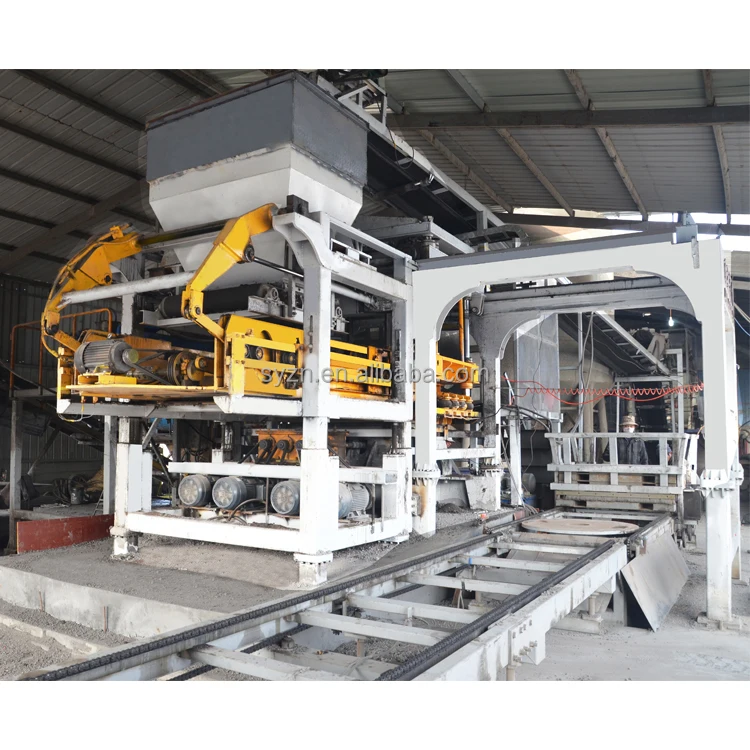
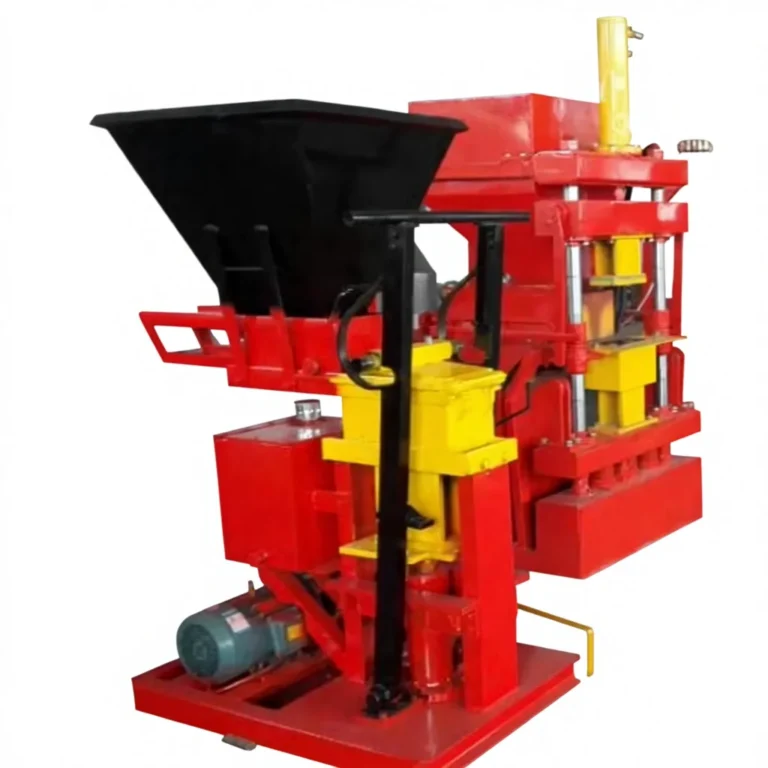 Stationary block machine