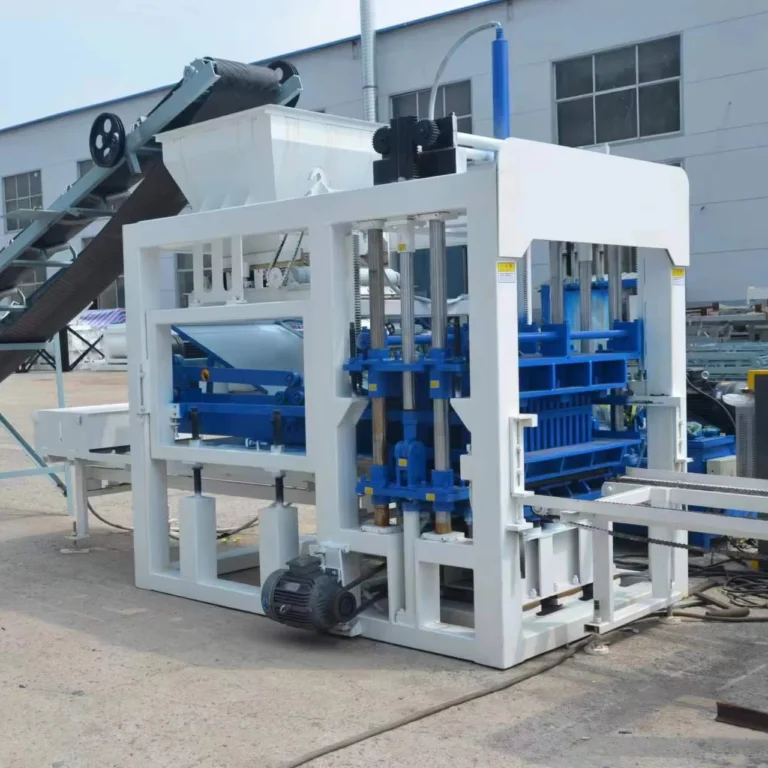
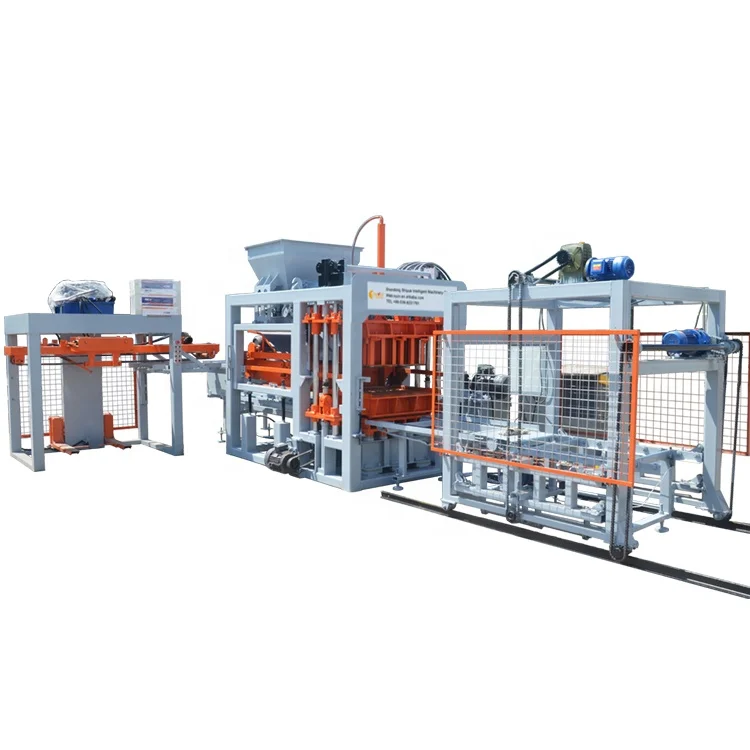
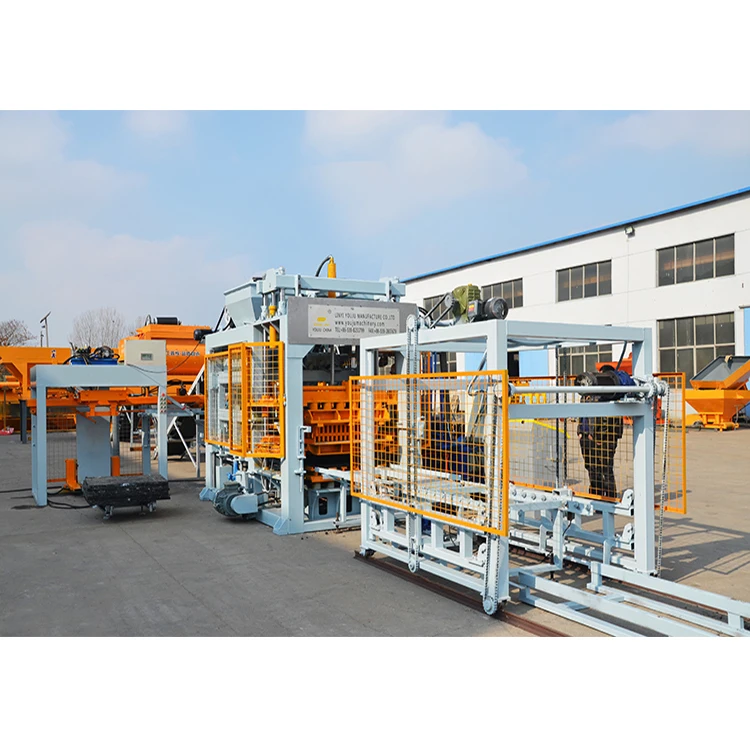
Single Focus on Block Machinery — the QT12-15 press, mould, pallet and handling are specified as one matched system rather than assembled from separate suppliers, so capacity figures hold up on your shop floor.
Technical Specifications
| Parameter |
Value |
| Model |
QT12-15 |
| Product Type |
Concrete Block Making Machine |
| Total Power |
62 kW |
| Pallet Size |
1300×900 mm |
| Moulding Cycle |
15–30 seconds (basis not stated in source — confirm block format and material) |
| Vibration Type |
Table vibration |
| Vibration Force |
120 kN |
| Voltage |
Customized according to local industrial voltage |
| Moulds |
Customized according to buyer’s required block formats |
| Key Features |
Four-axis table excitation, frequency conversion vibration control, 360° rotating press-in arch breaker, replaceable wear-resistant cloth platform plate |
Application Suitability
| Application |
Material or Output |
| Hollow block production |
Crushed stone, cement and sand aggregate |
| Solid block production |
Concrete mix with local gravel or fly ash |
| Paving brick production |
Dense concrete mix for interlocking and kerb formats |
| Interlocking brick production |
Fine aggregate mix with colour oxide additive |
| Slope protection brick production |
Permeable concrete mix for erosion control formats |
| Porous brick production |
Open-grade aggregate for water-permeable pavers |
Where the QT12-15 Fits in Your Plant Range
Buyers often compare machines by the cycle count printed on a brochure, only to discover the actual daily output depends entirely on which block format that number assumes. The QT12-15 block making machine manufacturer specification you receive should state the assumed format, mould cavity count and curing cycle alongside the cycle time, so you can map it against what your market actually buys. I have seen plants order a high-tier press expecting it to cover hollow blocks and paving bricks equally, then realise the pallet change and mould swap eat into the shift far more than anticipated. A buyer surveying options for a first plant or a replacement press needs to see where this model sits across the full range before narrowing the configuration [NEED_CITE: block plant capacity planning assumptions by format].
Placement Across Output Tiers
The QT12-15 occupies the high-capacity end of our block machine range. Smaller workshops typically start on semi-automatic or mobile machines with lower pallet sizes and manual stacking, while the QT12-15 is built for plants that need consistent throughput across multiple block formats on one line. Its 1300×900 mm pallet size means the curing area and forklift capacity must be sized accordingly before the machine arrives, not after.
Matching the Press to Your Site Reality
A QT12-15 block making machine manufacturer quotation should cover more than the press itself. Raw material feeding, mixing capacity, pallet feeding and stacking all have to keep pace with a 15–30 second moulding cycle, or the press spends half the shift waiting. When we scope a line, we check that the upstream batch mixer can deliver wet concrete at the rate the QT12-15 consumes it, and that the pallet return conveyor does not become a bottleneck on longer runs [NEED_CITE: block production line synchronization requirements].

Reading the Specification Sheet Honestly
The 62 kW total power rating tells you the electrical supply and dedicated circuit the QT12-15 demands on arrival. The 120 kN vibration force, combined with hydraulic pressure during the press stroke, determines the density and compressive strength of the finished block — but only when the vibration profile is tuned to your specific aggregate gradation and cement ratio. The 1300×900 mm pallet dimension governs how many blocks are formed per cycle, yet the actual cycle time shifts depending on whether you are pressing a tall hollow block that needs longer consolidation or a thin paving brick that fills quickly. Frequency conversion control lets the operator adjust vibration acceleration on the panel, which matters when you switch from a coarse crushed-stone mix to a finer sand-based mix for interlocking formats.
The Cost of Skipping the Configuration Conversation
Ordering a QT12-15 without confirming the local aggregate properties, target block format and site voltage is how plants end up running at half their expected output. When the stone powder available locally carries a high clay content, the vibration parameters calibrated at the factory no longer apply, and every block comes off the pallet under-strength or uneven in height. I once saw a plant take delivery of a high-tier press only to spend weeks sourcing a different aggregate because the machine was configured for a mix they could not buy locally [NEED_CITE: aggregate variation impact on block compressive strength]. Voltage and frequency mismatches delay commissioning further, because the control panel language and motor rotation direction both have to be right before the first test run.
Why Buyers Spec the QT12-15 Here
Block machinery is our single focus, so the QT12-15 is never shipped as a standalone press with handling bolted on later — the mould, pallet specification and stacking method are confirmed as part of the same proposal. We set the configuration against your actual mix design and target block format, not a catalogue default, and provide mould drawings for every format your market requires including custom profiles to buyer drawings. The automation level is selectable, meaning a plant can commission the QT12-15 in semi-automatic operation and add automatic stacking or cubing later as output grows. Installation support includes operator training on mould change procedure, PLC navigation and daily maintenance so your crew is productive from the first shift.
Documentation & Verification
- Line layout drawing showing QT12-15 position within the complete block production line
- Capacity calculation table stating the block format assumed for each output figure
- Mould drawing and format list with cycle time per block type
- Voltage, frequency and PLC display language confirmation before production begins
- Factory test record on the buyer’s specified pallet size and block format
- Hydraulic and electrical schematic matching the as-built QT12-15 configuration
Installation, Commissioning & Support
- Foundation plan sized for the QT12-15 footprint and vibration load transfer
- Dedicated circuit provision for 62 kW total power with correct voltage and frequency
- Machine dismantled into container-load sections with reassembly sequence documented
- On-site vibration force calibration against buyer’s local aggregate and mix design
- Operator training covering PLC control navigation and mould change procedure
- Wear parts and mould replenishment list with first replacement intervals noted
Before You Send the Inquiry
Help us scope the QT12-15 to your actual plant by sharing the block formats your market sells, the target daily output per format, and the local raw materials you plan to use including aggregate type and source. Confirm your site voltage, frequency and the control panel language your operators need, along with the curing area dimensions and forklift capacity you already have or plan to install.
Frequently Asked Questions
Q: How is daily output calculated for the QT12-15, and which block format is assumed?
A: Output depends on the block format, mould cavity count and curing cycle, not just the machine’s moulding cycle. We provide a capacity table that states the assumed format — such as 400×200×200 mm hollow block — so you can compare the figure against what your market actually orders rather than relying on a single headline number.
Q: Where does the QT12-15 sit compared to semi-automatic and mobile models?
A: The QT12-15 is at the high-capacity end of the range, suited to fixed plants producing multiple formats. Semi-automatic and mobile models serve smaller workshops or on-site production with lower investment and footprint. We map each tier against your output target and site conditions before recommending which fits.
Q: Can I start semi-automatic and upgrade the QT12-15 later?
A: Yes. The automation level is selectable at order, and the QT12-15 can be commissioned with manual pallet handling first, then upgraded with automatic stacking or cubing as your output volume grows. The PLC and mechanical interfaces are designed to accommodate that upgrade path.
Q: What pallet size does the QT12-15 use, and will it match my existing curing area?
A: The standard pallet size is 1300×900 mm, which determines the rack spacing and forklift capacity your curing area must support. We confirm pallet material and dimensions against your existing infrastructure before finalising the order so there are no surprises at commissioning.
Q: Is the voltage and control language confirmed before the QT12-15 ships?
A: Voltage, frequency and PLC display language are confirmed in writing before production begins. This prevents the common delay where a machine arrives with the wrong motor wiring or an unreadable control panel, which can hold up commissioning by days or weeks.

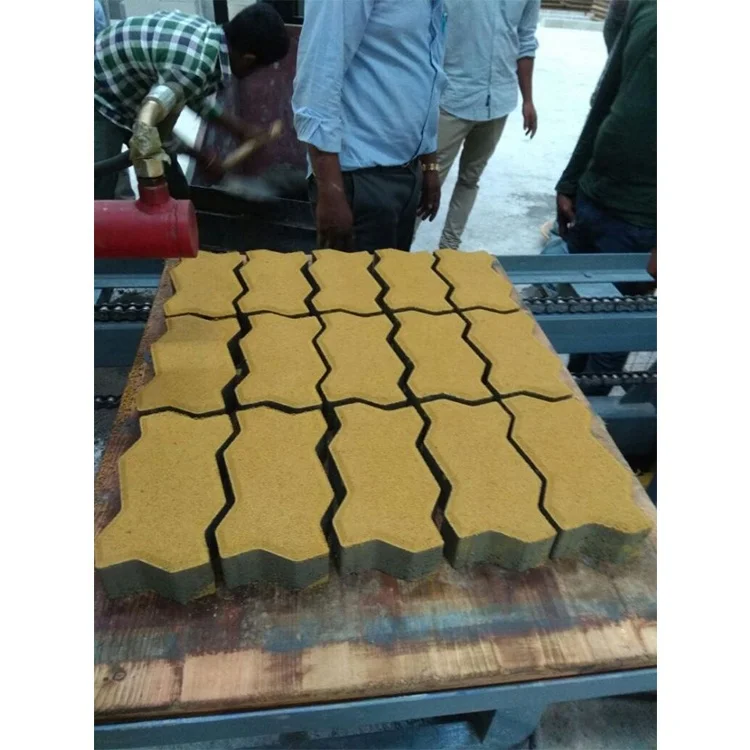
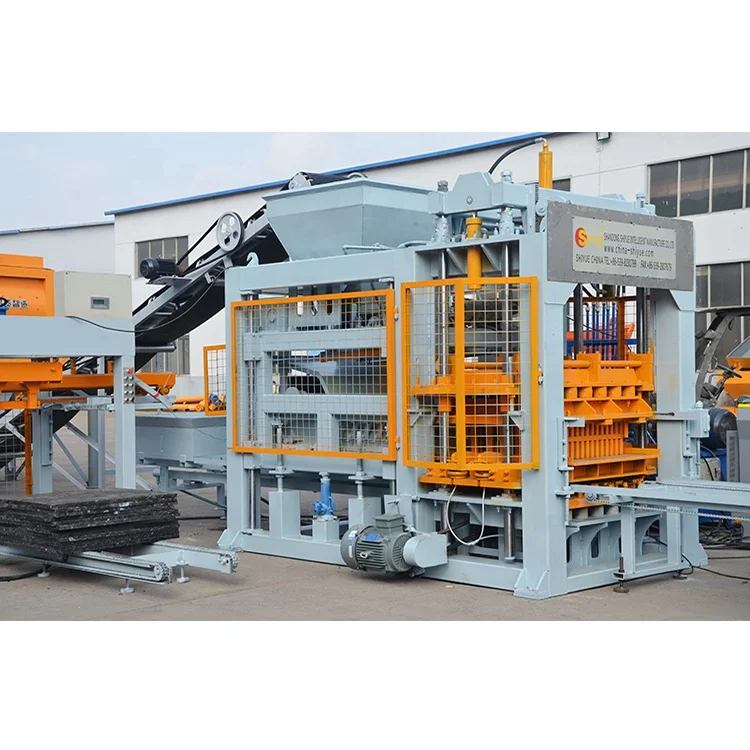 High quality block machine