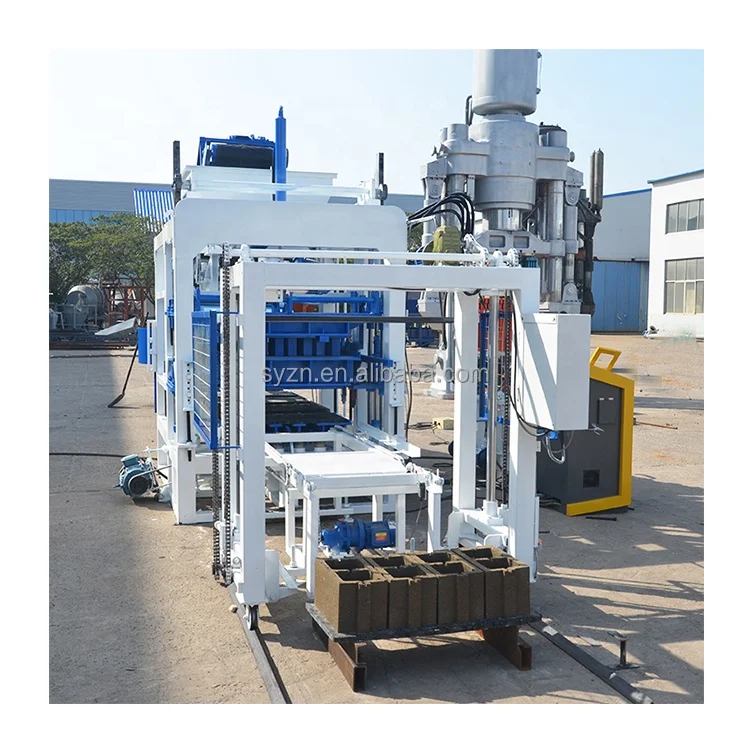
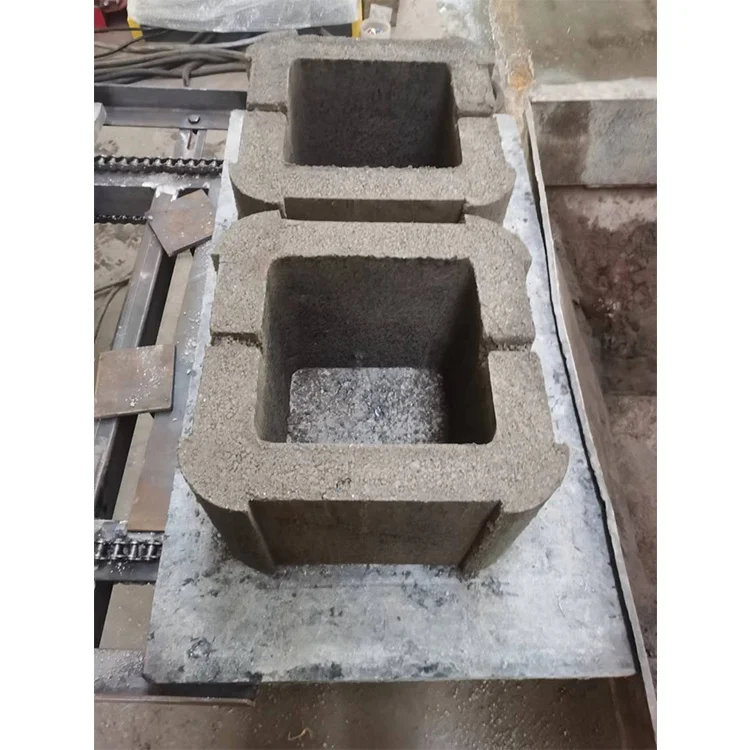
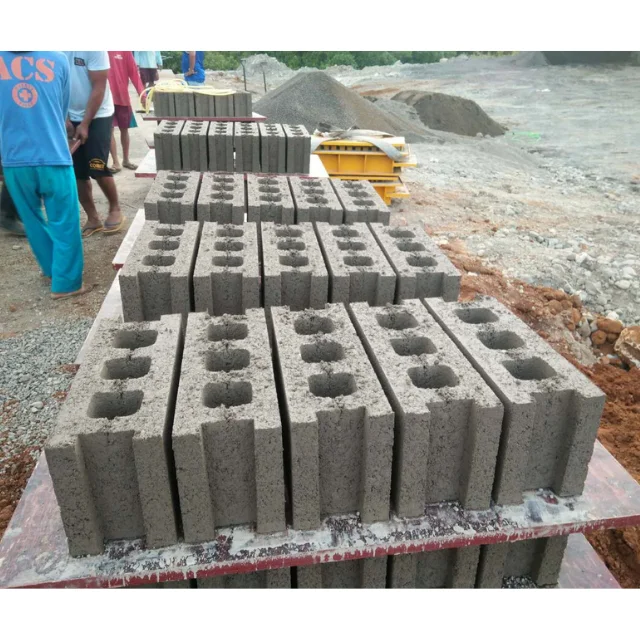
System-Matched Configuration — The QT10-15 block machine, moulds, pallets and handling stations are specified together against your local aggregate and target block format, not pulled from a catalogue default.
Technical Specifications
| Parameter |
Value |
| Model |
QT10-15 |
| Product Type |
Hydraulic Concrete Block Making Machine |
| Control System |
PLC control cabinet |
| Hydraulic System |
Independent integrated hydraulic station |
| Vibration Mode |
Vertical station mode resonance, automatic FM-AM |
| Mould Change System |
Quick replacement, multi-function with one machine |
| Output (400×200×200mm hollow block) |
1800-2400 pcs/hour, 14400-19200 pcs/8hr (15-20s cycle, 10 pcs/mould) |
| Output (400×150×200mm hollow block) |
2160-2880 pcs/hour, 17280-23040 pcs/8hr (15-20s cycle, 12 pcs/mould) |
| Output (240×115×53mm solid brick) |
8928-11160 pcs/hour, 71424-89280 pcs/8hr (15-20s cycle, 62 pcs/mould) |
| Output (200×100×60mm paving block) |
5184-6480 pcs/hour, 41472-51840 pcs/8hr (20-25s cycle, 27 pcs/mould) |
| Output (225×112.5×60mm interlocking brick) |
4032-5040 pcs/hour, 32256-40320 pcs/8hr (20-25s cycle, 24 pcs/mould) |
| Molding Cycle |
15-20s (hollow block & solid brick), 20-25s (paving & interlocking) |
| Components Included |
Pallet feed machine, block making machine, storage hopper, conveyor, hydraulic unit, PLC control cabinet |
| Automation Level |
Automatic with PLC and automatic pallet feeding |
| Pallet Size |
(basis to be confirmed) |
| Hydraulic Pressure |
(basis to be confirmed) |
| Vibration Force |
(basis to be confirmed) |
| Rated Power |
(basis to be confirmed) |
| Voltage & Frequency |
(basis to be confirmed) |
| Overall Dimensions |
(basis to be confirmed) |
| Net Weight |
(basis to be confirmed) |
| Warranty |
1 year for whole machine, excluding spare parts |
| Certification Scope |
CE (where applicable) |
Application Suitability
| Application |
Material or Output |
| Hollow block production plants |
Crushed stone, sand, cement, fly ash blends for 400×200×200mm and 400×150×200mm cavity formats |
| Solid brick manufacturing |
Fine aggregate and cement mixes for 240×115×53mm standard bricks |
| Paving block yards |
High-density aggregate blends for 200×100×60mm interlocking and uni-stone pavers |
| Interlocking brick facilities |
Laterite, quarry dust and cement combinations for 225×112.5×60mm dry-stack formats |
| On-site contractor production |
Local aggregate and cement for housing project block requirements across multiple formats |
Why "1800 Blocks per Hour" Tells Only Half the Story
Capacity means nothing without the block format and cycle time it was measured on.
I have been on enough job sites across West and East Africa to watch a machine quoted at an impressive hourly number fall to half that output by lunchtime. The reason is almost always the same: the capacity figure was based on a small solid brick, but the buyer’s market runs hollow blocks or pavers with longer press cycles and fewer cavities per mould. When you evaluate a QT10-15 block machine manufacturer, the first document to request is the capacity calculation broken down by every format you intend to produce. Without that, you are comparing headline numbers against reality. [NEED_CITE: block machine capacity calculation methods by format and cycle time]
Where the QT10-15 Sits in the Range
The QT10-15 occupies the upper-mid position in the Shiyue automatic concrete block making machine for sale range. Below it sit semi-automatic models suited to lower-volume workshops where manual pallet handling keeps investment down. Above it are higher-tier lines with fully automatic stacking and cubing for continuous three-shift operation. The QT10-15 bridges that gap: it delivers PLC-controlled automatic pressing and pallet feeding while leaving room to add downstream automation as volume grows. This makes it a common choice for buyers replacing an aging semi-automatic press or scaling a first plant beyond manual output limits.
Matching Output Tier to Your Block Format
A buyer producing 200×100×60mm paving blocks at a 20-25 second molding cycle sees different daily throughput than a buyer running 240×115×53mm solid bricks at 15-20 seconds — even on the same QT10-15. The mould cavity count, the compaction time required for adequate block strength, and the raw material feed speed all shift with format. That is why the automatic concrete block making machine for sale range is presented with per-format output rather than a single peak number. [NEED_CITE: relationship between mould cavity count and realistic daily output in block production]
How Hydraulic Pressure and Vibration Shape Block Density
The independent integrated hydraulic station on the QT10-15 is physically separated from the main vibration zone, which keeps hydraulic fluid temperature and seal wear within predictable limits over long production runs. Vertical station mode resonance with automatic frequency-amplitude modulation adjusts compaction energy as the mix changes from a dry paving blend to a wetter hollow block formula. The hydraulic pressure and vibration force must be matched to the specific aggregate grading and cement ratio the buyer sources locally. A mismatch here shows up as blocks that crumble at the edges or fail compressive strength tests, regardless of how many cycles per hour the press completes.

When the Wrong Pallet Specification Stops the Line
I once visited a plant where the buyer had received the machine on time but spent the first week unable to run production because the pallets specified did not match the curing racks already installed on site. The pallets were too wide for the rack channels, and the forklift in the yard could not lift a loaded rack to the upper tier. Pallet size and material must be confirmed against the curing area layout and existing handling equipment before the order is locked. A pallet mismatch does not just delay commissioning — it forces the buyer to either replace the pallets or rebuild the curing racks, both costly distractions. [NEED_CITE: pallet specification alignment with curing infrastructure in block plants]
What Sets This QT10-15 Block Machine Manufacturer Apart
Block machinery is the single product focus, which means the press, moulds, pallets and handling stations are engineered and quoted as one matched system rather than assembled from separate suppliers. The configuration process starts with the buyer’s actual mix design and local aggregate, so the vibration force and hydraulic pressure are set for materials you can actually source, not a default laboratory mix. Mould design covers the specific block formats your market sells, including custom drawings when standard formats do not match local building codes. Automation is selectable — start with automatic pressing and pallet feeding now, add stacking and cubing later when volume justifies it. Installation support includes on-site commissioning and operator training, so the team running the QT10-15 on day one is not learning from a manual alone.
Documentation & Verification
- Line layout and capacity calculation stating the block format assumed for each QT10-15 output figure
- Machine specification sheet confirming hydraulic pressure, vibration force, pallet size, voltage and frequency
- Mould drawing and format list showing included tooling and available additional formats
- Factory test record demonstrating cycle time and block quality against your target format before dispatch
- Hydraulic and electrical schematic for local maintenance team reference
- CE declaration where applicable to your import market requirements
Installation, Commissioning & Support
- Foundation plan matched to QT10-15 vibration load and overall footprint for your site conditions
- Dedicated electrical circuit sized to the confirmed power rating and voltage specification
- Machine arrives in configured assembly state with dismantling plan documented for container loading
- On-site commissioning includes cycle time verification against each purchased mould format
- Operator training covers PLC navigation, mould change procedure and daily maintenance checkpoints
- Wear parts and mould list provided so first replacement orders can be placed before stock runs out
Before You Request a Quote
To size the QT10-15 accurately within the range, share your target block formats, the daily output you need for each format, and the raw materials available at your site — including aggregate type, grading and any industrial by-products like fly ash. Confirm the voltage, frequency and phase at your plant, and the PLC display language your operators require. If you have existing pallets, curing racks or mixers, note their dimensions and capacities so the line can be configured around them.
Frequently Asked Questions
Q: How does the QT10-15 compare to smaller semi-automatic models in the range?
A: The QT10-15 adds PLC-controlled automatic pallet feeding and higher vibration force, which reduces operator involvement and supports longer production runs. Semi-automatic models below it require manual pallet handling and suit lower daily volumes. The step up in investment is justified when your target output exceeds what a two-person manual crew can sustain across an eight-hour shift.
Q: What block formats can the QT10-15 produce on a single machine?
A: The quick mould change system covers hollow blocks, solid bricks, paving blocks and interlocking bricks. Each format has a different cavity count and cycle time, so realistic daily output varies significantly between them. The capacity calculation provided with your quotation lists output per format so you can plan production scheduling around the products your market actually orders.
Q: Can I add automatic stacking and cubing to the QT10-15 later?
A: The automation level is designed to be selectable and upgradable. You can start with automatic pressing and pallet feeding, then add downstream stacking and cubing stations as your daily volume grows and justifies the additional investment. The PLC architecture supports this expansion without requiring a full control system replacement.
Q: What plant footprint does a complete QT10-15 line require?
A: The line includes raw material feeding, mixing, the press itself, pallet circulation and a curing area sized to your daily output. Total footprint depends on the automation level chosen and the curing method used. A line layout document is provided during the quotation stage showing each station position and the space needed for pallet return and block curing.
Q: How are voltage, frequency and PLC language confirmed before shipment?
A: These are confirmed as explicit line items in the quotation and production documents. The PLC display language is set to match your operator team, and the electrical system is built to your site voltage and frequency. Factory testing runs on the confirmed voltage before the machine is dismantled for container loading.

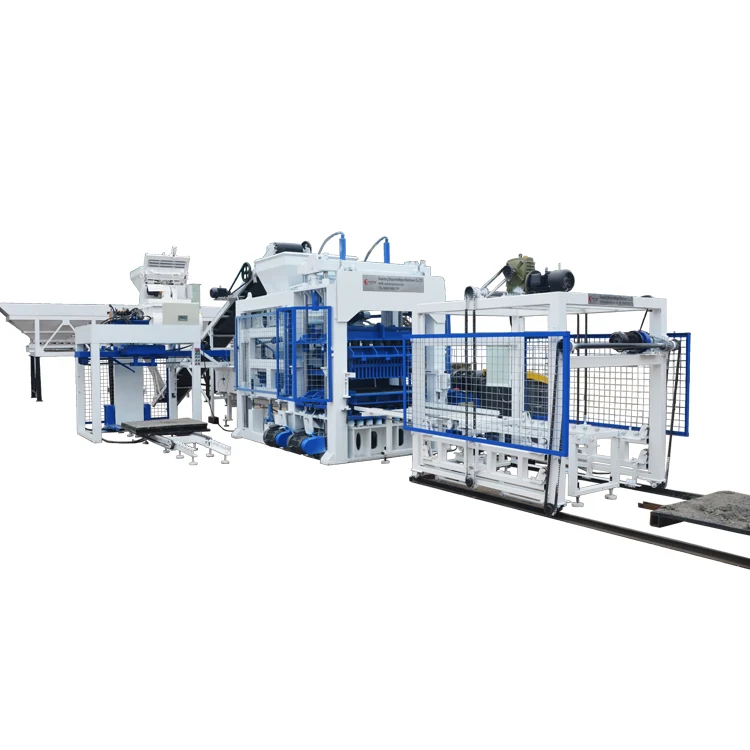
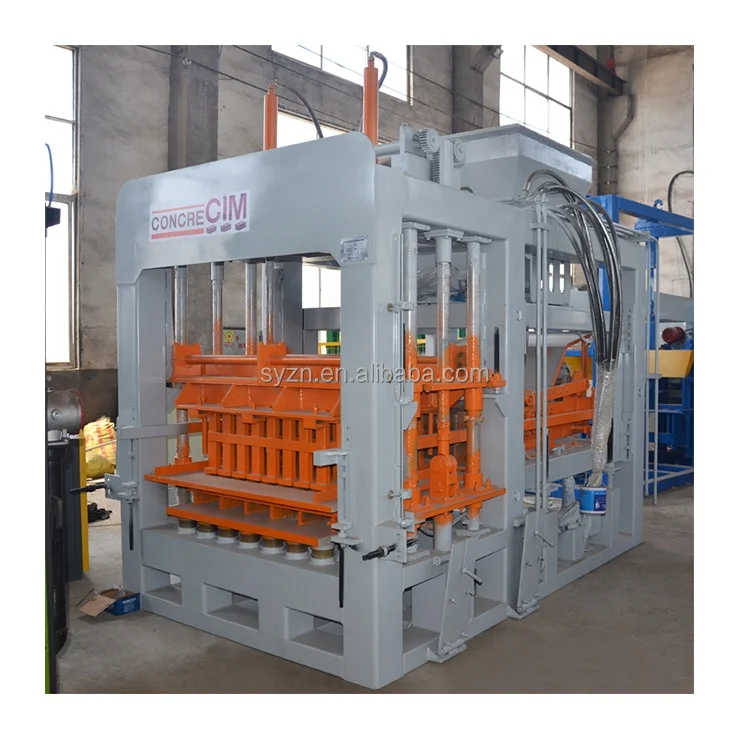 High quality block machine