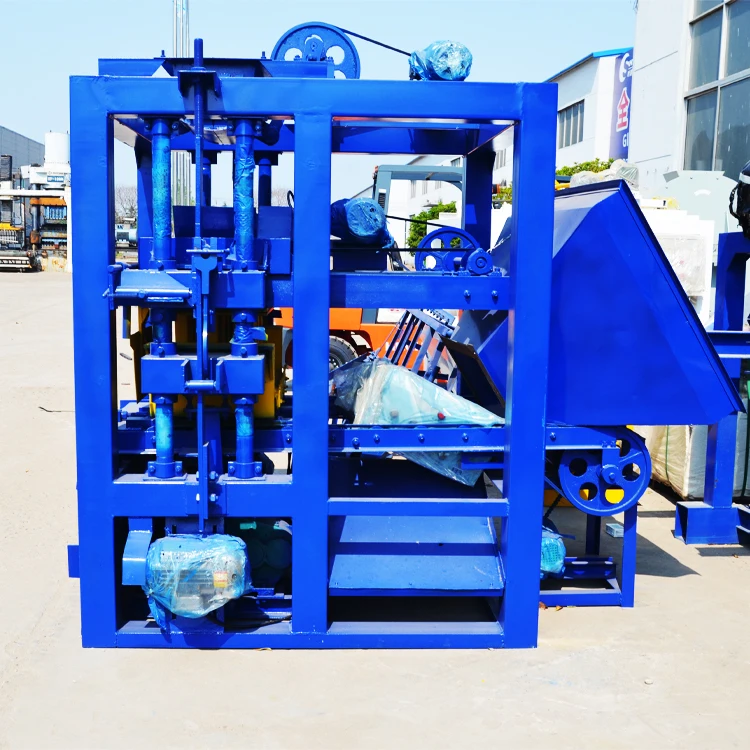
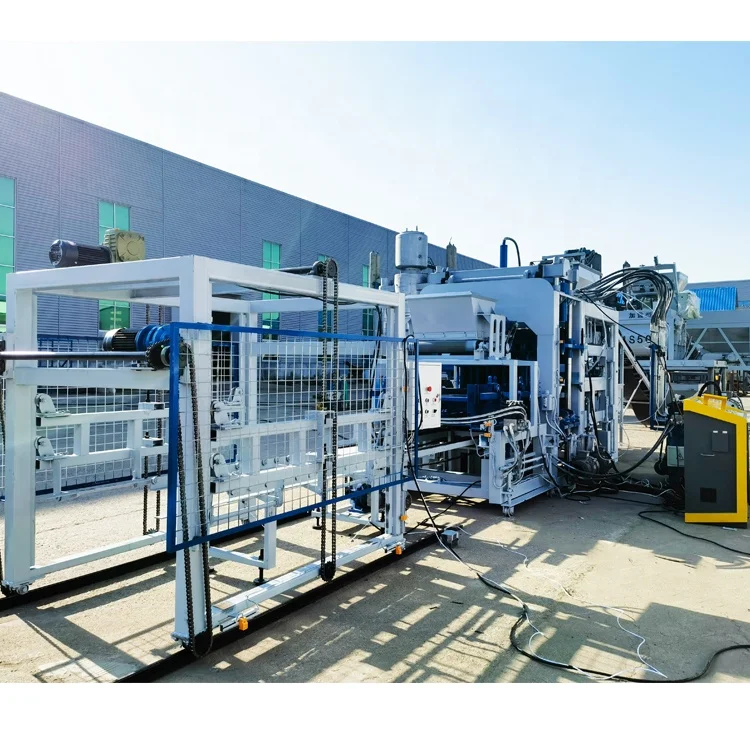
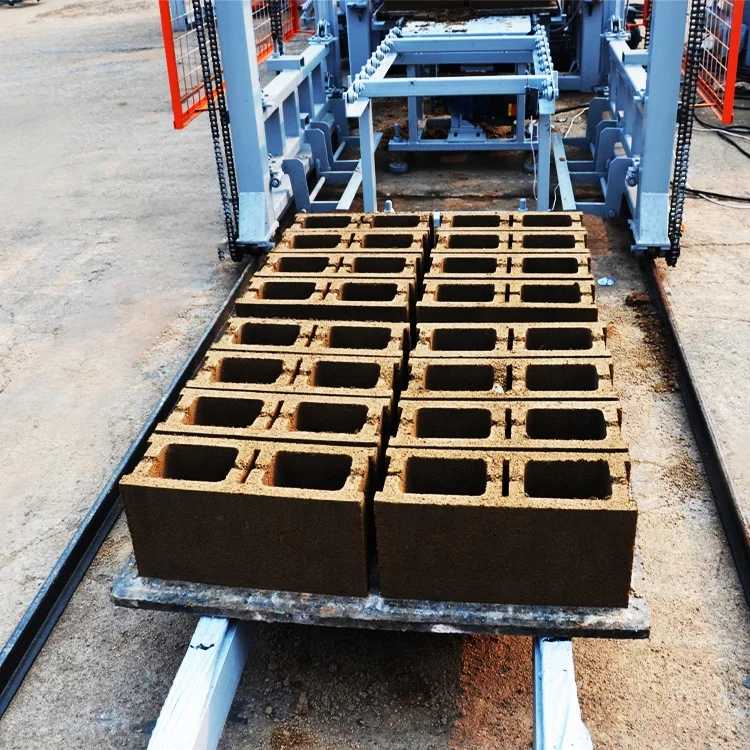
Complete Line Configuration — the QT10-15 is specified as a multi-station production line with pallet feed, press, conveyor and stacking integrated from the start, so capacity figures reflect real throughput rather than a standalone press running in isolation.
Technical Specifications
| Parameter |
Value |
| Model |
QT10-15 |
| Product Type |
Automatic Hydraulic Concrete Block Making Machine |
| Control System |
PLC control cabinet |
| Hydraulic System |
Independent integrated hydraulic station |
| Vibration Mode |
Vertical station mode resonance, automatic FM-AM |
| Mould Change |
Quick replacement mould system |
| Automation Level |
Automatic (pallet feeding, press, stacking line) |
| Cycle Time |
15–20 s (hollow / solid brick), 20–25 s (paver) |
| Output: 400×200×200 mm hollow block |
1,800–2,400 pcs/hour (10 pcs/mould, 15–20 s cycle) |
| Output: 400×150×200 mm hollow block |
2,160–2,880 pcs/hour (12 pcs/mould, 15–20 s cycle) |
| Output: 240×115×53 mm solid brick |
8,928–11,160 pcs/hour (62 pcs/mould, 15–20 s cycle) |
| Output: 200×100×60 mm paving block |
5,184–6,480 pcs/hour (27 pcs/mould, 20–25 s cycle) |
| Output: 225×112.5×60 mm paving block |
4,032–5,040 pcs/hour (24 pcs/mould, 20–25 s cycle) |
| Mould Format Range |
Hollow block, multicellular brick, paving brick, standard brick |
| Line Components |
Pallet feed machine, block making machine, storage hopper, conveyor, hydraulic unit, PLC control cabinet |
| Rated Power |
To be confirmed against buyer site |
| Voltage & Frequency |
To be confirmed against buyer market |
| Pallet Size |
To be confirmed against curing area and forklift |
| Warranty |
1 year for the whole machine (excluding spare parts) |
Application Suitability
| Application |
Material or Output |
| High-output hollow block plant |
Hollow blocks from crushed stone, sand and cement for wall construction |
| Paving block and kerb production |
Interlocking pavers and kerbstones from aggregate and cement for municipal projects |
| Standard solid brick supply |
Solid bricks from local sand, fly ash or stone dust for masonry |
| Multi-format production facility |
Switching between hollow, solid and paver formats on a single QT10-15 line |
What "1,800 Pieces per Hour" Actually Means on a QT10-15 Block Machine
Every capacity figure on this page is tied to a specific block size, mould cavity count and cycle range — no number stands alone.
I spent years on the assembly floor before moving into technical sales, and the most common complaint I hear from buyers who purchased elsewhere is that the quoted output never matched reality. The reason is almost always the same: the capacity was stated for a format the buyer never intended to produce. When a QT10-15 automatic concrete block making machine is rated at 1,800–2,400 pieces per hour, that figure assumes a 400×200×200 mm hollow block with 10 cavities per mould and a 15–20 second cycle. Switch to a 200×100×60 mm paving block and the same machine delivers 5,184–6,480 pieces per hour across 27 cavities at a longer 20–25 second cycle. Without this context, a buyer planning a paver line will find daily output falling well short of expectations [NEED_CITE: common causes of block plant output shortfalls].

Where the QT10-15 Sits in the Shiyue Full Machine Range
The Shiyue range spans mobile egg-laying machines for on-site work, semi-automatic presses for smaller plants, and fully automatic lines for continuous high-volume output. The QT10-15 block machine manufacturer positions this model in the high-capacity automatic tier, configured not as a standalone press but as a multi-station line. Buyers evaluating their first plant or replacing an ageing setup use this tier as the reference point for what a fully integrated line looks like before deciding whether to step down to semi-automatic or scale further.
Understanding Line Integration Around the Press
A block press only produces at its rated cycle time if pallets arrive on schedule, raw material is dosed and ready, and finished blocks are cleared without blocking the station. The QT10-15 line includes a pallet feed machine, storage hopper, conveyor and hydraulic unit working under a single PLC control cabinet. This integration means the automatic concrete block making machine is not left waiting between cycles because a downstream station fell behind — a problem that erodes real daily output on lines assembled from mismatched suppliers [NEED_CITE: importance of station synchronization in block production lines].
Reading the Specifications That Matter Most
Hydraulic pressure and vibration force together determine whether a block leaves the mould at target density. The QT10-15 uses an independent integrated hydraulic station physically separated from the host vibration and dust environment, which protects valve response and seal life over extended shifts. Vibration operates in vertical station mode resonance with automatic FM-AM tuning, meaning the system adjusts frequency and amplitude rather than running a fixed pattern — this matters when the buyer’s local aggregate differs from standard test sand. The quick replacement mould system allows format changes across hollow block, multicellular brick, paving brick and standard brick on one press, though the actual changeover time depends on operator familiarity and must be confirmed during commissioning.
The Hidden Cost of Skipping Configuration Details
Buyers who confirm price before voltage end up with a control cabinet that does not match local supply, delaying commissioning by weeks while transformers or replacement components are sourced. Pallet size chosen without checking the buyer’s existing curing racks and forklift means pallets either do not fit the racks or cannot be moved efficiently, creating a bottleneck the press specification never predicted. When PLC display language is left unspecified, operators struggle through menus in a language they cannot read, increasing the error rate during the critical first production runs [NEED_CITE: voltage and frequency standards by export market].
Why Buyers Source This Tier from Shiyue
Block machinery is our single focus, so the QT10-15 machine, mould, pallet and handling equipment are specified as one matched system rather than assembled from separate suppliers. We configure each line against the buyer’s actual mix design and local aggregate, not a catalogue default — I learned this the hard way when a Middle Eastern client’s volcanic aggregate required parameter adjustments that standard test sand never predicted. Mould design covers the formats the buyer’s market actually sells, with custom drawings available. Automation level is selectable so a plant can start at a baseline and add stacking or cubing later. Installation and commissioning support includes operator training on the specific PLC interface delivered.
Documentation & Verification
- Line layout and capacity calculation stating the block format assumed for each output figure
- Machine specification sheet with rated power, voltage and pallet size confirmed to your site
- Mould drawing and format list matching the block types your market sells
- Voltage, frequency and PLC display language confirmed in writing before production
- Factory test record and CE declaration where applicable with packing photographs before shipment
Installation, Commissioning & Support
- Foundation plan sized to the QT10-15 line footprint and vibration isolation requirements
- Dedicated power circuit matching confirmed voltage and frequency before the machine arrives
- Multi-station line dismantled for container loading with reassembly guided on site
- PLC parameters tuned to your local aggregate and target block format during first runs
- Operator training covering mould change procedure and PLC menu navigation in your language
- Wear parts list and hydraulic seal kit specified for the first replacement cycle
Before You Send an Inquiry
To size the QT10-15 correctly within the full Shiyue range, we need to know which block formats your market demands, the daily output you are targeting per format, and your local raw material type. Please also confirm your site voltage and frequency, the PLC display language your operators require, and whether your existing curing area and forklift dictate a specific pallet size. If you are replacing a current line, share the model and its pain points so we can address them directly in the configuration.
Frequently Asked Questions
Q: How is the 1,800–2,400 pcs/hour figure calculated for the QT10-15?
A: That figure assumes a 400×200×200 mm hollow block produced on a mould with 10 cavities at a 15–20 second cycle time. Different block sizes and cavity counts produce different hourly outputs — for example, a 200×100×60 mm paving block with 27 cavities yields 5,184–6,480 pieces per hour at a 20–25 second cycle. Every capacity figure on this page is tied to a named format.
Q: Where does the QT10-15 sit compared to semi-automatic models in the Shiyue range?
A: The QT10-15 is in the high-capacity automatic tier, configured as a complete multi-station line with PLC control, automatic pallet feeding and stacking integration. Semi-automatic models suit smaller plants with lower investment and reduced footprint but require manual pallet handling. Buyers choose between tiers based on daily output targets, available labour and the automation level their budget supports.
Q: What plant footprint does this automatic line require?
A: The QT10-15 is a multi-station line including pallet feed, press, conveyor and stacking stations, so it requires more floor space than a standalone press. The exact footprint depends on pallet size and curing rack layout, both of which must be confirmed against your site conditions before a layout drawing is issued.
Q: Which electrical and control options must be confirmed before production?
A: Voltage, frequency and PLC display language must all be confirmed in writing before the QT10-15 enters production. These parameters vary by export market, and leaving any of them unspecified can delay commissioning after the line arrives at your site.
Q: How does the line integrate pallet feeding and stacking around the press?
A: The QT10-15 line includes a pallet feed machine delivering pallets on schedule, a conveyor moving finished blocks to the stacking station, and a PLC control cabinet coordinating all stations. This prevents the press from idling between cycles due to upstream or downstream delays, which is the most common cause of actual output falling below quoted capacity.

![QT10-15 Cement Block Machine for Hollow Block | Manufacturer8 + 2 + 9 + 4 + 7 = 30 30 mod 6 = 0 → 句式:[品类词] for [应用或物料] – [站点修饰词] 目标站 shiyueblockmachine.com → 全品类目录类角色 → 池:Manufacturer / Factory Supply / Full Range 30 mod 3 = 0 → Manufacturer Cement Block Machine for Hollow Block – Manufacturer (50) → 刚好50字符 Cement Block Machine for Hollow Block – Manufacturer](https://shiyueblockmachine.com/wp-content/uploads/2026/04/Hb41b33f9751e441c8a35b36846992f0bP.webp)
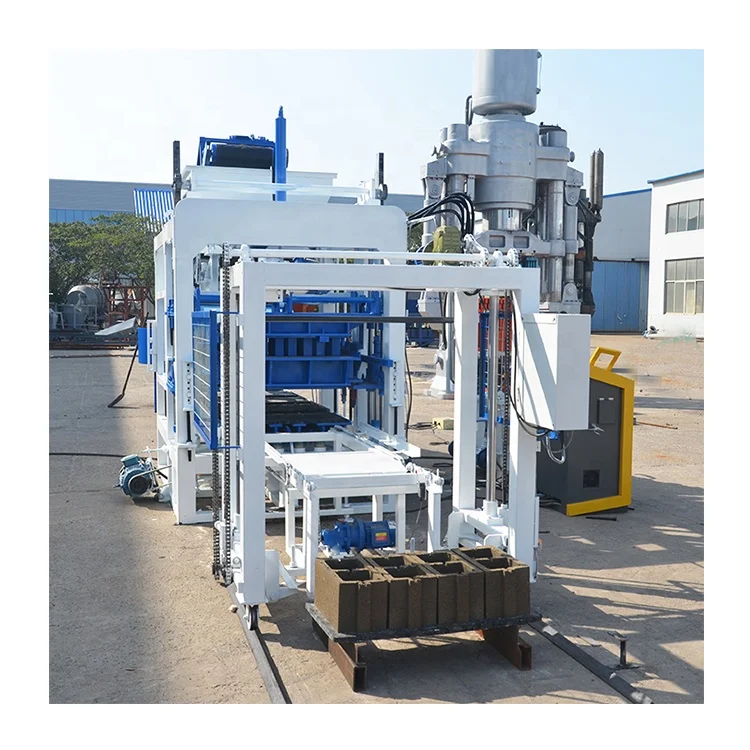 High quality block machine