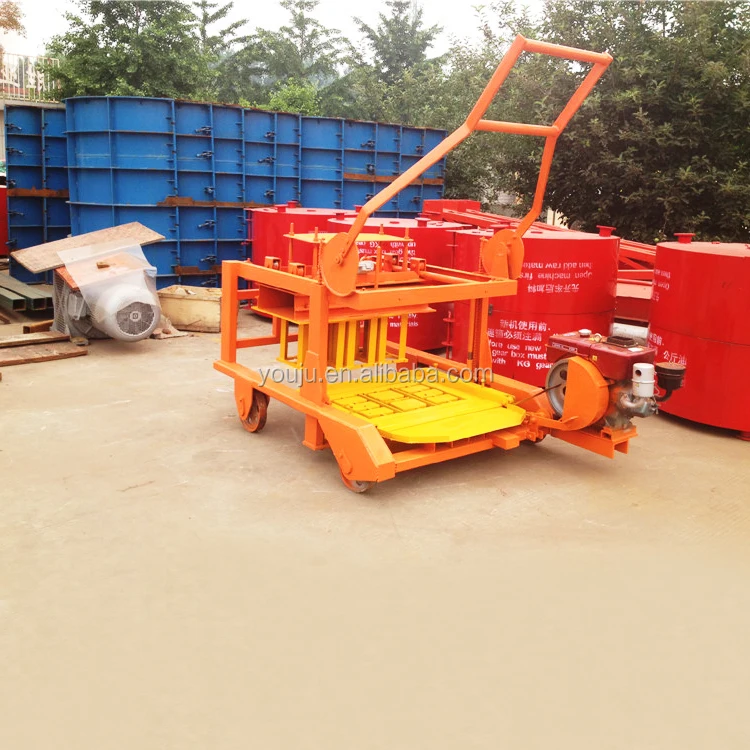
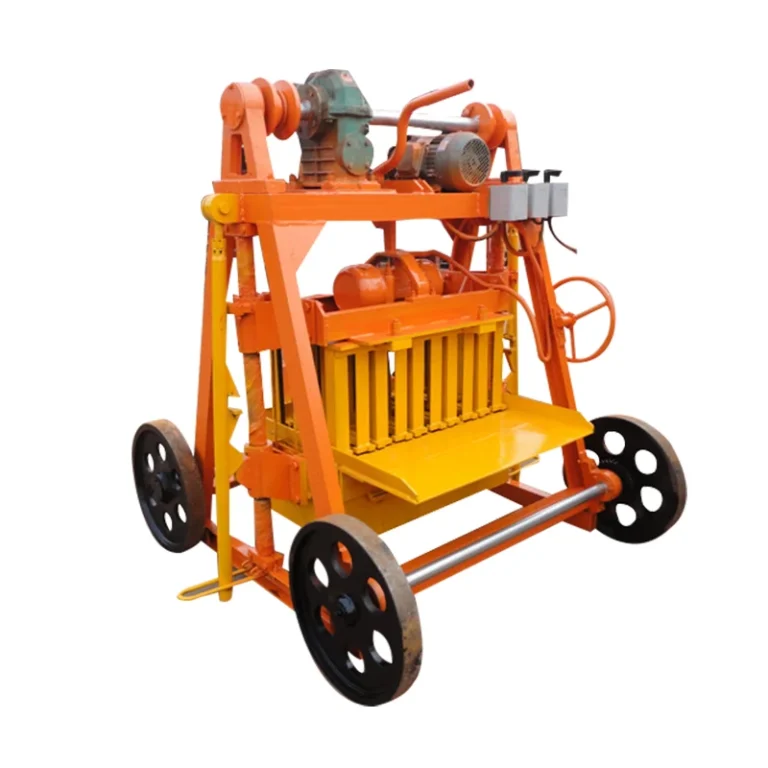
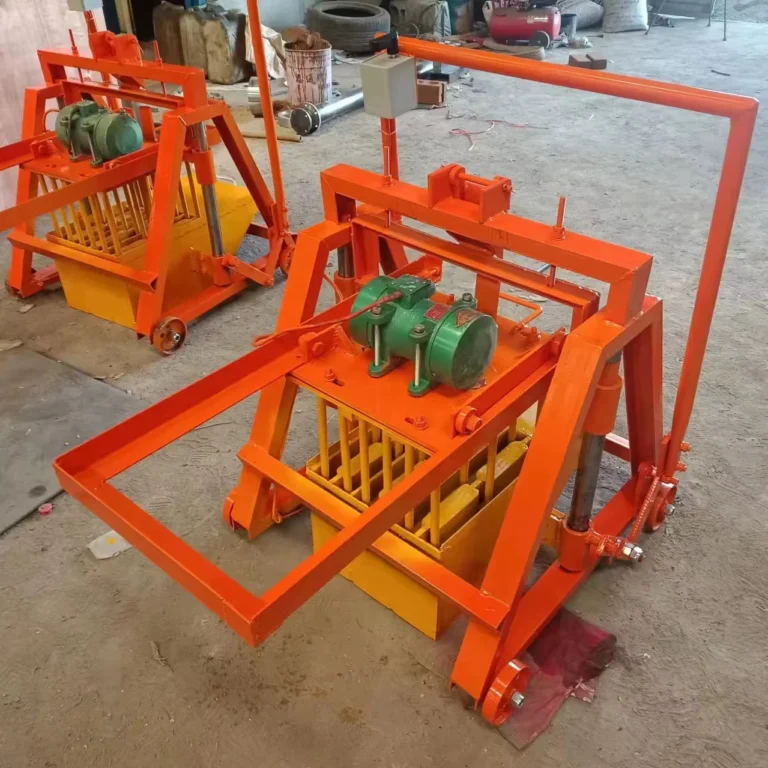
Single-Focus Machinery Line — every QMY4-30 unit ships as a matched system of machine, mould, and hydraulic assist rather than a collection of separate parts, so your on-site output stays consistent from the first block to the last.
Technical Specifications
| Parameter |
Value |
| Model |
QMY4-30 |
| Product Type |
Mobile Hydraulic Block Making Machine |
| Overall Dimensions (L×W×H) |
1300 × 1500 × 1000 mm |
| Net Weight |
950 kg – 1000 kg |
| Total Power |
5.95 kW |
| Vibration Force |
28.6 KN |
| Excitation Frequency |
4500 r/min |
| Molding Cycle |
30 s |
| Output Capacity |
3000 pcs/day (basis not stated in source) |
| Hydraulic Method |
Mold Vibration |
| Control System |
Manual operation with hydraulic transmission |
| Mobility |
Egg-laying type (move forward, move back, corner) |
| Mould Format |
Customizable to buyer design |
| Automation Level |
Manual with hydraulic-assisted demoulding |
| Voltage & Frequency |
Configurable to destination (basis to be confirmed) |
| Raw Material Compatibility |
Concrete, sand, cement, fly ash, lime, gypsum, stone dust, construction waste, slag, mine tailings, river sand, coal gangue |
Application Suitability
| Application |
Material or Output |
| On-site hollow block production |
Crushed stone, cement, and sand mixed at the building site |
| Remote project block manufacturing |
Fly ash, lime, and local aggregate in mountainous or desert areas |
| Small-scale contractor brick supply |
Concrete and stone dust for solid block runs |
| Housing development local production |
Construction waste and recycled slag for non-load-bearing formats |
| Rural and suburban block supply |
River sand and cement for standard walling blocks |
What "3000 Pieces per Day" Actually Means on the Ground
Capacity numbers only matter when tied to a specific block format.
Suppliers often quote a daily figure without revealing which block size it assumes. A mobile block machine manufacturer may list output based on small solid pavers, while the buyer plans to run 200 mm hollow blocks — a format that demands more material per cycle and a longer press time. The QMY4-30 is a mobile egg-laying block machine for sale with a 30-second molding cycle, but the real blocks-per-day count changes with every format swap. Before you commit, ask for a written capacity table that breaks down hourly and daily output by each block type you intend to produce [NEED_CITE: block format cycle time comparison standards]. Without that table, the headline number is little more than a guess.

Placing the QMY4-30 on the Full Machine Range
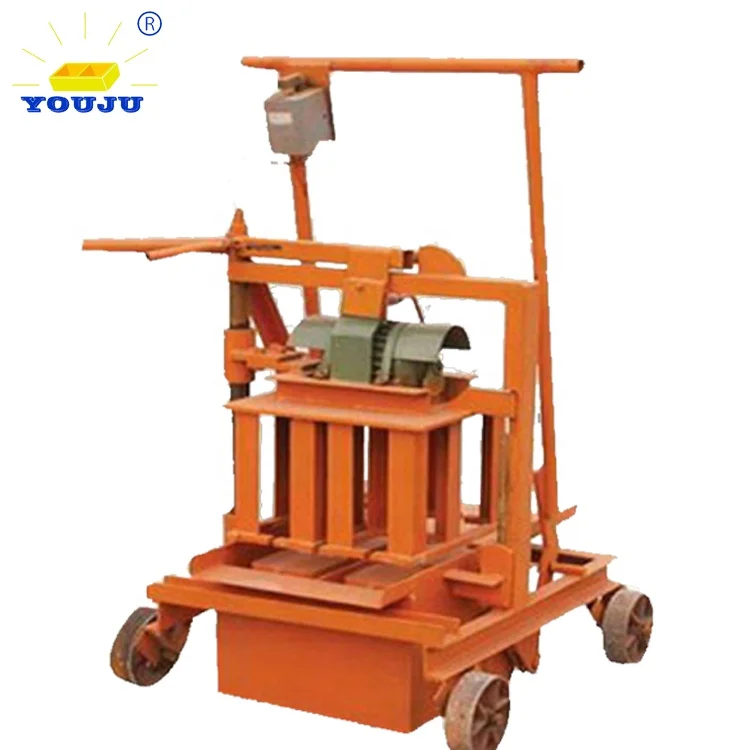
The Shiyue lineup runs from small mobile units like this one, through semi-automatic stationary plants, up to fully automatic lines with stacking and cubing. The QMY4-30 occupies the entry tier, designed for buyers who want to produce blocks on their own site without pouring foundations for a fixed factory or investing in a pallet return system. Footprint is minimal — the machine rolls forward after each cycle, leaving fresh blocks on the ground to cure in place.
From Mobile Start to Stationary Scale
A buyer who begins with an egg-laying machine today may need higher volume tomorrow. The range is structured so that mould formats and raw material knowledge carry over when you move to a semi-automatic or automatic tier. This mobile block machine manufacturer keeps mould mounting patterns and hydraulic fittings consistent across tiers where possible, reducing the learning curve when capacity needs outgrow a single mobile unit [NEED_CITE: machinery upgrade path compatibility practices].
Reading the Vibration and Pressure Numbers
Vibration force and hydraulic pressure work together to compact the mix inside the mould box. The QMY4-30 delivers 28.6 KN of excitation force at 4500 r/min through mold vibration, meaning the mould itself shakes rather than a separate table. For lightweight mixes rich in fly ash or stone dust, this direct mold vibration consolidates particles without over-segregating fine aggregate. The 5.95 kW total power keeps the machine within reach of a standard portable generator, a practical requirement for remote sites where grid power is unreliable. A 30-second molding cycle allows an operator to maintain a steady rhythm without rushing the demoulding step.
The Cost of Skipping the Voltage Conversation
I once shipped a mobile block machine to West Africa without confirming the local supply was 415 V / 50 Hz in a three-phase delta configuration. The site had a star-connected transformer delivering 220 V line-to-line. The motor hummed, the hydraulic pump barely moved, and the machine sat idle for three weeks while a replacement transformer was sourced locally. Since then, every QMY4-30 dispatch sheet includes a signed voltage and frequency confirmation before the crate is closed. Skipping that step costs you time, demurrage, and credibility with your own project manager [NEED_CITE: international voltage and frequency standards by region].
Why Buyers Choose This Factory for Mobile Units
Block machinery is the only product line here, so the QMY4-30 is not a side item borrowed from a general equipment catalog. Each machine, mould, and hydraulic circuit is specified as a matched set rather than sourced from separate vendors. Configuration starts from the buyer’s actual mix design and target block format, not a default table. Custom moulds can be drawn and built in-house to match the sizes your local market demands. Automation level is selectable, so a buyer who begins with manual operation can transition to a semi-automatic line later without discarding everything learned on the QMY4-30.
Documentation & Verification
- Line layout and capacity table listing output per block format for the QMY4-30
- Machine specification sheet confirming voltage, frequency, and control language
- Mould drawing and format list matching buyer’s local block sizes
- Factory test record showing cycle time and block dimensions before dispatch
- Packing photographs and customs documentation support for destination port
Installation, Commissioning & Support
- Level concrete floor with minimum 150 mm thickness required for stable egg-laying operation
- Three-phase power supply matching confirmed voltage and frequency, with dedicated circuit breaker for the 5.95 kW load
- Machine shipped partially assembled; hydraulic hoses and vibration motor connected on site within one shift
- First-run parameter setting covers vibration duration and hydraulic pressure to suit buyer’s mix
- Operator training includes mould change procedure and daily greasing points
- Wear parts list and mould inventory provided at dispatch for advance ordering
Sending the Right Details Upfront
To get a configuration that fits your site, share the block formats you plan to sell, the raw materials available locally, and your target daily volume. Include the three-phase voltage and frequency at your location so the motor and control panel are wound correctly. If you already own a generator or forklift, mention its rated capacity — that shapes pallet and handling recommendations.
Frequently Asked Questions
Q: What block format is the 3000 pcs/day figure based on?
A: The source does not state which block size was assumed. Output changes with every format — hollow blocks consume more material per cycle than solid pavers, reducing daily count. Request a capacity table that lists pieces per hour for each specific block size you intend to produce before placing an order.
Q: How does the QMY4-30 compare to semi-automatic and automatic tiers?
A: The QMY4-30 is a mobile entry-tier unit requiring no fixed plant or pallet return. Semi-automatic lines add a stationary press with pallet feeding for higher volume, while automatic tiers include stacking and cubing. Investment, footprint, and daily output rise with each step.
Q: Can I upgrade to a stationary automatic line later?
A: Yes. Mould formats, mix design knowledge, and curing practices gained on the QMY4-30 carry over to larger stationary lines. The manufacturer keeps mould mounting patterns and hydraulic standards consistent across tiers where possible, easing the transition.
Q: What site requirements does an egg-laying machine need?
A: You need a level, cured concrete floor, a three-phase power supply matching the machine’s confirmed voltage, and a nearby curing area where blocks can sit undisturbed. Ground must be strong enough to support the machine weight and fresh blocks without settling.

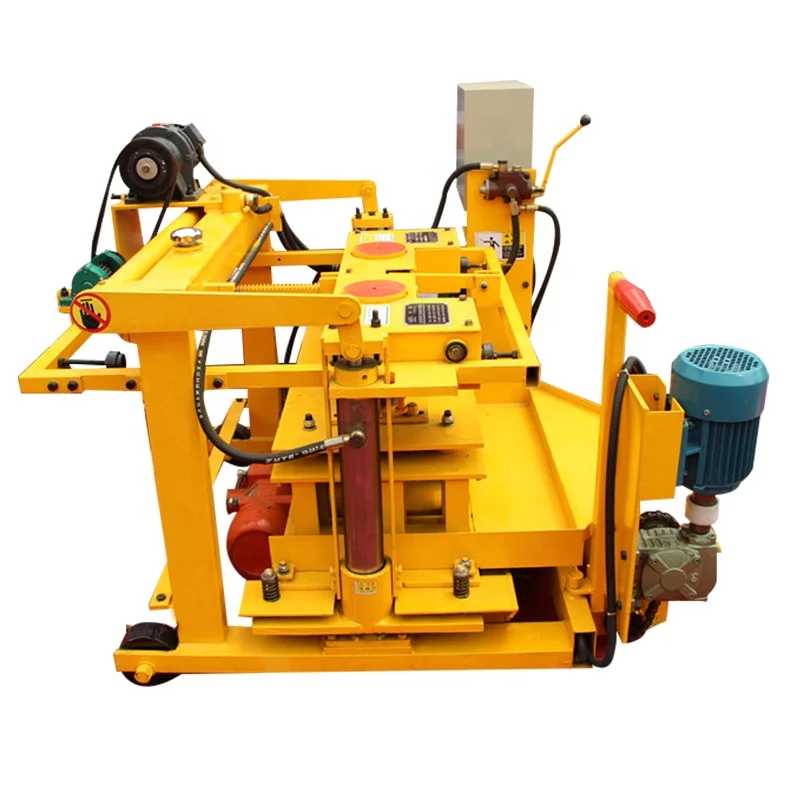
 Mobile block machine