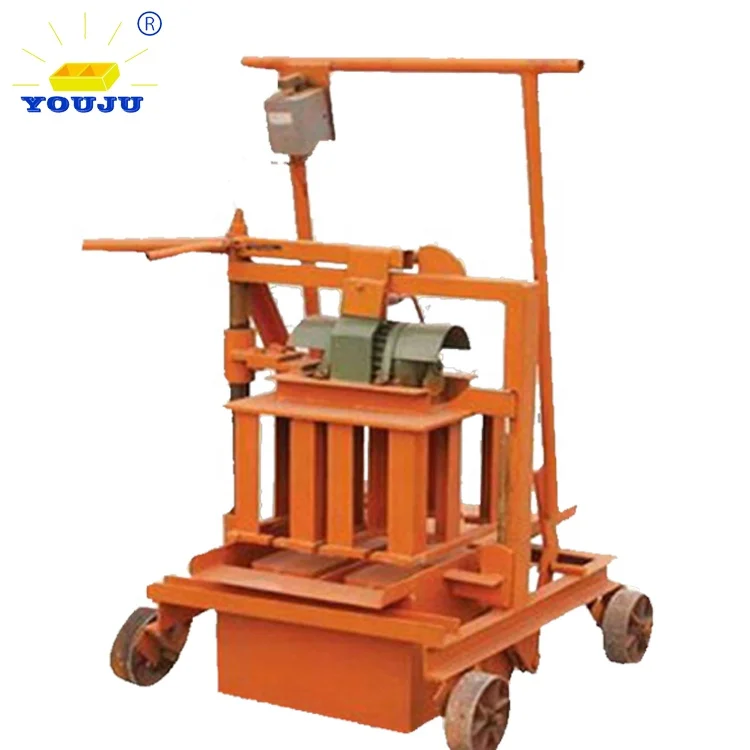
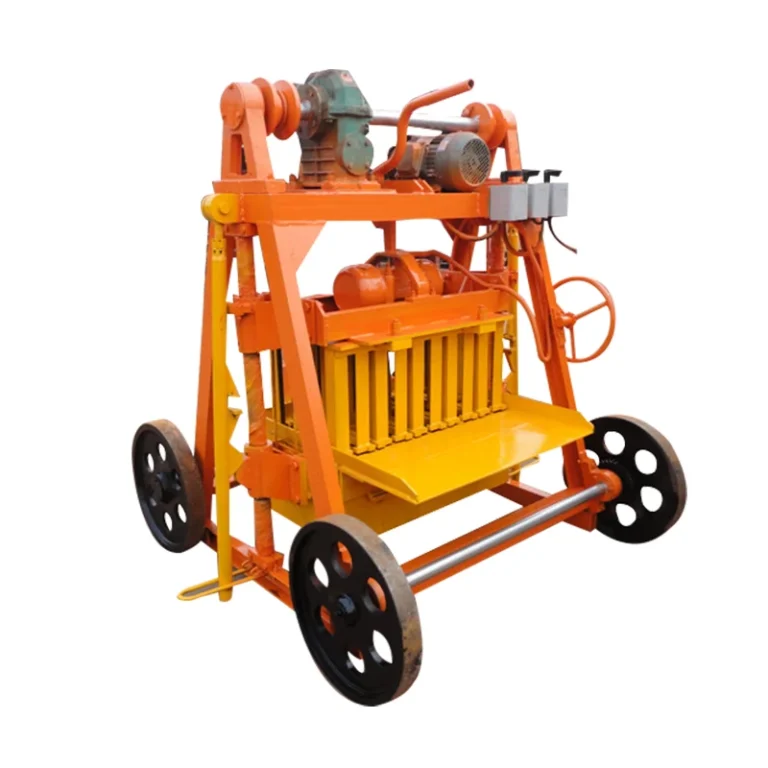
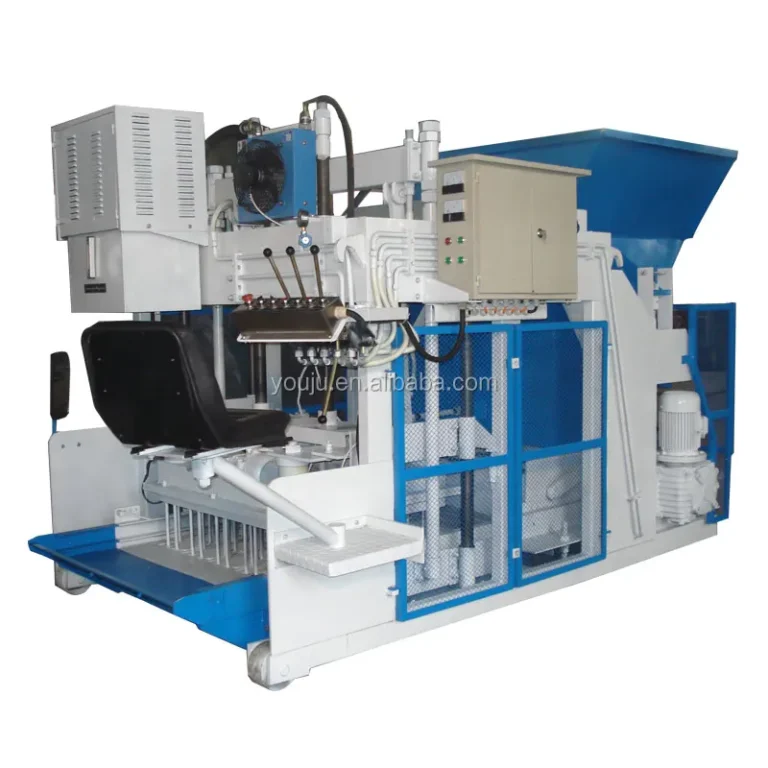
Matched System Focus — every QMR4-45 unit ships with its mould, power source, and output calculation specified against the buyer’s actual block format rather than a generic catalogue rating.
Technical Specifications
| Parameter |
Value |
| Model |
QMR4-45 |
| Product Type |
Mobile Egg-Laying Block Making Machine |
| Overall Dimensions (L×W×H) |
2420×1320×1650 mm |
| Net Weight |
810 kg |
| Moulding Cycle |
40–45 s |
| Pallet Requirement |
No pallet required (egg-laying design) |
| Rated Power (Electric) |
6 kW |
| Diesel Engine Option |
6 kW or 6–8 HP |
| Voltage Options |
220 V / 380 V / custom to local supply |
| Output (400×200×200 mm hollow, 4 pcs/mould) |
3000 pcs per 8-hour shift |
| Output (400×150×200 mm hollow, 5 pcs/mould) |
3500 pcs per 8-hour shift |
| Output (400×120×200 mm hollow, 6 pcs/mould) |
4500 pcs per 8-hour shift |
| Power Source Selection |
Electric motor or diesel engine with hydraulic supply |
| Mould Change |
Manual swap for alternate concrete product formats |
| Assembly State |
Fully assembled mobile unit on arrival |
Application Suitability
| Application Scenario |
Material and Output Context |
| On-site housing project block production |
Hollow blocks from local crushed stone and cement, laid directly on prepared ground |
| Remote job sites without stable grid power |
Diesel-driven hydraulic system running independently of local electrical infrastructure |
| First block plant for entrepreneurs |
Small-footprint hollow and solid block runs with minimal capital outlay and no pallet inventory |
| Supplemental production for established yards |
Additional formats or overflow capacity on an existing concrete slab |
What "3000 Pieces per Day" Leaves Out About the QMR4-45
Daily output figures only mean something when the block format behind them is named.
Most mobile block machine buyers receive a single headline capacity number, then discover on site that the real output depends entirely on the mould loaded and the mix being fed. A QMR4-45 block machine for sale might be quoted at 3000 pieces, but that figure holds only when the 400×200×200 mm hollow block mould is running with four cavities per cycle [NEED_CITE: block output verification standards by format and mould cavity count]. Switch to a thinner wall format with six cavities and the same cycle time produces a different daily total altogether. Without a capacity sheet tied to the buyer’s specific format, the machine leaves the factory carrying expectations it cannot meet.

Placing the QMR4-45 in the Mobile Block Machine Range
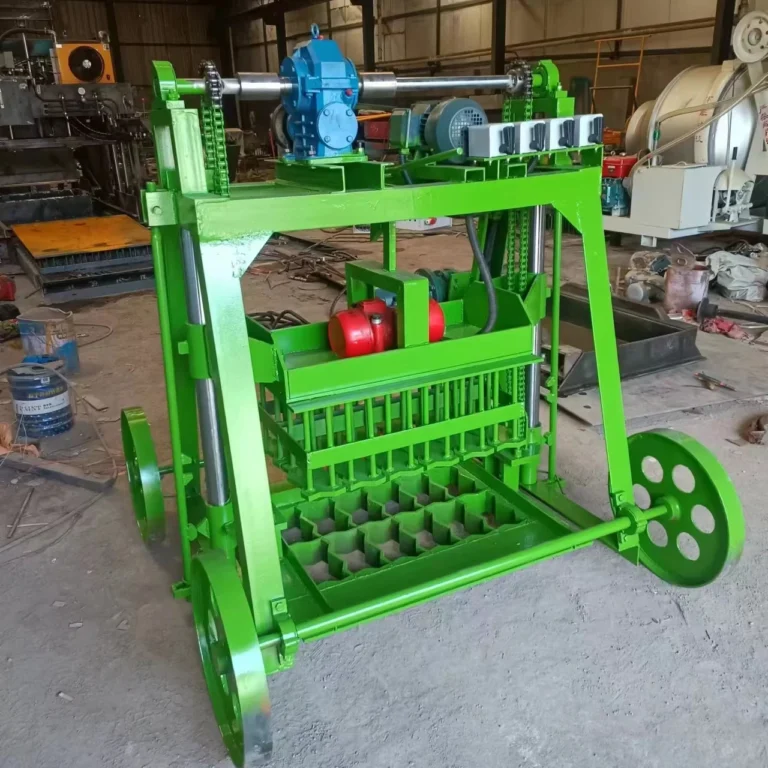
The QMR4-45 sits at the entry point of our mobile egg-laying block machine manufacturer range, designed for buyers who need block production without investing in a fixed plant or pallet system. Its egg-laying action deposits each block directly onto a flat concrete surface, which eliminates pallet purchasing, pallet storage, and pallet handling labour entirely. For a contractor setting up on a new housing development or an entrepreneur launching a first block yard, this model represents the lowest threshold between manual block making and mechanised production.
Where the Diesel Option Changes the Decision
Sites across rural and semi-rural areas frequently lack the stable three-phase supply that electric block machines require. The QMR4-45 mobile egg-laying block machine addresses this by offering a 6–8 HP diesel engine that drives the hydraulic pressure system independently [NEED_CITE: diesel-driven hydraulic block press specifications for off-grid production]. Buyers working in regions where grid voltage fluctuates or where generator fuel is more accessible than reliable electricity can specify the diesel option at the inquiry stage, ensuring the machine arrives configured for the actual power conditions on site rather than requiring a costly retrofit after delivery.
Reading the Specs That Shape Daily Output
The 40–45 second moulding cycle governs how many blocks the QMR4-45 produces per shift, but the cavity count in each mould determines the multiplier. A 400×200×200 mm hollow block mould carries four cavities, while a 400×120×200 mm version carries six — meaning the same cycle time yields materially different daily totals. The 6 kW rated power covers the vibration motor and hydraulic pump together; when the diesel engine option is selected, it must supply adequate hydraulic pressure to maintain consistent compaction across every cycle. The 810 kg net weight and compact footprint allow the machine to be relocated within a job site as the production area shifts, which matters on housing projects where the block yard follows the building line.
The Cost of Overlooking Format and Power Confirmation
When a buyer confirms neither the target block format nor the local voltage before the machine enters production, two problems converge at commissioning. The capacity the buyer planned a project around was calculated on a mould that was never ordered, and the electrical system does not match the site supply [NEED_CITE: voltage mismatch consequences in exported industrial machinery]. Resolving either issue on site means idle weeks, not idle hours — the machine sits while a replacement mould is manufactured and shipped, or while a transformer is sourced locally. These are entirely preventable delays that stem from skipping two confirmation steps during the quotation exchange.
Why Source the QMR4-45 Through This Range
Our block machinery focus means the QMR4-45 mobile egg-laying block machine is specified as part of a matched system: the mould, power source, and capacity calculation all reference the buyer’s stated format and local conditions rather than a default catalogue entry. Configuration is set against the actual mix design and aggregate the buyer will use, which directly affects block density and strength on this class of machine. Mould design covers the formats the buyer’s market sells, with custom drawings available when standard options do not match local building codes. The automation level is selectable, so a buyer can start with this mobile unit and step up to a semi-automatic line as volume grows. Installation support includes operator training on the specific controls and mould change procedure for the QMR4-45.
Documentation & Verification
- Line layout and capacity calculation sheet stating the exact block format assumed for QMR4-45 daily output
- Mould drawing and format list confirming cavity count and block dimensions before production begins
- Voltage and control language confirmation form signed off prior to factory assembly
- Factory test record showing cycle time and block sample output on the specified mould
- Packing photographs and customs documentation support for container loading
Installation, Commissioning & Support
- Flat concrete slab preparation to manufacturer flatness tolerance before the 2420×1320×1650 mm unit is positioned
- Dedicated circuit matching confirmed 220 V or 380 V supply, or diesel fuel logistics for off-grid hydraulic operation
- Fully assembled mobile unit arrives ready for first-cycle commissioning without on-site mechanical assembly
- Mould change procedure trained on site so operators can swap formats within a practical timeframe
- Wear parts list supplied at delivery so the first replacement order can be placed before stock runs out
What to Include in Your Inquiry
To receive a QMR4-45 configuration that matches your actual production conditions, share the block formats your market requires and the daily volume you plan to run on each format. Specify your local voltage and frequency, and confirm whether grid power is stable enough for the electric motor or whether the diesel engine option is necessary. If you have a prepared concrete surface already on site, provide its dimensions so we can confirm the egg-laying travel path.
Frequently Asked Questions
Q: How is the QMR4-45 daily output verified, and which block format is each figure based on?
A: Each output figure in our specifications is tied to a specific mould and block dimension. The 3000-piece figure assumes a 400×200×200 mm hollow block with four cavities per mould over an eight-hour shift. Switching to a different format changes both cavity count and daily total, which is why we issue a capacity calculation sheet with every quotation.
Q: Where does the QMR4-45 sit in the full block machine range, and when should a buyer step up?
A: This model occupies the entry tier of our mobile egg-laying block machine manufacturer range, suited to low-investment startups and on-site contractor production. When daily volume targets exceed what a single mobile unit can sustain, or when pallet-based curing becomes necessary for block quality, stepping up to a semi-automatic stationary model is the typical next stage.
Q: Do I need a prepared concrete floor to run this egg-laying machine?
A: Yes. The QMR4-45 lays blocks directly onto a flat concrete surface, so the ground must be level and smooth enough to support fresh blocks without deformation. A rough or uneven surface will cause blocks to crack or lean during the curing period, affecting both dimensional accuracy and structural integrity.
Q: Voltage, frequency, and diesel engine options — how do I confirm the right setup for my country?
A: During the quotation stage, we collect your local voltage and frequency along with power stability information. If your site has reliable three-phase supply, the 6 kW electric motor is the standard fit. Where grid power is absent or unstable, we configure the 6–8 HP diesel engine option to drive the hydraulic system independently.

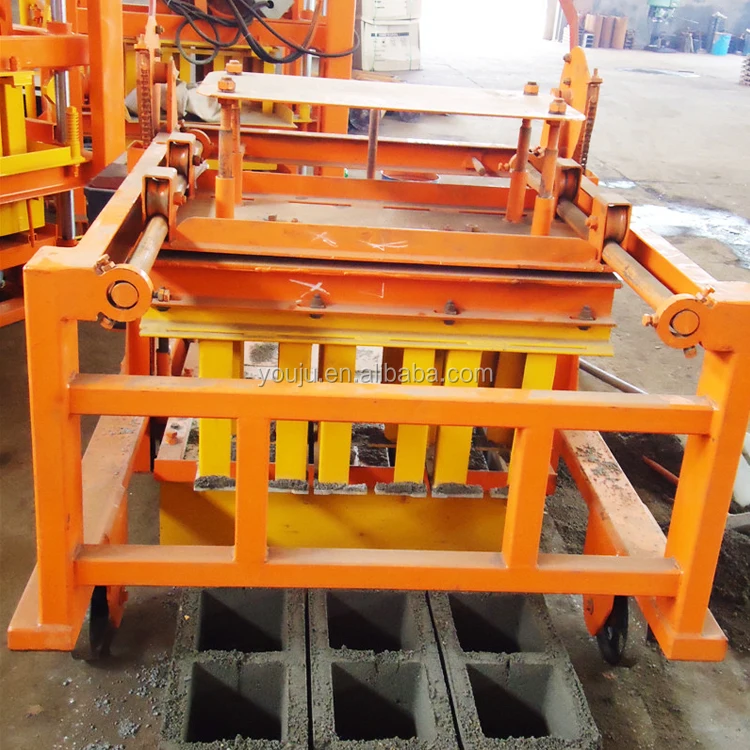
 Mobile block machine