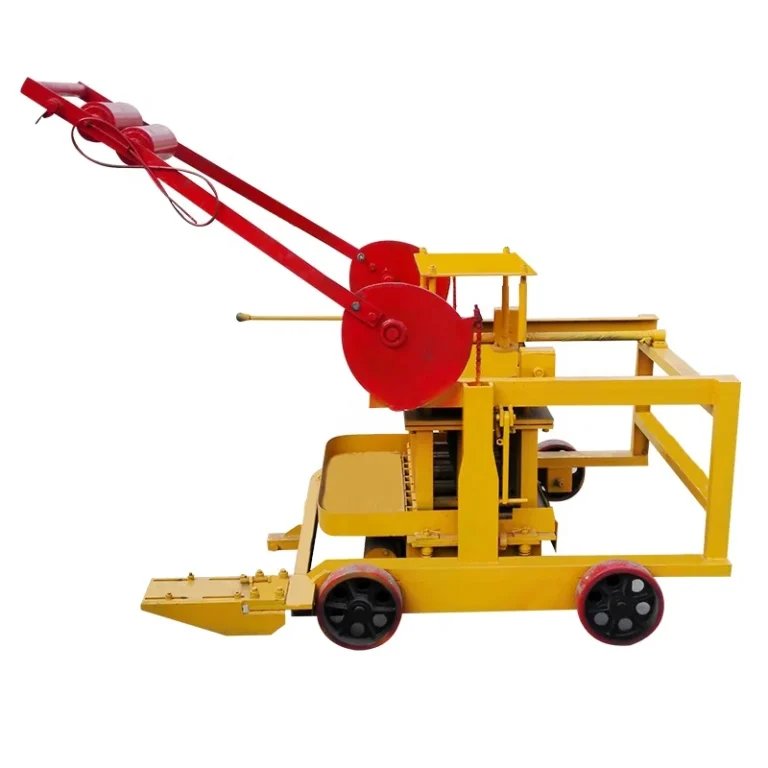
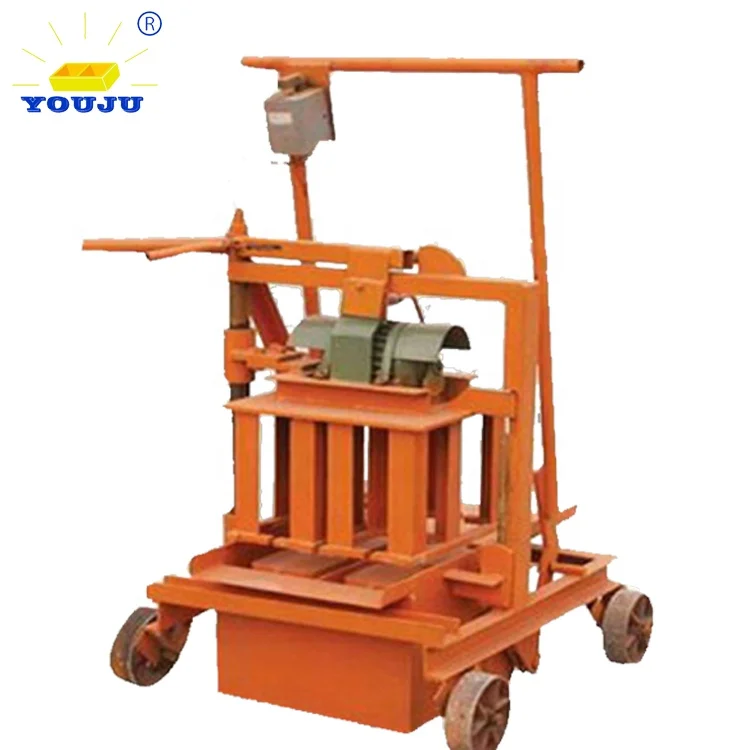
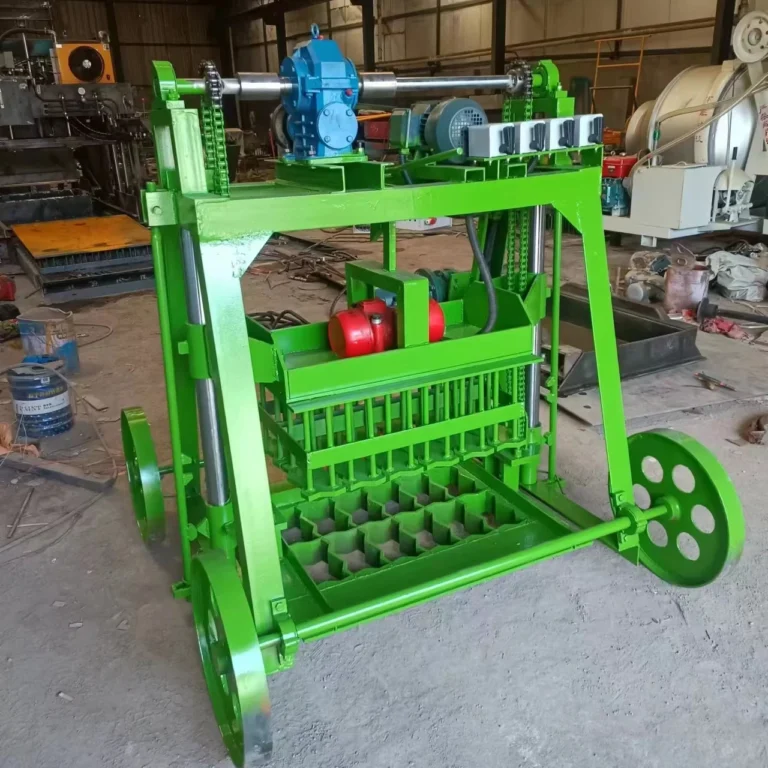
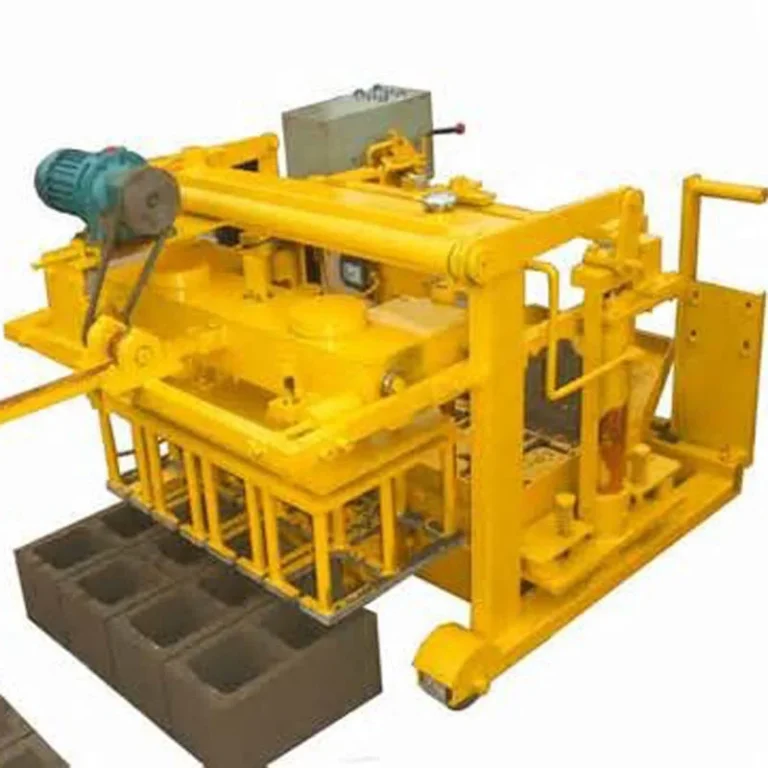
Matched System Approach — the QMR4-45 mobile egg-laying block machine is specified with diesel or electric drive, mould formats matched to your local block market, and output stated per format rather than as a single misleading cycle figure.
Technical Specifications
| Parameter |
Value |
| Model |
QMR4-45 |
| Product Type |
Mobile Egg-Laying Concrete Block Making Machine |
| Overall Dimensions (L×W×H) |
2420×1320×1650 mm |
| Net Weight |
810 kg |
| Rated Power |
6 kW |
| Diesel Engine Option |
6 kW or 6–8 HP |
| Voltage & Frequency |
220V / 380V or customized to client local voltage (frequency to be confirmed) |
| Moulding Cycle |
40–45 s |
| Pallet Requirement |
No pallet required (egg-laying type) |
| Productivity (400×200×200 mm hollow block) |
3000 pcs/day (4 pcs/mould, 8-hour shift) |
| Productivity (400×150×200 mm hollow block) |
3500 pcs/day (5 pcs/mould, 8-hour shift) |
| Productivity (400×120×200 mm hollow block) |
4500 pcs/day (6 pcs/mould, 8-hour shift) |
| Mould Formats |
Hollow blocks in multiple widths; other formats available via mould change (confirm with supplier) |
| Automation Level |
Manual / semi-automatic operation |
| Assembly State |
Fully assembled, mobile unit |
| Stacking Method |
Manual (blocks laid directly on ground) |
| Warranty |
One year for the whole machine |
Application Suitability
| Application |
Material or Output |
| On-site building projects |
Hollow blocks produced directly on the construction ground using local aggregate, sand and cement |
| Remote construction sites with no grid power |
Diesel-powered hollow block production using crushed stone and cement mix |
| Small-scale block yard start-ups |
Multiple hollow block widths from a single machine with mould change |
| Housing and development contractors |
Local production of 400×200×200 mm, 400×150×200 mm and 400×120×200 mm hollow blocks |
What "3000 Blocks per Day" Actually Means on Your Site
Daily output only holds true when the block format, mix design and shift length match the assumptions behind the figure.
Many mobile block machine quotations list a single headline capacity without stating which block size it refers to. A buyer expecting 3000 hollow blocks per day may receive a machine rated for a smaller format, resulting in actual throughput that falls noticeably short once production begins on the intended size. The QMR4-45 mobile egg-laying block machine for sale lists output separately for each confirmed hollow block width, so the number you plan against is the number tied to your actual product. This avoids the common situation where a machine arrives and the real daily count forces a revision of the project timeline [NEED_CITE: typical capacity misalignment complaints in mobile block machine procurement].

Diesel Drive for Sites Where the Grid Cannot Reach
Construction sites in developing regions often lack reliable three-phase power, and bringing in a generator large enough for a fixed block plant adds cost and logistics complexity. The QMR4-45 mobile egg-laying block machine for sale offers a 6–8 HP diesel engine option that allows hollow block production entirely independent of grid electricity. The machine is delivered fully assembled and can be moved across the site as the building footprint expands, keeping block output close to where the masonry crew is working.
Egg-Laying Design Eliminates the Pallet Problem
Pallets represent a hidden capital line in any block plant: they must be purchased in volume, stored in the curing area, collected after demoulding and cycled back to the press. The no-pallet egg-laying configuration removes this entire loop. Blocks are formed directly on the compacted ground surface, which means start-up investment stays limited to the machine itself and the raw materials. For contractors working to a project deadline, this also removes the waiting period that pallet procurement and curing-area layout typically impose before first production [NEED_CITE: pallet investment as a percentage of total block plant start-up cost].
Reading the Specifications That Matter in the Field
The 40–45 second moulding cycle governs how fast the press completes one press-and-release sequence, but actual hourly throughput depends on the operator’s rhythm in repositioning the machine between cycles and the time required to feed the hopper. At 810 kg net weight, the unit is heavy enough to resist walking during vibration yet light enough to be repositioned by two operators or a small loader. The 6 kW rated power applies to the electric motor configuration; when the diesel engine is specified, fuel consumption and engine maintenance replace electrical load as the operating cost variable. Voltage and frequency must be confirmed against the buyer’s local supply before the motor is wound, because a 380V motor shipped to a 220V site will not start without a transformer that may not be locally available [NEED_CITE: voltage and frequency standards by export market].
The Cost of Skipping the Material Conversation Before Order
I spent years assembling block machines in Shandong workshops before moving into export. One order that stayed with me involved a mobile egg-laying machine shipped to an African buyer who used laterite soil mixed with crushed gravel. We had tested with standard river sand, and the vibration force we set was wrong for that heavier, stickier mix. The blocks arrived at site and crumbled under handling. Since then, I never sign off on production without seeing the buyer’s actual aggregate photo and a sample mix ratio. The vibration setting that produces a solid block with river sand will under-compact a laterite mix, and over-compact a lightweight aggregate blend, producing blocks that fail the drop test on arrival [NEED_CITE: effect of aggregate type on vibration force requirements in mobile block machines].
Why This Source Works for Mobile Block Buyers
Block machinery is the single focus here, which means the machine, mould and handling accessories are specified as a matched system rather than sourced from separate suppliers and bolted together. Configuration is set against the buyer’s actual mix design and local aggregate, not pulled from a catalogue default. Mould design covers the hollow block formats the buyer’s market sells, with custom drawings accepted for non-standard dimensions. The automation level is selectable, so a buyer starting with the QMR4-45 manual operation can plan an upgrade path without replacing the entire press. Installation and commissioning support includes operator training at site, and the wear parts and mould list is provided before shipment so replacements can be sourced when the first change is due [NEED_CITE: CE machinery directive requirements for mobile block making equipment].
Documentation & Verification
- Line layout stating block format assumed for each output figure
- Mould drawing and format list matched to your local market dimensions
- Voltage, frequency and motor specification confirmed in writing before production
- Factory test record with your target mix ratio and block size
- Wear parts and mould list for planning first replacements
- Packing photographs reviewed before container loading
Installation, Commissioning & Support
- Fully assembled delivery means the 2420×1320×1650 mm unit is operational after ground leveling
- Diesel or electric drive confirmed before build to match site power conditions
- 6 kW electrical circuit or diesel fuel supply arranged before commissioning day
- Operator training covers hopper feed rhythm and machine repositioning sequence
- Mould change procedure trained on-site using your confirmed block formats
- Wear parts list supplied with recommended replacement intervals
What to Include in Your Inquiry
To size the QMR4-45 correctly for your project, share the hollow block dimensions your market requires, the local aggregate type and a photo of your raw material stockpile, and whether your site has grid power available or will run entirely on diesel. If you have existing curing space or ground conditions that affect block laying, include those details so the mould and cycle configuration can be confirmed before production starts.
Frequently Asked Questions
Q: How is the daily output calculated and which block format does each figure assume?
A: Each output figure states the block size, number of cavities per mould and shift length. For example, 3000 pcs/day assumes 400×200×200 mm hollow blocks at 4 pcs per mould over an 8-hour shift with a 40–45 second cycle. A different block width changes the cavity count and therefore the daily total, which is why every confirmed format carries its own stated output.
Q: Can the machine run entirely on diesel if my site has no reliable electricity?
A: Yes. The QMR4-45 is available with a 6–8 HP diesel engine that replaces the electric motor entirely. This configuration is suited to remote construction sites where grid power is absent or unreliable, and it removes the need for a separate generator sized for the machine’s electrical load.
Q: What block formats and mould options are available, and can I order custom moulds?
A: Confirmed hollow block formats include 400×200×200 mm, 400×150×200 mm and 400×120×200 mm. Moulds for other formats are available, and custom mould design is accepted against buyer-provided drawings. The mould drawing and format list are supplied for verification before production begins.
Q: What voltage and frequency options are available, and how is this confirmed?
A: The electric configuration supports 220V or 380V with customization to the buyer’s local voltage. Frequency must be confirmed in writing before the motor is wound, because mismatched frequency affects motor speed and vibration characteristics. This confirmation is part of the standard pre-production documentation.
Q: What is included in the one-year warranty and how are replacement moulds supplied?
A: The warranty covers the whole machine for one year from commissioning. A wear parts and mould list is provided before shipment, detailing components that require periodic replacement. Moulds and wear parts are available as separate orders, and custom replacement moulds can be produced to the original drawings.

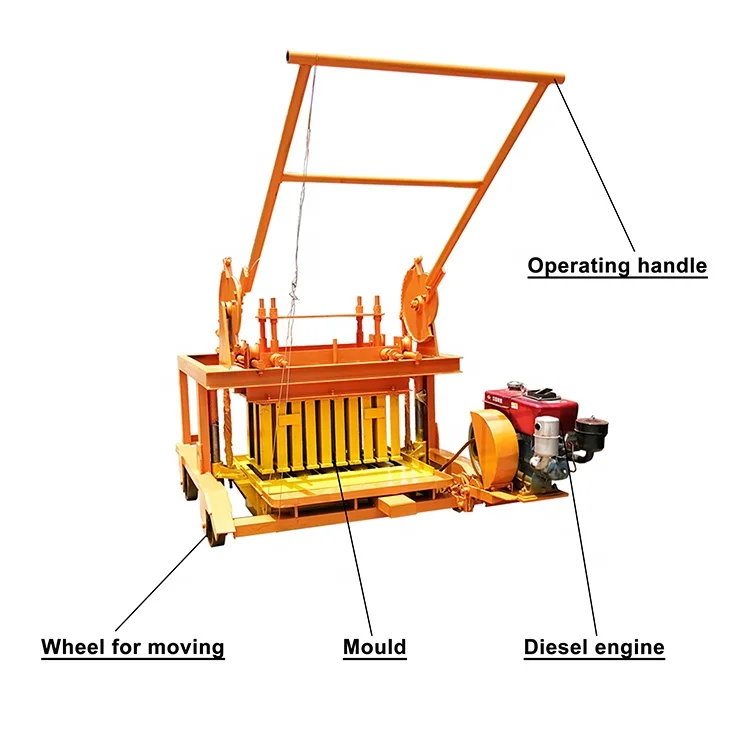
 Mobile block machine