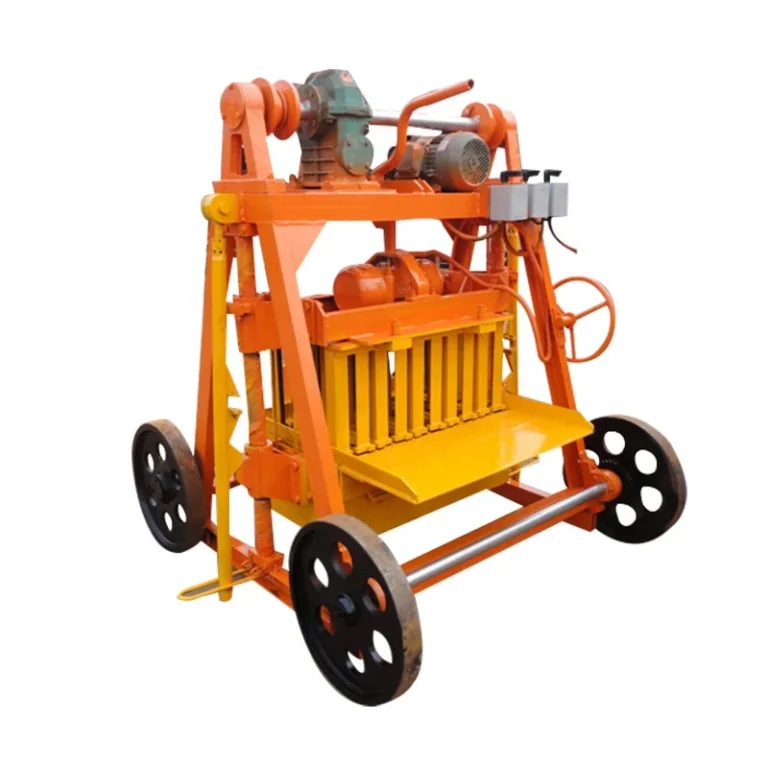
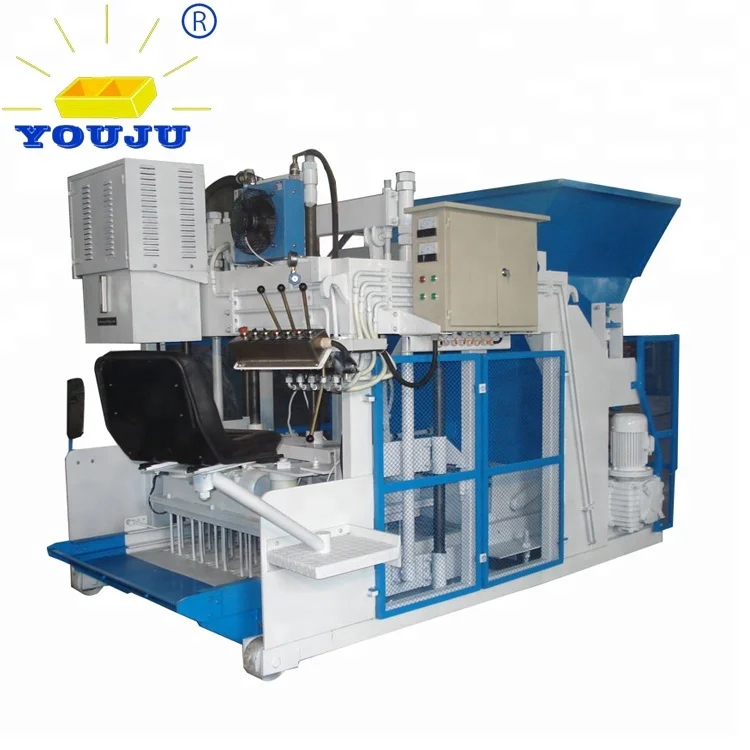
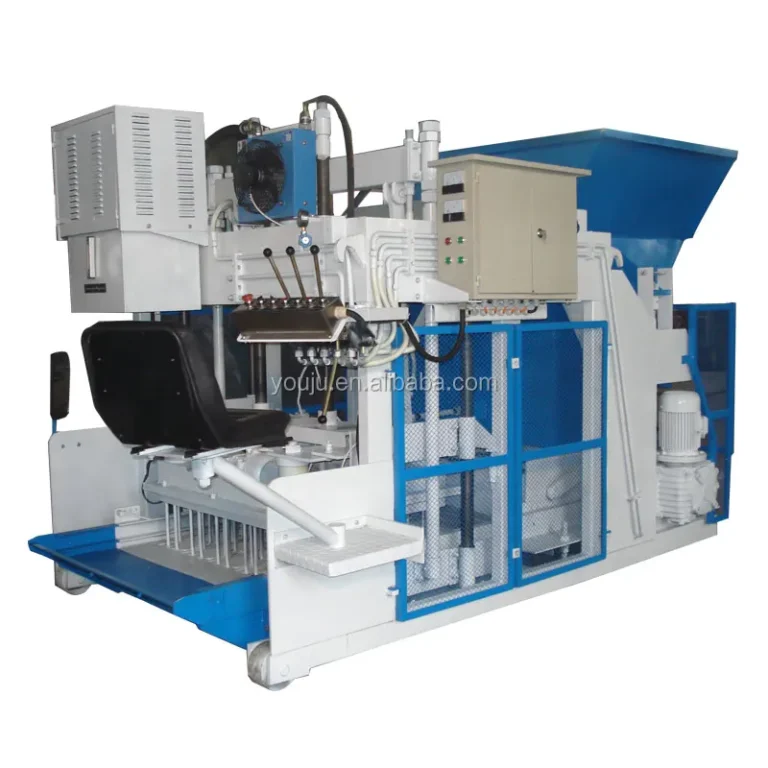
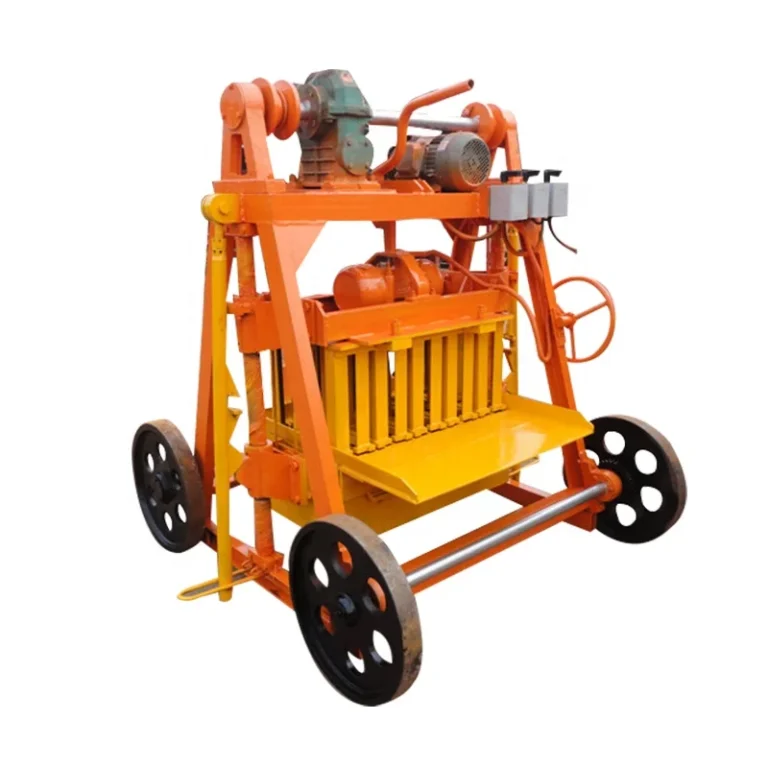
Diesel-powered mobility — the QMJ4-45 mobile egg laying block machine lays hollow blocks directly on the ground without pallets, cutting consumable costs for remote job sites.
Technical Specifications
| Parameter |
Value |
| Model |
QMJ4-45 |
| Product Type |
Mobile Egg Laying Block Making Machine |
| Molding Capacity |
4 pcs/mould for 400×200×200 mm hollow block (basis to be confirmed for other formats) |
| Molding Cycle |
40–45 s |
| Vibration Frequency |
2400 r/m |
| Vibration Type |
Twice-vibration of molding core |
| Power Source |
Diesel or petrol engine |
| Total Power |
6 kW |
| Hydraulic Method |
Mold vibration |
| Demold Method |
Manual |
| Turning Method |
Manual |
| Automation Level |
Manual operation |
| Hollow Block Output (400×200×200 mm) |
Approx. 3000 pcs/day based on 4 pcs/mould, 40–45 s cycle, 8-hour shift |
| Hollow Block Output (400×150×200 mm) |
Approx. 3500 pcs/day based on 5 pcs/mould, 40–45 s cycle, 8-hour shift |
| Hollow Block Output (400×120×200 mm) |
Approx. 4500 pcs/day based on 6 pcs/mould, 40–45 s cycle, 8-hour shift |
| Pallet Requirement |
Not required — egg laying design deposits blocks on ground |
| Warranty |
1 year for the whole machine (verify against current manufacturer policy) |
Application Suitability
| Application |
Material or Output |
| On-site hollow block production for building contractors |
Concrete mixed from local sand, crushed stone and cement |
| Remote or off-grid housing projects |
Engine-powered operation without grid electricity dependency |
| Small-scale block yards serving local construction markets |
Hollow blocks in 400×200×200, 400×150×200 and 400×120×200 mm formats |
| First-time block plant entrepreneurs |
Low-footprint setup with minimal infrastructure investment |
| Development contractors producing blocks at the project location |
Daily output matched to site consumption rates |
What "4500 Blocks per Day" Actually Means on Your Site
Every output figure above is tied to a specific block format and an 8-hour shift — no generic capacity claims.
When I first started configuring machines for overseas buyers, I quoted daily output based on a standard test mould and assumed the number would transfer to whatever the customer actually wanted to produce. It does not. A QMJ4-45 mobile egg laying block machine manufacturer will typically quote peak output on the smallest block size. If your market buys 400×200×200 mm hollow blocks, your real daily number sits closer to 3000 pieces per shift, not the headline figure. I learned to ask which block format sells in the buyer’s local market before putting any capacity number on paper [NEED_CITE: block format demand varies significantly by regional construction standards].

Where This Machine Sits in the Full Range
The QMJ4-45 occupies the entry-level position in the mobile egg laying block machine lineup. It is built for buyers who need to produce hollow blocks directly on the job site without investing in a fixed plant, pallet circulation system, or curing racks. Above this tier, semi-automatic stationary machines add pallet-based production and higher cycle speeds for buyers who have a dedicated production yard. Further up, fully automatic lines bring batching, stacking and cubing into one continuous flow for high-volume plants.
Engine Power and What It Removes From Your Setup
Running on a diesel or petrol engine means the QMJ4-45 does not depend on grid voltage or frequency — a practical advantage on remote construction sites where electrical infrastructure is unreliable or absent. The 6 kW total power rating covers the vibration motor and any auxiliary electrical components. Before confirming an order, we verify the vibration motor winding matches local standards even on engine-powered units, because replacement motors must be sourceable locally [NEED_CITE: electrical component compatibility for engine-driven industrial equipment in export markets].
Reading the Vibration and Cycle Numbers
The twice-vibration molding core is the key engineering distinction on this model. Single-vibration systems shake the mould once per cycle, which can leave density variation across the block face. The QMJ4-45 applies two vibration phases through the molding core, producing more uniform compaction and consistent block strength. At 2400 r/m vibration frequency with a 40–45 second molding cycle, the machine balances throughput against the time needed for the concrete mix to fully settle in the mould cavity. Shorter cycles risk under-compacted blocks that crumble during handling; longer cycles reduce daily output without measurable strength gains. The manual demold and turning methods keep the machine simple to maintain in the field, where hydraulic or pneumatic demold systems would add components that require specialised service [NEED_CITE: vibration compaction principles in concrete block forming].
The Cost of Skipping the Raw Material Conversation
I once configured an egg laying machine for a buyer in West Africa using standard sand test data. When the machine arrived and ran on local laterite soil, the vibration parameters were completely wrong for that aggregate. Block strength was inconsistent, and daily output dropped well below the quoted figure for the first month. We had to re-tune the vibration settings remotely before production stabilised. Since then, I ask every buyer for a sample description of their local sand, aggregate and cement type before finalising any configuration. The mix design and the machine must be matched — otherwise the capacity numbers on the spec sheet become theoretical [NEED_CITE: effect of local aggregate properties on concrete block density and strength].
Why Buyers Source This Range Here
Block machinery is the single production focus, so the machine, mould and handling requirements are specified as one system rather than assembled from unrelated suppliers. The QMJ4-45 is configured against the buyer’s actual block format and local raw material, not pulled from a catalogue default. Mould design covers the hollow block sizes the buyer’s market demands, including custom drawings if local building codes require non-standard dimensions. The automation level is selectable across the full range, so a buyer who starts with the manual QMJ4-45 can move to a semi-automatic stationary line later without changing suppliers. Installation guidance and operator training are included, which matters when the machine is running on a remote site far from technical support.
Documentation & Verification
- Capacity calculation sheet stating the exact block format and cycle time assumed
- Machine specification with vibration frequency, engine type and total power confirmed
- Mould drawing and format list showing included hollow block sizes
- Electrical component spec for vibration motor winding and protection rating
- Factory test record on your specified block format before dispatch
- Operation and maintenance manual with wear parts identification list
Installation, Commissioning & Support
- Level ground preparation with compacted surface for egg laying block deposit
- Engine fuel supply and daily consumption rate confirmed per 8-hour shift
- Vibration motor wiring checked against local electrical standards on arrival
- First production run supervised with mould adjustment to your concrete mix
- Operator training covering manual demold technique and cycle timing
- Wear parts list with mould and vibration component replacement intervals
What to Prepare Before Requesting a Quotation
To match the QMJ4-45 or recommend a different tier in the mobile egg laying block machine range, share the hollow block sizes your market buys, your target daily output, and a description of the sand and aggregate available locally. If the project site has no grid power, confirm that an engine-powered unit suits your operation. Let us know whether you plan to produce blocks at a single fixed location or move the machine between sites during the project.
Frequently Asked Questions
Q: How is the daily output calculated and which block format does each figure assume?
A: Each productivity figure in the specification table is tied to a specific hollow block size, mould cavity count and 40–45 second cycle over an 8-hour shift. The 3000 pcs/day figure applies to 400×200×200 mm blocks at 4 pcs/mould. Smaller formats yield higher piece counts because the mould holds more cavities. Always compare output on the block size you will actually produce.
Q: What is the difference between egg laying and pallet-based block machines?
A: Egg laying machines like the QMJ4-45 deposit blocks directly on the ground and move forward, leaving the blocks in place to cure. Pallet-based machines press blocks onto pallets that then travel through a curing rack system. Egg laying removes pallet and rack costs but requires a flat, prepared ground area large enough for a full day’s output.
Q: Can the machine run on a diesel engine, and what should I plan for fuel?
A: Yes, the QMJ4-45 is available with a diesel or petrol engine as the power source. This removes dependency on grid electricity for remote sites. Fuel consumption depends on engine rating and shift length — confirm the daily fuel budget with your engine supplier based on continuous operation at the machine’s 6 kW total power demand.
Q: Where does the QMJ4-45 sit in the full machine range?
A: It is the entry-level mobile option for buyers who need on-site production without a fixed plant. If your daily volume grows or you need paving blocks and solid blocks alongside hollow blocks, the next step is a semi-automatic stationary machine with pallet circulation. Fully automatic lines add batching, stacking and cubing for high-capacity dedicated plants.
Q: What mould formats are available, and can I order custom sizes?
A: Standard moulds cover 400×200×200 mm, 400×150×200 mm and 400×120×200 mm hollow blocks. If your local construction standards require different dimensions, custom moulds can be designed to your drawings. Share the exact block size, wall thickness and any interlocking profile requirements so the mould cavity layout can be matched to the machine’s molding area.

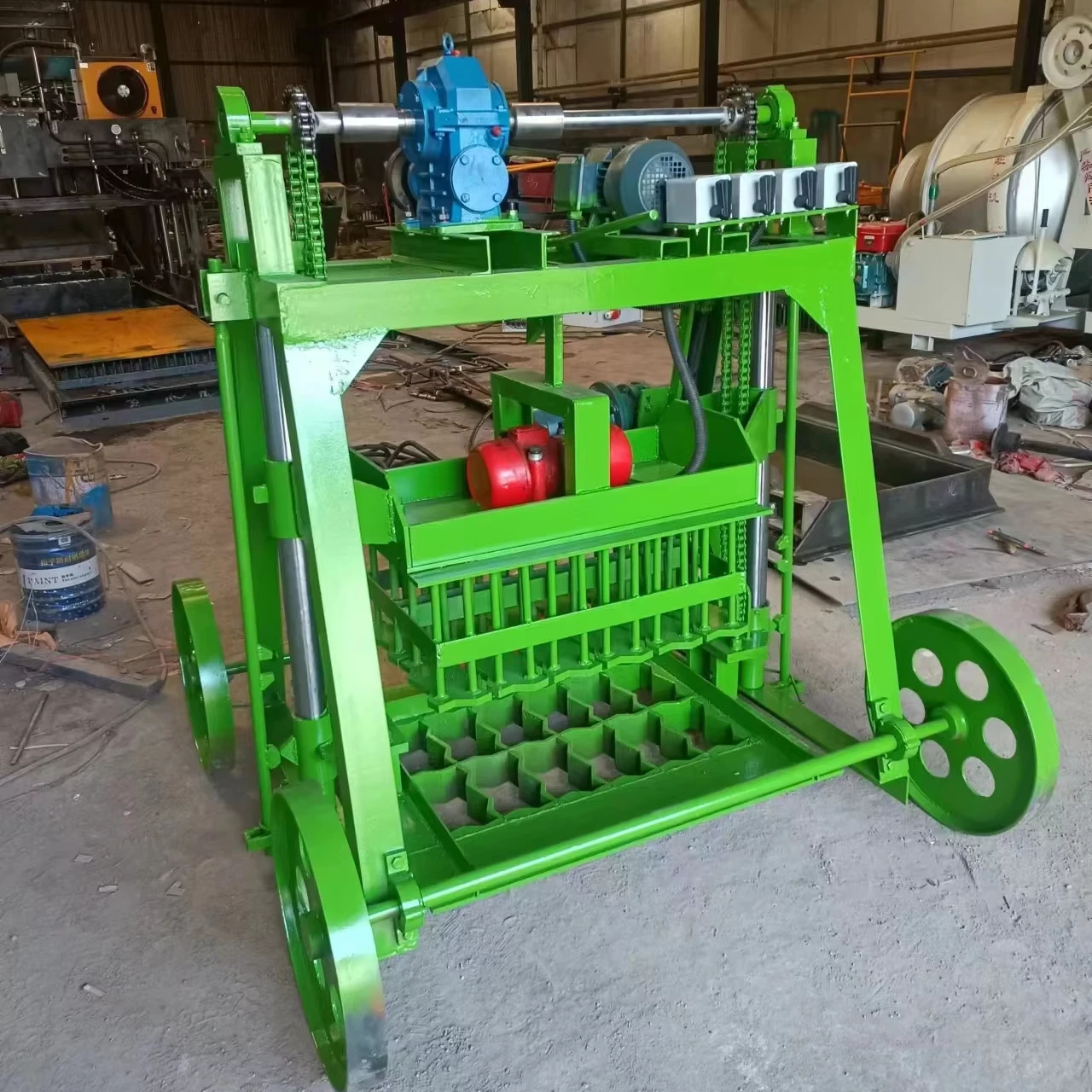
 Mobile block machine