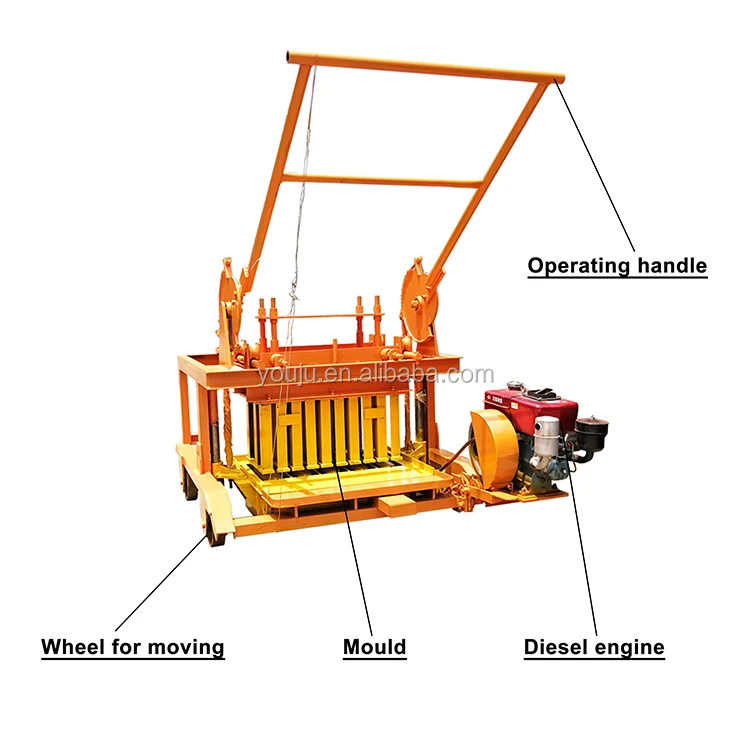
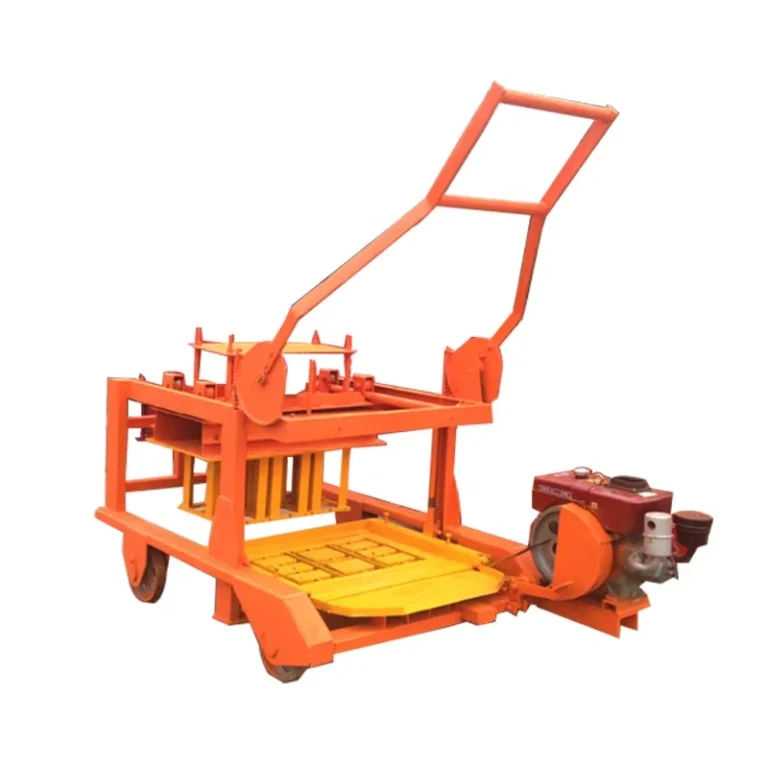
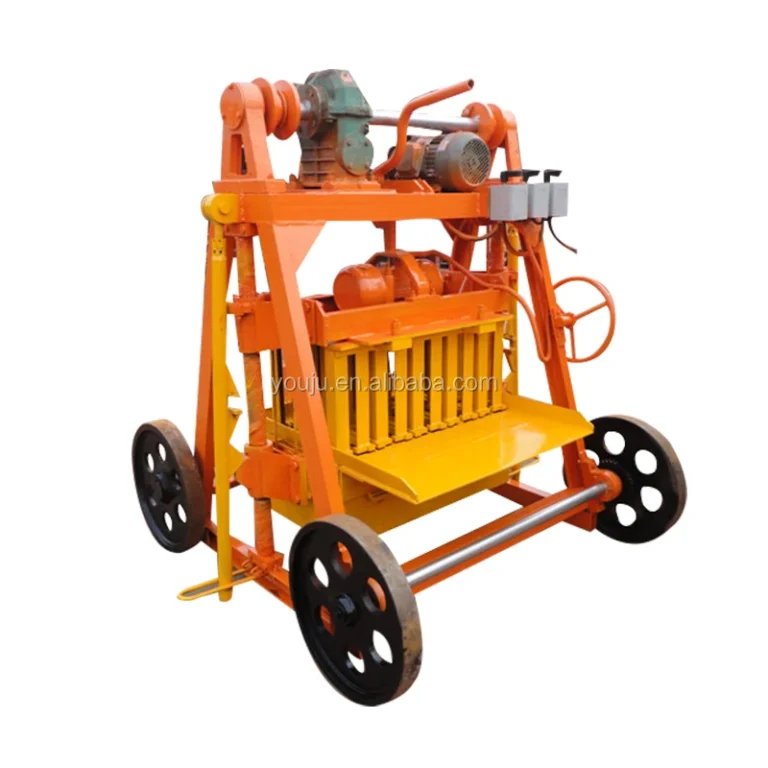
Matched system spec — Every QMJ4-45 egg laying block machine manufacturer proposal we issue pairs the press, mould, and handling gear to the buyer’s actual mix and block format, not a catalogue default.
Technical Specifications
| Parameter |
Value |
| Model |
QMJ4-45 |
| Product Type |
Manual Egg-Laying Block Making Machine |
| Molding Capacity |
4 pcs/mold |
| Vibration Frequency |
2400 r/m |
| Vibration Method |
Mold vibration |
| Molding Cycle |
45 s |
| Demold Method |
Manual |
| Turning Method |
Manual |
| Total Power |
6 kW |
| Power Source |
Diesel / Petrol engine |
| Automation Level |
Manual (egg-laying type) |
| Mould Format |
Hollow block (multiple sizes available) |
| Hollow Block Output (400×200×200mm) |
3000 pcs/day (8 hours) |
| Hollow Block Output (400×150×200mm) |
3500 pcs/day (8 hours) |
| Hollow Block Output (400×120×200mm) |
4500 pcs/day (8 hours) |
| Warranty |
1 year |
Application Suitability
| Application |
Material or Output |
| On-site hollow block production |
Crushed stone, sand, cement, water |
| Remote construction sites without grid power |
Diesel or petrol engine powered operation |
| Entry-level block plant for entrepreneurs |
Low-investment hollow block manufacturing |
| Housing project local supply |
400×200×200mm, 400×150×200mm, 400×120×200mm hollow blocks |
What "Output Capacity" Really Means on a QMJ4-45 Egg Laying Block Machine Manufacturer Quote
Every output figure on this page is tied to a specific hollow block dimension and an eight-hour shift — not a generic cycles-per-hour claim.
I have watched buyers sign for mobile block machines based on a single headline number, only to discover on site that the figure assumed a block size their market does not buy. When the actual format is larger or requires a longer vibration cycle, daily throughput drops and the project timeline slips. The QMJ4-45 egg laying block machine manufacturer capacity table on this page lists three hollow block sizes with their respective daily outputs so you can match the machine to the product your customers actually order [NEED_CITE: block format assumptions in capacity quotations].

Matching the Range to Your Entry Point
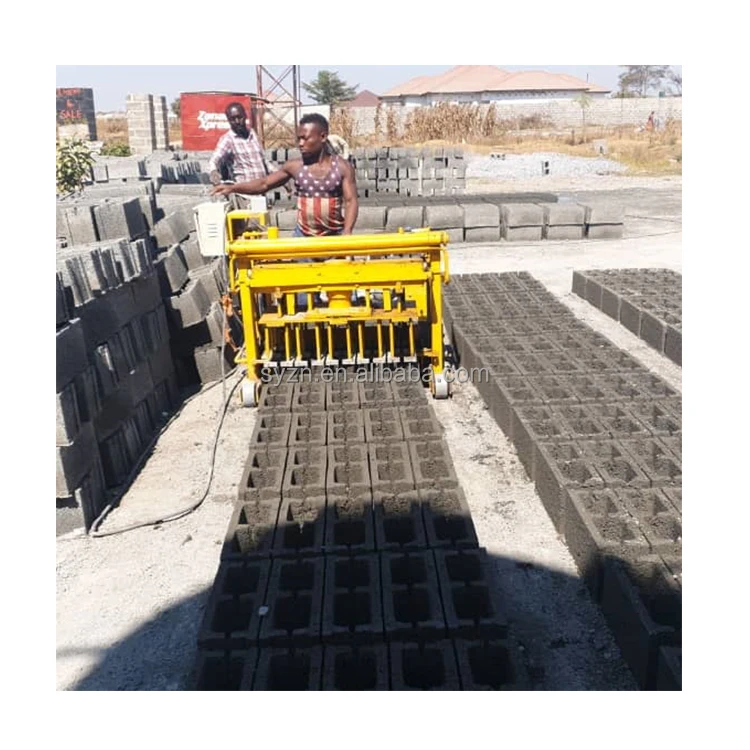
The QMJ4-45 sits at the opening tier of the Shiyue mobile block machine range. Buyers who need hollow blocks directly on a building site, without pouring a factory floor or installing three-phase power, start here. The machine lays blocks on any flat, cured concrete surface and moves forward under its own wheels, eliminating pallet cost entirely.
For contractors producing blocks at an existing cement yard or entrepreneurs testing a first venture, this tier keeps fixed infrastructure near zero while still delivering mold vibration at 2400 r/m for adequate block density.
Where Each Tier Sits in Investment and Footprint
Semi-automatic lines add a pallet circuit, mixer, and stacking station — raising both output and capital. Fully automatic plants introduce PLC batching, curing racks, and cubing systems that demand a covered production hall. The QMJ4-45 egg laying block machine manufacturer offering occupies the opposite end: a compact footprint, a single operator plus one helper, and a diesel or petrol engine that runs independent of the local grid. This makes it practical for remote housing developments where transporting finished blocks would erase any margin [NEED_CITE: mobile block machine site requirements for remote construction].
Reading the Numbers Behind Vibration, Cycle Time, and Power
Mold vibration at 2400 r/m compacts the concrete mix inside the cavity before demolding. On a manual egg-laying machine, this vibration is the primary force driving block density because there is no hydraulic press ram. A 45-second molding cycle allows the vibration to settle the aggregate, which matters when the local sand is fine and tends to trap air.
The 6 kW total power rating covers the vibration motor and any auxiliary electrical components. Because the QMJ4-45 can be driven by a diesel or petrol engine, sites without reliable electricity still run production. The manual demold and manual turning mechanism means the operator physically lifts the mold box after each cycle — straightforward, fewer components to fail, but physically demanding across an eight-hour shift.
The Hidden Cost of Skipping the Mould Spring Kit
On a job in West Africa, I saw a contractor buy a small egg-laying machine and run it for three months before the mold springs lost tension. No spares were on site, and the replacement order took six weeks to arrive — the entire crew sat idle while blocks cured unevenly and orders backed up. A machine configured without a wear parts kit matched to the buyer’s block format creates a hidden downtime risk that never appears in the quotation [NEED_CITE: spare parts planning for manual block machines in remote sites].
Why Source This Tier Here
Block machinery is our single focus, so the QMJ4-45 press, mould, and handling aids are specified as one matched set. We configure the vibration frequency and cycle time against the buyer’s actual mix design and local aggregate, not a factory default. Mould design covers the hollow block sizes the buyer’s market sells, with custom drawings available. Automation level is selectable — a buyer can begin with this manual tier and move to semi-automatic later without replacing the entire line. Installation support includes operator training so the crew understands mold change, spring tension, and daily maintenance from the first shift.
Documentation & Verification
- Capacity calculation sheet stating the hollow block format behind each output figure
- Mould drawing and format list confirming included block sizes
- Machine specification sheet with engine and electrical accessory details
- Wear parts and mould spring list matched to the quoted block format
- Operation and maintenance manual with daily inspection checklist
Installation, Commissioning & Support
- Flat concrete surface required; no fixed foundation needed for the QMJ4-45 egg-laying frame
- Diesel or petrol engine eliminates three-phase power requirement at remote sites
- Machine arrives assembled; operator lifts and positions manually during production
- First-day commissioning covers mold alignment, spring tension, and vibration motor check
- Operator training on 45-second cycle pacing, manual demold technique, and block spacing
- Wear parts kit shipped with first order — mold springs, vibration mounts, and drive belts
What to Include in Your Enquiry
Tell us which hollow block dimensions your market requires, the daily volume you need to hit, and whether grid electricity is available on site. Share your local aggregate type so we can confirm the mix suits the 2400 r/m vibration setting. Let us know if you plan to add a pallet-based line later so the QMJ4-45 egg laying block machine manufacturer proposal leaves room for that path.
Frequently Asked Questions
Q: How is the daily output calculated and which block format does it assume?
A: Each output figure on this page is based on an eight-hour shift and a specific hollow block size: 3000 pieces for 400×200×200mm, 3500 for 400×150×200mm, and 4500 for 400×120×200mm. Actual throughput depends on your crew speed, curing logistics, and raw material feed continuity. We state the format so you can pick the number that matches your product.
Q: Can the QMJ4-45 run on a diesel engine where grid power is unavailable?
A: Yes. The machine is available with a diesel or petrol engine as the primary power source, making it suitable for remote construction sites or areas with unreliable electricity. The 6 kW total power requirement is modest, so fuel consumption remains manageable across an eight-hour production shift.
Q: What block formats and moulds are available, and can custom moulds be made?
A: Standard moulds cover common hollow block sizes including 400×200×200mm, 400×150×200mm, and 400×120×200mm. Custom moulds can be manufactured to buyer drawings for non-standard formats. We confirm the mould drawing and format list before production so the quotation matches the blocks your market actually sells.
Q: What is the realistic mould change time on a manual egg-laying machine?
A: Mould change on a manual egg-laying machine involves unbolting the current mold box, fitting the new one, and rechecking spring tension and vibration alignment. The time depends on operator experience and whether the correct tools are on hand. We include a mould change procedure in the operation manual to keep the process straightforward.
Q: What site preparation is needed before the machine arrives?
A: The QMJ4-45 needs a flat, cured concrete surface to lay blocks on — no fixed foundation or production hall is required. Plan a curing area nearby with enough space for the daily output and a water supply for block curing. Raw material stockpiles for sand, aggregate, and cement should be within wheelbarrow distance of the machine position.

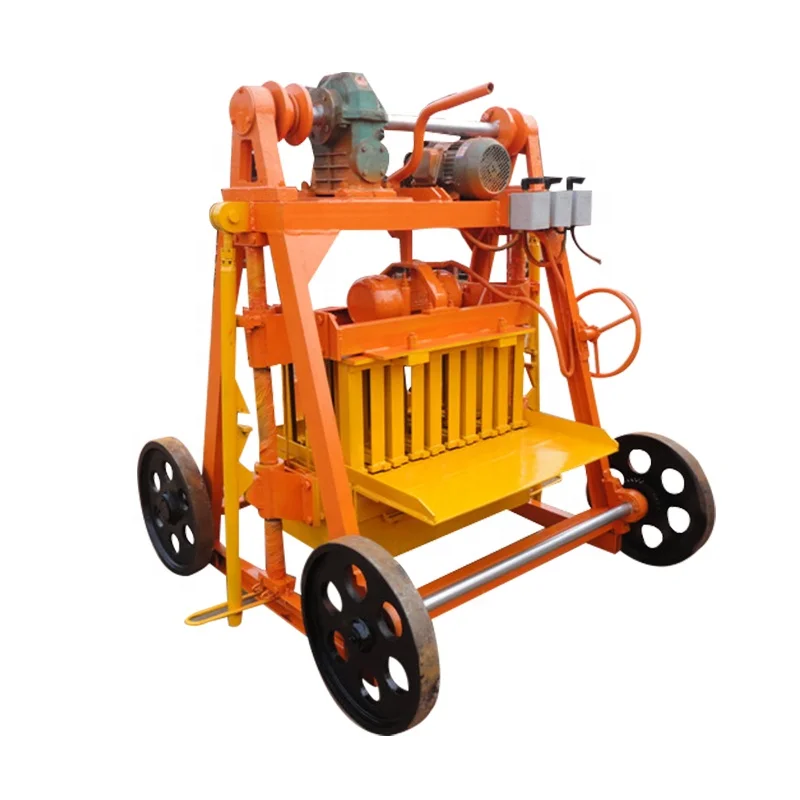
 Mobile block machine