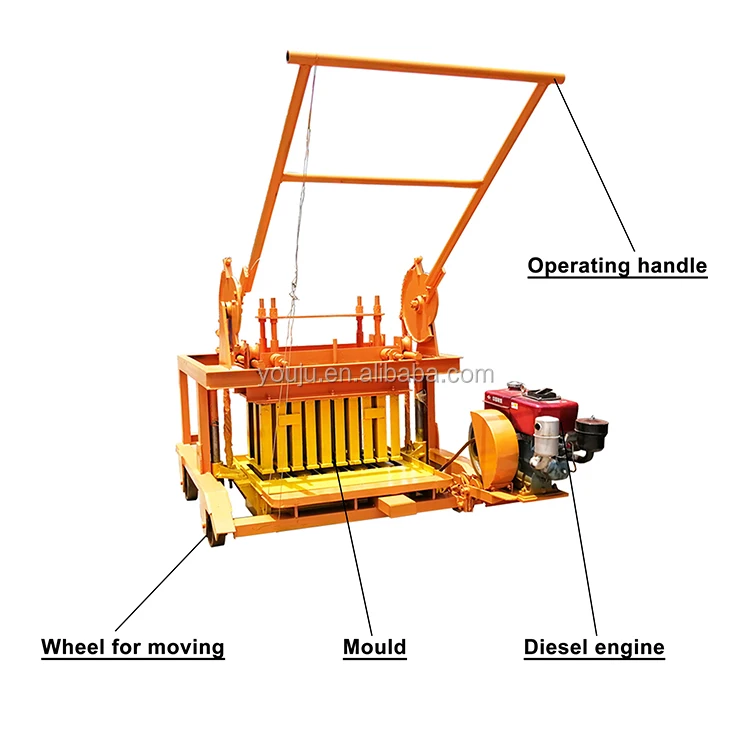
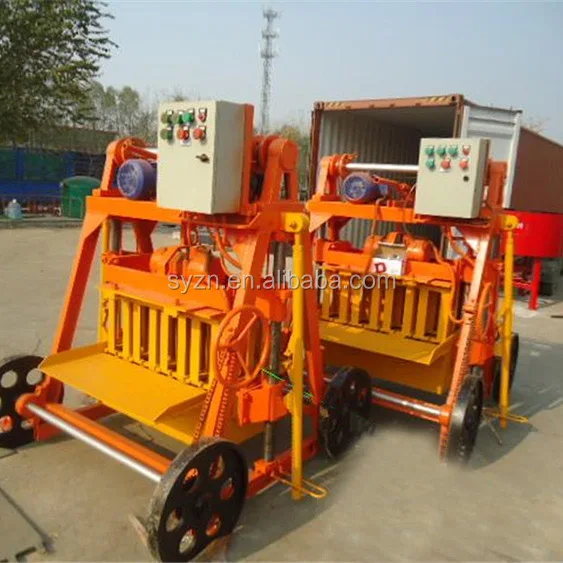
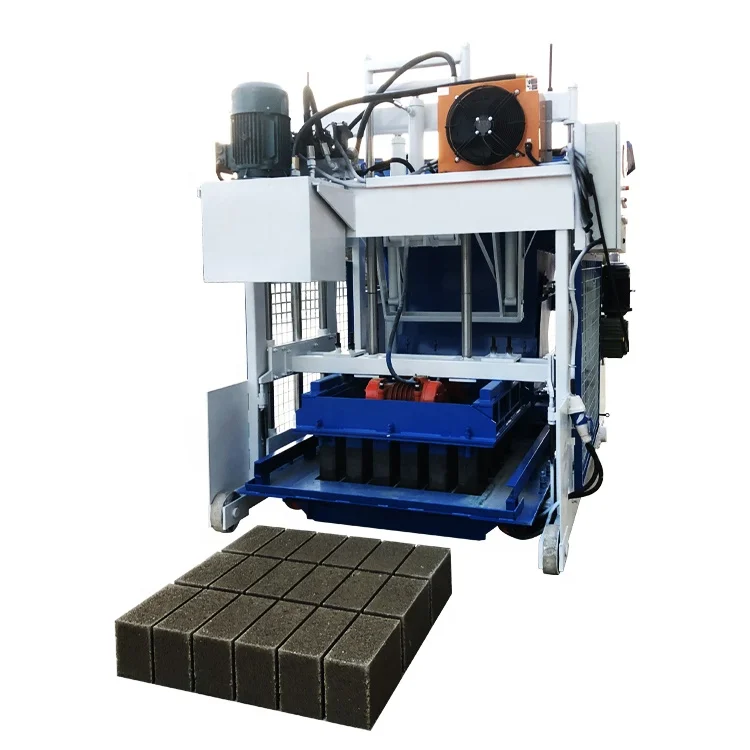
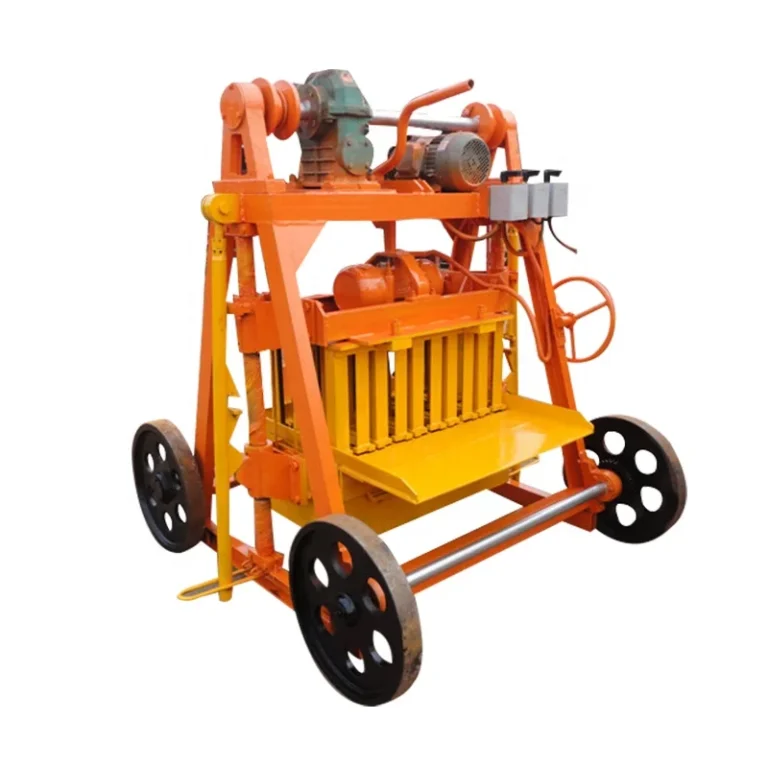
Single-focus block machinery — Every QMJ2-45 specification, from vibration force to mould design, is matched against the buyer’s local aggregate and target hollow brick format rather than pulled from a catalogue default.
Technical Specifications
| Parameter |
Value |
| Model |
QMJ2-45 |
| Product Type |
Mobile / Egg-Laying Block Making Machine |
| Moulding Cycle |
25–30 seconds |
| Mould Format: 400×200×200 mm |
2 pcs/mould, 160 pcs/hour, 1280 pcs/8hr (basis: stated mould size, cycle 25–30s) |
| Mould Format: 400×150×200 mm |
3 pcs/mould, 240 pcs/hour (daily output to be confirmed with actual shift pattern) |
| Mould Format: 400×100×200 mm |
4 pcs/mould, 320 pcs/hour, 2560 pcs/8hr (basis: stated mould size, cycle 25–30s) |
| Pallet Requirement |
None (egg-laying type) |
| Automation Level |
Manual / Semi-automatic |
| Labour Requirement |
1–3 workers |
| Mould Change |
Supported across multiple hollow brick formats |
| Power Source |
Electric (motor power to be confirmed before order) |
| Voltage & Frequency |
Configurable to buyer’s market (to be confirmed before order) |
| Control System |
To be confirmed before order |
| Standards |
ISO 9001:2000, CE |
Application Suitability
| Application |
Material or Output |
| On-site hollow block production for building contractors |
Crushed stone, sand, cement and water mixes laid directly on a flat concrete floor |
| First-stage block plant for entrepreneurs entering the market |
Low-investment hollow brick output with minimal site preparation |
| Remote or off-grid construction projects |
Egg-laying production where pallet transport and curing rack infrastructure are unavailable |
| Small workshop expansion adding hollow block capability |
Limited-footprint production with one to three operators |
What "Pieces per Hour" Actually Means When You Are Buying a Mobile Block Making Machine for Sale
Capacity figures only matter when you know exactly which block size they were measured on.
A lot of mobile block making machine quotations list a single hourly number and leave it at that. The problem surfaces once the machine arrives and the buyer realises the quoted capacity was measured on a small format, while the block they actually sell takes noticeably longer per cycle. With the QMJ2-45, every capacity statement here is tied to a named hollow brick dimension and a stated cycle window of 25 to 30 seconds, so you can check the math yourself before you sign [NEED_CITE: capacity disclosure standards in block machinery quotations].

Where the QMJ2-45 Sits in the Full Machine Range
The QMJ2-45 occupies the entry tier for buyers who need hollow block output without investing in a fixed batching plant, pallet circulation system, or curing racks. It lays blocks directly onto a prepared concrete floor, which removes the entire pallet-handling cost from the project budget. For an entrepreneur comparing a first machine against larger semi-automatic or fully automatic lines, this mobile block making machine for sale represents the lowest capital entry point while still supporting mould swaps across several standard hollow brick sizes.
Egg-Laying Design and What It Removes From Your Site
Because the machine moves forward after each press cycle and leaves the freshly formed block on the ground, there is no pallet inventory to buy, no pallet return conveyor to maintain, and no curing rack handling to staff. The trade-off is that the floor surface must be level and strong enough to bear green blocks without settling, and production stops if rain threatens before the blocks gain initial set. Buyers who have enough covered floor space find that the pallet-free design keeps the operator count down to one to three workers depending on how the mixing and feeding are arranged [NEED_CITE: on-site concrete floor preparation for egg-laying block machines].
Reading the Specs That Actually Shape Daily Output
The moulding cycle of 25 to 30 seconds governs how many presses the QMJ2-45 completes in a shift, but the block format loaded into the mould determines how many units each press delivers. A 400×200×200 mm hollow brick mould holds two pieces per cycle, while a 400×100×200 mm mould holds four, doubling the unit count at the same cycle speed. Labour allocation matters too: one worker feeding mix and one guiding the machine is the minimum, and adding a third person to pre-stage material keeps the cycle from stretching beyond the 30-second mark. Motor power and voltage must be confirmed against the buyer’s local supply before the machine is wired, because an undersized supply will trip breakers mid-shift and an incorrect frequency will alter motor speed and vibration force.
The Cost of Skipping the Voltage Conversation
One of the most common delays we see after a mobile block making machine for sale arrives overseas is the electrical mismatch. The buyer assumed 380V/50Hz, the local grid actually runs a different combination, and the motor either overheats or refuses to start. By the time a step-down transformer is sourced and shipped, the machine has been sitting idle on the dock for days. Confirming voltage, frequency, and control panel language at the quotation stage costs nothing; fixing it after the container lands costs time and money that the project schedule rarely has [NEED_CITE: voltage and frequency standards by export market].
Why Source This Machine From a Single-Focus Block Machinery Supplier
Our workshop builds block presses, moulds, pallets, and handling equipment as one matched system, so the QMJ2-45 arrives with moulds already fitted and tested against the block format you named in the inquiry. Mould design is done against the buyer’s own drawings or against the hollow brick sizes that sell in the target market, not limited to a fixed catalogue list. Automation level is selectable, meaning a buyer can start with manual pallet-free operation and later add a mixer or conveyor without replacing the press. Factory testing covers the exact block format and cycle time the buyer intends to run, and the test record ships with the machine. Installation support and operator training are included so the first shift produces saleable blocks, not scrap.
Documentation & Verification
- Line layout showing QMJ2-45 floor space and block curing area requirement
- Capacity calculation sheet stating hollow brick format behind every output figure
- Mould drawing and format list for each hollow brick size ordered
- Motor power and voltage confirmation signed before production starts
- Factory test record on buyer’s specified block format before dispatch
- CE declaration and ISO 9001:2000 documentation included in shipment file
Installation, Commissioning & Support
- Level concrete floor required; QMJ2-45 egg-laying design needs no pallet return pit
- Power supply matching confirmed voltage and frequency before motor wiring
- Machine ships partially assembled; final mould and hopper fitting done on site
- First-run commissioning covers cycle timing on the buyer’s chosen hollow brick format
- Operator training for one to three workers on mixing, feeding and mould change
- Wear parts list and first-replacement mould inventory reviewed before handover
Before You Send the Inquiry
To size the QMJ2-45 correctly, share the hollow brick dimensions your market sells most, the daily volume you need from a single shift, and the aggregate you plan to use locally. Tell us your site’s voltage and frequency so the motor and control panel arrive ready to run. If you already have a mixer or a concrete floor prepared, mention that too, because it changes how we configure the feeding arrangement around the press.
Frequently Asked Questions
Q: How is output capacity verified, and which block format does each number assume?
A: Each capacity figure in the specification table is tied to a named hollow brick dimension and a 25 to 30-second cycle. The 400×200×200 mm mould produces two pieces per cycle, while the 400×100×200 mm mould produces four. We provide a written capacity calculation with your quotation so you can check daily output against your shift pattern.
Q: What voltage and frequency options are available for my market?
A: The QMJ2-45 motor and control panel are configured to the buyer’s confirmed supply before production begins. We ask for your local voltage and frequency at the inquiry stage so the machine arrives wired correctly and avoids transformer delays or motor issues during commissioning.
Q: How does this mobile machine compare to semi-automatic and fully automatic tiers?
A: The QMJ2-45 sits at the entry tier with pallet-free egg-laying operation and manual or semi-automatic control. Buyers needing higher daily volume or multiple block formats per shift can move up to semi-automatic lines with pallet circulation, or fully automatic lines with stacking and cubing, within the same machine range.
Q: What are the installation and space requirements for on-site production?
A: The machine needs a level concrete floor with enough area for block curing. No pallet racks or return conveyors are required. Floor space depends on daily output and how many days the blocks remain in cure before being moved to the stacking yard.
Q: Which moulds and wear parts are stocked for first replacement?
A: The QMJ2-45 ships with moulds matching the hollow brick formats specified in your order. A wear parts list and recommended first-replacement inventory are included in the shipment documentation so you can plan spares before the machine reaches continuous production.

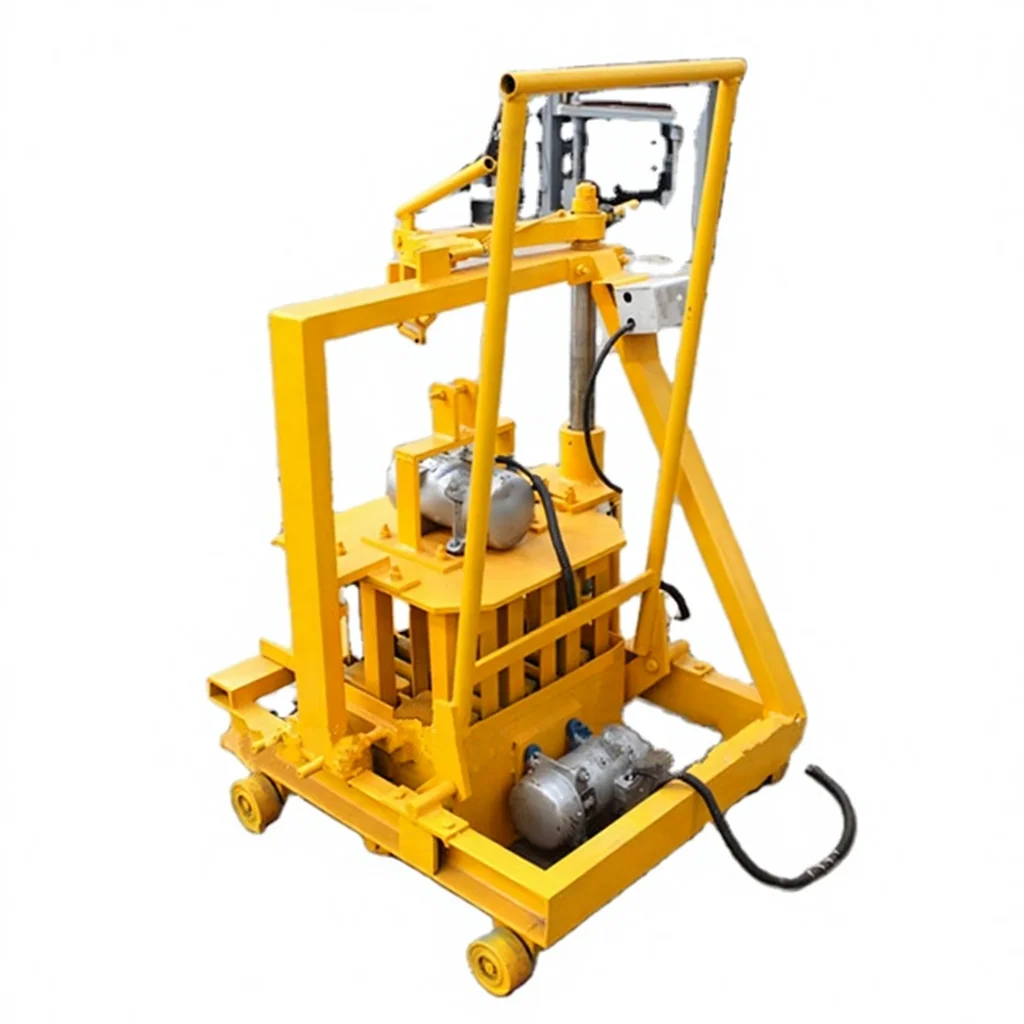
 Mobile block machine