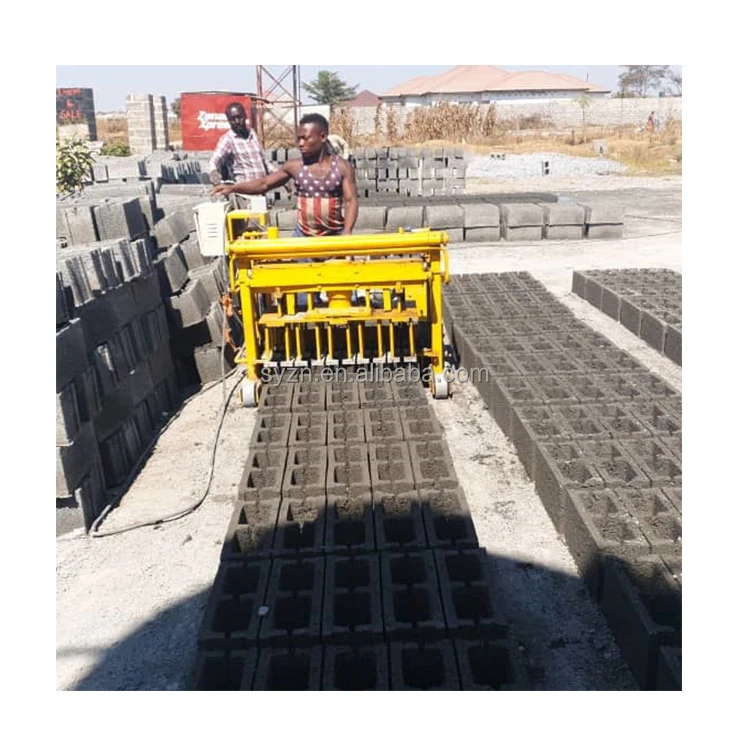
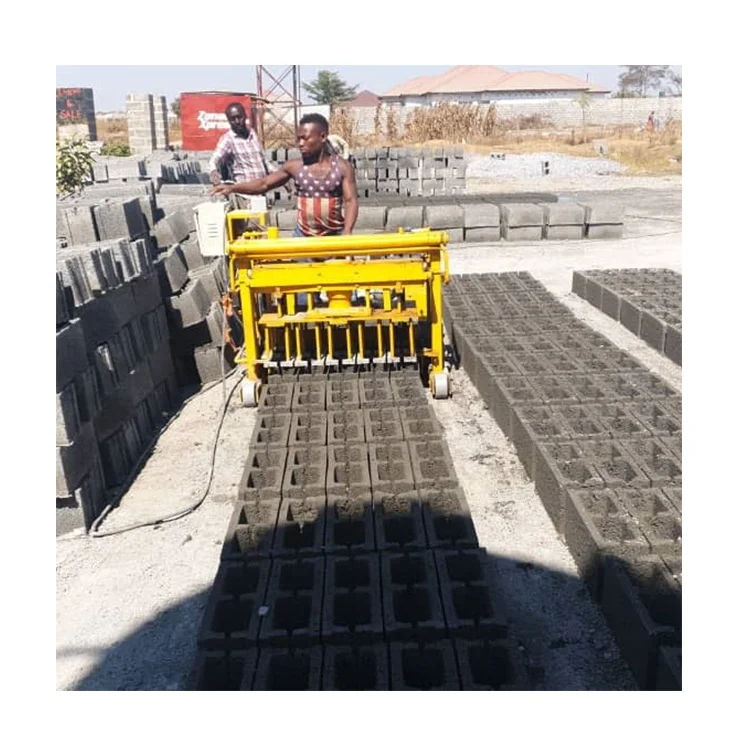
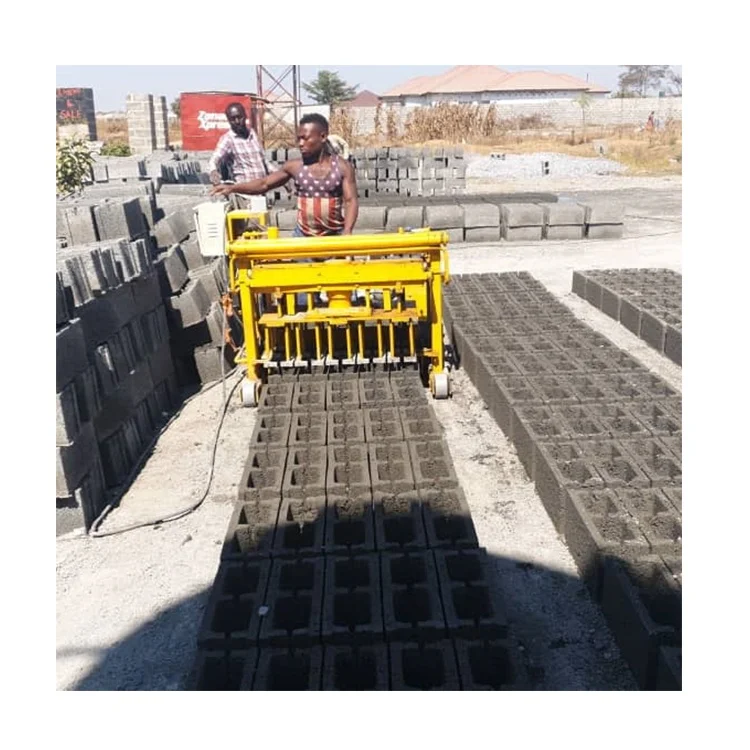
Matched System Sizing — Every QMJ2-45 leaves the factory with vibration and hydraulic parameters tuned to the buyer’s actual mix sample, not a generic default that fails on local aggregate.
Technical Specifications
| Parameter |
Value |
| Model |
QMJ2-45 |
| Product Type |
Manual Mobile Concrete Block Making Machine |
| Machine Operation |
Manual mobile (egg-laying) |
| Mould Formats |
400×200×200 mm / 400×150×200 mm / 400×100×200 mm hollow brick |
| Cycle Time |
25–30 seconds per mould |
| Output (400×200×200 mm) |
2 pcs/mould, 160 pcs/h, 1280 pcs/8 hr |
| Output (400×150×200 mm) |
3 pcs/mould, 240 pcs/h (basis not stated in source) |
| Output (400×100×200 mm) |
4 pcs/mould, 320 pcs/h, 2560 pcs/8 hr |
| Pallet Requirement |
None (palletless ground-laying operation) |
| Power Source |
Diesel engine |
| Control System |
Manual operation |
| Labor Requirement |
1–3 workers |
| Stacking Method |
Blocks laid directly on ground |
Application Suitability
| Application |
Material or Output |
| On-site contractor production |
Hollow bricks from crushed stone, sand, and cement |
| Remote project block making |
Diesel-powered operation away from grid infrastructure |
| First-workshop entrepreneurship |
Low-investment hollow block formats for local markets |
| Moving worksite production |
Palletless laying on prepared ground surfaces |
What "1,280 Blocks per Shift" Actually Means on a Remote Site
Capacity figures on a manual mobile block machine mean nothing until you pin down the block format and the condition of your ground.
When a contractor in a humid region orders a machine based on a single headline number, the reality on site is often a different story. The aggregate arrives wetter than expected, the sand carries more clay, and the vibration force that worked in the factory test video fails to compact the mix into a clean edge. Output drops because every third block cracks before it can be moved. That experience is why we now ask for a material sample before we ship, adjusting the manual mobile block machine settings so the cycle time holds up once the diesel engine fires up on your soil [NEED_CITE: mix design variance with local aggregate moisture].

Where the Entry Tier Sits on the Range
The QMJ2-45 occupies the lowest investment step in the full block machinery lineup. It is the tier where pallets, grid power, and a fixed curing rack are removed from the equation entirely. A buyer at this level is usually producing hollow bricks for a specific project rather than supplying a regional market. The manual mobile block machine tier trades speed and format variety for the ability to start producing within days of arrival, without waiting for pallet deliveries or electrical infrastructure.
When a Buyer Should Look One Tier Up
If your daily requirement involves more than hollow bricks — solid blocks for foundations, interlocking pavers for access roads — the QMJ2-45 chassis does not accommodate those mould profiles. A semi-automatic stationary machine with pallet handling opens up the wider format catalogue. The decision usually comes down to whether the worksite will still be active in twelve months. Project contractors with a defined end date stay at this tier; those building a permanent block supply business step up to pallet-based machines [NEED_CITE: mobile versus stationary block machine selection criteria].
Reading the Cycle Time Against Your Ground Conditions
The 25–30 second cycle quoted here assumes a mix that holds its shape the instant the mould lifts. On a well-graded crushed stone blend with controlled moisture, that cycle is realistic. On a fine river sand with high clay content, the operator will need to hold the mould down longer or accept a higher breakage rate on demoulding. The diesel engine provides consistent power regardless of site voltage, but it does not solve a bad mix. The three interchangeable hollow brick moulds — 400×200×200, 400×150×200, and 400×100×200 mm — share the same chassis, so format switching is a matter of unbolting and rebolting, not a production line changeover.
The Hidden Cost of Skipping the Material Test
A machine configured for a dry, coarse aggregate will struggle from the first day if your local sand runs fine and damp. The blocks emerge soft-edged, the operator slows the cycle to compensate, and the quoted 1,280-block shift falls to a fraction. The cure is not a different machine — it is a different vibration setting matched to your actual material. We run buyer-supplied samples through a test cycle before dispatch, noting which format holds and which one needs a longer settle time [NEED_CITE: vibration force adjustment for high-clay aggregate].
Why the Configuration Conversation Starts Here
Block machinery is our single focus, so the QMJ2-45 is specified alongside the curing area layout and the ground preparation your site needs, not quoted as a standalone press. Mould design covers the hollow brick formats your market actually buys, including custom drawings if your local standard differs from the three listed. The diesel engine is confirmed for your ambient temperature and altitude, because power output drops in thin air. Installation support includes operator training on mix consistency, since a manual mobile block machine lives or dies on what the worker feeds it.
Documentation & Verification
- Capacity calculation sheet stating the hollow brick format and cycle time assumed
- Mould drawing pack for each of the three interchangeable hollow brick profiles
- Diesel engine specification with power curve at buyer’s site altitude
- Factory test record using buyer-supplied aggregate sample before dispatch
- Operation manual covering mix ratio guidance and ground preparation requirements
Installation, Commissioning & Support
- Level ground area sized to daily output — palletless curing requires space proportional to block volume
- Diesel fuel storage and routine engine service schedule provided with the machine documentation
- Machine arrives assembled; operator training covers mould swap procedure and cycle timing
- First-day commissioning includes test runs on buyer’s local mix to confirm block integrity
- Wear parts list identifies the mould liner and vibration components for early reorder planning
What to Send with Your Inquiry
To size this machine accurately, share the hollow brick format your market demands, the source and grading of your local aggregate, and the altitude and ambient temperature of your site. If you have an existing curing area or a planned worksite footprint, a rough sketch helps us calculate whether the palletless output volume fits the ground you have available.
Frequently Asked Questions
Q: How is the QMJ2-45 output verified per block format, and why do the 8-hour figures differ?
A: Each hollow brick format yields a different number of pieces per mould cycle. The 400×200×200 mm mould produces 2 blocks per cycle, while the 400×100×200 mm produces 4. The same 25–30 second cycle time therefore generates different hourly totals, and the 8-hour figure reflects that arithmetic, not a change in machine speed.
Q: Where does the QMJ2-45 sit compared with semi-automatic tiers, and when should a buyer step up?
A: This model sits at the entry level — no pallets, no grid power, no fixed plant. A buyer should step up when format variety beyond hollow brick is required, when daily volume exceeds what 1–3 workers can handle, or when the project timeline extends beyond a single construction site into ongoing supply.
Q: What site conditions does a palletless mobile machine require?
A: The ground must be flat, firm, and swept clean before each pass. Curing area must be large enough to hold a full day’s output without stacking blocks before initial set. Weather protection is needed in rain-prone climates, since fresh blocks have no pallet to move under cover.
Q: What considerations apply if the buyer prefers an electric motor over the diesel engine?
A: Voltage and frequency must be confirmed before production, as motor winding is market-specific. Stable grid power is required — frequent outages will halt production entirely. Sites without reliable three-phase supply should retain the diesel option for uninterrupted operation.

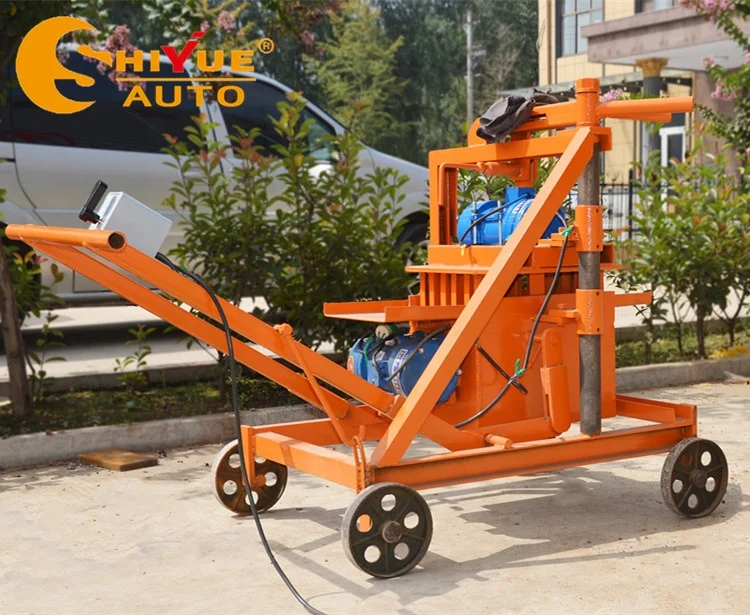
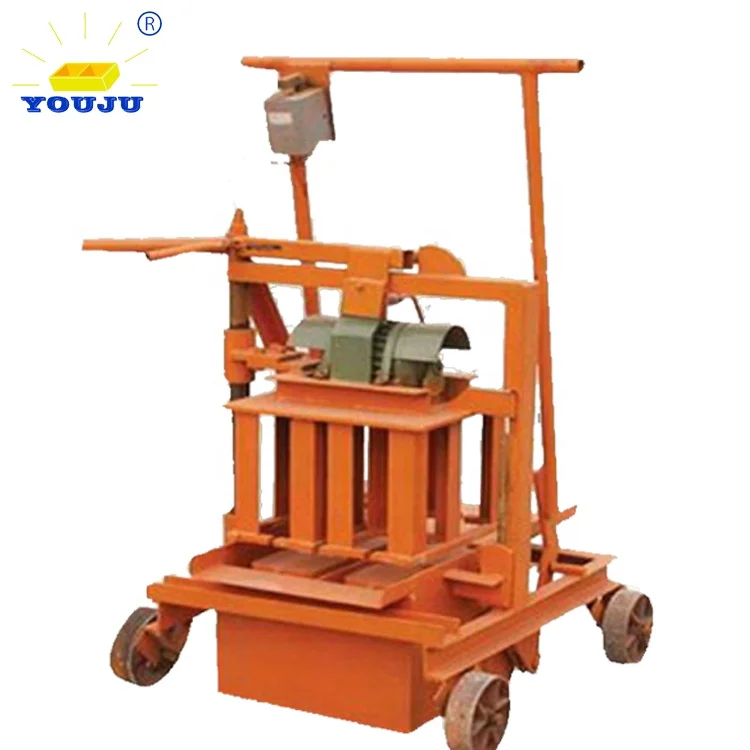 Mobile block machine