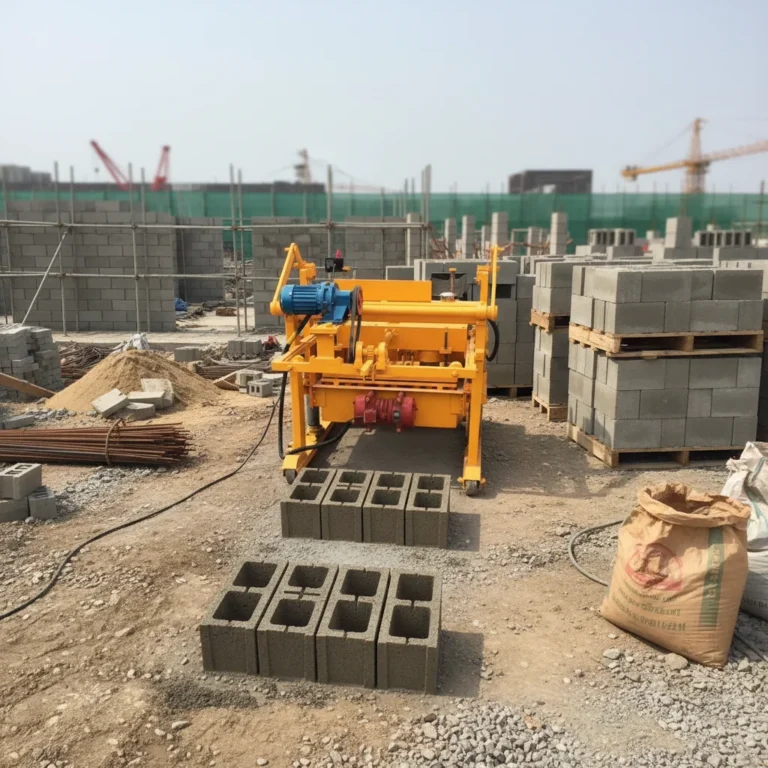
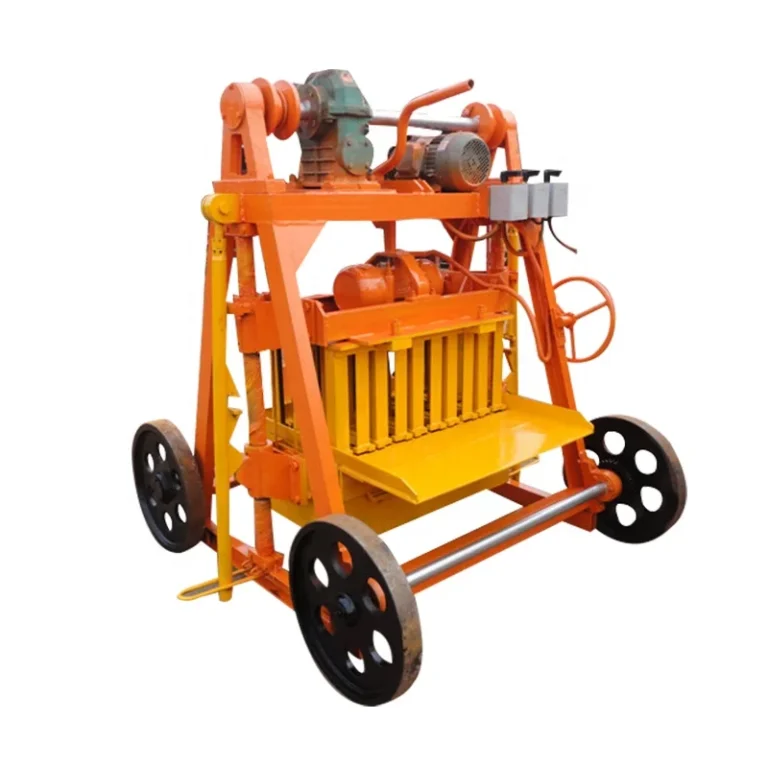
Matched system supply — the QMJ2-45 mobile block making machine is specified alongside its interchangeable moulds and ground-curing layout as one verified package, not assembled from mismatched sources.
Technical Specifications
| Parameter |
Value |
| Model |
QMJ2-45 |
| Product Type |
Mobile Block Making Machine |
| Machine Operation |
Manual mobile egg-laying system |
| Mould Format Options |
400×200×200 mm / 400×150×200 mm / 400×100×200 mm hollow brick |
| Pallet Requirement |
None required (on-ground egg-laying production) |
| Labor Requirement |
1 to 3 workers |
| Cycle Time |
25–30 s depending on hollow brick format |
| Output Capacity |
160 pcs/h based on 400×200×200 mm hollow block (2 pcs/mould) |
| Output Capacity |
240 pcs/h based on 400×150×200 mm hollow block (3 pcs/mould) |
| Output Capacity |
320 pcs/h based on 400×100×200 mm hollow block (4 pcs/mould) |
| Daily Output (8 h) |
1280 pcs based on 400×200×200 mm hollow block |
| Daily Output (8 h) |
1920 pcs based on 400×150×200 mm hollow block |
| Daily Output (8 h) |
2560 pcs based on 400×100×200 mm hollow block |
| Power Source |
Verify voltage and frequency against local site supply |
| Control System |
Manual operation (vibration motor assist to be confirmed) |
| Hydraulic Pressure |
Not stated in source (basis to be confirmed) |
| Vibration Force |
Not stated in source (basis to be confirmed) |
| Mobility |
Free-moving on site, no fixed plant infrastructure required |
| Space Requirement |
Usable in confined site areas |
| Automation Level |
Manual |
| Stacking Method |
Manual handling |
| Standards |
ISO 9001:2000, CE |
Application Suitability
| Application |
Output Context |
| On-site hollow brick production for housing contractors |
Blocks laid directly on prepared ground across the project footprint |
| First-stage block plant for entrepreneurs |
Low-investment entry with no pallet inventory or curing rack required |
| Remote construction sites without grid power |
Manual operation with minimal external power dependency |
| Material distributors testing local demand |
Small batch production across multiple hollow brick formats before scaling |
| Infrastructure project block supply |
Mobile production relocated as the work front advances |
What Output Figures Leave Out on a Mobile Block Machine
Every capacity number must name the block format behind it, or it means nothing.
The most common complaint I hear on sites across West Africa and South Asia is that a mobile egg-laying machine never reaches the daily output printed in the brochure. The reason is almost always the same: the quoted figure was based on the smallest block format the mould can make, but the contractor is producing the largest one. When a QMJ2-45 mobile block making machine for sale is listed at a single headline number, the buyer has no way to compare it against what they will actually run. On a recent project in Nigeria, the contractor ordered based on a capacity figure that turned out to assume a format his market does not buy. [NEED_CITE: mismatch between quoted capacity and actual block format as leading cause of buyer dissatisfaction in manual block machines]

Where the QMJ2-45 Sits in the Full Machine Range
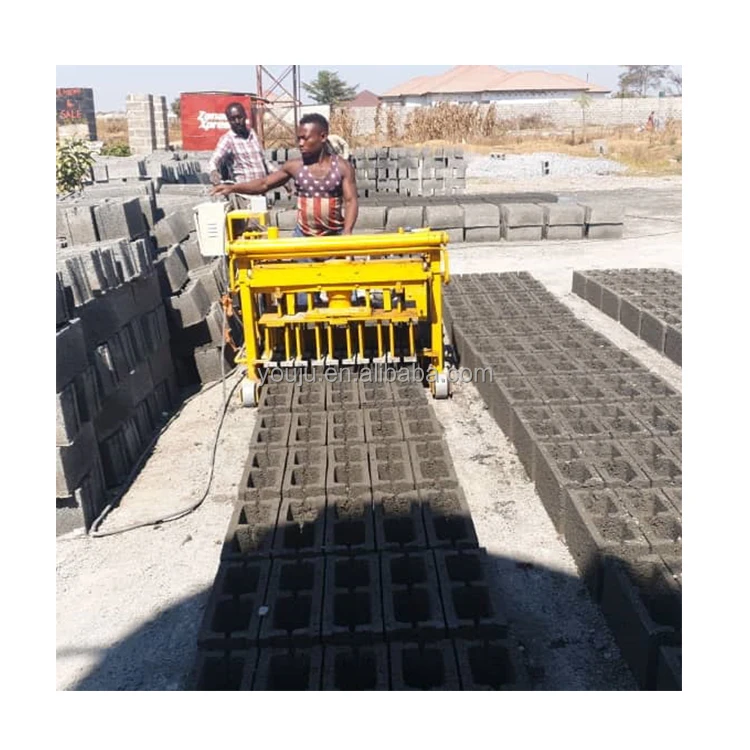
This machine occupies the entry position in the complete block machine lineup. It requires no fixed foundation, no pallet investment, and no curing rack infrastructure — the blocks are laid directly on the ground and cured in place. For a contractor producing hollow bricks on a single housing project, or an entrepreneur testing a new market with limited capital, it removes the overhead that a stationary line demands.
When daily volume outgrows what a manual egg-laying machine can sustain, the step up is a semi-automatic stationary press with pallet circulation and a fixed curing area. The QMJ2-45 mobile block making machine for sale gives buyers a working entry point without locking them into a plant footprint they may not yet need. The full range extends from this tier through high-capacity automatic lines with batching, stacking, and cubing.
How the Range Maps to Investment and Site Footprint
Each tier in the block machine range carries a different combination of capital outlay, labor headcount, and land area. The QMJ2-45 demands the least of all three — a small leveled area, one to three workers, and no supporting equipment beyond a mixer. A semi-automatic line introduces pallets, a pallet return system, and a covered curing zone, which increases both the investment and the site footprint substantially. Fully automatic lines add batching plants, automatic stackers, and cubing systems that require dedicated power supply and a larger operational team. [NEED_CITE: capital and footprint comparison across block machine automation tiers for project planning]
Buyers who understand this spectrum can place themselves accurately before requesting a quotation, which shortens the configuration process and prevents over-investment in capacity the project cannot yet absorb.
Reading the Specs That Actually Matter for Egg-Laying Production
The cycle time of 25–30 seconds governs how many blocks one operator can lay in a shift, and it varies with the mould format loaded. The three available hollow brick sizes — 400×200×200 mm, 400×150×200 mm, and 400×100×200 mm — each produce a different number of pieces per cycle (two, three, and four respectively), so throughput changes meaningfully depending on which format your market requires.
The absence of a pallet requirement eliminates a recurring cost that stationary lines carry: pallet replacement, pallet storage, and pallet-driven curing area constraints. On a ground-laying machine, the limiting factor becomes available flat ground and curing time, not pallet inventory. The manual operation means vibration force and hydraulic pressure values must be confirmed before the machine is matched to a local mix design — high-clay soils common in parts of South Asia and sub-Saharan Africa require different consolidation energy than clean crushed-sand mixes. Voltage and frequency must also be locked down, since any vibration motor fitted to the unit must match the local grid or generator supply.
The Cost of Skipping Site-Specific Configuration
When a mobile block making machine for sale arrives on site configured for a standard sand-cement ratio that the local supplier cannot match, block strength drops and rejection rates climb. I have watched crews in humid tropical conditions try to compensate by adding cement, which raises cost without solving the consolidation problem. The underlying issue is that vibration force was never verified against the buyer’s actual aggregate and moisture range. Ground conditions also matter: soft or uneven surfaces cause blocks to crack during the egg-laying release, and this is not a machine defect — it is a site preparation gap that no specification sheet can prevent on its own. [NEED_CITE: impact of unverified mix design and ground conditions on egg-laying block machine output quality]
Why Buyers Source This Tier Through Shiyue
Block machinery is the sole product focus, so the QMJ2-45 is supplied with its mould set, ground preparation guidance, and handling workflow specified as one package. Machine configuration is set against the buyer’s actual mix design and target block format, not pulled from a default catalog line. Mould design covers the hollow brick sizes the buyer’s local market sells, and custom mould drawings can be produced for formats outside the standard three. The automation level is selectable across the range, so a buyer starting with this manual unit has a documented upgrade path when volume justifies a stationary line.
Documentation & Verification
- Capacity calculation sheet stating the exact hollow brick format behind each output figure
- Mould drawing package confirming dimensions and interchangeability of all included formats
- Voltage and vibration motor specification matched to buyer’s site power supply
- Factory test record showing actual cycle time per loaded mould format
- CE compliance documentation for import clearance where applicable
Installation, Commissioning & Support
- Site leveling guidance for ground surface where blocks are laid directly without pallets
- Power supply verification for vibration motor voltage and frequency before dispatch
- On-site first-run commissioning with mix adjustment to local aggregate properties
- Operator training covering mould changeover between the three hollow brick formats
- Wear parts list identifying components due for first replacement cycle
- Daily maintenance checklist specific to manual egg-laying machine operation
What to Prepare Before Requesting a Quote
To configure the QMJ2-45 correctly, share the hollow brick format your market sells most, the target daily output you need to meet, and the raw materials available locally — especially the sand or aggregate type and its typical moisture content. Confirm your site power supply voltage and frequency, and describe the ground surface where blocks will be laid. If you are evaluating this machine against a future upgrade to a stationary line, mention that timeline so the configuration can accommodate your growth plan.
Frequently Asked Questions
Q: How is the output capacity of the QMJ2-45 verified for each block format?
A: Each capacity figure is calculated from the number of pieces per mould, the cycle time range, and an eight-hour shift. The 160 pcs/h rate applies specifically to 400×200×200 mm hollow blocks at two pieces per cycle. Factory test records confirm actual cycle times before dispatch so buyers can verify against their own shift planning.
Q: Where does this machine sit compared to semi-automatic and automatic tiers?
A: The QMJ2-45 is the entry-level tier requiring no pallets, no fixed plant, and minimal capital. Semi-automatic lines add pallet circulation and a curing zone for higher volume. Fully automatic lines add batching, stacking, and cubing. Each tier increases investment, footprint, and labor in defined steps.
Q: What is the upgrade path from this mobile machine to a fixed line?
A: Buyers who outgrow manual egg-laying output can transition to a semi-automatic stationary press that reuses the same block format knowledge and mould design principles. The machine, mould, and handling configuration are specified together, so the upgrade path is documented from the initial purchase stage.
Q: Which hollow brick formats can the mould system produce?
A: The standard mould set covers 400×200×200 mm, 400×150×200 mm, and 400×100×200 mm hollow bricks. Custom moulds can be designed and manufactured to buyer drawings for formats outside this range, with cycle time and output recalculated for each new format.
Q: What site conditions are needed to operate this machine?
A: The QMJ2-45 requires a level ground surface for egg-laying production, space for ground-cured blocks, and one to three workers. Any vibration motor must match local voltage and frequency. A water supply for mix preparation and curing is also necessary on site.

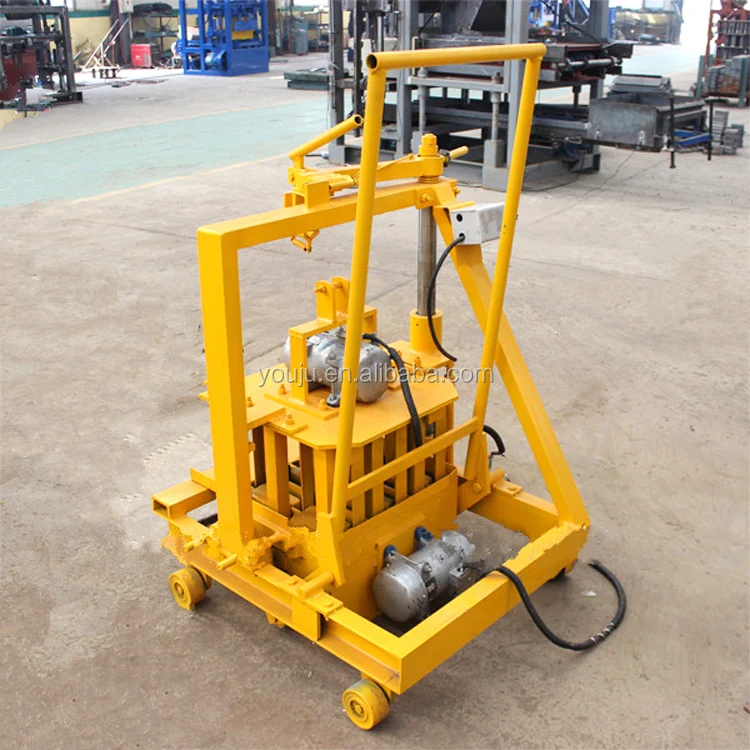
 Mobile block machine