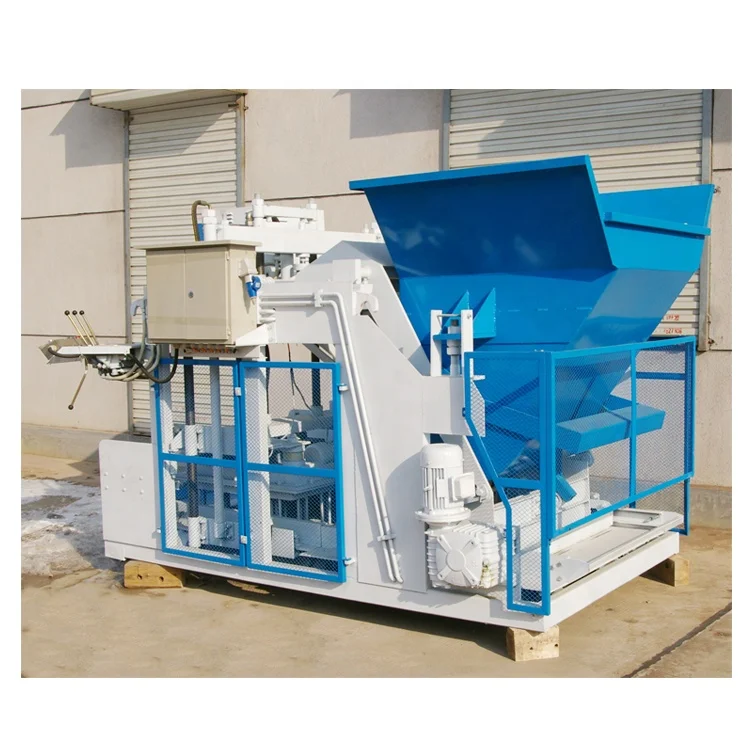
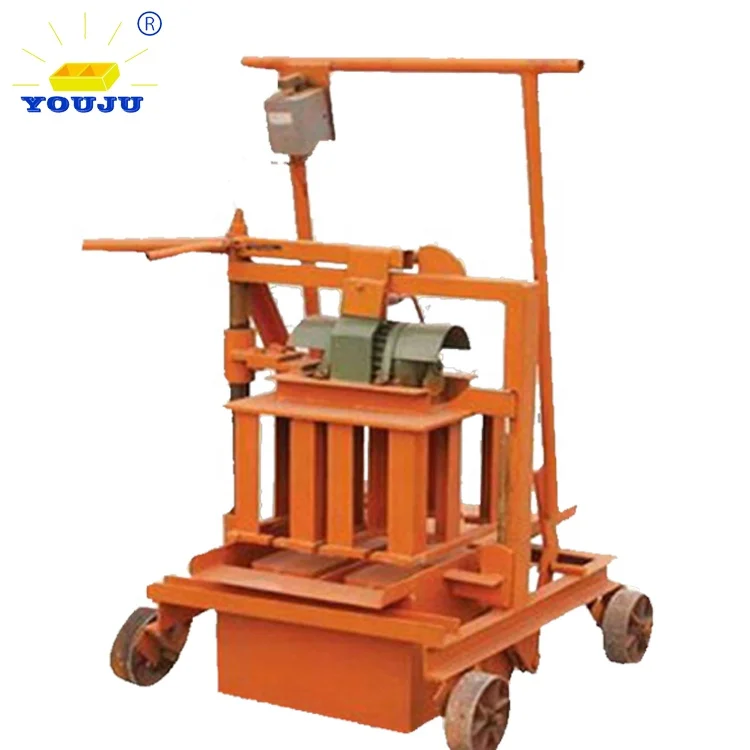
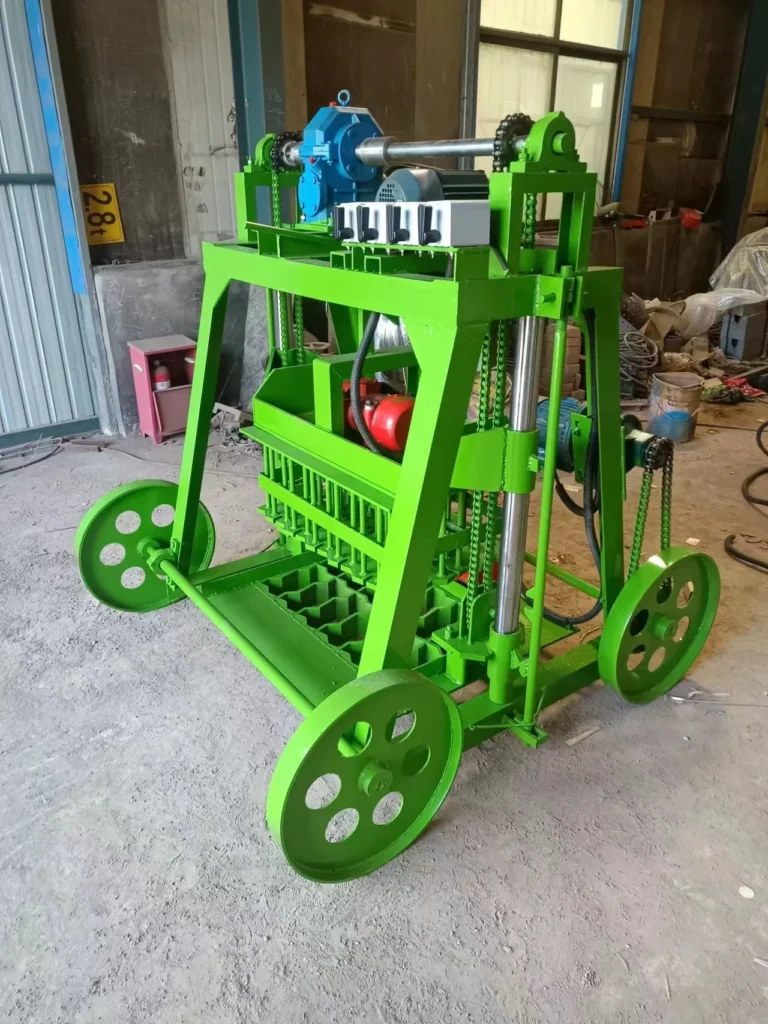
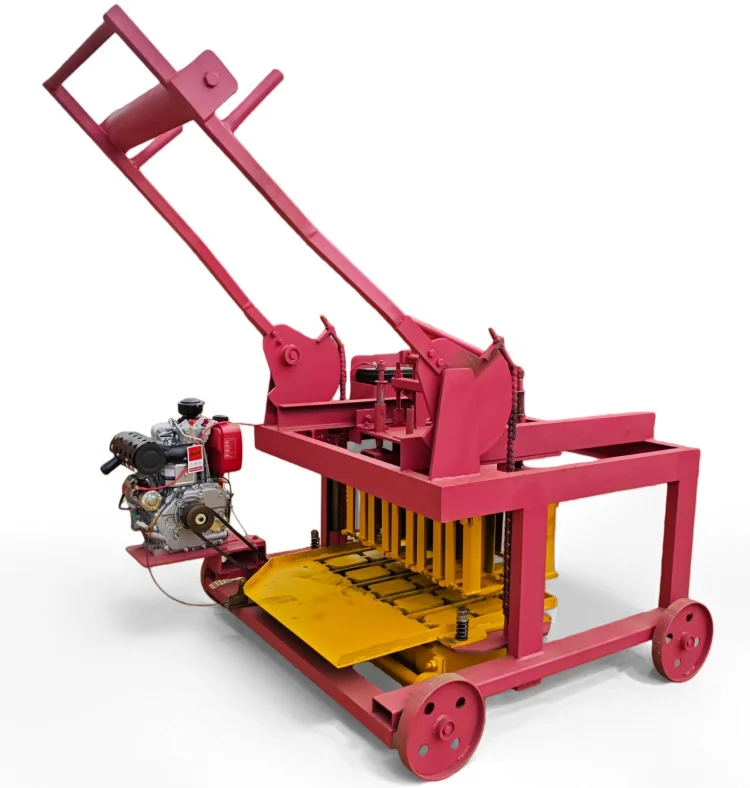
Complete System Matching — the QMJ2-45 mobile block machine is specified as a matched unit with its moulds, power requirements, and output capacity calculated per block format rather than quoted as a single cycle figure.
Technical Specifications
| Parameter |
Value |
| Model |
QMJ2-45 |
| Product Type |
Mobile Block Making Machine |
| Moulding Cycle |
25–30 seconds |
| Pallet Requirement |
No pallets required (egg-laying type) |
| Power Source |
Electric motor |
| Labor Requirement |
1 to 3 workers |
| Mould Change |
Manual mould swap for different hollow brick formats |
| Output Capacity (400×200×200mm hollow block) |
2 pcs/mould, 160 pcs/hour, 1280 pcs per 8-hour shift |
| Output Capacity (400×150×200mm hollow block) |
3 pcs/mould, 240 pcs/hour, 4800 pcs per 8-hour shift (basis not stated in source — confirm block format, material, and wall thickness) |
| Output Capacity (400×100×200mm hollow block) |
4 pcs/mould, 320 pcs/hour, 2560 pcs per 8-hour shift |
| Portability |
Free movement across site, usable in confined spaces |
| Assembly State |
Mobile, no fixed plant infrastructure required |
| Standards |
ISO 9001:2000, CE |
Application Suitability
| Application |
Material or Output |
| On-site hollow block production without a fixed plant |
Concrete mix with locally sourced sand, gravel, and cement |
| Small workshop block manufacturing |
Crushed stone and cement blend for hollow blocks |
| Construction project site block making |
River sand or manufactured sand with cement binder |
| Entrepreneur first block plant with low investment |
Standard concrete hollow blocks in three size formats |
What "Pieces per Hour" Actually Means for Your Daily Output
Every capacity figure on this page is tied to a specific block dimension, so the number you plan around is the number you will produce.
A mobile block making machine manufacturer quoting a single output number without stating the block format is leaving out the variable that matters most. A mould producing two 400×200×200mm blocks per cycle delivers a very different daily total than a mould producing four 400×100×200mm blocks in the same cycle time. I have watched buyers receive machines and then discover that their target block format was the slower one, cutting their planned revenue nearly in half before the first week ended [NEED_CITE: block format impact on daily output calculations].

Where the QMJ2-45 Sits in the Machine Range
The QMJ2-45 occupies the entry tier of the mobile block machine lineup. It requires no pallets, no curing racks, and no fixed plant foundation, which places it below semi-automatic and fully automatic stationary lines in both capital outlay and site preparation. For a buyer surveying options before committing to a plant build, this model answers whether mobile production meets daily volume needs before stepping up to a pallet-based system.
How No-Pallet Production Changes Site Layout
Egg-laying machines deposit each block directly onto the ground surface and move forward to the next position. This eliminates the need for pallet purchasing, pallet storage areas, and pallet return conveyors. The trade-off is that the curing area must be a flat, level concrete floor large enough to hold a full shift of blocks in place until they gain enough strength to be moved. A mobile block making machine manufacturer should confirm your floor area against daily output before the machine ships [NEED_CITE: curing area calculation for egg-laying block machines].
Reading the Cycle Time and Output Figures
The 25–30 second moulding cycle governs how many blocks the QMJ2-45 can form in an hour, but the per-mould piece count varies with format. At 400×200×200mm, two blocks drop per cycle for 160 pieces per hour. At 400×100×200mm, four blocks drop per cycle for 320 pieces per hour. The vibration force and motor power remain constant across formats, meaning the denser, larger block demands more from the mix design to hold its shape without pallet support. Local aggregate grading and cement content directly affect whether the stated cycle time is achievable on your material [NEED_CITE: vibration force and mix design relationship in mobile block production].
The Cost of Skipping the Material Report
Ordering a mobile egg-laying machine without confirming that your local sand and aggregate can form a stable, self-supporting block leads to collapsed bricks and wasted shifts. High clay content in river sand slows moulding because the mix sticks to the mould walls, and the blocks slump before they set. I once spent hours on a late-night call adjusting vibration parameters because the buyer’s sand source had changed since the sample was sent. Providing a raw material report before configuration avoids this entirely [NEED_CITE: aggregate quality effects on block formation in egg-laying machines].
Why Sourcing from a Focused Block Machinery Supplier Matters
Block machines as a single focus means the QMJ2-45 is specified alongside its moulds, power requirements, and handling needs as one matched system. Configuration is set against your actual mix design and local aggregate, not a catalogue default. Mould design covers the hollow block formats your market sells, with custom drawings available. The automation level is selectable so you can begin with this manual mobile unit and step up later. Installation support includes operator training so your crew understands mould change procedures and cycle timing from the first day.
Documentation & Verification
- Line layout and capacity calculation stating the block format assumed for each output tier
- Mould drawing and format list confirming the three hollow brick sizes the QMJ2-45 produces
- Voltage and control language confirmation document signed off before production begins
- Factory test record showing actual cycle times on the configured block format before dispatch
- Wear parts and mould list with availability terms for your first replacement order
Installation, Commissioning & Support
- Flat concrete floor required as curing surface, sized to hold one full shift of QMJ2-45 output
- Electric power connection at confirmed voltage and frequency, with dedicated circuit for the motor
- Machine arrives assembled and mobile, requiring no fixed foundation or anchor bolts
- On-site commissioning includes first-run cycle timing verification on your actual mix
- Operator training covers mould change procedure, mix consistency checks, and daily maintenance points
- Spare mould and wear parts list provided with lead times for your region
What to Include in Your Inquiry
Share the hollow block format you sell most, your local sand or aggregate type with a basic sieve analysis, and your target daily output so the capacity calculation matches your actual product. Confirm your site voltage and frequency, and describe the curing floor area you have available.
Frequently Asked Questions
Q: How is the QMJ2-45 capacity calculated, and which block format does each output figure assume?
A: Each output figure is tied to a specific block dimension. The 160 pieces per hour figure assumes 400×200×200mm hollow blocks at two per mould. The 320 pieces per hour figure assumes 400×100×200mm blocks at four per mould. All figures are based on a 25–30 second moulding cycle. The 400×150×200mm output carries a source notation requiring format and material confirmation before it can be used for planning.
Q: What voltage and frequency options are available for my market?
A: The QMJ2-45 runs on an electric motor whose voltage and frequency must match your local supply. Common configurations include 220V, 380V, and 440V at 50Hz or 60Hz. Voltage and frequency are confirmed in writing before production starts so the motor and wiring arrive ready for immediate connection, avoiding commissioning delays caused by mismatched electrical specifications.
Q: Where does the QMJ2-45 sit in the full range, and when should a buyer step up?
A: The QMJ2-45 is the entry-tier mobile machine, designed for buyers who need block production without pallet infrastructure or a fixed plant. When daily volume requirements exceed what a single mobile unit can deliver, or when the product range expands to include pavers and solid blocks, stepping up to a semi-automatic pallet-based line becomes necessary for consistent output and format variety.
Q: What site conditions does a mobile egg-laying machine require?
A: The QMJ2-45 needs a flat, level concrete floor large enough to hold a full shift of blocks in place for curing. The surface must be smooth so blocks release cleanly when deposited. Overhead cover is recommended in rainy climates. The machine moves freely across the floor on its own wheels, so no fixed foundation or anchor bolts are required.
Q: How are moulds and spare parts supplied after the first replacement?
A: A wear parts and mould list is provided with the machine, listing each replaceable component and its lead time. Moulds for the three standard hollow block formats are kept in production, and custom mould drawings can be supplied for additional formats. First replacement timing depends on your aggregate abrasiveness and daily run hours, which we review during commissioning.

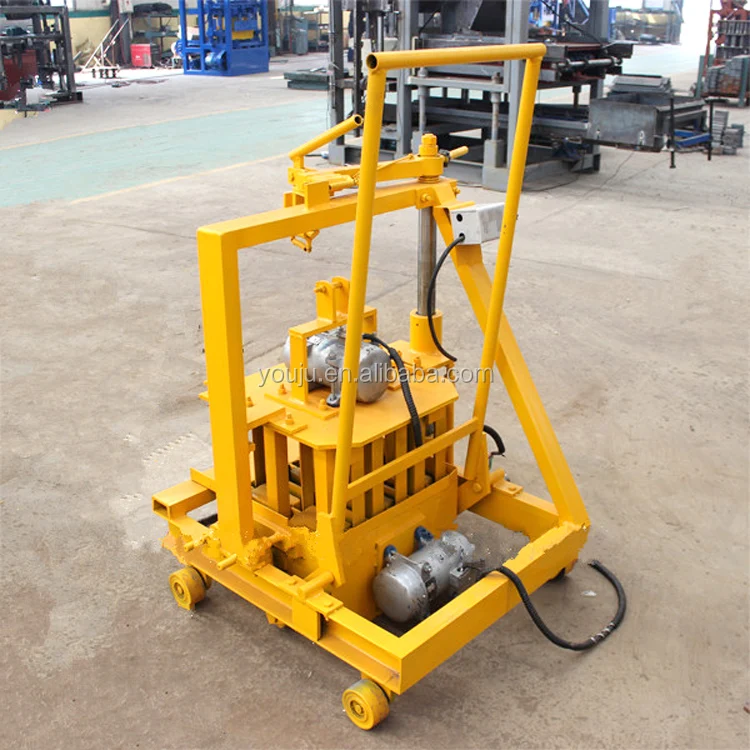
 Mobile block machine