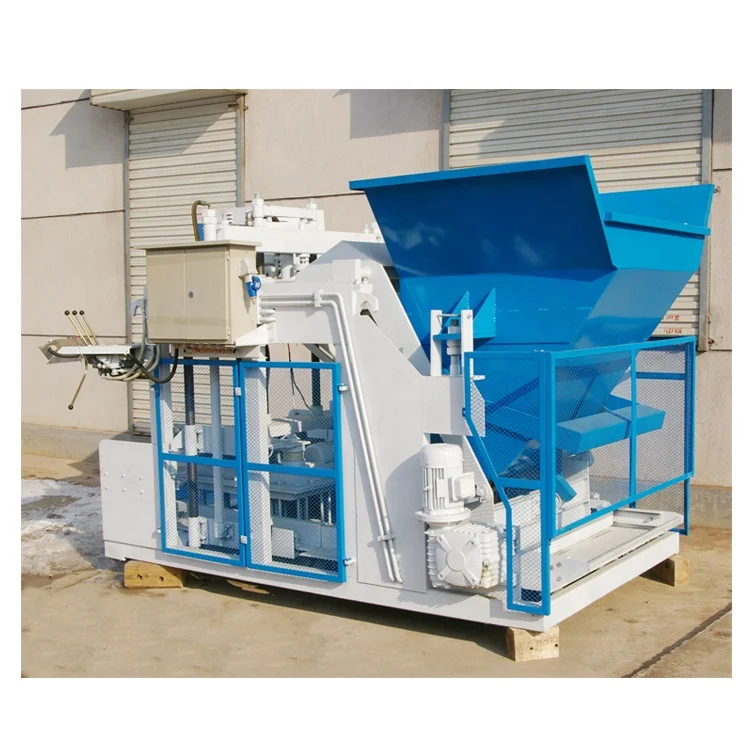
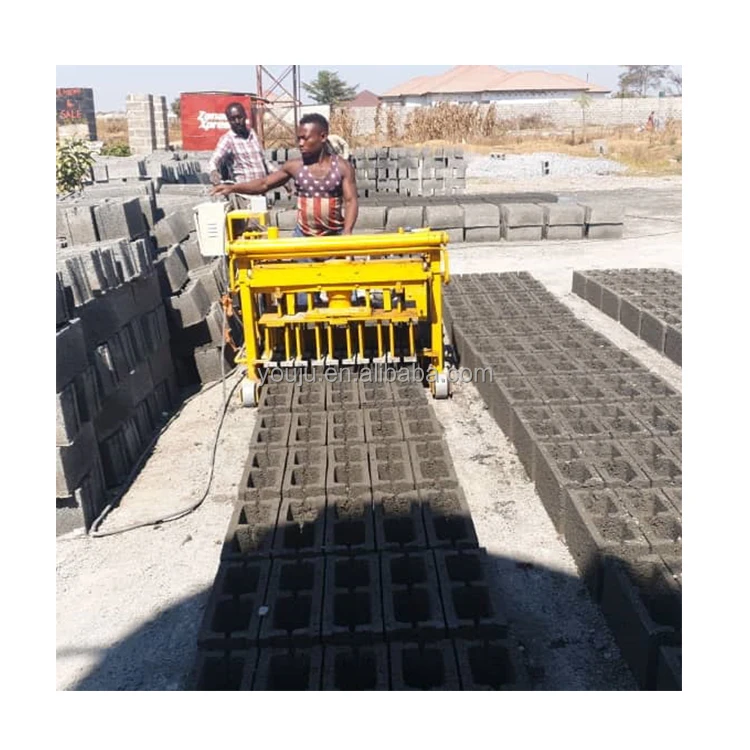
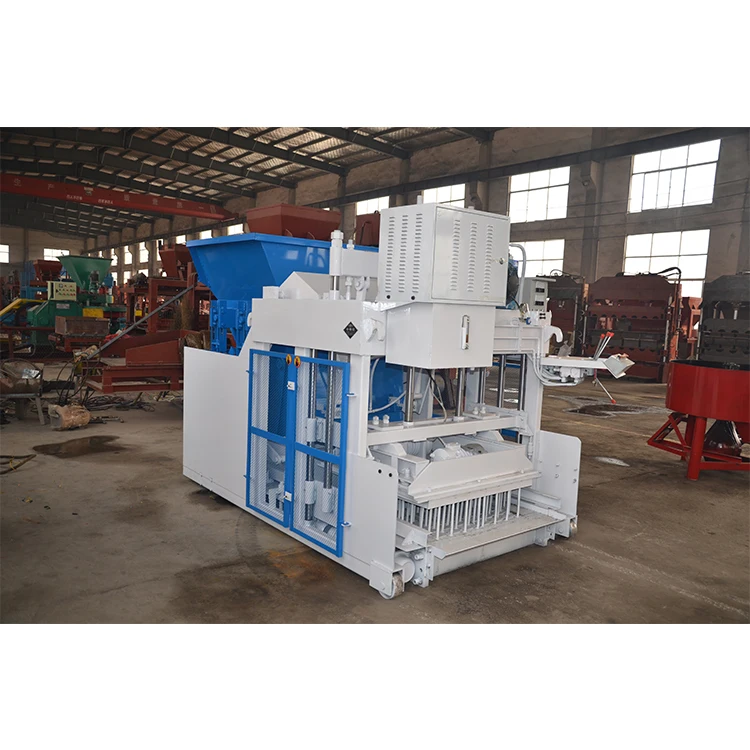
Wear Kit Matched to Your Aggregate — Every QMJ2-45 ships with a mould liner and scraper plate set sized against the buyer’s actual sand and cement mix, so the first replacement does not halt the site.
Technical Specifications
| Parameter |
Value |
| Model |
QMJ2-45 |
| Product Type |
Mobile Mini Portable Cement Block Making Machine |
| Machine Type |
Mobile / Egg-laying |
| Operation Mode |
Manual |
| Pressure Type |
Hydraulic Pressure |
| Pallet Requirement |
None (pallet-free / egg-laying) |
| Labor Requirement |
1 to 3 workers |
| Mould Format Supported |
400×200×200 mm / 400×150×200 mm / 400×100×200 mm hollow brick |
| Cycle Time |
25–30 s per mould |
| Output per Mould (400×200×200 mm) |
2 pcs |
| Output per Mould (400×150×200 mm) |
3 pcs |
| Output per Mould (400×100×200 mm) |
4 pcs |
| Hourly Output (400×200×200 mm hollow block) |
160 pcs/h (basis: 25–30 s cycle, continuous operation) |
| 8-Hour Output (400×200×200 mm hollow block) |
1,280 pcs/shift |
| Hourly Output (400×150×200 mm hollow block) |
240 pcs/h (basis not stated in source — confirm block format / material / thickness) |
| 8-Hour Output (400×150×200 mm hollow block) |
4,800 pcs/shift (basis not stated in source — confirm block format / material / thickness) |
| Hourly Output (400×100×200 mm hollow block) |
320 pcs/h (basis: 25–30 s cycle, continuous operation) |
| 8-Hour Output (400×100×200 mm hollow block) |
2,560 pcs/shift |
| Stacking Method |
Manual — blocks laid directly on prepared ground |
| Key Features |
Pallet-free operation, interchangeable moulds, compact mobile footprint |
Application Suitability
| Application |
Material or Output |
| On-site hollow block production for housing projects |
Cement, crushed stone, local sand — 400×200×200 mm format |
| Small workshop block manufacturing |
Cement, river sand, gravel aggregate — 400×150×200 mm format |
| Contractor self-supply for masonry walls |
Cement, quarry dust, coarse sand — 400×100×200 mm format |
| Entrepreneur first plant start-up |
Standard cement and locally available fine aggregate |
| Remote or limited-space construction sites |
Any mix compatible with manual feeding and egg-laying curing |
What "Output per Hour" Really Means on a Small Mobile Press
A cycle time of 25–30 seconds only translates to quoted hourly figures when the crew, mix and ground preparation keep pace without interruption.
Many buyers receive a single headline capacity number that assumes the largest block format or the most favourable cycle assumption, then find daily site output falls well short once mould changes, mix batching pauses and ground levelling are factored in. On a mobile block making machine manufacturer quote, the gap between catalogue output and real shift output is where project schedules slip. The QMJ2-45 lists output separately for each of the three hollow block formats it supports, so a buyer can size the machine against the format the local market actually purchases rather than the format that produces the highest headline number [NEED_CITE: typical output variance between quoted and actual block plant capacity].

Placing the QMJ2-45 in the Full SHIYUE Range
The SHIYUE range spans mobile egg-laying units, semi-automatic stationary lines and fully automatic plants with pallet circulation and cubing. The QMJ2-45 occupies the entry tier — a manual, pallet-free mobile block making machine manufacturer option for buyers who do not yet need a fixed production hall or automated stacking. Understanding where this machine sits helps a buyer decide whether current volume justifies the next step up or whether a compact egg-laying unit covers the project adequately.
When a Mobile Unit Outperforms a Fixed Plant
A fixed block line demands a concrete floor, curing racks, pallet inventory and a three-phase power supply sized for the full press and mixer circuit. On a remote housing site or a short-run contractor project, mobilising that infrastructure costs more than the blocks themselves. The QMJ2-45 removes the pallet and rack requirement entirely — blocks are laid on a level bed and left to cure in place, which keeps site infrastructure to a prepared ground area and basic weather cover [NEED_CITE: site infrastructure cost comparison between fixed and mobile block production].
Reading the Specs That Decide Daily Output
Cycle time of 25–30 seconds governs how many moulds the operator can complete per hour, but that figure assumes a consistent mix arriving at the hopper and a level curing surface ahead of the machine. The three supported hollow block formats — 400×200×200, 400×150×200 and 400×100×200 mm — each yield a different number of pieces per mould (2, 3 and 4 respectively), so hourly piece count changes with the format chosen. Manual operation means the crew controls the pace: one to three workers handle feeding, moving and levelling. Hydraulic pressure compacts the mix inside the mould before the egg-laying release, and the consistency of that compaction depends on mix moisture and aggregate gradation matching what the hydraulic circuit was set for at the factory. A mobile block making machine manufacturer must confirm the buyer’s local sand type before finalising the vibration and pressure settings.
The Cost of Skipping the Wear Parts Conversation
Buyers who order a mobile press without specifying a wear kit matched to their aggregate often discover that the mould liner wears through within weeks on abrasive local sand. When the first replacement is needed, the machine stops and waits for a shipment that was never planned. In after-sales I saw a small contractor site lose nearly two weeks of production because no spare liner had been included with the original dispatch. That downtime erases whatever capital saving the buyer made by choosing a smaller machine in the first place [NEED_CITE: typical mould liner replacement intervals on abrasive aggregate].
Why Source This Machine Through the SHIYUE Range
The QMJ2-45 is specified as part of a single-supplier system — machine, mould and wear parts come from one source rather than assembled from separate vendors. Capacity calculations provided with every quotation state the exact block format assumed, so the buyer can verify shift output before committing. Mould drawings and format lists are supplied before production, allowing the buyer to confirm the hollow block dimensions match local market demand. Automation is selectable across the wider range, meaning a buyer who starts with a manual QMJ2-45 can move to a semi-automatic or automatic line later without changing suppliers. Documentation packages include voltage and control language confirmation to avoid commissioning delays after the machine arrives on site.
Documentation & Verification
- Capacity calculation sheet stating output per format for 400×200×200, 400×150×200 and 400×100×200 mm hollow blocks
- Mould drawing with dimensional tolerances for each hollow block format ordered
- Factory test record on buyer’s specified mix design and aggregate sample
- Hydraulic and electrical schematic with confirmed voltage and frequency
- Wear parts and mould liner list with recommended replacement intervals
- Operation and maintenance manual in buyer’s confirmed language
Installation, Commissioning & Support
- Level compacted ground area with drainage slope prepared before the QMJ2-45 arrives on site
- Power supply circuit confirmed for rated voltage and frequency before first start-up
- Mould installed and aligned on site with hydraulic pressure set to buyer’s mix sample
- Operator training covers cycle pacing, mix moisture checks and manual egg-laying technique
- Wear kit on site before first mould liner change is due based on local aggregate abrasiveness
- Daily maintenance checklist provided covering hydraulic hose inspection and mould cleaning
Starting Your Enquiry
To size the QMJ2-45 correctly for your project, share the hollow block format your market sells, the daily piece count you need to hit and the type of sand or aggregate available locally. Confirm your site voltage and frequency so the electrical system matches before dispatch. If you are comparing this mobile unit against a semi-automatic line, let us know your curing space and labour availability so the range comparison reflects your actual conditions.
Frequently Asked Questions
Q: How is the QMJ2-45 hourly output calculated for each block format?
A: Hourly output is derived from a 25–30 second cycle time applied continuously. For the 400×200×200 mm hollow block the machine produces 2 pieces per mould, yielding 160 pieces per hour. The 400×100×200 mm format produces 4 pieces per mould at 320 per hour. Figures assume uninterrupted feeding and ground preparation.
Q: Where does the QMJ2-45 sit in the SHIYUE mobile versus semi-automatic versus automatic range?
A: The QMJ2-45 is the entry-tier mobile egg-laying unit — manual operation, no pallets, no fixed plant. Semi-automatic lines add pallet circulation and a mixer circuit. Automatic lines include full stacking and cubing. The range lets a buyer start here and move up without switching suppliers.
Q: What site conditions and space are needed to operate a pallet-free egg-laying machine?
A: The QMJ2-45 requires a level, compacted ground surface with enough length for the machine to travel while laying blocks. No curing racks or pallet storage are needed. Weather cover is recommended for the curing area. One to three workers operate the feeding and movement cycle.
Q: Can I upgrade from the QMJ2-45 to a semi-automatic or automatic line later?
A: Yes. The SHIYUE range includes semi-automatic and automatic tiers that share mould format compatibility. When volume grows beyond what a manual mobile unit supports, a buyer can transition to a stationary line with pallet handling and automatic stacking while retaining the same block formats.
Q: What voltage and frequency options are available, and how is this confirmed before shipment?
A: Voltage and frequency are confirmed during the quotation stage based on the buyer’s site supply. The electrical schematic and control language are verified before production begins. This prevents commissioning delays that occur when a machine arrives configured for a different grid standard than the site provides.

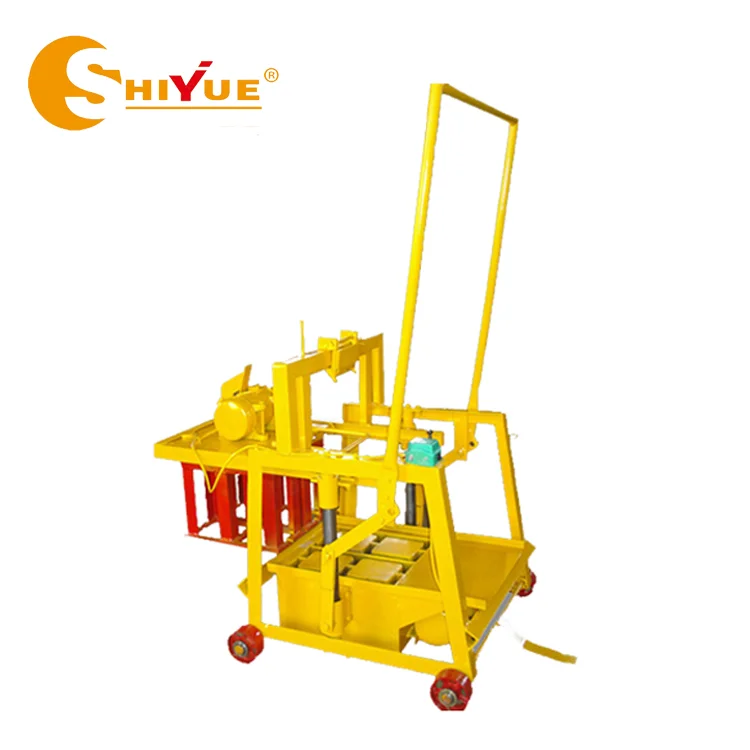
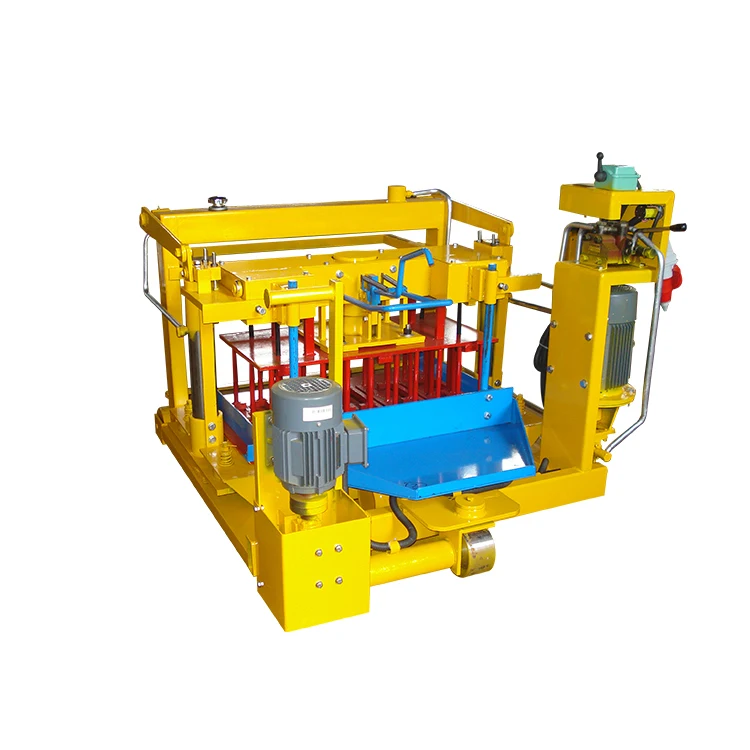 Mobile block machine