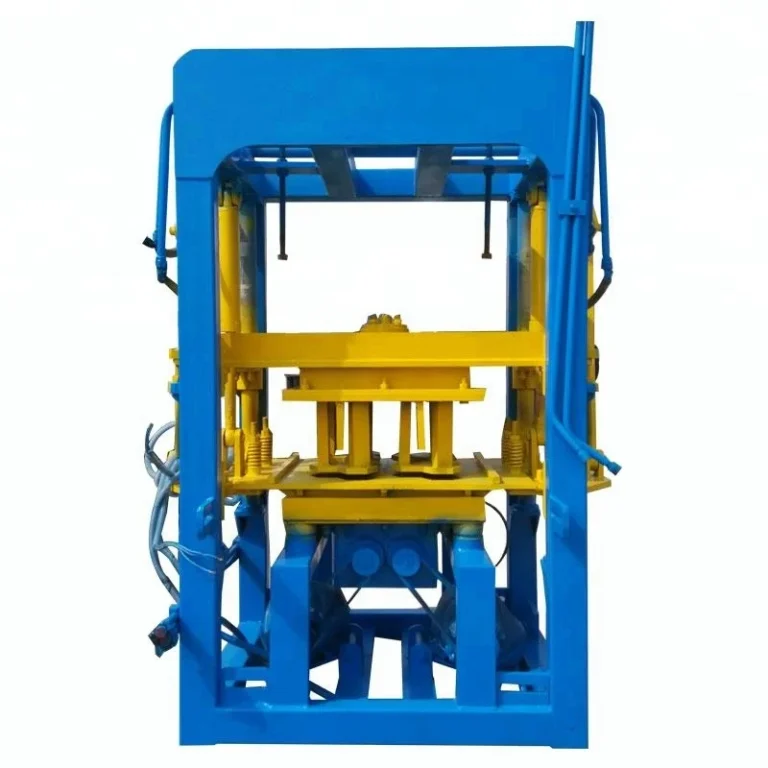
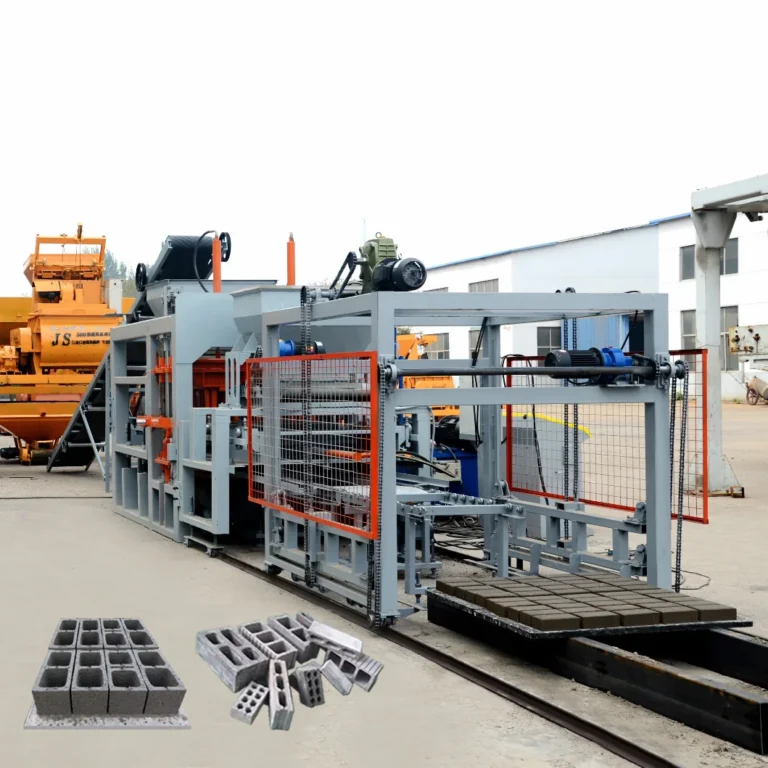
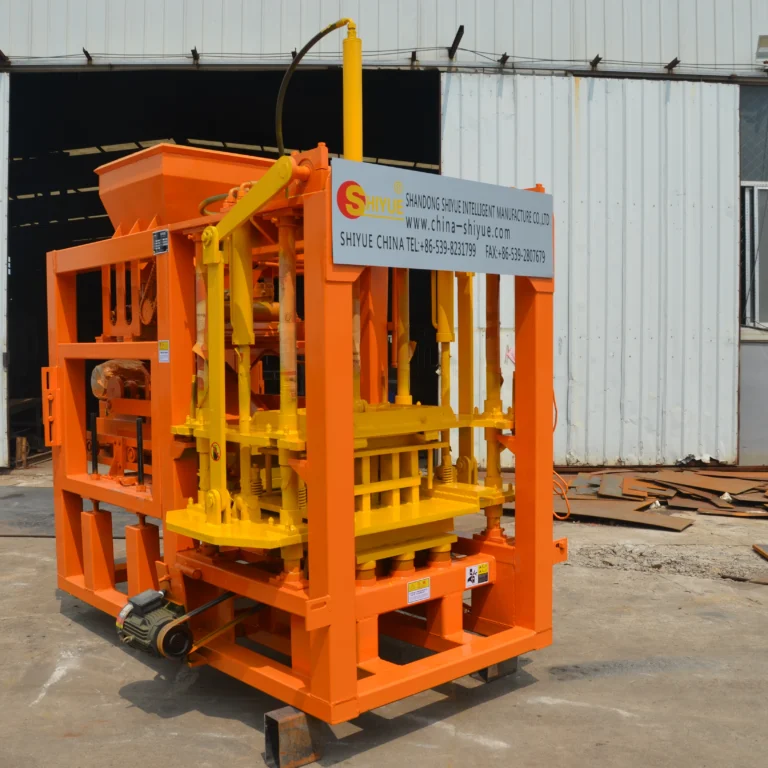
Matched system specification — the QT4-20 is configured as one coordinated set of press, mould, pallet and handling rather than assembled from separate suppliers, so cycle times and output calculations stay consistent across the line.
Technical Specifications
| Parameter |
Value |
| Model |
QT4-20 |
| Product Type |
Hydraulic Concrete Block Making Machine |
| Overall Dimensions (L×W×H) |
7100×1600×2610 mm |
| Total Mass |
5 T |
| Rated Power |
27.5 kW |
| Rated Pressure |
16–21 MPa |
| Vibration Force |
40 kN |
| Vibration Frequency |
4600 r/min |
| Main Vibration Form |
Platform Vibration |
| Pallet Size |
1020×570 mm |
| Molding Area |
400×800 mm |
| Molding Cycle |
15–25 s |
| Demolding Method |
Hydraulic |
| Recommended Factory Area |
500 m² |
| Control System |
PLC Control (brand and language options basis to be confirmed) |
| Voltage & Frequency |
Configurable per target market (basis to be confirmed) |
| Automation Level |
Fully Automatic |
| Warranty |
One year guarantee for the whole machine |
Application Suitability
| Application |
Material or Output |
| Hollow block production |
Crushed stone, sand, cement, fly ash; 400×200×200 mm format, 4 pcs/mould, 7200–9600 pcs/day based on 15–20 s cycle |
| Porous brick production |
Sand, cement, gravel, slag; 240×115×90 mm format, 14 pcs/mould, 20200–26800 pcs/day based on 15–20 s cycle |
| Standard solid brick production |
Crushed stone, sand, cement, dust; 240×115×53 mm format, 28 pcs/mould, 47400–53700 pcs/day based on 15–17 s cycle |
| Paving block production |
Crushed stone, sand, cement, fly ash; format-dependent output via mould change |
What "Pieces per Hour" Actually Means for the QT4-20
Capacity numbers only matter when tied to a specific block format and cycle time.
Many quotations list a single throughput figure without stating which block size or mould configuration produced it. A machine cycling every fifteen seconds on small solid bricks will show a dramatically higher number than the same machine running large hollow blocks on a twenty-five-second cycle. I have watched buyers sign off on a full-range concrete block making machine expecting a certain daily volume, then discover on commissioning day that their primary product — usually the largest hollow block their market demands — cuts that volume nearly in half. The QT4-20 block machine manufacturer documentation addresses this by publishing output per format with the cycle time assumption stated alongside each figure [NEED_CITE: capacity calculation standards for concrete block machinery].

Where the QT4-20 Sits in the Full Machine Range
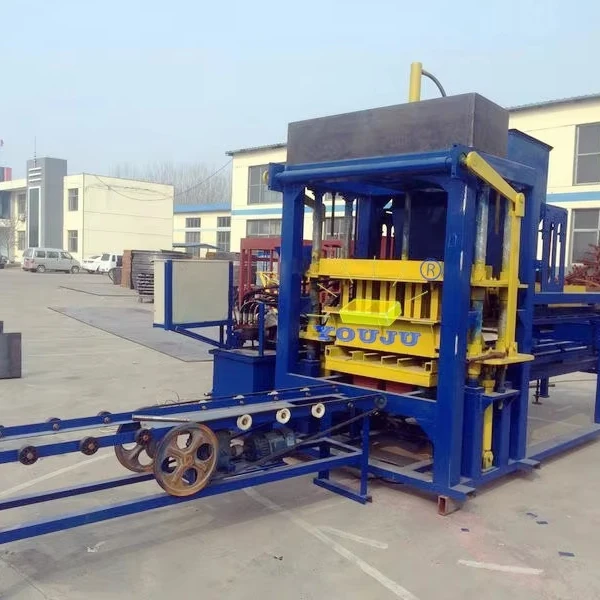
The Shiyue lineup spans mobile egg-layers, semi-automatic stationary presses, and high-capacity fully automatic lines. The QT4-20 occupies the mid-tier stationary position — fully automatic with PLC control, but on a 5 T frame drawing 27.5 kW rather than the heavier power and footprint of the upper-tier models. For a buyer moving past a semi-automatic press or a mobile unit, this model offers a clear step up in daily volume and consistency without committing to the plant area and utility load of a large-capacity line.
Understanding Output Tiers Across the Range
Each tier in the full range is defined by pallet size, molding area, and the automation level wrapped around the press. The QT4-20 uses a 1020×570 mm pallet with a 400×800 mm molding area, placing it between the compact semi-automatic models and the larger pallet formats above. Buyers comparing across the range should match their primary block format to the molding area first, then check whether the automation level — from manual pallet handling through to automatic stacking — fits their labour situation [NEED_CITE: automation level selection for block plant investment].
How Pressure, Vibration, and Pallet Size Shape Real Output
The 16–21 MPa hydraulic pressure and 40 kN platform vibration at 4600 r/min work together to compact the mix into a dense block that holds its shape immediately after demolding. Platform vibration distributes force across the full molding area, which matters when running hollow blocks with thin web walls — insufficient vibration leaves weak spots that fail under stacking weight. The 1020×570 mm pallet size determines how many blocks are formed per cycle and must align with the curing rack dimensions and forklift capacity already on site. A mismatch here forces the buyer to replace handling equipment or redesign the curing yard layout. The 15–25 s molding cycle range reflects the difference between a fast-curing standard brick mix and a slower-setting hollow block mix with higher aggregate content.
The Cost of Overlooking Format-Specific Capacity
When a buyer evaluates a machine on a single generic cycle count, the first consequence appears during production planning. Daily output targets are set on the assumption of a cycle time that only applies to small solid bricks, so the hollow block quota is never met. Contracts with construction projects then slip, and the buyer either adds shifts or purchases a second machine to cover the shortfall. I have seen this pattern repeat across markets where hollow blocks are the primary product but the quotation highlighted the standard brick figure [NEED_CITE: common causes of block plant output shortfall].
Why Source This Tier from a Single-Focus Manufacturer
Block machinery is the only product line here, so the QT4-20 press, its moulds, pallets, and handling equipment are specified as one matched system. Configuration starts from the buyer’s actual mix design and local aggregate rather than a catalogue default. Mould design covers the formats the buyer’s market sells, including custom drawings when standard options do not fit. The automation level is selectable — a buyer can begin with semi-automatic pallet handling and add automatic stacking later within the same platform. Installation support includes operator training on the specific mould set and control language delivered with the machine.
Documentation & Verification
- Line layout showing QT4-20 station spacing and curing area matched to 1020×570 mm pallet
- Capacity calculation sheet stating cycle time and block format for each output figure
- Mould drawing and format list covering hollow, porous, standard brick, and paving block
- Hydraulic and electrical schematic with confirmed voltage and PLC language
- Factory test record with photographs before dispatch
Installation, Commissioning & Support
- Foundation pad sized for 7100×1600 mm footprint and 5 T operating mass
- Dedicated power circuit rated for 27.5 kW at confirmed voltage and frequency
- PLC display language set before production to match site operators
- On-site commissioning with mould change procedure trained per format
- Wear parts list covering hydraulic seals and vibration platform components
Starting the Conversation on the Right Foot
To size the QT4-20 accurately within the full range, share the primary block format your market sells, the daily volume you need to hit, and the aggregate materials available locally. Confirm your site voltage, frequency, and the language your operators will need on the PLC display. If you already have curing racks or forklifts on site, provide their dimensions so the pallet and handling configuration can be matched before production begins.
Frequently Asked Questions
Q: How is the QT4-20 daily output calculated, and which block format does each figure assume?
A: Each output figure in the specification is tied to a specific block format and cycle time. Hollow block output of 7200–9600 pieces per day assumes a 400×200×200 mm format with four pieces per mould and a 15–20 second cycle. Porous brick and standard brick figures are calculated the same way with their respective mould counts and cycle ranges stated alongside.
Q: Where does the QT4-20 sit compared to semi-automatic and higher-capacity models in the range?
A: The QT4-20 is a mid-tier fully automatic stationary press. It sits above semi-automatic and mobile models in output and automation, but below the high-capacity automatic lines in pallet size, power draw, and plant footprint. It suits buyers scaling up without committing to the largest tier.
Q: What plant footprint and utility requirements does a buyer need before the QT4-20 arrives?
A: The recommended factory area is 500 m² to accommodate the machine, pallet circulation, and curing racks. The rated power is 27.5 kW, requiring a dedicated circuit at the confirmed voltage and frequency. The foundation must support a 5 T machine across the 7100×1600 mm footprint.
Q: How are voltage, frequency, and PLC language confirmed for the target market?
A: These are confirmed during the quotation stage before production begins. The buyer provides the local voltage, frequency, and phase, along with the preferred PLC display language. This avoids commissioning delays caused by mismatched electrical supply or unreadable control screens after arrival.
Q: Can a buyer start semi-automatic and upgrade later within the Shiyue range?
A: Yes. The platform supports selectable automation levels. A buyer can begin with manual or semi-automatic pallet handling and add automatic stacking or cubing functions later. The upgrade path stays within the same machine family, preserving the existing mould set and pallet format.

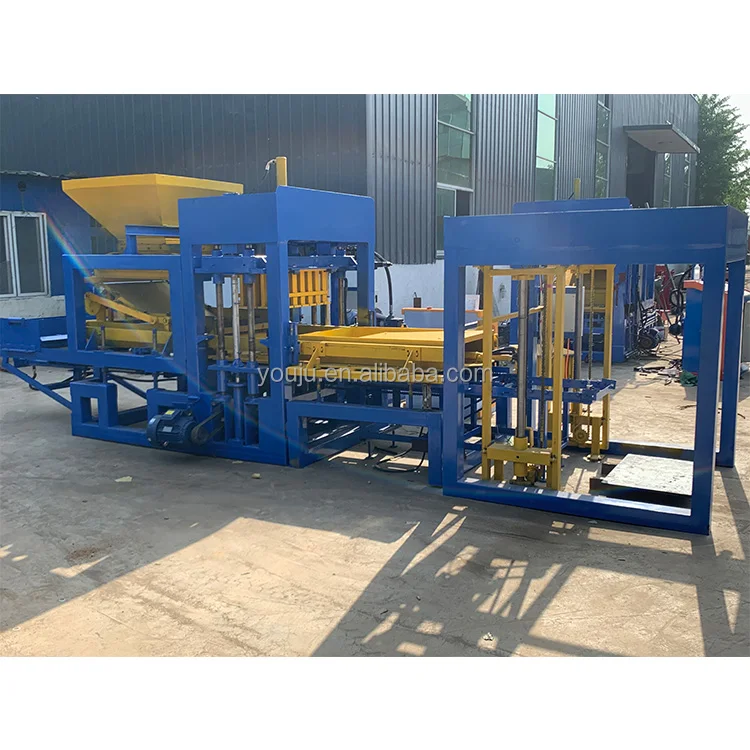 Stationary block machine