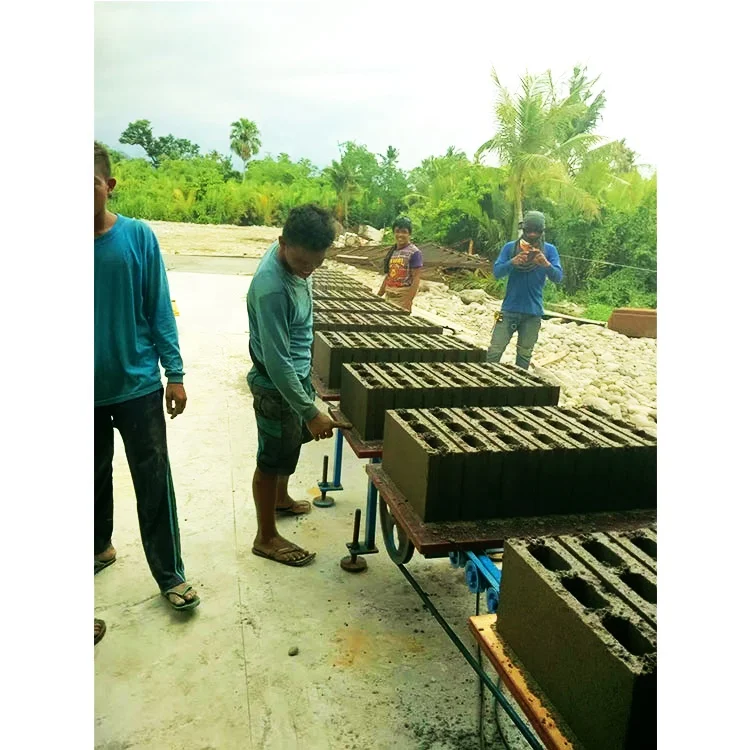
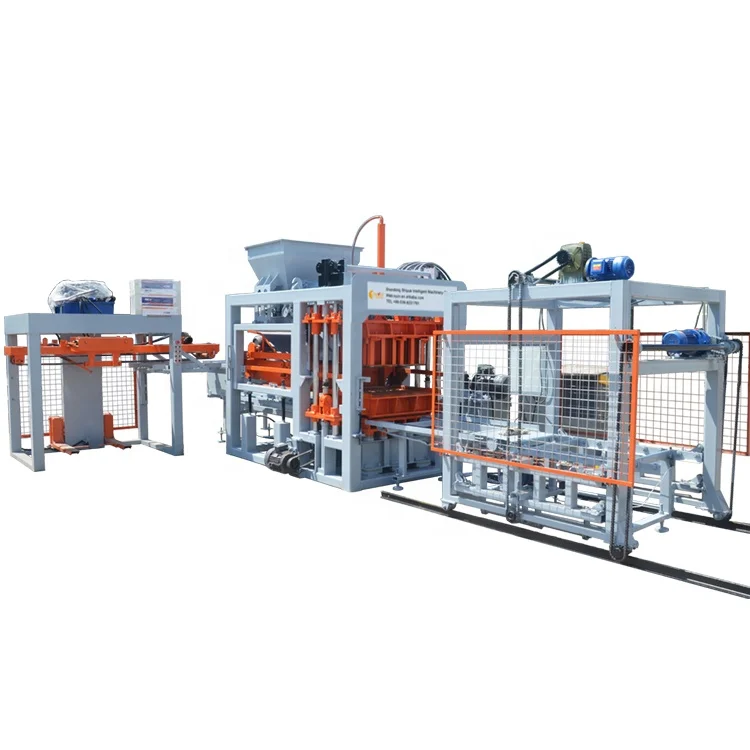
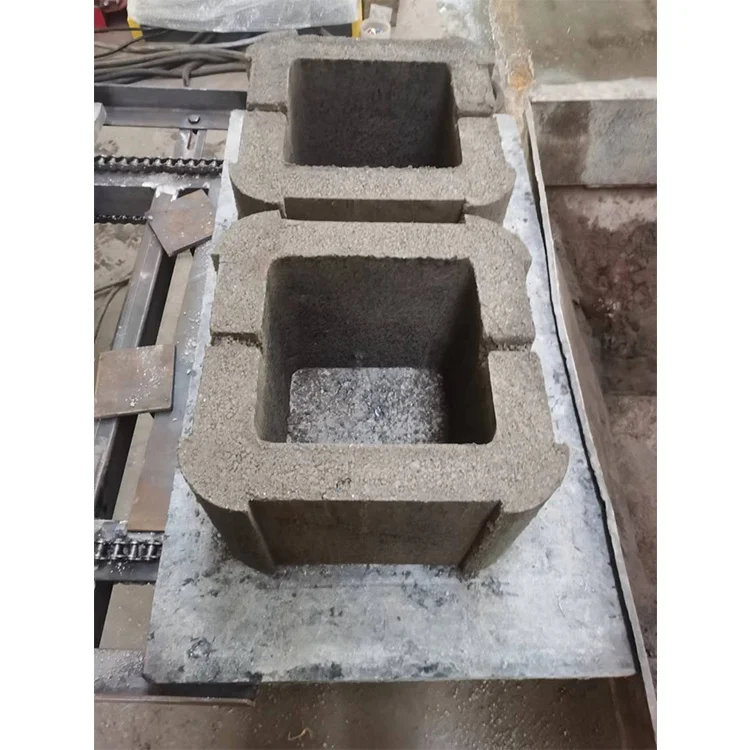
Mid-Range Positioning — The QT6-15 hydraulic block making machine bridges semi-automatic workshop setups and high-capacity lines, sized for buyers who need honest output figures tied to their actual block format.
Technical Specifications
| Parameter |
Value |
| Model |
QT6-15 |
| Product Type |
Hydraulic Concrete Block Making Machine |
| Overall Dimensions (L×W×H) |
8200 × 1700 × 2950 mm |
| Total Mass |
7 T |
| Overall Power |
37 kW |
| Vibration Force |
45 kN |
| Vibration Frequency |
0–60 Hz |
| Vibration Form |
Platform Vibration |
| Moulding Mode |
Automatic loading, vibration moulding |
| Demolding Method |
Hydraulic |
| Pallet Size |
880 × 850 mm |
| Molding Cycle |
15–20 s (basis not stated in source — confirm block format and material) |
| Control System |
PLC with touch screen, fault diagnosis, safety interlock logic |
| Hydraulic System |
Independent integrated station, isolated from dust and vibration |
| Compressive Strength of Output |
>15 MPa |
| Recommended Factory Area |
1200 m² |
| Output — Hollow Block 400×200×200 mm |
8640–11520 pcs/8hr (6 pcs/mould, 15–20s cycle) |
| Output — Hollow Block 400×150×200 mm |
11520–15360 pcs/8hr (8 pcs/mould, 15–20s cycle) |
| Output — Solid Brick 240×115×53 mm |
46080–61440 pcs/8hr (32 pcs/mould, 15–20s cycle) |
| Output — Rectangular Paver 200×100×60 mm |
17280–23040 pcs/8hr (21 pcs/mould, 20–25s cycle) |
| Output — Interlocking Brick 225×112.5×60 mm |
17280–23040 pcs/8hr (15 pcs/mould, 20–25s cycle) |
| Warranty |
1 year for whole machine (excluding spare parts) |
Application Suitability
| Application |
Material or Output |
| Hollow block production for building walls |
Crushed stone, sand, cement, waste ash, slag |
| Solid brick manufacturing for load-bearing structures |
Local aggregates blended with cement |
| Rectangular paving brick for roads and walkways |
Fine aggregate and cement mixtures |
| Interlocking and zigzag brick for driveways and landscapes |
Graded aggregate with cement binder |
| On-site block production for housing projects |
Locally sourced sand and gravel |
| First block plant setup by entrepreneurs |
Versatile raw material adaptability across formats |
What "Pieces per Hour" Really Means on the QT6-15 Hydraulic Block Making Machine
A capacity number without its block format is meaningless.
I have seen quotations land on a desk stating a machine produces thousands of blocks per hour, with no mention of which block size that figure assumes. The buyer signs the order expecting daily volumes based on hollow blocks, then discovers the quoted throughput was calculated on small solid bricks. The QT6-15 hydraulic block making machine manufacturer should always tie every output figure to a specific mould, cycle time, and material assumption. When the block format changes, the cycle changes — and so does the real daily count [NEED_CITE: block format impact on cycle time in hydraulic moulding].

Where the QT6-15 Sits in the Full Range
Buyers surveying Shiyue’s lineup need to understand the tier structure before committing capital. The QT6-15 occupies the mid-range automatic tier, sitting above semi-automatic workshop machines that rely on manual pallet handling and below high-capacity lines with full stacking and cubing automation. For a first block plant, this model offers automatic process control through PLC with touch-screen operation while keeping the investment and factory footprint within reach. A plant owner evaluating a replacement machine can compare this tier against both smaller and larger options to see where the output gains justify the floor space and power requirements.
Matching the Machine Tier to Your Project Scale
Contractors producing blocks on a single construction site sometimes wonder whether a mid-tier automatic press or a mobile egg-laying machine better serves their timeline. The QT6-15 requires a recommended factory area of 1200 m² and a fixed curing zone, which suits a permanent or semi-permanent production base. Mobile machines eliminate the fixed plant but sacrifice the pallet-based vibration consistency that produces blocks above 15 MPa compressive strength. The decision turns on whether the project volume justifies setting up a dedicated block yard with curing racks and pallet circulation [NEED_CITE: fixed plant versus mobile block production trade-offs].
Reading the Specifications That Matter
The vibration force of 45 kN combined with adjustable platform vibration from 0 to 60 Hz determines how densely the mix is compacted inside the mould cavity. Insufficient vibration leaves voids and weak corners; excessive frequency on a dry mix can cause segregation. The independent integrated hydraulic station sits isolated from the main machine vibration and dust, which protects valve life and maintains consistent demolding pressure across long shifts. Pallet size at 880 × 850 mm must align with the curing rack dimensions and the forklift capacity already on site — ordering a machine without confirming this match leads to pallets that cannot be racked or moved efficiently.
The Cost of Skipping Configuration Details
When voltage, frequency, and PLC display language are left unconfirmed before production, the machine arrives on site and sits idle while the buyer sources a transformer or waits for a technician who reads the control language. I once saw a machine stand uncommissioned for weeks because the control panel displayed in a language the operators could not read [NEED_CITE: commissioning delays from unconfirmed electrical specifications]. The mould change system is another area where assumptions create losses — if the buyer’s market shifts to a new block format and the mould was not specified for quick changeover, a full shift can disappear into reconfiguration.
Why Source This QT6-15 Hydraulic Block Making Machine Here
Block machinery is the single focus at Shiyue, so the press, mould, pallet, and handling equipment are specified as one matched system rather than assembled from separate suppliers. The configuration is set against the buyer’s actual mix design and local aggregate, not a catalogue default that assumes materials the buyer cannot source. Mould design covers the formats the buyer’s market actually sells, with custom drawings available for non-standard shapes. Automation level is selectable, meaning a buyer can begin with the QT6-15 in a semi-automatic arrangement and add pallet feeding or stacking automation later on the same platform.
Documentation & Verification
- Line layout and capacity calculation stating the exact block format for each output figure
- Machine specification sheet confirming pallet size, vibration force, hydraulic pressure, and 37 kW total power
- Mould drawing and format list showing included and optional block types
- Voltage, frequency, and PLC display language confirmation before production begins
- Factory test record on buyer’s specified block format before dispatch
- Operation and maintenance manual with wear parts and mould replacement list
Installation, Commissioning & Support
- Foundation must accommodate 8200 × 1700 mm footprint and 7 T mass with level tolerance for platform vibration alignment
- Dedicated electrical circuit rated for 37 kW total power at confirmed voltage and frequency
- Hydraulic station arrives pre-assembled and isolated; connect hoses and fill fluid on site
- PLC touch screen configured to buyer’s language before commissioning begins
- Operator training covers mould change procedure, cycle time adjustment, and fault diagnosis system use
- Wear parts list and mould inventory provided for first replacement cycle planning
Before You Send the Inquiry
Provide the block formats your market sells and the daily volume you need for each, so the capacity calculation reflects reality. State your local raw material type and any aggregate limitations such as high clay content or limited grading options. Confirm your site voltage, frequency, and preferred PLC language to avoid delays after the machine arrives.
Frequently Asked Questions
Q: How is the QT6-15 capacity calculated, and which block format does each figure assume?
A: Every output figure ties to a specific mould cavity count and cycle time. For example, hollow block 400×200×200 mm yields 8640–11520 pieces per 8-hour shift based on 6 pieces per mould and a 15–20 second cycle. Switching to interlocking brick changes the mould count and cycle, so the daily total shifts accordingly.
Q: Where does the QT6-15 sit compared to smaller semi-automatic and larger automatic models?
A: It occupies the mid-range automatic tier. Below it, semi-automatic models rely on manual pallet handling and suit smaller workshops. Above it, high-capacity lines add automatic stacking and cubing for continuous high-volume output. The QT6-15 balances PLC-controlled automation with a moderate factory footprint of 1200 m².
Q: What plant footprint does the QT6-15 require, and how does that compare across tiers?
A: The recommended factory area is 1200 m², covering the press, pallet circulation, and curing rack space. Smaller semi-automatic machines operate in tighter footprints with manual pallet movement. Larger automatic lines need more room for stacking and cubing systems. Confirm your available land area before selecting a tier.
Q: Can I start semi-automatic and upgrade automation later?
A: Yes. The QT6-15 platform allows adding automatic pallet feeding, stacking, or cubing after initial installation. The PLC control system supports these additions without replacing the main press. This lets buyers match initial investment to current volume and scale up as demand grows.
Q: What voltage, frequency, and PLC language options are available?
A: Voltage and frequency are configured to match the buyer’s local power grid before production begins. The PLC touch screen display language is confirmed at the order stage so operators can read all menus and fault messages in their working language upon commissioning.

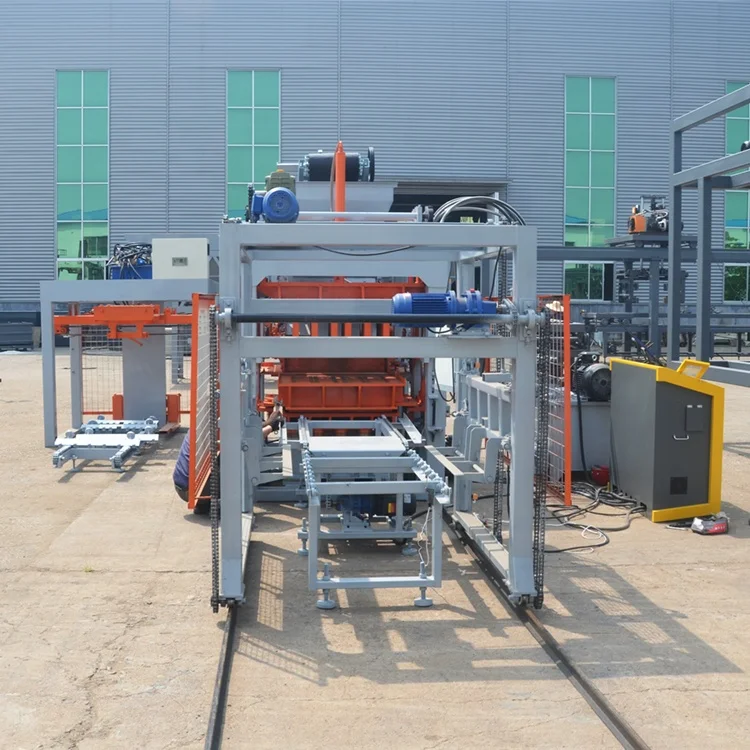
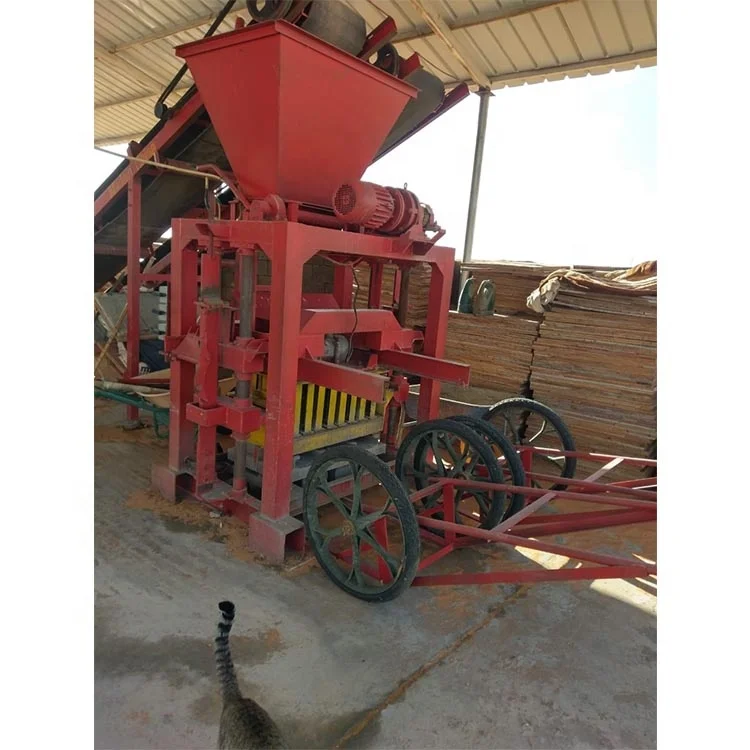 High quality block machine